
Amagi India IPO performance 2026: Market Debut Met with Valuation Reality
Amagi Media Labs debuted on Indian exchanges at a discount, raising $196M. Explore the Amagi India IPO performance 2026, valuation trends, and global revenue growth.
The long-awaited unicorn exit didn't exactly go as planned. Amagi Media Labs, the Bengaluru-based cloud software provider for broadcasters, saw its shares slide on its debut in the Indian market. While it raised ₹17.89 billion (about $196 million), the opening price reflected a significant discount, highlighting the gap between private valuations and public market expectations.
Amagi India IPO performance 2026 and Valuation Trends
Shares of Amagi opened at ₹318 on Wednesday, marking a 12% discount to the issue price of ₹361. The stock eventually stabilized around ₹348.85, valuing the company at roughly $825.81 million. This is a sharp contrast to the $1.4 billion valuation Amagi secured during its November 2022 funding round led by General Atlantic.

A Rare Export-First Tech Success
Despite the rocky start, Amagi stands out as a unique technology player on Indian exchanges. Unlike most domestic IPOs that focus on Indian consumers, Amagi earns almost all of its revenue abroad—73% from the U.S. and 20% from Europe. Its revenue grew 34.6% year-over-year in the first half of 2025, and it maintains an impressive net revenue retention rate of 127%.
| Metric | Value / Stat |
|---|---|
| Opening Discount | 12% |
| Listing Day Valuation | $825.81M |
| 2022 Private Valuation | $1.4B |
| U.S. Revenue Share | 73% |
| Net Revenue Retention | 127% |
Authors
Related Articles

Samsung Electronics' union branch revealed that 84% of survey respondents oppose the government's roughly $290 billion (₩400 trillion) semiconductor megaproject in Gwangju. Government, management, the union and shareholders are all reading the same national project in sharply different ways.
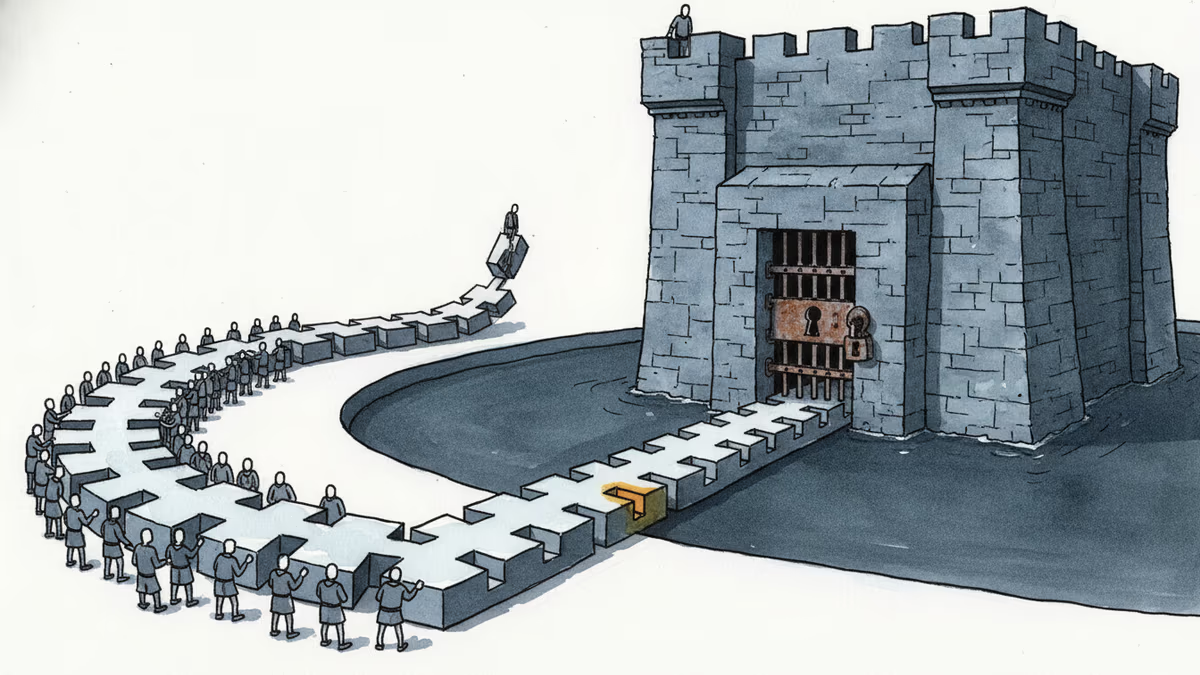
Nvidia shipped roughly a billion RISC-V cores in 2024, then announced it would run CUDA on the open standard. We break down how royalty-free instruction sets and open software stacks are trying to route around CUDA's lock-in. Part 2 of the Semiconductor Sovereignty series.
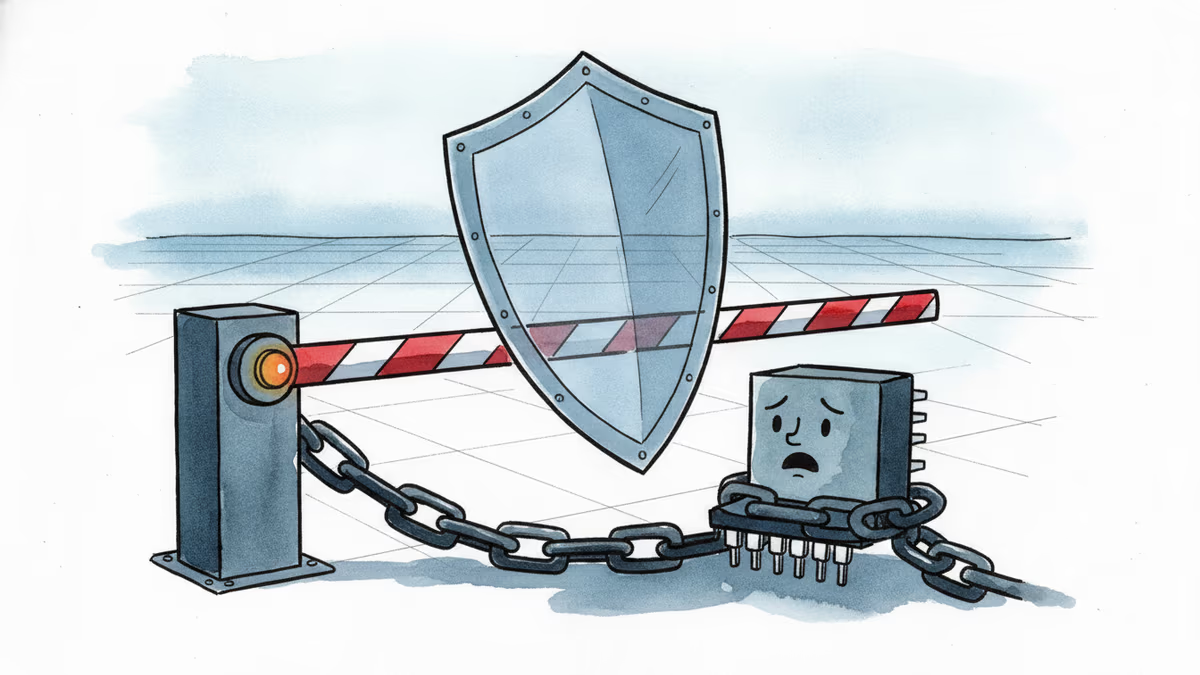
US AI-chip export controls split into three layers in the first half of 2026 — January easing, a May crackdown on circumvention, and a pending bill. Nvidia erased China from its guidance and still posted a record $81.6 billion quarter. A look at the export policy that both shields and cages it.
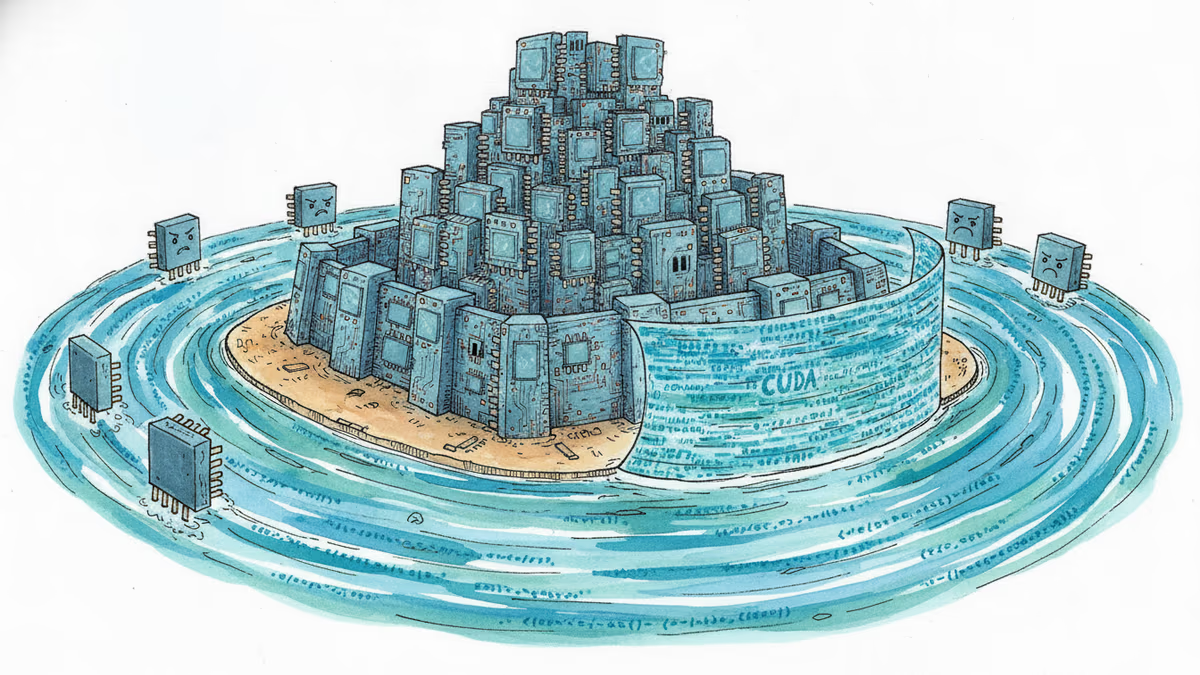
AMD's MI325X matches or beats Nvidia on memory and bandwidth — yet Nvidia's 86-92% share holds. The real moat is CUDA, 20 years in the making. Part 1 of 4.
Samsung Electronics' union branch revealed that 84% of survey respondents oppose the government's roughly $290 billion (₩400 trillion) semiconductor megaproject in Gwangju. Government, management, the union and shareholders are all reading the same national project in sharply different ways.
Nvidia shipped roughly a billion RISC-V cores in 2024, then announced it would run CUDA on the open standard. We break down how royalty-free instruction sets and open software stacks are trying to route around CUDA's lock-in. Part 2 of the Semiconductor Sovereignty series.
US AI-chip export controls split into three layers in the first half of 2026 — January easing, a May crackdown on circumvention, and a pending bill. Nvidia erased China from its guidance and still posted a record $81.6 billion quarter. A look at the export policy that both shields and cages it.
AMD's MI325X matches or beats Nvidia on memory and bandwidth — yet Nvidia's 86-92% share holds. The real moat is CUDA, 20 years in the making. Part 1 of 4.
Thoughts
Share your thoughts on this article
Sign in to join the conversation