
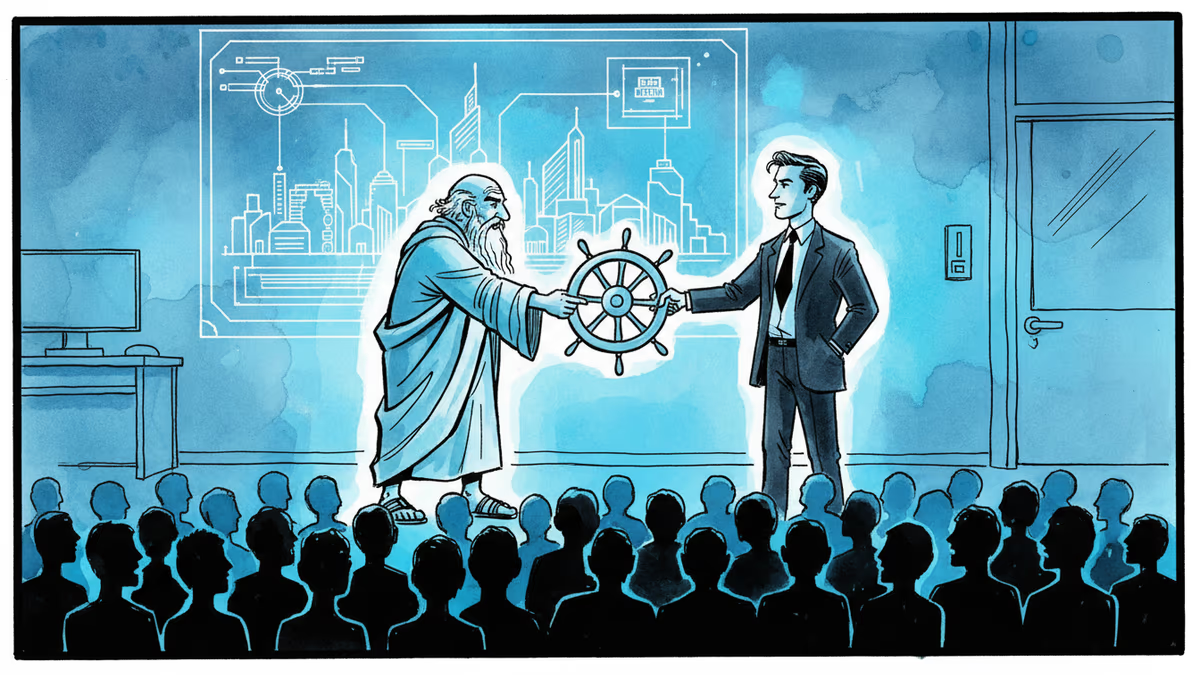
Bluesky's Founder Steps Aside — By Choice
Jay Graber voluntarily exits the CEO role at Bluesky as the decentralized social platform hits 40 million users. What does the leadership shift mean for the open web's biggest bet?
She wasn't fired. There was no scandal. Jay Graber just handed the wheel to someone else — while the car is still accelerating.
From Twitter Side Project to 40 Million Users
Bluesky didn't start as a startup. It began as a research initiative inside Twitter, exploring what a decentralized social network might look like. In 2021, it spun out as an independent company, and Graber became its first CEO — tasked with turning an experimental protocol into something people would actually use.
The timing that followed was almost cinematic. When Elon Musk acquired Twitter and rebranded it as X in late 2023, a wave of users went looking for alternatives. Bluesky caught many of them. The platform grew from roughly 30 million users a year ago to 40 million today — not explosive by Silicon Valley standards, but steady and ideologically motivated growth.
And then, at this moment of relative momentum, Graber stepped down as CEO.
What Actually Changed — And What Didn't
Graber isn't leaving. She's shifting to a newly created role: Chief Innovation Officer, focused on building new features and exploring what the platform can become. The day-to-day leadership passes to Toni Schneider, a venture capitalist and former CEO of Automattic — the company behind WordPress.com — who had already been serving as a Bluesky advisor.
On paper, it's a division of labor: Graber handles vision and product innovation, Schneider handles operations and scale. In practice, it's a pattern that startup watchers know well. When a founder-led company hits a certain size, the skills that built it aren't always the same skills needed to run it.
Automattic is a telling choice of precedent. Schneider helped build a company that monetized an open-source ecosystem without destroying the community that made it valuable. That's almost exactly the tightrope Bluesky now has to walk.

The Decentralization Paradox
Here's the tension at the heart of this story. Bluesky's entire value proposition rests on the AT Protocol — an open standard that lets users own their data, take their followers with them if they leave, and interact across different apps built on the same protocol. Think email, but for social media. No single company controls the graph.
That's a genuinely different vision from Meta, X, or TikTok. And it's why many of Bluesky's 40 million users chose it specifically — not just because it isn't X, but because of what it claims to be.
The problem: the business models that fund social platforms at scale — advertising, data licensing, algorithmic engagement — tend to require exactly the kind of centralized data control that AT Protocol is designed to prevent. Schneider's job isn't just to grow the user base. It's to find a revenue model that doesn't quietly betray the founding philosophy.
Three Ways to Read This
For existing Bluesky users, the unease is understandable. The platform attracted people who were explicitly skeptical of how big tech runs social media. A leadership change, especially one that brings in a VC-connected executive, raises a familiar question: is this the beginning of the end of the "different" phase?
For investors and the broader tech industry, the move reads as maturation. Founder transitions of this kind — where the original visionary moves to a product-focused role while an experienced operator takes the helm — are standard playbook for companies preparing to scale or raise serious capital. It signals ambition, not retreat.
For the open web community — developers building on AT Protocol, researchers watching federated social networks, advocates for digital rights — the stakes are higher. Bluesky is currently the highest-profile experiment in whether decentralized social media can actually work at scale. If Schneider finds a sustainable model, it validates the whole approach. If the platform drifts toward conventional monetization, it becomes a cautionary tale.
What 40 Million Really Means
40 million users sounds significant until you compare it to Instagram (2 billion+) or even Threads, which Meta turbocharged using its existing social graph. Bluesky is still, by most measures, a platform for the digitally engaged and politically motivated — not yet a mainstream destination.
The next phase of growth requires reaching people who have never heard of AT Protocol and don't particularly care about decentralization. That's a different product challenge, a different marketing challenge, and arguably a different company. Whether Graber's vision and Schneider's operational experience can combine to bridge that gap — without alienating the core community that made Bluesky credible in the first place — is the real question this leadership shift raises.
Authors
Related Articles

Bluesky integrated end-to-end encrypted messaging from startup Germ Network, showing how open ecosystems work differently from Big Tech platforms.

After 2 years, Bluesky adds drafts feature that rivals had from day one. What this delayed basic feature reveals about the decentralized platform's priorities and growth strategy.
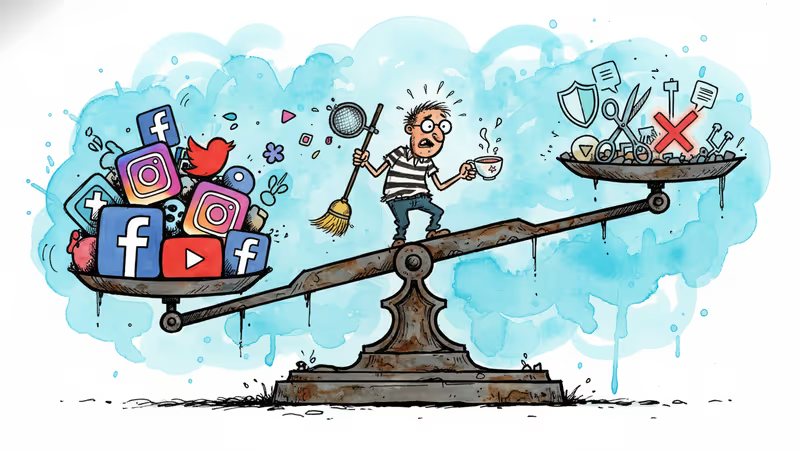
Bluesky published its first comprehensive transparency report showing 60% user growth alongside surging moderation reports and legal requests, revealing the challenges facing the Twitter alternative.

Bluesky announces 2026 roadmap focusing on real-time interactions. As it challenges X, what does this mean for the future of social platforms?
Bluesky integrated end-to-end encrypted messaging from startup Germ Network, showing how open ecosystems work differently from Big Tech platforms.
After 2 years, Bluesky adds drafts feature that rivals had from day one. What this delayed basic feature reveals about the decentralized platform's priorities and growth strategy.
Bluesky published its first comprehensive transparency report showing 60% user growth alongside surging moderation reports and legal requests, revealing the challenges facing the Twitter alternative.
Bluesky announces 2026 roadmap focusing on real-time interactions. As it challenges X, what does this mean for the future of social platforms?
Thoughts
Share your thoughts on this article
Sign in to join the conversation