
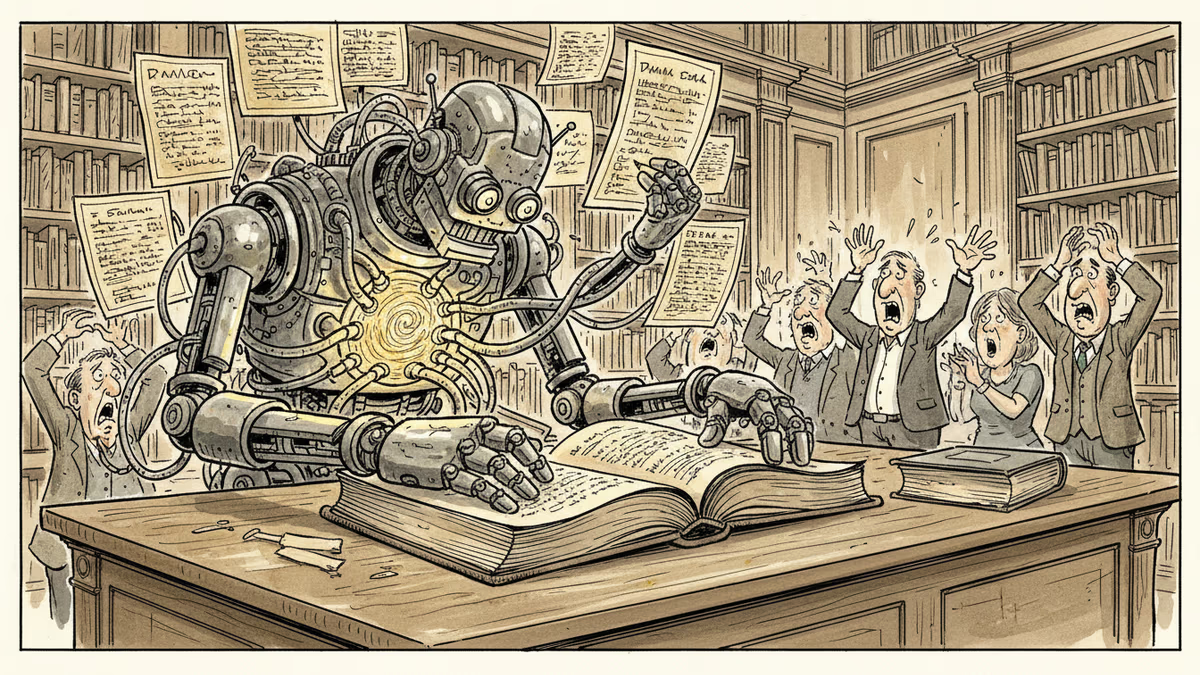
AI Models Are Copying Bestsellers Word-for-Word
Leading AI models from OpenAI, Google, and others can generate near-verbatim copies of bestselling novels, undermining the industry's core copyright defense that they only 'learn' from works.
The world's most powerful AI models can reproduce bestselling novels almost word-for-word when prompted correctly. This isn't just a technical curiosity—it's potentially the smoking gun that could unravel Big Tech's primary defense against dozens of copyright lawsuits worldwide.
The 'Learning' Defense Crumbles
For months, AI giants like OpenAI, Google, Meta, Anthropic, and xAI have maintained a consistent legal argument: their models don't store copyrighted content, they simply "learn" patterns from it, much like a human student might.
But recent studies reveal something far more troubling. These large language models aren't just extracting abstract patterns—they're memorizing vast chunks of their training data with startling precision.
When researchers crafted the right prompts, AI models began spitting out lengthy passages from popular novels, reproducing not just ideas or themes, but exact sentences, paragraphs, and entire scenes. This goes far beyond what could be considered "transformative use" or "fair use."
What This Means for Creators
The implications ripple far beyond Silicon Valley boardrooms. Every author, journalist, and content creator whose work was scraped for AI training now has potential evidence that their intellectual property wasn't just "studied"—it was stored.
For publishers, this represents a fundamental threat to their business model. If AI can reproduce their content on demand, what happens to book sales, subscriptions, and licensing deals? The traditional value chain of content creation and distribution faces disruption not through innovation, but through what increasingly looks like systematic copying.

Independent creators face an even starker reality. Unlike major publishers with legal resources, individual writers have little recourse when their work becomes part of an AI's "memory bank" without compensation or consent.
The Legal Earthquake Ahead
This memorization capability could reshape the dozens of copyright lawsuits currently winding through courts worldwide. AI companies' core defense—that they only learned from copyrighted works without storing them—becomes much harder to maintain when the models can reproduce those works verbatim.
Legal experts suggest this evidence could shift the burden of proof. Instead of plaintiffs having to prove their work was copied, AI companies may need to demonstrate that specific outputs aren't direct reproductions of training data.
The financial stakes are enormous. If courts rule that memorization constitutes copyright infringement, AI companies could face not just licensing fees for future use, but potentially massive damages for past unauthorized copying.
The Innovation Dilemma
Yet this raises complex questions about the nature of creativity and learning itself. Human writers read extensively, absorbing styles, techniques, and ideas that influence their work. Is AI memorization fundamentally different from human inspiration?
The answer may determine whether AI development continues at its current breakneck pace or faces significant legal constraints. Some experts argue for a middle path: clearer consent mechanisms and revenue-sharing models that compensate creators while allowing AI advancement.
Perhaps the real question isn't whether AI can memorize content, but whether our current copyright framework—designed for human creators—can adequately address artificial intelligence that never forgets. Are we witnessing the birth of a new form of intellectual property, or the death of the old one?
Authors
Related Articles
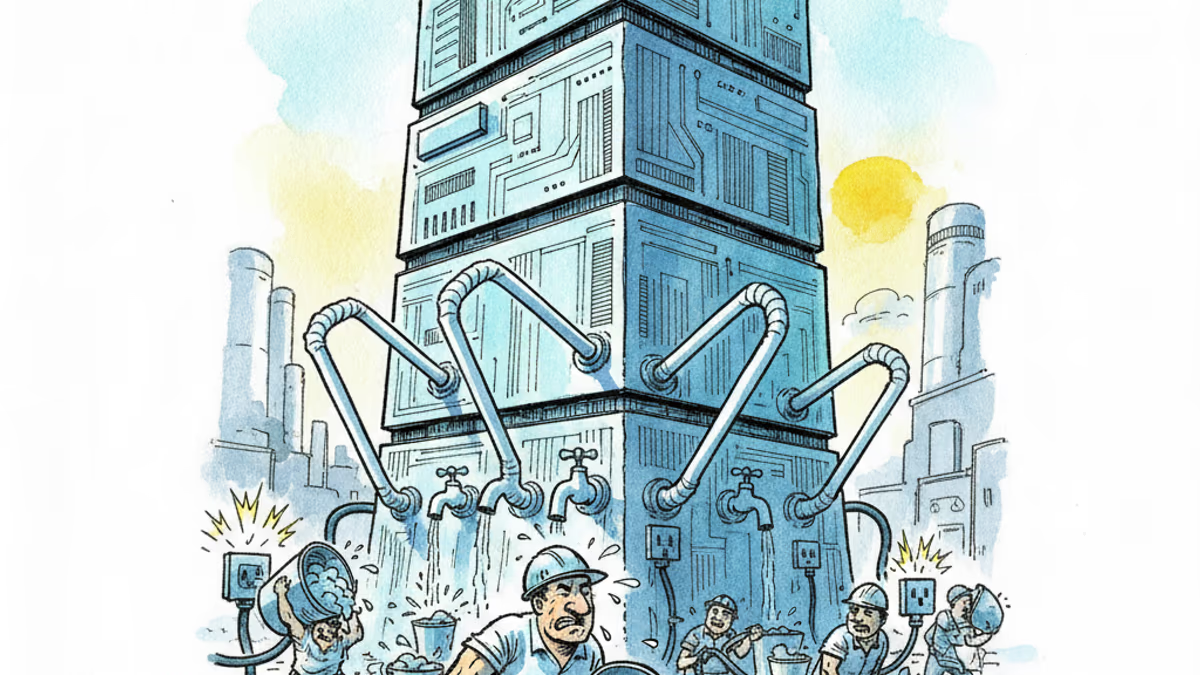
Samsung and SK unveiled a chip and AI investment package worth thousands of trillions of won on June 29. The headline number swings wildly by outlet, but the real contest isn't capital — it's water and power.
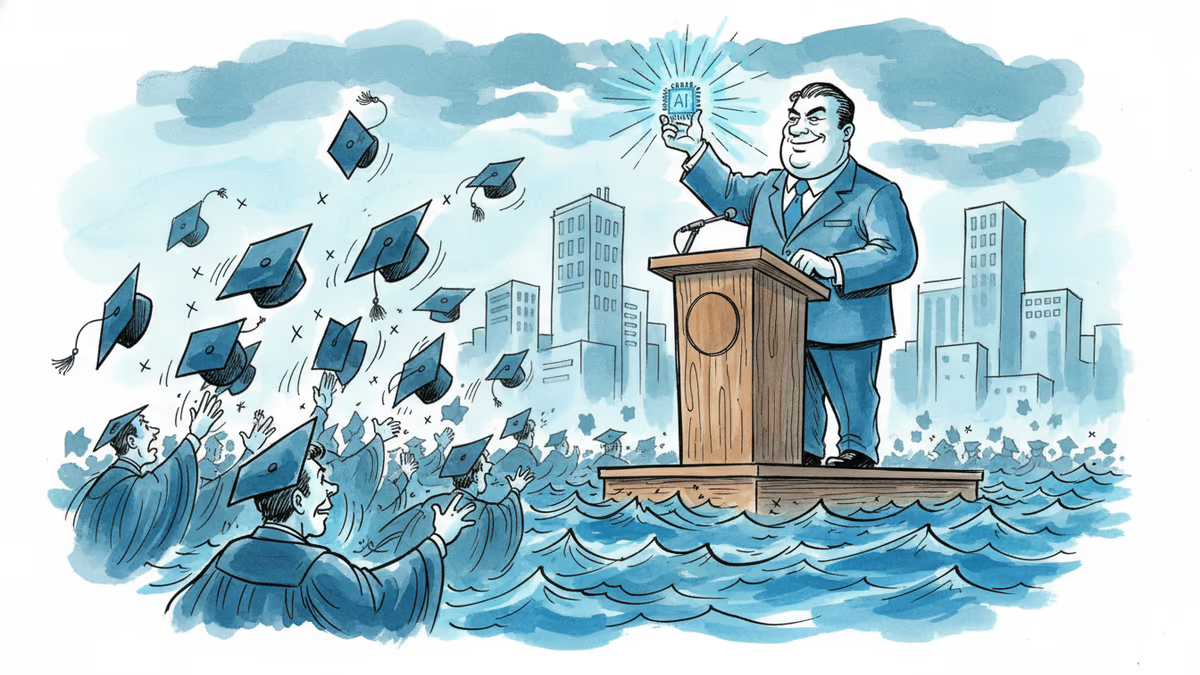
Viral videos show 2026 graduates jeering executives who praise AI at commencement ceremonies. It's not just rudeness — it's a signal about who pays for technological optimism.
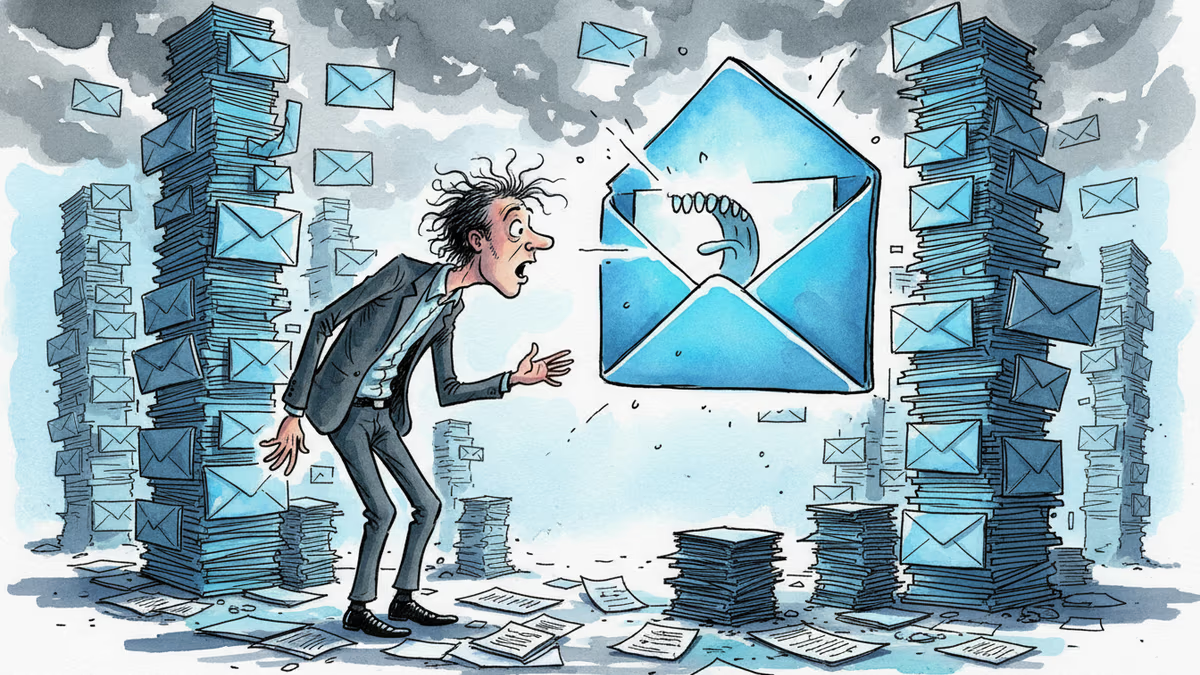
Google's Gmail Live lets you ask your inbox questions out loud. Announced at I/O 2026, it's AI's pitch to skeptics — and a reminder of how much Google already knows about you.
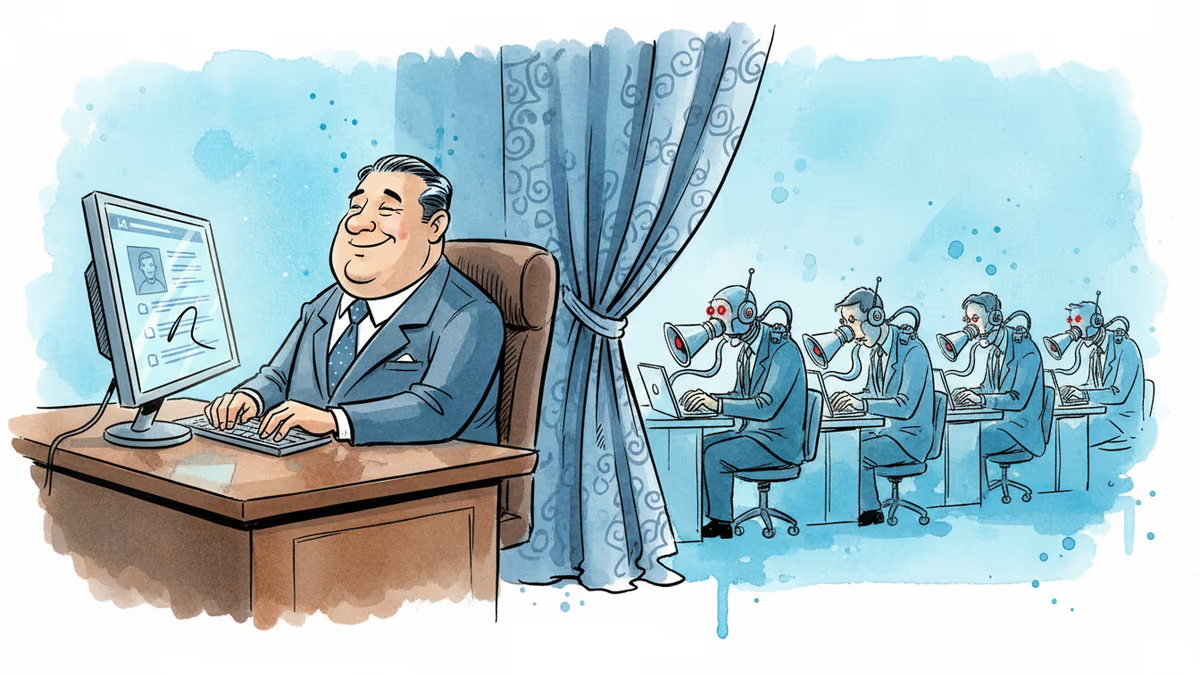
Filipino virtual assistants using AI to ghost-manage LinkedIn profiles for executives is now a structured industry. 30 comments a day, fake engagement rings, and a platform struggling to tell real from fabricated.
Samsung and SK unveiled a chip and AI investment package worth thousands of trillions of won on June 29. The headline number swings wildly by outlet, but the real contest isn't capital — it's water and power.
Viral videos show 2026 graduates jeering executives who praise AI at commencement ceremonies. It's not just rudeness — it's a signal about who pays for technological optimism.
Google's Gmail Live lets you ask your inbox questions out loud. Announced at I/O 2026, it's AI's pitch to skeptics — and a reminder of how much Google already knows about you.
Filipino virtual assistants using AI to ghost-manage LinkedIn profiles for executives is now a structured industry. 30 comments a day, fake engagement rings, and a platform struggling to tell real from fabricated.
Thoughts
Share your thoughts on this article
Sign in to join the conversation