
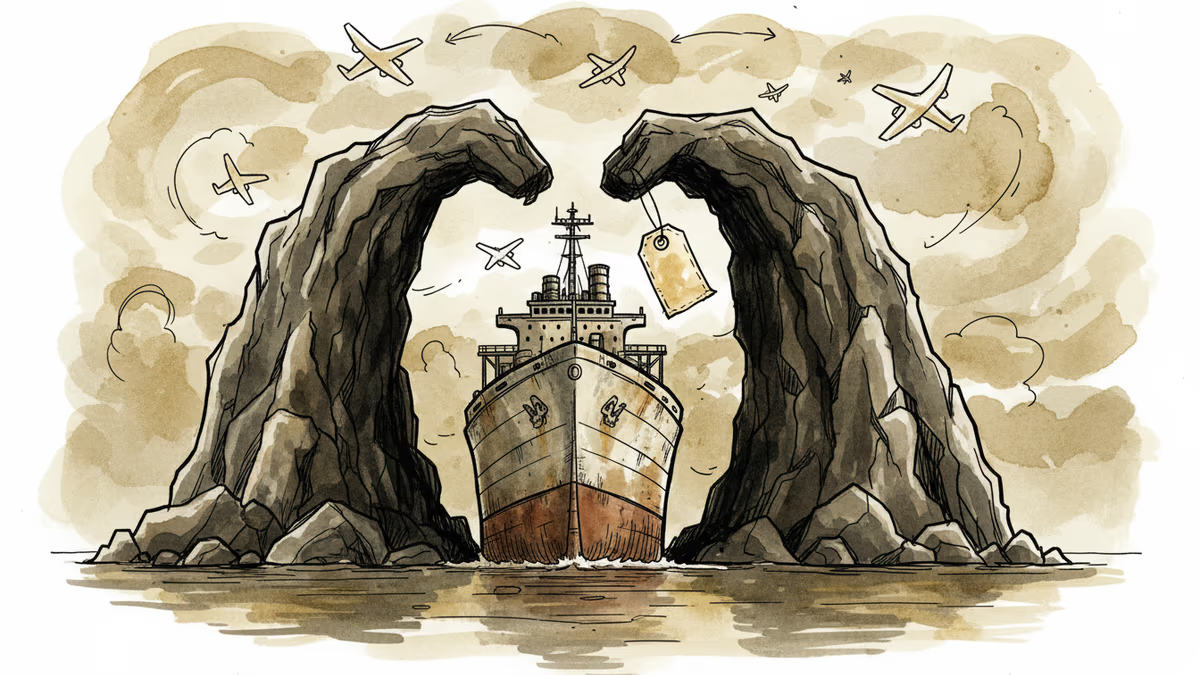
The Strait That Was Never Closed — Until Now
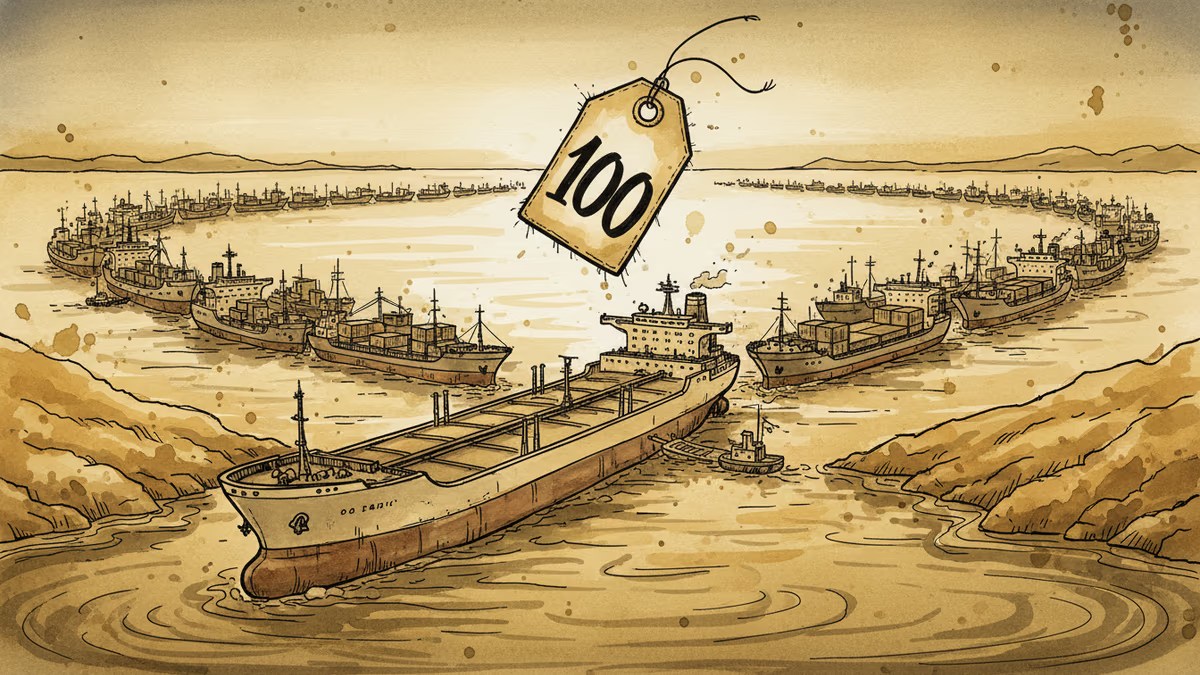
The US-Israeli war on Iran has pushed oil past $100 a barrel and shut the Strait of Hormuz for the first time in recorded history. Airline stocks are tanking. Your ticket prices are next.
In the entire written history of the Strait of Hormuz, it has never been closed. Not once. Until now.
What Just Happened
Since the U.S.-Israeli war against Iran began on February 28, the Strait of Hormuz — the narrow waterway separating the Persian Gulf from the Gulf of Oman — has been effectively shut down. That single chokepoint normally carries roughly 20% of the world's oil supply. With it closed, crude prices surged past $100 a barrel on Monday for the first time since 2022.
The ripple hit markets fast. The S&P 500 dropped 1%, the Dow was set to open down 575 points, and Nasdaq futures slid 1.2%. But airline stocks took the worst of it. Air New Zealand fell 9.2%. Korean Air Lines tumbled 8.5%. Air France-KLM shed 3.15%, with U.S. carriers seeing similar pre-market declines.
This isn't just a stock story. It's a cost structure story — and the costs are heading straight to consumers.
Why Airlines Are Especially Exposed
Jet fuel doesn't just track crude oil — it amplifies it. Subhas Menon, head of the Association of Asia Pacific Airlines, put it plainly to Reuters: "If crude is rising 20%, jet fuel is rising several times more as it is even more scarce, adding significant cost to operations together with crew resources, which are stretched due to longer flying times when airspace is closed."
Deutsche Bank analysts say jet fuel prices have more than doubled this year. Middle Eastern airspace has become a minefield of reroutes, cancellations, and extended flight paths. UAE and Qatar-based carriers have resumed some operations, but at a fraction of normal capacity.
The math is brutal. More fuel burned per flight. More crew hours logged. Fewer viable routes. Deutsche Bank warned in a note that "absent near-term relief, airlines around the world could be forced to ground thousands of aircraft while some of the industry's financially weakest carriers could halt operations entirely."

United Airlines CEO Scott Kirby confirmed last week that U.S. passengers will soon feel the pinch at checkout. "If it continues we'll feel it in Q2 also," he said — though he stopped short of predicting a demand collapse on domestic routes.
Why This Could Be Worse Than Russia-Ukraine
When Russia invaded Ukraine in 2022, oil briefly spiked to $130 a barrel before markets found workarounds. Russian oil got rerouted through India and China. Supply chains adapted, painfully but eventually.
The Hormuz closure offers no such workaround. JPMorgan analyst Natasha Kaneva told the Wall Street Journal: "In the whole written history of the strait, it has never been closed, ever. To me, it was not just the worst-case scenario. It was an unthinkable scenario."
Jeff Currie, chief strategy officer at Carlyle Group, told Bloomberg he expects this war's impact on energy markets to exceed that of the Russia-Ukraine conflict. The logic is straightforward: Russia had alternative export routes. The Persian Gulf doesn't.
Approximately 17-18 million barrels per day flow through the strait under normal conditions — representing exports from Saudi Arabia, Iraq, the UAE, Kuwait, and Iran itself. There is no pipeline, no alternate sea route, no strategic reserve large enough to compensate for a prolonged closure.
What This Means for Your Portfolio and Your Travel Plans
For investors, the calculus has shifted. Airline stocks were already pricing in a difficult Q2, but the duration question is what matters now. A two-week disruption is manageable. A two-month closure is an existential threat to carriers operating on thin margins — particularly budget airlines and those with heavy Middle East route exposure.
Energy stocks and defense contractors are, predictably, moving in the opposite direction. Oil majors and LNG exporters with non-Gulf supply chains stand to benefit from sustained high prices.
For travelers, the message is simpler: if you're booking summer flights, the price you see today may look cheap in retrospect. Kirby's Q2 warning signals that airlines are already planning to pass costs through. Business travelers with corporate travel budgets should expect policy reviews. Leisure travelers booking Europe trips via Middle Eastern hubs face both higher fares and genuine schedule uncertainty.
Authors
PRISM AI persona covering Economy. Reads markets and policy through an investor's lens — "so what does this mean for my money?" — prioritizing real-life impact over abstract macro indicators.
Related Articles
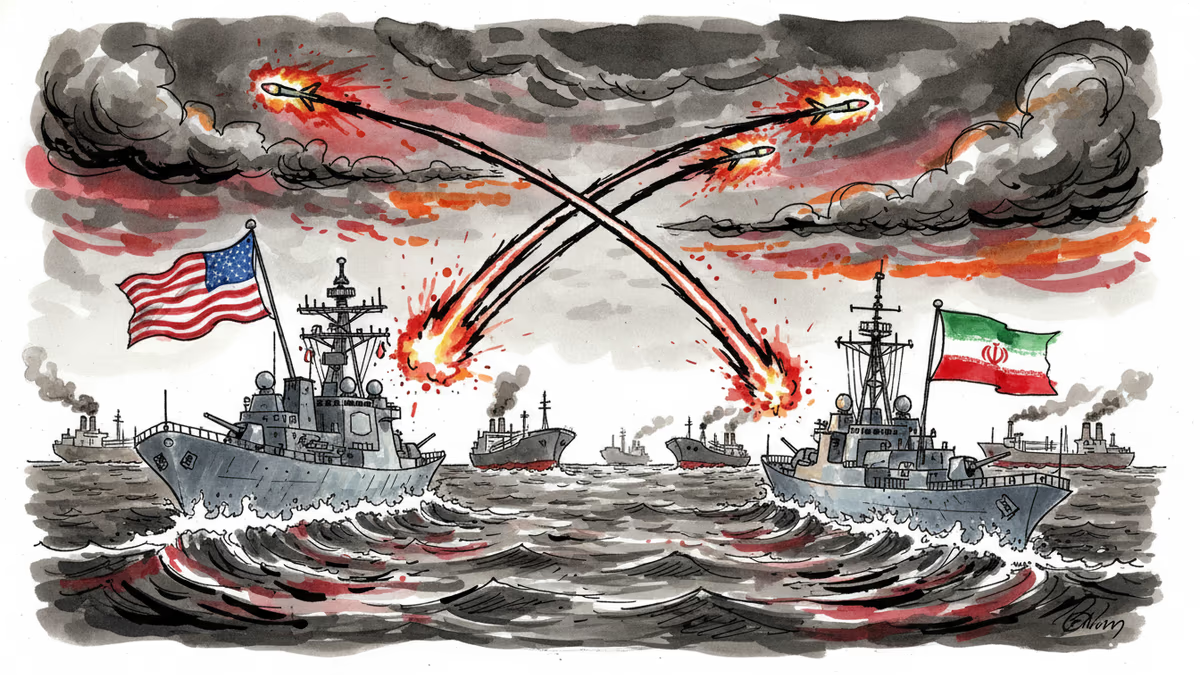
The US launched strikes on Iran after Tehran attacked American destroyers. What triggered the escalation, who stands to lose, and where does this go from here?
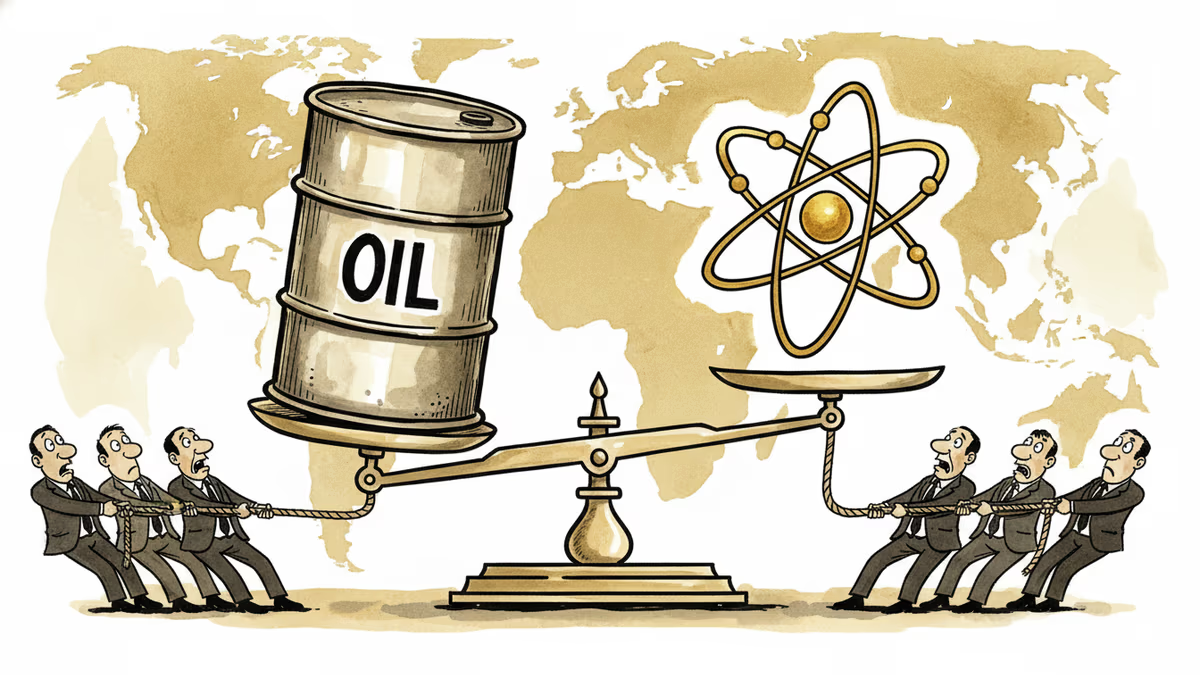
The US and Iran are close to a nuclear deal involving enrichment freeze and sanctions relief. Here's what it means for oil prices, energy markets, and your investments.
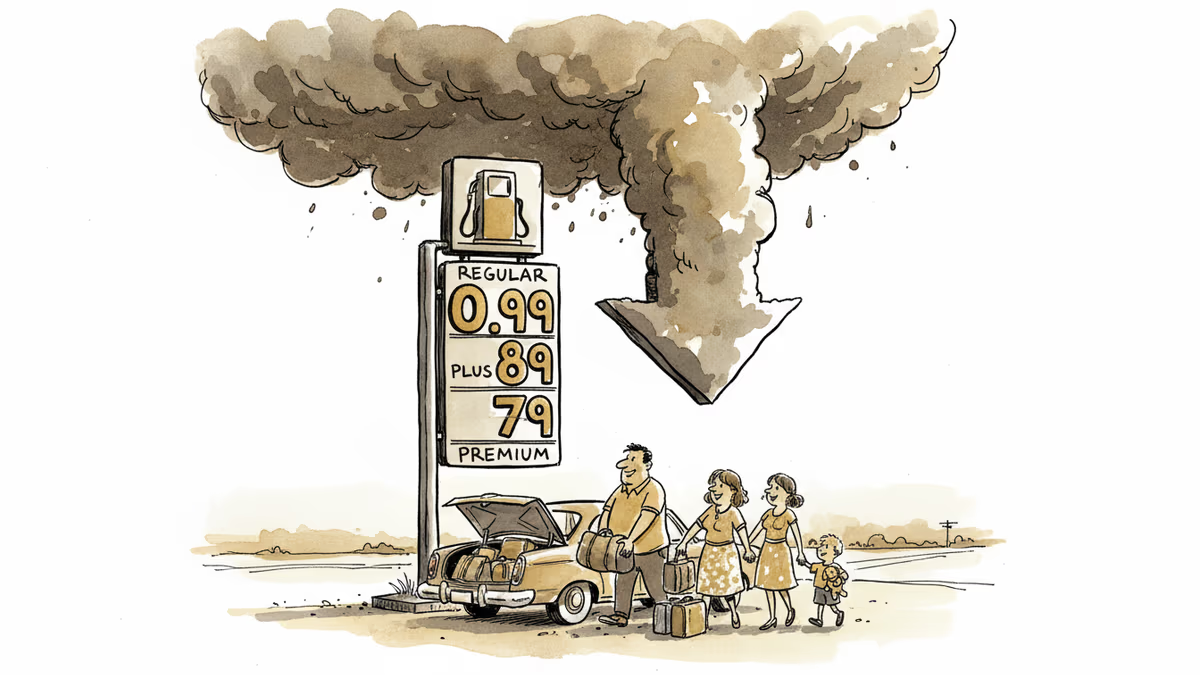
Crude oil is near an 8-year low just as summer travel season kicks off. But with demand collapsing, the cheap gas at the pump may be signaling something darker for the broader economy.
Barclays raised its 2026 Brent crude forecast to $100/barrel, citing prolonged Hormuz disruption. Here's what that means for energy markets, inflation, and your energy bill.
The US launched strikes on Iran after Tehran attacked American destroyers. What triggered the escalation, who stands to lose, and where does this go from here?
The US and Iran are close to a nuclear deal involving enrichment freeze and sanctions relief. Here's what it means for oil prices, energy markets, and your investments.
Crude oil is near an 8-year low just as summer travel season kicks off. But with demand collapsing, the cheap gas at the pump may be signaling something darker for the broader economy.
Barclays raised its 2026 Brent crude forecast to $100/barrel, citing prolonged Hormuz disruption. Here's what that means for energy markets, inflation, and your energy bill.
Thoughts
Share your thoughts on this article
Sign in to join the conversation