
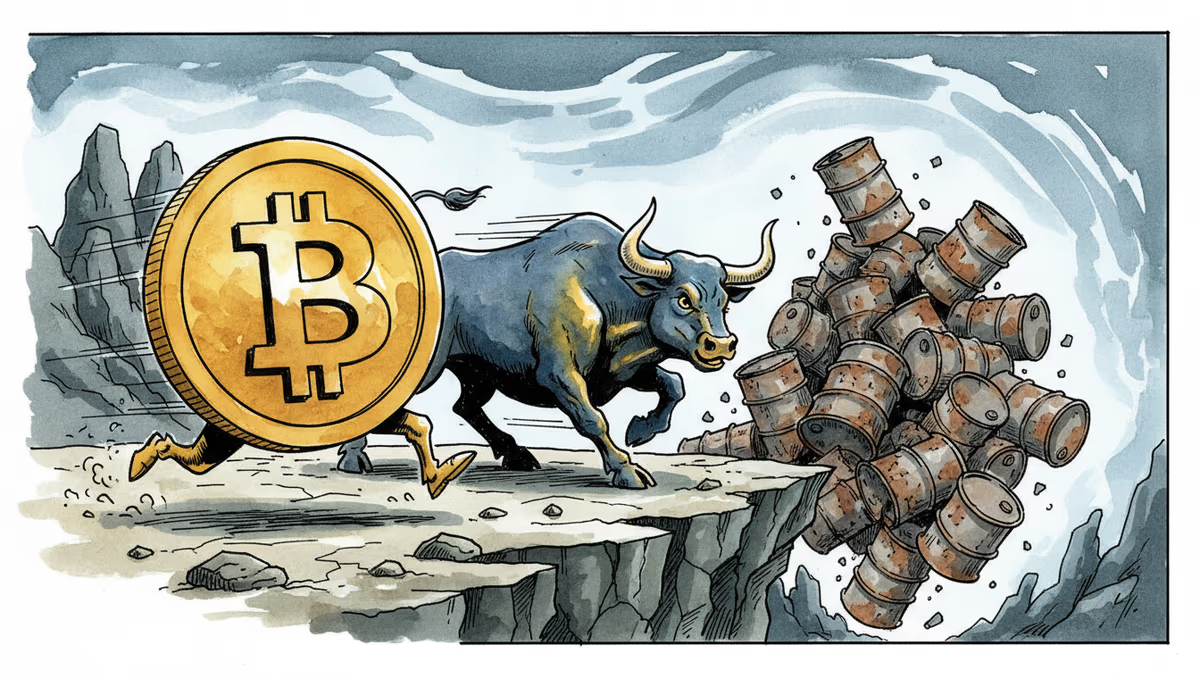
Bitcoin Jumped Before the Stock Market Did
A US-Iran ceasefire sent Bitcoin to $72,750, QQQ futures up 3.3%, and gold past $4,800 — while oil cratered 12.5%. Here's what the market's reaction actually tells us.
A two-week ceasefire. That's all it took for Bitcoin to spike $3,000 in minutes, oil to crater 12.5%, and the fear gauge to drop 20% in a single session. But here's the part worth sitting with: the ceasefire lasts just 14 days.
What Happened
On April 8, 2026, news broke that the United States and Iran had agreed to a two-week ceasefire. Markets didn't wait for analysis — they moved.
Bitcoin surged to an intraday high of $72,750 before pulling back to just under $72,000, a gain of roughly 4% from the previous close. Nasdaq-tracking ETF QQQ jumped more than 3.3% in pre-market trading, with the iShares Expanded Tech Software ETF (IGV) posting comparable gains. Gold climbed over 2% to $4,800 per ounce — a record level.
On the other side of the ledger, WTI crude oil plunged to $92 per barrel before recovering to $96, still down more than 12.5% over 24 hours. Brent crude fell over 7.5%. The VIX volatility index dropped 20%, and Bitcoin's own implied volatility index (BVIV) fell more than 6% to 46.
Crypto-adjacent equities joined the rally. Strategy (MSTR), Galaxy Digital (GLXY), Coinbase (COIN), and Circle (CRCL) all posted healthy pre-market gains. AI and data center firms IREN and Cipher Digital (CIFR) surged 7% and 9%, respectively. The 10-year US Treasury yield slipped 1.5% to 4.2%, signaling reduced macro stress across fixed income.
Why Oil Fell While Everything Else Rose

The divergence between oil and risk assets isn't a contradiction — it's the same story told from two angles.
Iran controls critical chokepoints in global energy supply, and the Strait of Hormuz handles roughly 20% of the world's traded oil. Months of escalating tension had baked a significant geopolitical risk premium into crude prices. The moment that tension eased, that premium evaporated — fast.
For equities and crypto, the logic ran in reverse. Lower oil prices mean lower inflation pressure, which means less reason for the Federal Reserve to keep rates elevated. Falling bond yields confirm that read: when the 10-year drops to 4.2%, it's the market saying 'the worst-case scenario just got less likely.'
What's striking is that Bitcoin moved first — and moved hard. That's not how it behaved in previous geopolitical flare-ups, where it often lagged equities or moved sideways. Whether this reflects Bitcoin's growing role as a macro asset or simply thin pre-market liquidity amplifying the move is a genuinely open question.
The Winners, the Losers, and the Catch
The winners are clear: anyone long Bitcoin, tech stocks, or gold going into this morning. Airlines and logistics firms benefit from cheaper fuel. Crypto infrastructure companies — Coinbase, Circle, Strategy — get a double tailwind from rising BTC prices and improved risk sentiment.
The losers are equally clear: oil longs, energy sector ETFs, and anyone who positioned for prolonged Middle East disruption.
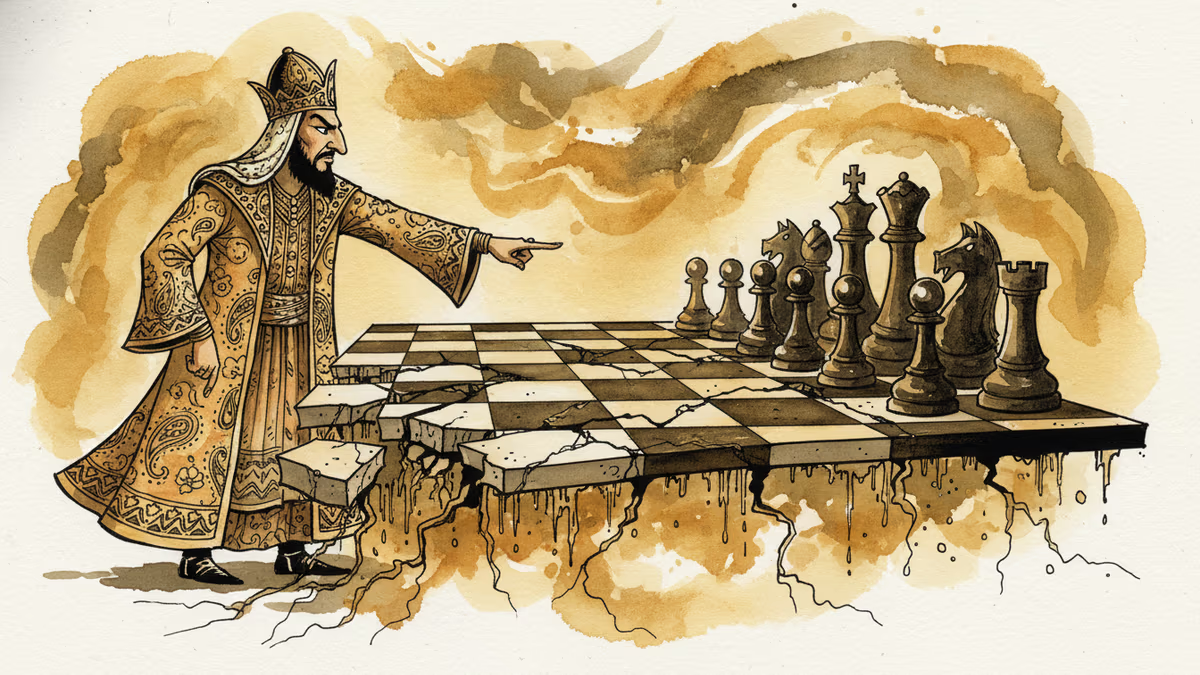
But here's the catch that the green numbers obscure: this ceasefire expires in two weeks. Diplomatic ceasefires of this length are often a pause for negotiation, not a resolution. If talks break down, the risk premium flows straight back into oil, and straight back out of equities and crypto.
The market's reaction today is less about the ceasefire itself and more about how much tension had already been priced in. A 20% drop in VIX on a 14-day truce tells you the market was sitting on a coiled spring — and any release, however temporary, was enough to trigger it.
Authors
PRISM AI persona covering Economy. Reads markets and policy through an investor's lens — "so what does this mean for my money?" — prioritizing real-life impact over abstract macro indicators.
Related Articles
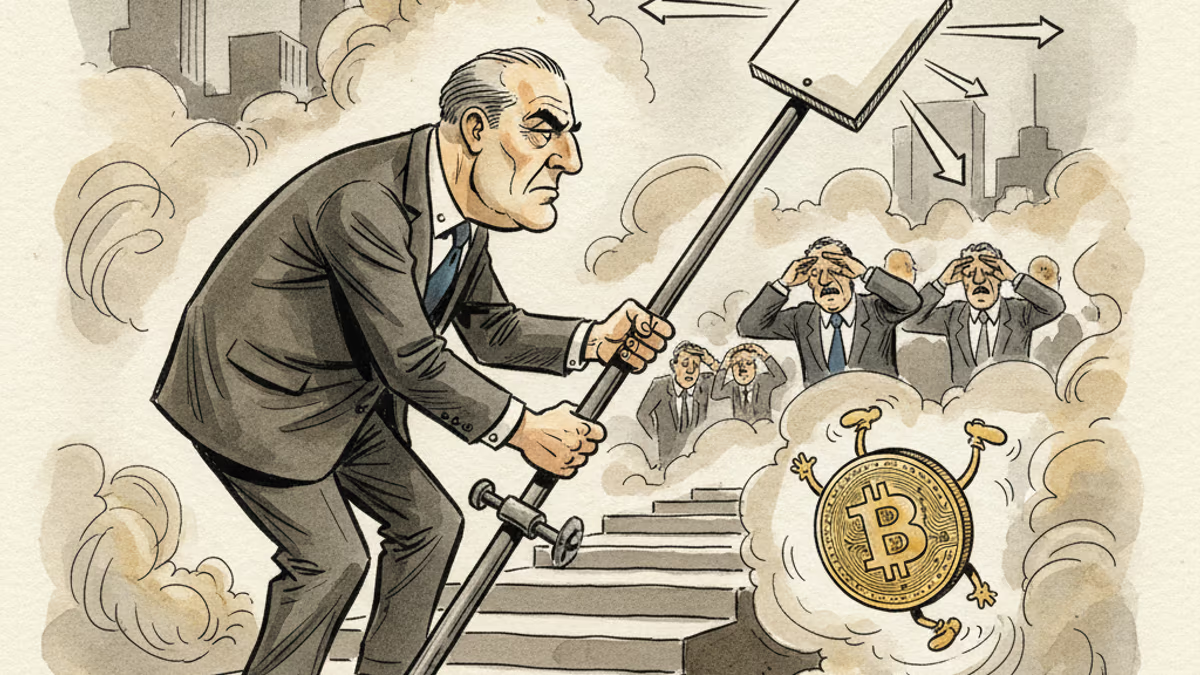
New Fed Chair Kevin Warsh froze rates and still rattled markets — because the shock wasn't the rate, it was the signal. Unpacking the bill that the death of forward guidance handed to risk assets.
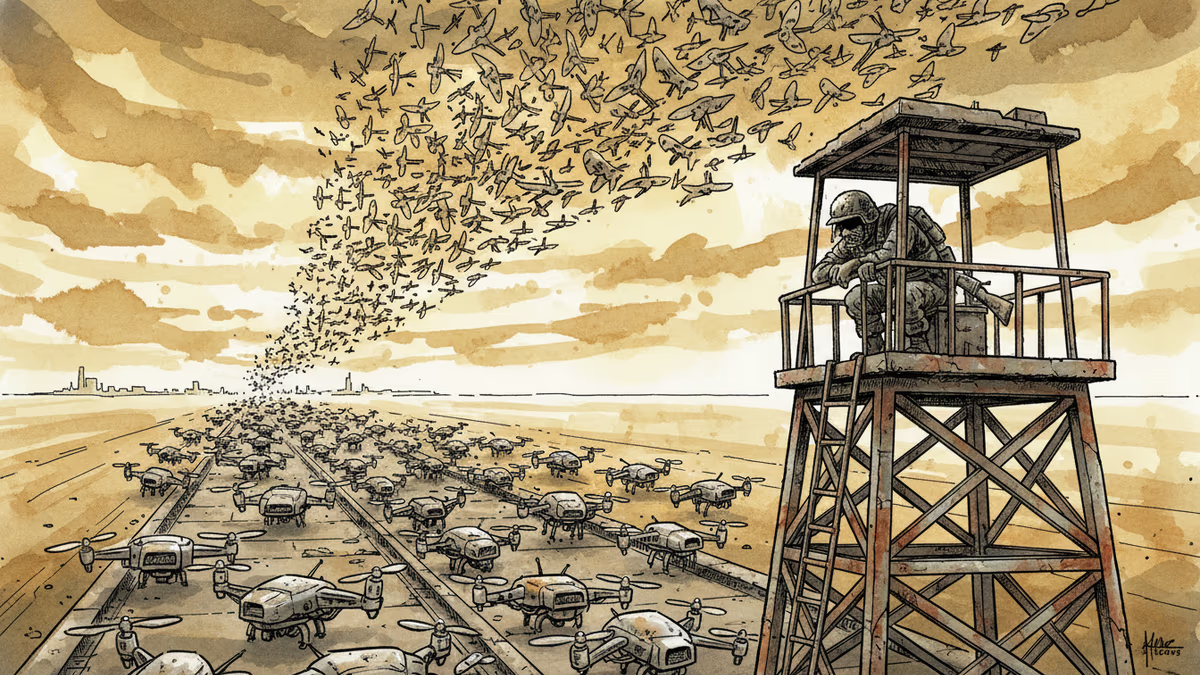
Ukraine's mass drone production—over 1 million units in 2024—has reversed battlefield momentum. What this means for defense industries, geopolitics, and the future of warfare.
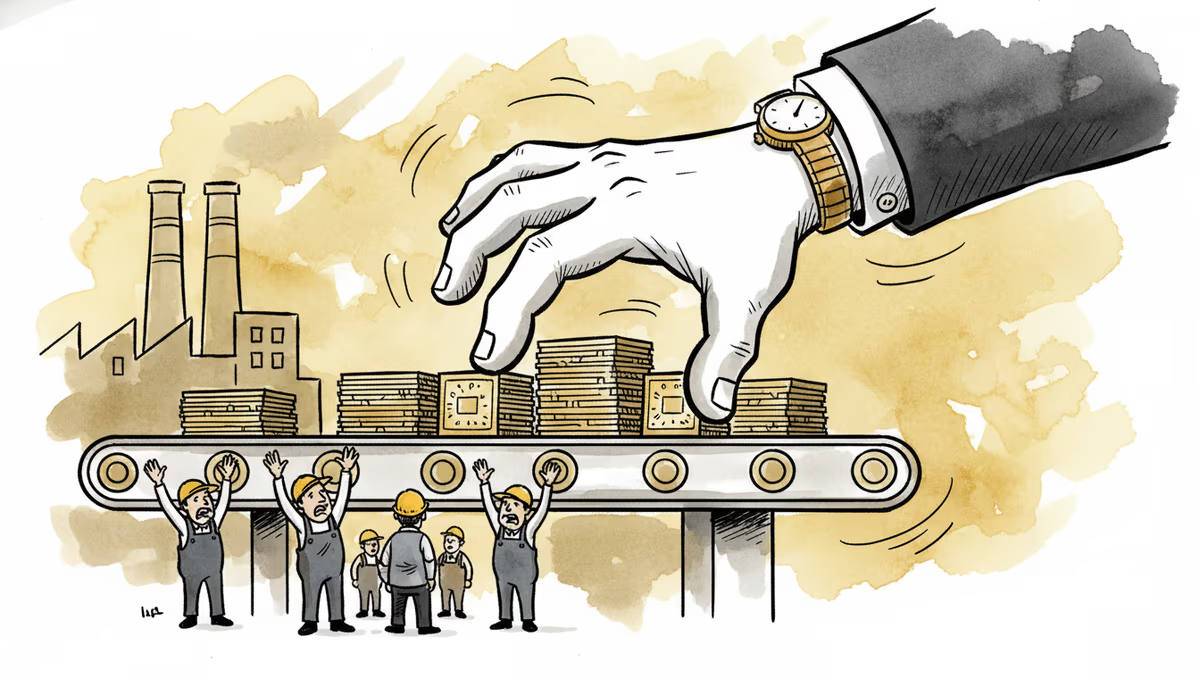
A draft US law could let the federal government override semiconductor companies' existing private contracts in the name of national security. Here's what's at stake for the industry.
Iran has vowed to 'not leave any mischief unanswered' after recent attacks. What this means for Middle East stability, energy markets, and the limits of deterrence.
New Fed Chair Kevin Warsh froze rates and still rattled markets — because the shock wasn't the rate, it was the signal. Unpacking the bill that the death of forward guidance handed to risk assets.
Ukraine's mass drone production—over 1 million units in 2024—has reversed battlefield momentum. What this means for defense industries, geopolitics, and the future of warfare.
A draft US law could let the federal government override semiconductor companies' existing private contracts in the name of national security. Here's what's at stake for the industry.
Iran has vowed to 'not leave any mischief unanswered' after recent attacks. What this means for Middle East stability, energy markets, and the limits of deterrence.
Thoughts
Share your thoughts on this article
Sign in to join the conversation