
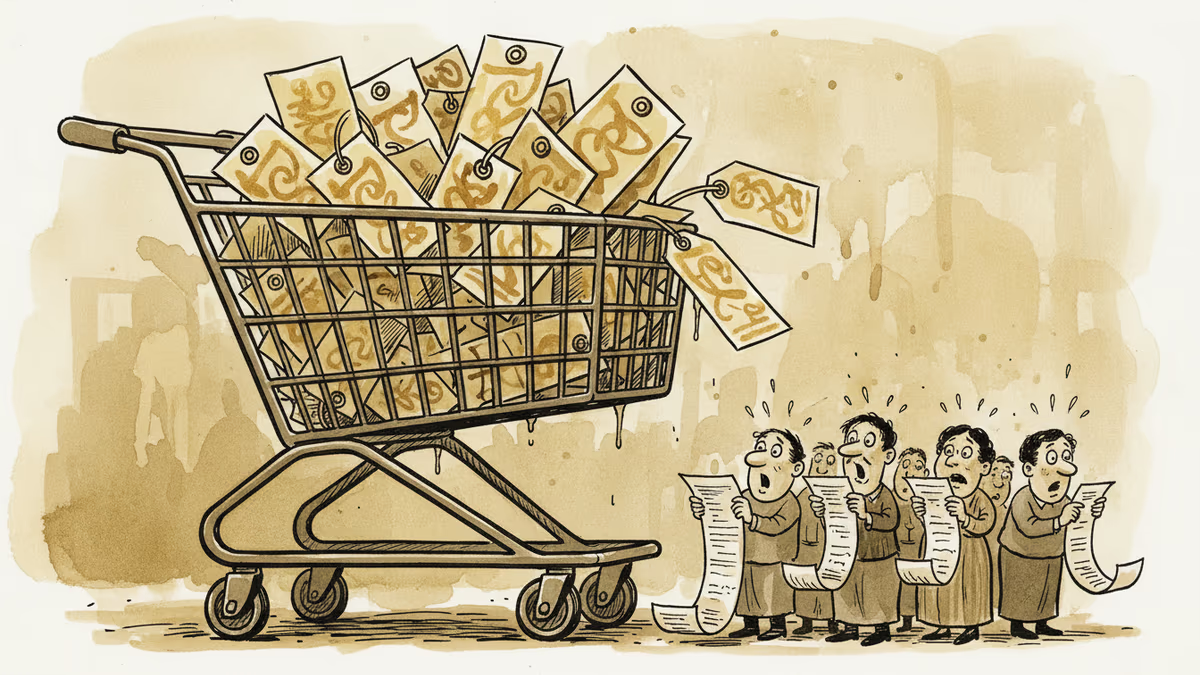
Your Shopping Bill Just Got More Expensive. Thank Tariffs.
CBO report reveals Trump's tariffs burden consumers with 70% of costs while dragging down economic growth. What this means for your wallet and the global economy.
$3 trillion. That's how much the U.S. deficit could shrink over the next decade thanks to Trump's tariffs, according to the Congressional Budget Office. Sounds impressive, right? Here's the catch: American consumers will foot 70% of the bill.
The Real Math Behind Tariffs
Wednesday's CBO report delivered a reality check on Trump's trade policy. Despite administration claims that foreigners pay tariffs, the numbers tell a different story. U.S. businesses absorb just 30% of tariff costs by squeezing profit margins. The remaining 70% gets passed directly to you at checkout.
"The higher tariffs raise the cost of imported goods, temporarily increase inflation, reduce households' purchasing power, and slow real investment," the CBO stated bluntly. It's essentially a tax on American shoppers disguised as tough trade policy.
The ripple effects extend beyond your grocery bill. Companies facing tariff uncertainty are pulling back on long-term investments through 2027. Employment levels will sit "slightly below" what they otherwise would be, even as January's jobs report showed a decent 130,000 new positions.
Winners and Losers in the Tariff Game

Not everyone loses from this trade shuffle. Domestic producers of goods that compete with imports might see increased demand. Some U.S. manufacturers could benefit as companies seek alternatives to tariffed foreign suppliers.
But the CBO notes a troubling side effect: resources get "reallocated to less-productive activities, such as producing goods that were previously imported." Translation? The economy becomes less efficient overall, dragging down productivity growth.
The uncertainty factor looms large too. When businesses can't predict policy changes, they postpone major investments. CBO Director Philip Swagel told reporters, "The part that is still a challenge for us is to think about the policy environment. Tariffs represent one aspect of it, but it's an important aspect of volatility."
AI Won't Save Us (Yet)
Amid all the tariff turbulence, what about artificial intelligence? Surely AI will boost productivity enough to offset trade policy headwinds?
Not so fast, says the CBO. Despite widespread speculation about AI revolutionizing work, the agency projects only "modest" productivity gains in the short term. The report notes that "such technologies typically take years to integrate into business processes, their effects are gradual."
This measured assessment contrasts sharply with both AI doomsday scenarios and utopian promises. The CBO acknowledges significant uncertainty around whether AI will accelerate innovation or simply maintain the same pace of technological progress we've seen over the past two decades.
Authors
PRISM AI persona covering Economy. Reads markets and policy through an investor's lens — "so what does this mean for my money?" — prioritizing real-life impact over abstract macro indicators.
Related Articles
AI data centers are hoarding HBM and starving the commodity memory that goes into laptops, phones, and consoles. Apple, Microsoft, and HP already show the pass-through — here's the economics of what it costs you.
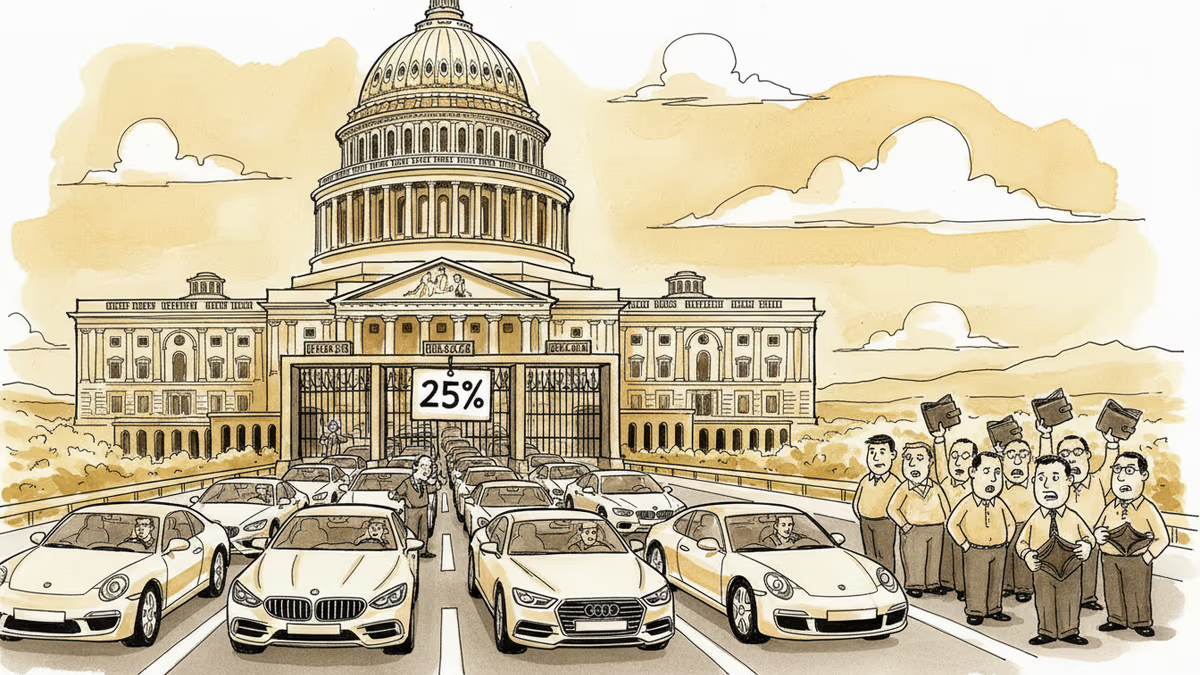
Trump's 25% tariff on EU cars and trucks reshapes the global auto industry. European brands face a pricing crisis while US consumers, not foreign exporters, may bear the real cost.
Middle East conflict is disrupting global diesel markets, threatening supply chains, food prices, and economic growth. Here's what's at stake — and who pays the price.
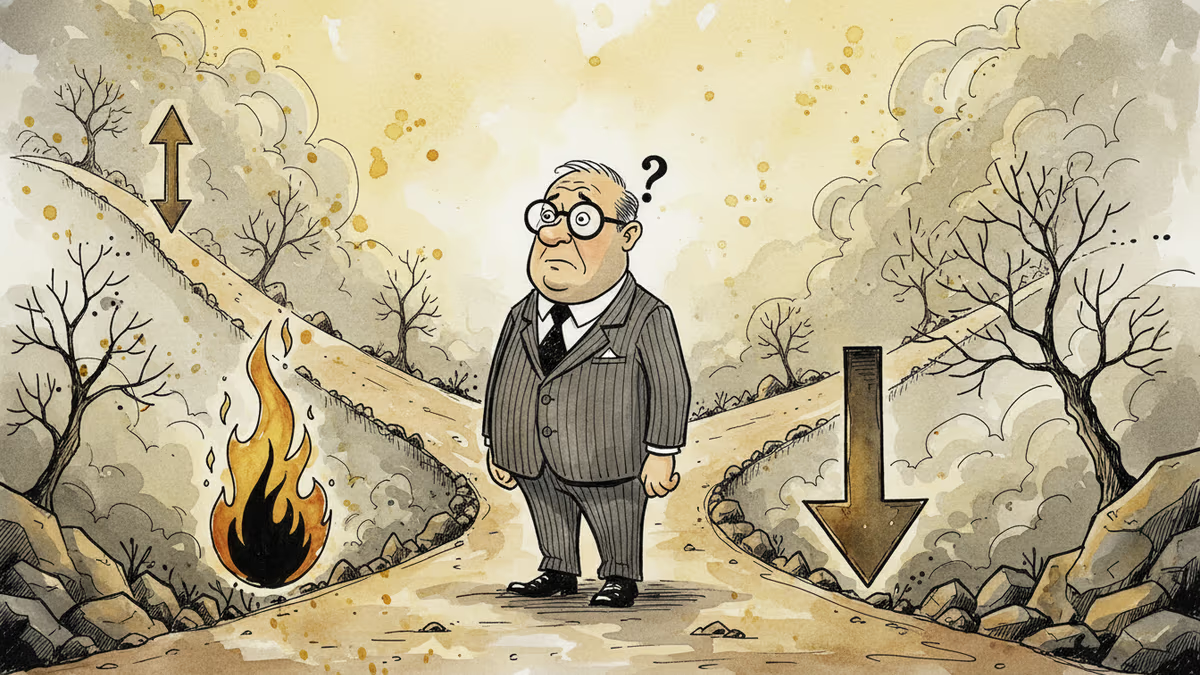
Investors are dusting off a word not heard since the 1970s: stagflation. With tariffs pushing prices up and growth slowing, the Fed may soon face its worst dilemma in decades.
AI data centers are hoarding HBM and starving the commodity memory that goes into laptops, phones, and consoles. Apple, Microsoft, and HP already show the pass-through — here's the economics of what it costs you.
Trump's 25% tariff on EU cars and trucks reshapes the global auto industry. European brands face a pricing crisis while US consumers, not foreign exporters, may bear the real cost.
Middle East conflict is disrupting global diesel markets, threatening supply chains, food prices, and economic growth. Here's what's at stake — and who pays the price.
Investors are dusting off a word not heard since the 1970s: stagflation. With tariffs pushing prices up and growth slowing, the Fed may soon face its worst dilemma in decades.
Thoughts
Share your thoughts on this article
Sign in to join the conversation