

TikTok Age Verification System 2026: The New Global Standard for Child Safety?
Explore the TikTok age verification system 2026 rollout in Europe. Learn about global regulations in Australia and the US, and the privacy debate surrounding age detection tech.
Is your child's digital footprint being watched? TikTok has just expanded its new age-detection system across Europe, marking a significant pivot in how social media giants handle underage users. After a one-year pilot in the UK, the platform is now using a mix of profile data and behavioral signals to identify and restrict users under 13. This move comes as governments worldwide lose patience with self-regulation.
How the TikTok Age Verification System 2026 Works
Unlike traditional hard bans, TikTok's system flags suspicious accounts for review by human moderators rather than using automated deletions. To verify identity, it partners with Yoti, a third-party vendor that has already performed over 1 billion age checks globally. Users may be asked to provide credit card info or undergo facial age estimation, which Yoti claims is privacy-preserving as images are deleted immediately after the result.

Global Crackdown: From Australia to the US
The regulatory landscape is shifting rapidly. Australia made headlines last year by banning social media for children under 16. In the US, 25 states have enacted age-authentication laws, though many face First Amendment challenges. Experts like Eric Goldman warn that these 'segregate-and-suppress' laws effectively mandate digital surveillance of all users, not just children.
Authors
Related Articles
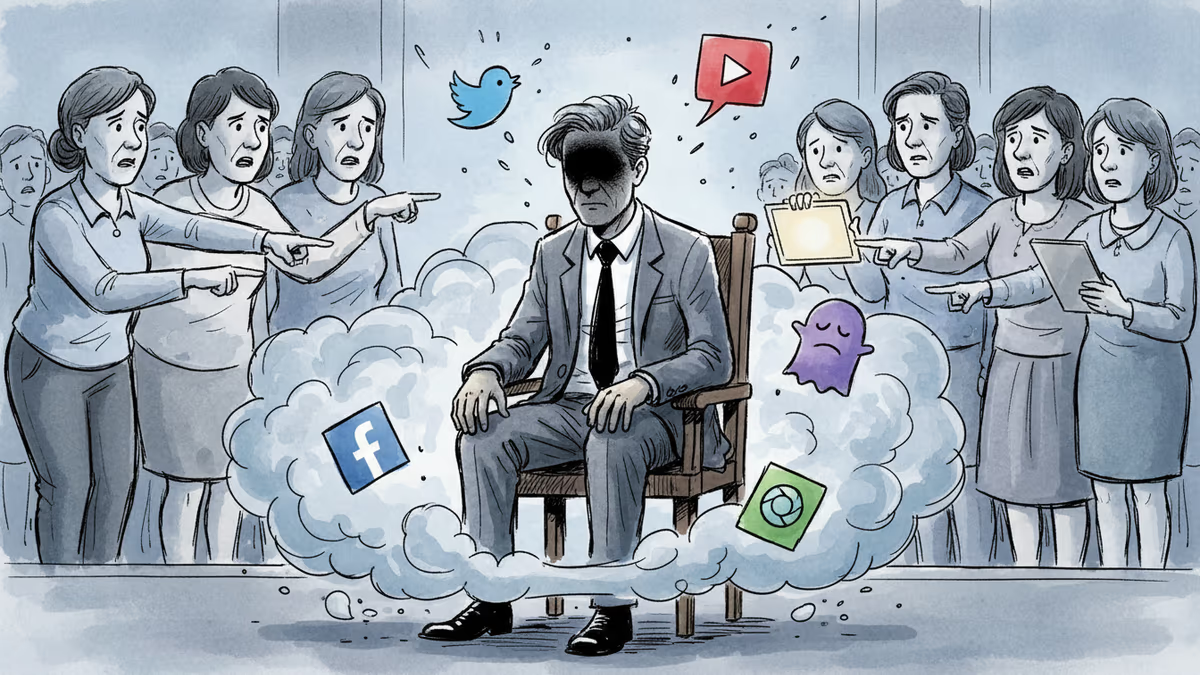
Meta's CEO spent eight hours in court denying social media's role in teen harm, but his monotone responses revealed a calculated strategy of minimal accountability in the face of mounting pressure.

Microsoft Copilot bug exposed customers' confidential emails to AI processing for weeks, bypassing data protection policies. Privacy implications explored.
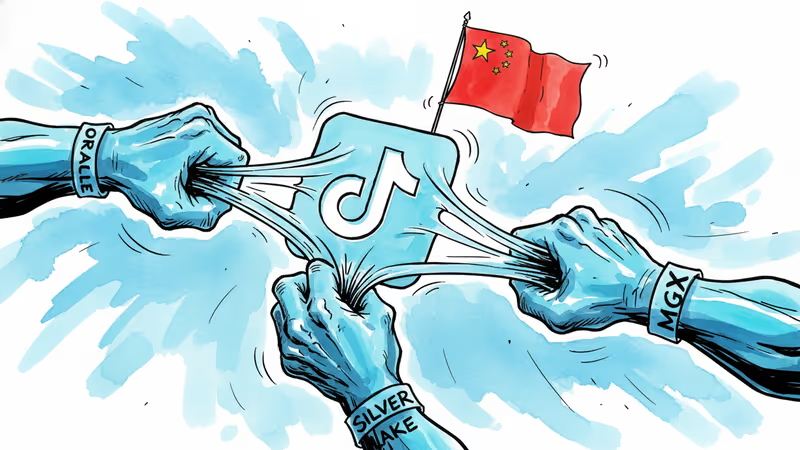
ByteDance sells 80% of TikTok US to Oracle, Silver Lake, and MGX in a complex deal that raises questions about true independence from Chinese influence. Here's what the new ownership structure really means.
TikTok's updated 2026 privacy policy has triggered widespread alarm over the collection of sensitive data like immigration status. Explore the legal reasons behind it.
Meta's CEO spent eight hours in court denying social media's role in teen harm, but his monotone responses revealed a calculated strategy of minimal accountability in the face of mounting pressure.
Microsoft Copilot bug exposed customers' confidential emails to AI processing for weeks, bypassing data protection policies. Privacy implications explored.
ByteDance sells 80% of TikTok US to Oracle, Silver Lake, and MGX in a complex deal that raises questions about true independence from Chinese influence. Here's what the new ownership structure really means.
TikTok's updated 2026 privacy policy has triggered widespread alarm over the collection of sensitive data like immigration status. Explore the legal reasons behind it.
Thoughts
Share your thoughts on this article
Sign in to join the conversation