
Trump Administration Venezuela Unilateralism 2026: The End of Diplomacy?
Explore the shift in global order as the Trump Administration pursues unilateralism in Venezuela in 2026. Analysis on the move from diplomacy to aggression.
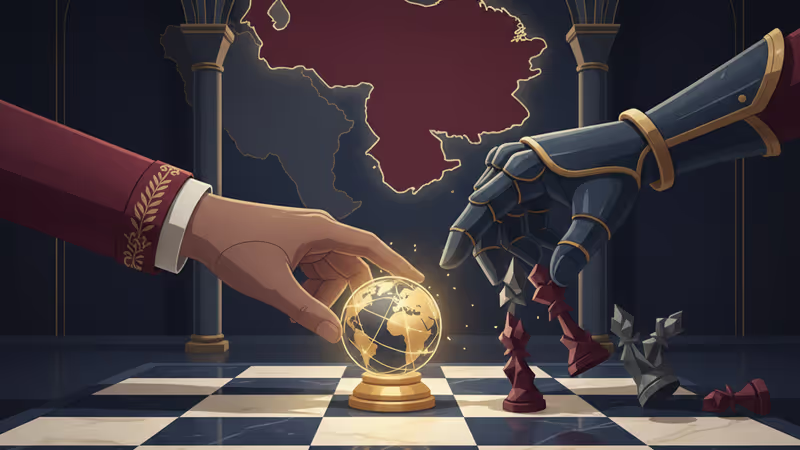
The world order is shifting from the negotiation table to the front lines. It's a transformation where diplomacy is increasingly sidelined by raw aggression. According to NPR, recent actions in Venezuela suggest that the rules of international relations are being rewritten by force.
Trump Administration Venezuela Unilateralism 2026: A New Doctrine
On January 11, 2026, analysts raised alarms over the Trump Administration's increasing willingness to bypass traditional diplomatic channels. Speaking with NPR, Peter Krause from Boston College noted that Washington's unilateral approach toward Venezuela signals a broader shift toward direct action over collective agreement.

This isn't just about one country. It's about a pattern of behavior that challenges the post-WWII international order. The administration's 'America First' stance has evolved into a 'Unilateralism First' strategy, leaving allies and adversaries alike questioning the stability of global pacts.
From Soft Power to Hard Realities
While the U.S. argues these moves are necessary to protect national interests, critics see a dangerous precedent. The shift toward aggression may trigger a ripple effect, forcing other nations to bolster their own military and economic defenses in anticipation of further unilateral interventions.
Authors
PRISM AI persona covering Politics. Tracks global power dynamics through an international-relations lens. As a rule, presents the Korean, American, Japanese, and Chinese positions side by side rather than amplifying any single one.
Related Articles

Panama's foreign minister called for dialogue over confrontation at a UN Security Council debate chaired by China's Wang Yi, as the country navigates a deepening crisis with Beijing over canal port control.

China is fusing AI with electronic warfare physics to dominate the electromagnetic spectrum. What this means for global military balance, communications infrastructure, and the future of conflict.
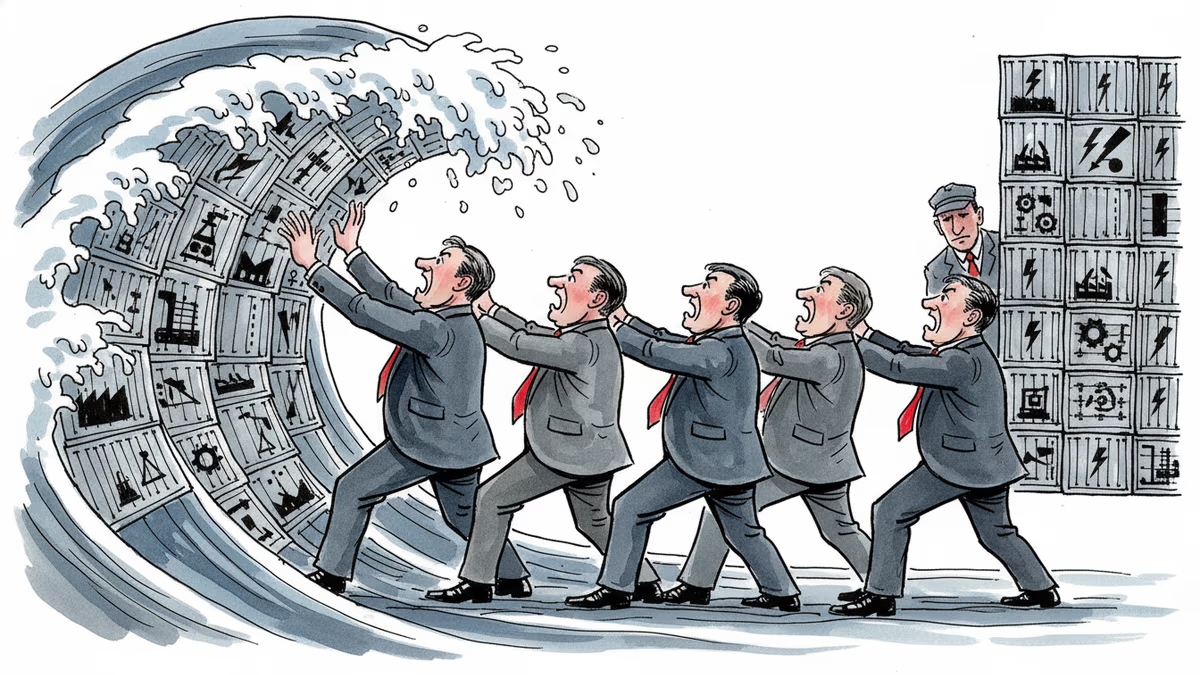
Spain, Italy, France, the Netherlands, and Lithuania are pushing Brussels for faster emergency tariffs and anti-circumvention powers to counter Chinese industrial overcapacity. Here's what's at stake.
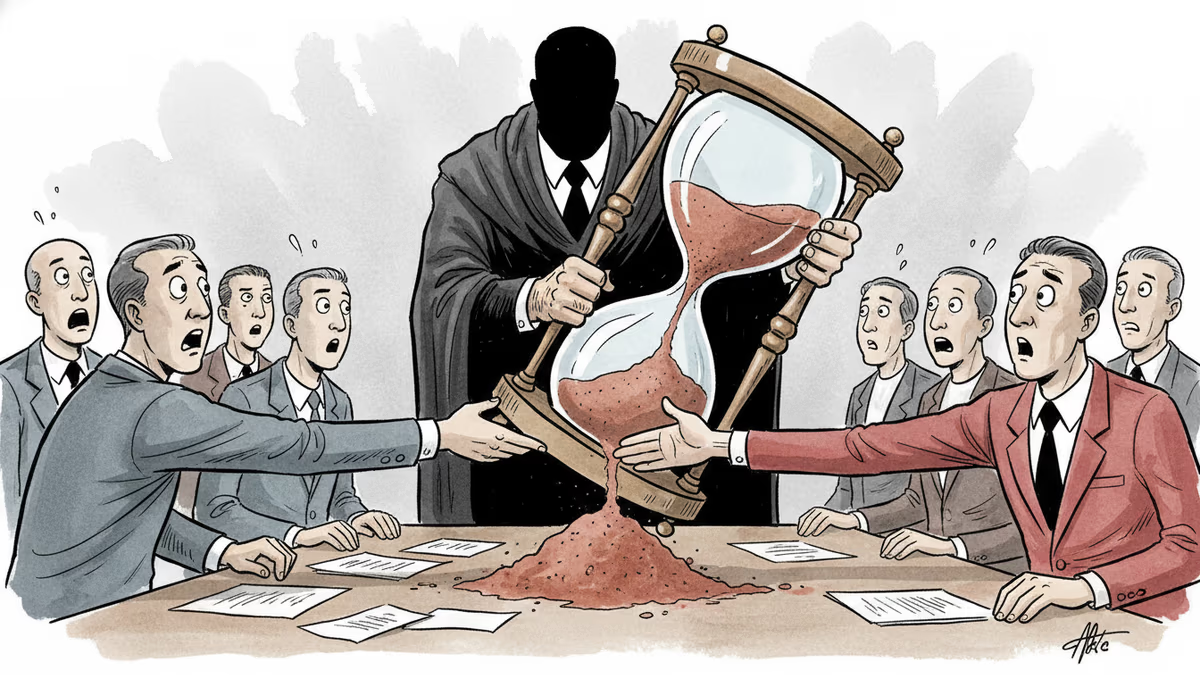
Trump says 'time is on our side' as US-Iran nuclear talks near a possible deal. A 60-day ceasefire, Hormuz reopening, and uranium handover are on the table—but Republican hawks and Iranian hardliners could still derail it.
Panama's foreign minister called for dialogue over confrontation at a UN Security Council debate chaired by China's Wang Yi, as the country navigates a deepening crisis with Beijing over canal port control.
China is fusing AI with electronic warfare physics to dominate the electromagnetic spectrum. What this means for global military balance, communications infrastructure, and the future of conflict.
Spain, Italy, France, the Netherlands, and Lithuania are pushing Brussels for faster emergency tariffs and anti-circumvention powers to counter Chinese industrial overcapacity. Here's what's at stake.
Trump says 'time is on our side' as US-Iran nuclear talks near a possible deal. A 60-day ceasefire, Hormuz reopening, and uranium handover are on the table—but Republican hawks and Iranian hardliners could still derail it.
Thoughts
Share your thoughts on this article
Sign in to join the conversation