
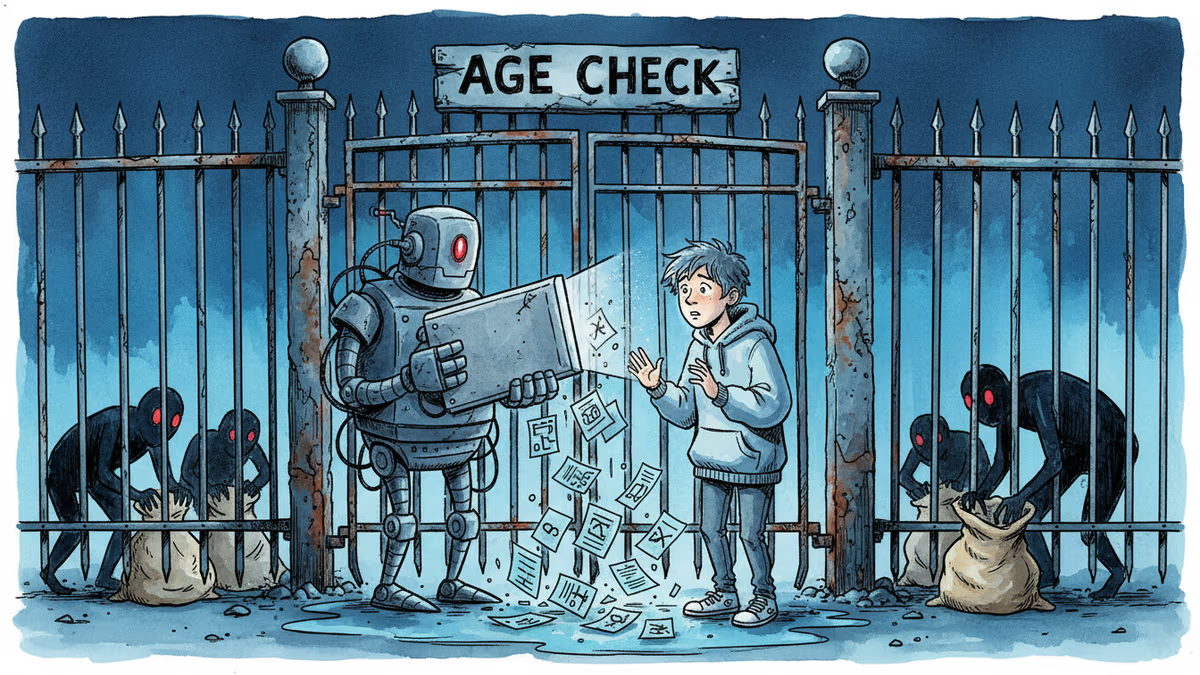
Checking Your Age Means Giving Up More Than You Think
Discord's rapid U-turn on age verification exposed the hidden world of "age assurance" companies—and the uncomfortable trade-off between protecting kids and protecting everyone's privacy.
It took Discord less than a week to learn that "just verify your age" is never just that.
Last month, the platform—home to over 300 million registered users—announced it would roll out a global age-verification system to keep minors away from adult content. The backlash was swift and loud. Within days, Discord reversed course entirely. But the real fallout wasn't the U-turn itself. It was what the episode dragged into the open: a quiet, fast-growing industry of "age assurance" companies that most people have never heard of—and the deeply uncomfortable question of whether protecting kids online is even possible without compromising everyone else's privacy.
What Discord Actually Tried to Do
Discord's reasoning was straightforward. Regulators across the UK, EU, and Australia have been tightening the screws on platforms, demanding they verify user ages before allowing access to adult or potentially harmful content. The UK's Online Safety Act, the EU's Digital Services Act, and a wave of US state-level child protection bills have all pushed in the same direction: platforms must know how old their users are.
For Discord, which hosts everything from gaming servers to adult content communities, the pressure was real. Age verification looked like the responsible—and legally safer—move.
But users pushed back hard. The core complaint wasn't about the goal. It was about the mechanism. To verify age, you need proof. Proof means documents—a government ID, a passport, a credit card. And handing those over to a third-party company whose data practices most people couldn't name, let alone scrutinize, felt like a very different proposition than simply confirming you're over 18.
The Industry Nobody Talks About
When Discord retreated, the spotlight swung to its age-verification partners—companies operating in what the industry calls the "age assurance" space. These firms had been quietly building infrastructure for exactly this kind of regulatory moment, and suddenly they had to justify themselves in public.
The technology they offer generally falls into three categories. Document verification requires users to upload a government-issued ID; it's reliable but hands over a dense package of personal data. Financial checks use credit card or bank account ownership as a proxy for adulthood—imprecise, and excluding anyone without a card. Facial age estimation uses AI to guess a user's age from a photo or live camera feed; no documents required, but accuracy is contested and bias against certain demographics has been documented.
The industry's standard reassurance is that these systems "verify age, not identity"—that data is processed and discarded without being stored. But independent audits of these claims are rare, and the technical architecture that would make such guarantees verifiable is not always in place. Discord's users weren't wrong to ask: once you hand your face or your passport to a company you've never dealt with, what actually happens next?
The Regulation Paradox

Here's the tension that the Discord episode crystallizes: the laws designed to protect children may be creating a privacy problem that affects everyone.
Every new age-verification mandate is, in effect, a mandate to collect more sensitive data from more people—and to route that data through more intermediaries. The more platforms that implement these systems, the more companies sit in the middle of that data flow. And the more companies in that chain, the larger the attack surface for breaches, misuse, or quiet function creep.
This isn't a hypothetical concern. Age verification databases have been breached before. In 2021, a major adult content platform's age-verification provider suffered a data exposure that revealed which users had submitted ID documents. The reputational and personal damage was significant.
The counterargument is real too. Children are being exposed to genuinely harmful content at scale, and platforms have historically done little to stop it. The status quo—where anyone can claim to be 18 by clicking a checkbox—is not a neutral baseline. It's a failure that has concrete victims.
Who's Actually Winning This Argument
The stakeholders in this debate want incompatible things.
Platforms want regulatory cover. A working age-verification system shifts legal liability and demonstrates good faith to regulators. But as Discord found, it can also trigger user exodus—particularly among the young, privacy-conscious demographic that makes these platforms valuable in the first place.
Parents and child safety advocates want effective protection. They argue that the inconvenience of verification is a reasonable trade-off if it meaningfully reduces minors' exposure to harmful content. Many are skeptical that privacy concerns should outweigh child safety outcomes.
Privacy advocates and civil liberties groups see it differently. They point out that anonymity online isn't just a preference—for LGBTQ+ youth, for people in abusive households, for anyone whose safety depends on not being identified, it can be a lifeline. Mandatory identity verification doesn't just inconvenience; it excludes and exposes.
And the age assurance companies themselves are caught in a credibility crisis. Their business model depends on being trusted with sensitive data. The Discord episode forced them to defend their practices before a skeptical public audience for the first time.
What Comes Next
The regulatory pressure isn't going away. The UK's Ofcom has already begun enforcing age assurance requirements under the Online Safety Act. The EU is watching. Several US states have passed or are debating laws that would require social media platforms to verify ages before allowing minors to sign up.
Discord's retreat bought it time, not a solution. Every major platform operating in regulated markets will face the same choice eventually: implement some form of age verification, or argue to regulators that the privacy costs outweigh the child safety benefits. That's a hard argument to win in public.
The more interesting question is whether the technology itself can evolve to change the terms of the trade-off. Cryptographic approaches—zero-knowledge proofs, for instance—theoretically allow a system to confirm "this person is over 18" without revealing who the person is or storing any identifying information. Several startups are working on exactly this. Whether these approaches can scale, earn regulatory acceptance, and survive the business pressures of the age assurance industry is another matter entirely.
Authors
Related Articles
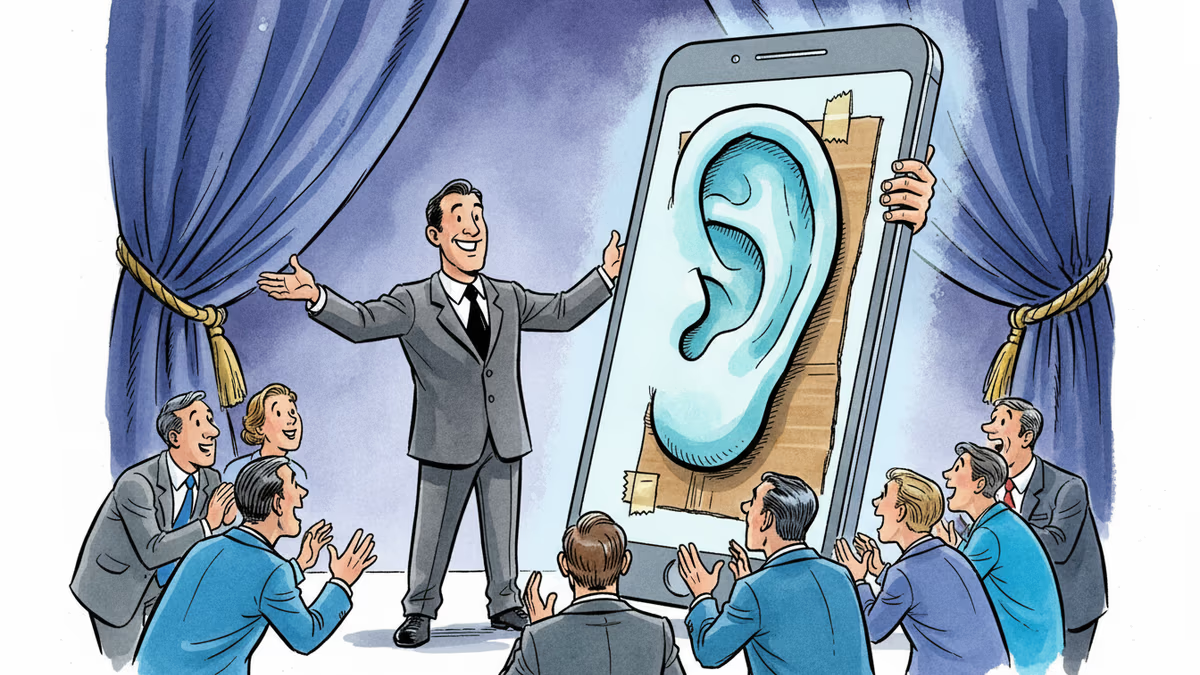
The FTC fined Cox Media and two ad firms $930,000 — not for actually eavesdropping on users, but for falsely claiming they could. The case raises uncomfortable questions about surveillance capitalism.
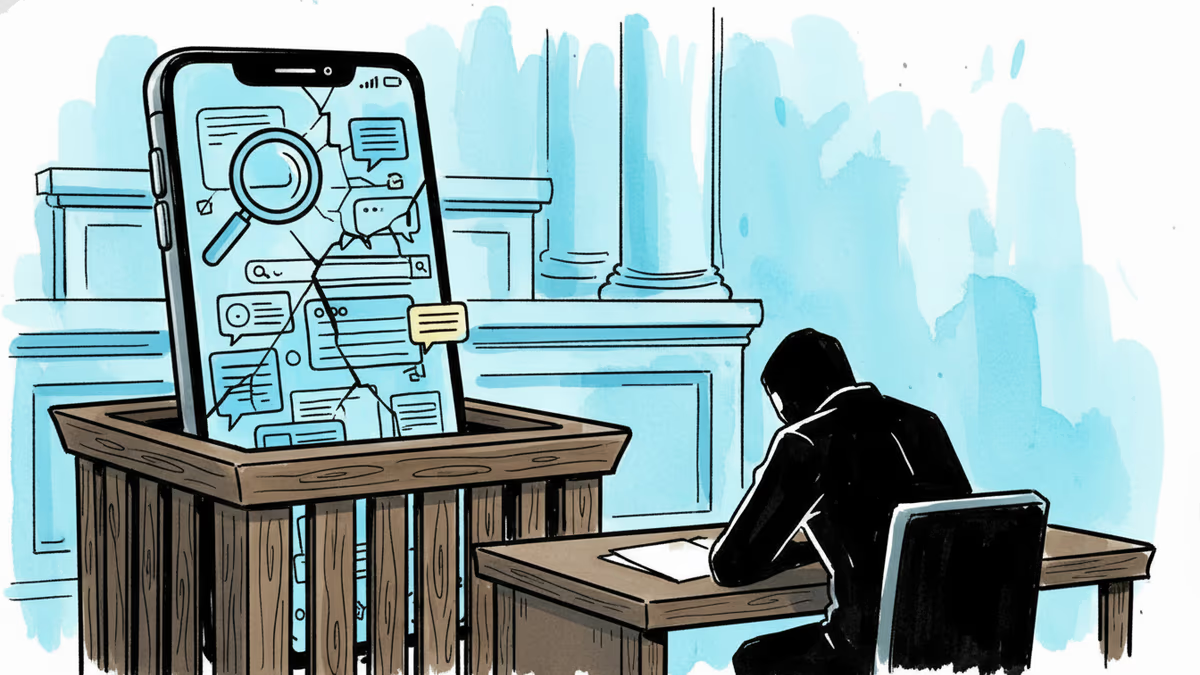
A Utah woman was sentenced to life in prison partly because of her Google searches and deleted texts. The Kouri Richins case reveals how digital footprints have become the courtroom's most reliable witness.
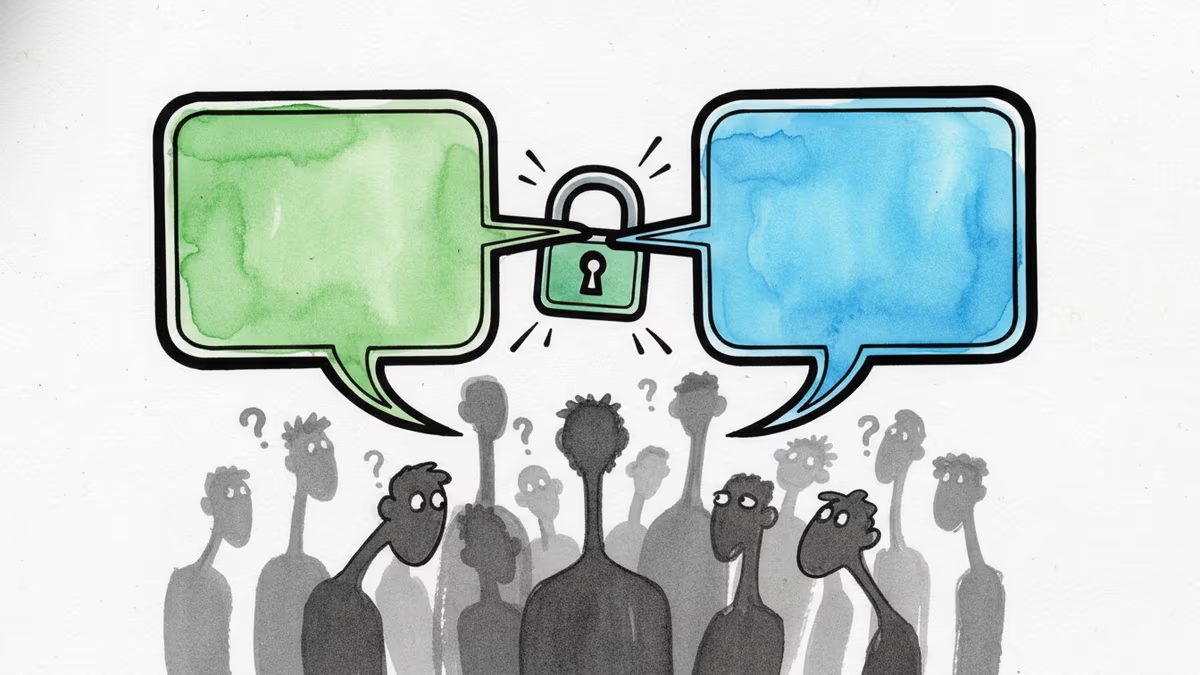
After 15 years of fragmented mobile messaging, Apple and Google are rolling out end-to-end encrypted RCS messaging between iPhones and Android devices. Here's what changed, why it took so long, and what it means for your privacy.
New Mexico already won $375 million from Meta. Now it wants something harder to give: a court order forcing Facebook, Instagram, and WhatsApp to redesign themselves. A three-week trial starts Monday.
The FTC fined Cox Media and two ad firms $930,000 — not for actually eavesdropping on users, but for falsely claiming they could. The case raises uncomfortable questions about surveillance capitalism.
A Utah woman was sentenced to life in prison partly because of her Google searches and deleted texts. The Kouri Richins case reveals how digital footprints have become the courtroom's most reliable witness.
After 15 years of fragmented mobile messaging, Apple and Google are rolling out end-to-end encrypted RCS messaging between iPhones and Android devices. Here's what changed, why it took so long, and what it means for your privacy.
New Mexico already won $375 million from Meta. Now it wants something harder to give: a court order forcing Facebook, Instagram, and WhatsApp to redesign themselves. A three-week trial starts Monday.
Thoughts
Share your thoughts on this article
Sign in to join the conversation