
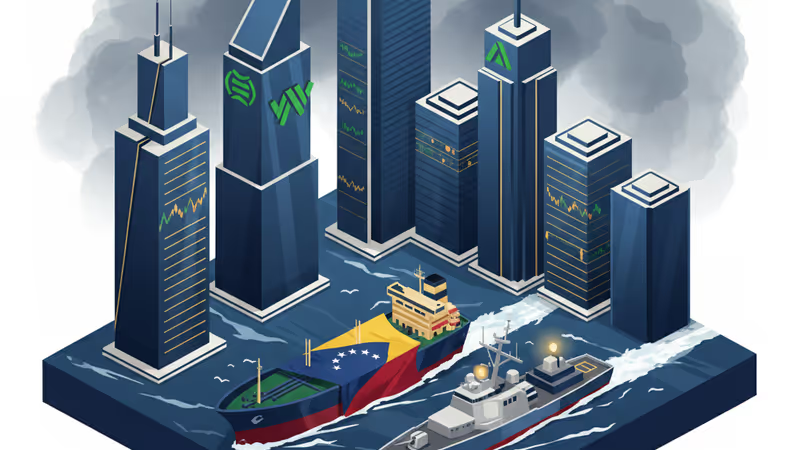
Oil Prices Jump After U.S. Intercepts Venezuelan Tanker, Igniting Supply Fears
Oil prices climbed over 2% after the US seized a Venezuelan oil tanker, fueling fears of supply disruptions and escalating geopolitical tensions. WTI and Brent benchmarks rose.
Oil prices surged in early trading on Monday after the U.S. intercepted a Venezuelan oil tanker over the weekend, escalating geopolitical tensions and raising concerns over potential supply disruptions from the OPEC nation. West Texas Intermediate (WTI) futures jumped over 2.5%, reflecting a renewed risk premium in the market.
According to a report from Reuters, the incident occurred in the Caribbean Sea on Saturday, December 21. A U.S. Coast Guard vessel, enforcing sanctions against Venezuela's state-run oil company PDVSA, seized the tanker, which was reportedly en route to buyers in Asia.
The news sent immediate ripples through energy markets. WTI crude for February delivery climbed 2.5% to $85.30 a barrel, while Brent crude, the global benchmark, rose 2.2% to $90.15. "This isn't about the volume of one tanker; it's about the signal it sends," said a senior energy analyst. "The U.S. is tightening the screws, and that adds a layer of uncertainty the market hates."
Official reactions were swift and polarized. The U.S. State Department confirmed the operation, stating it was "committed to the robust enforcement of sanctions designed to prevent the illicit sale of Venezuelan oil." In Caracas, Venezuela's foreign ministry condemned the act as "an illegal act of piracy" and a "flagrant violation of international law."
PRISM Insight: The Geopolitical Risk Premium Is Back
The weekend's events are more than a one-off skirmish; they may signal a significant hardening of U.S. policy toward Venezuela. For investors and businesses, this reintroduces a tangible geopolitical risk premium to oil prices that had faded in recent months. While a single tanker seizure won't derail global supply, the risk of further confrontations will now be priced in. This heightened volatility in energy markets could complicate central banks' fight against inflation and should be a key variable to watch heading into the new year.
관련 기사

미국 퓨전파워의 핵융합 기술 돌파로 유가가 8% 급락했습니다. 이 기술의 의미와 장기 투자 전략, 그리고 포트폴리오에 미칠 영향을 분석합니다.
주말 사이 미국이 베네수엘라 유조선을 나포했다는 소식에 국제 유가가 2% 이상 급등했습니다. 지정학적 리스크가 커지면서 국내 주유비와 물가에 미칠 영향 분석.

일본 철도 대기업 케이큐와 여행사 JTB가 하네다 공항 인근에서 의료 관광 사업을 시작합니다. 2026년 정식 출시를 목표로 하는 이 프로젝트의 사업성, 투자 기회, 그리고 리스크를 분석합니다.

주말 동안 발생한 미국-베네수엘라 유조선 나포 사건으로 국제유가가 급등했습니다. 이번 지정학적 리스크가 우리 주유비, 물가, 투자 포트폴리오에 미칠 영향을 쉽게 분석합니다.