
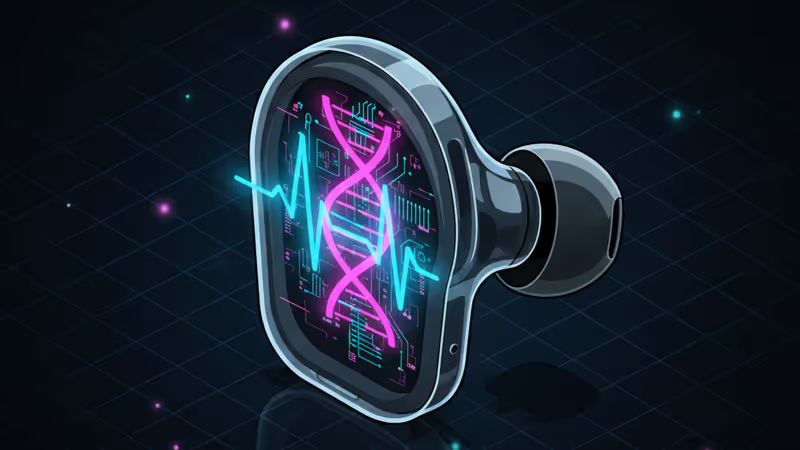
AirPods Are No Longer Just for Music. They're Apple's Trojan Horse for Your Health.
Apple's new AirPods Pro 3 aren't just an audio upgrade. Our analysis reveals their hidden strategy to transform earbuds into powerful health and AI devices.
The Lede: The Ear is the New Wrist
Apple's latest refresh of its AirPods lineup, particularly the flagship AirPods Pro 3, is not the incremental audio upgrade many expected. It's a calculated strategic pivot. While the world debates noise-cancellation and bass quality, Apple is quietly transforming its earbuds from a simple audio accessory into an indispensable health and communications platform. This isn't about competing with Sony or Bose anymore; it's about making the ear the next frontier for personal data and ambient computing, a move that should put the entire wearable and health tech industry on high alert.
Why It Matters
The strategic implications of embedding health sensors and advanced AI features directly into earbuds are profound. This move blurs the lines between consumer electronics, medical devices, and fitness trackers, creating a new, highly competitive category of "hearables."
- Second-Order Effects: By integrating features like heart-rate monitoring and clinical-grade hearing assistance, Apple is creating a powerful new data stream for its Health ecosystem. This deepens the platform lock-in, making it significantly harder for a user to switch to Android. Your audio, communication, and now vital health metrics, are all tethered to your ears, which are tethered to your iPhone.
- Industry Disruption: This is a direct assault on specialized markets. Fitness tracker companies like Whoop and Garmin now face competition from an unexpected vector. More significantly, the multi-billion dollar hearing aid industry, long protected by high costs and medical gatekeepers, is now facing a consumer-friendly alternative from the world's most powerful tech company.
The Analysis: From Convenience to Vitals
The Pro Model as the Tip of the Spear
Looking at Apple's lineup reveals a clear strategy. The standard AirPods 4 serve as the mass-market entry point, securing the user base with the convenience of the Apple ecosystem. The AirPods Max cater to the luxury, high-fidelity audio segment. But the real innovation—the blueprint for the future—is happening in the Pro line. The AirPods Pro 3, with their new heart rate sensor, improved IP57 rating for workouts, and live translation capabilities, are the Trojan horse. These aren't just features; they are a statement of intent. Apple is using its most popular premium model to test and normalize the concept of an ear-based health device before these features inevitably trickle down.
The "Hearable" Revolution Has Arrived
For years, the tech industry has discussed the potential of "hearables"—smart devices in the ear. The ear is an ideal location for accurate biometric tracking, offering proximity to major arteries and the brain. While startups have experimented in this space, Apple possesses the scale, ecosystem integration, and consumer trust to make it mainstream. The Apple Watch's success proved that consumers are willing to adopt health-monitoring wearables. Now, Apple is betting that the real estate inside the ear canal is even more valuable. It's a persistent, discreet, and natural interface for the voice-first AI future Apple is building towards.
PRISM Insight: The Strategic Value of the Ear Canal
Technology & Future Outlook
The introduction of a heart rate sensor is just the beginning. The ear offers a pathway to track metrics the wrist cannot, such as core body temperature, blood oxygen saturation with potentially higher accuracy, and even hydration levels in the future. The source's mention of a potential camera-equipped model hints at a future where AirPods become a key component of Apple's augmented reality and "Apple Intelligence" ambitions. Imagine an AI assistant that not only hears your requests but also sees what you see and understands your physiological state in real-time. This transforms AirPods from a passive listening device into an active, context-aware co-processor for your life.
Investment & Market Impact
From an investment perspective, this strategy dramatically expands the Total Addressable Market (TAM) for AirPods. They are no longer just competing for a share of the ~$30 billion global headphone market. They are now officially entering the ~$100+ billion wearable technology market and the ~$10 billion hearing aid market. For Apple, this turns the "Wearables, Home and Accessories" category, already a powerhouse, into an even more formidable engine of growth. It provides a new narrative beyond the iPhone, diversifying revenue streams into the high-margin, subscription-friendly health and wellness sector.
PRISM's Take
Apple is playing a different game. While competitors release earbuds with marginally better sound or noise cancellation, Apple is methodically executing a long-term vision to own the most intimate technology interface we have: our ears. The AirPods Pro 3 are not the final destination; they are the public proof-of-concept for a device that aims to be your personal translator, fitness coach, and health guardian. The battle for the future of personal computing won't be fought on your desk or in your pocket, but in your ear, and Apple has just made its most decisive move yet.
관련 기사

인스타카트가 AI를 이용해 일부 고객에게 식료품을 23% 더 비싸게 판매한 사실이 드러났습니다. 이것이 '디지털 가격 차별'의 시작이며, 소비자가 알아야 할 대응법을 심층 분석합니다.

우버의 '다크패턴' 구독 서비스가 24개 주로부터 집단 소송을 당했습니다. 이것이 구독 경제의 종말을 의미하는지, 당신의 지갑에 미칠 영향을 심층 분석합니다.

AI 붐의 이면, 데이터센터가 당신의 전기요금을 폭등시키고 있습니다. 미 상원의 칼끝이 빅테크를 향한 이유와 이것이 투자자와 시장에 미칠 영향을 심층 분석합니다.

그라인더가 단순 데이팅 앱을 넘어 AI와 헬스케어를 결합한 '게이 수퍼앱'으로 변신을 선언했다. 이 야심 찬 계획의 성공 가능성과 숨겨진 위험을 심층 분석한다.