
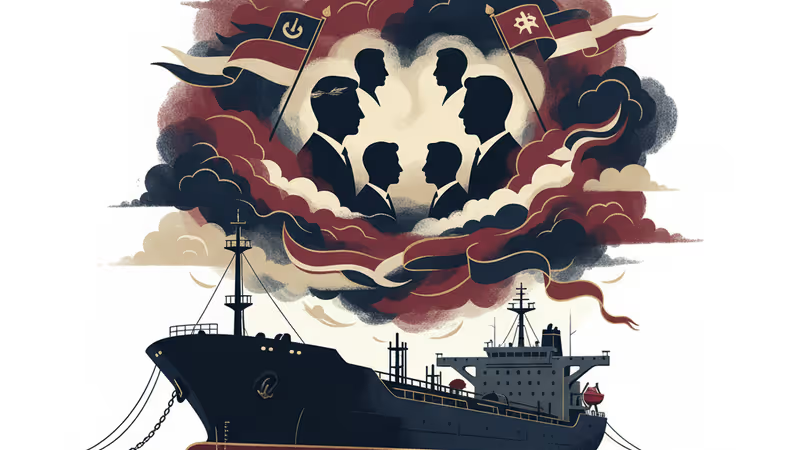
Up to 20 Years in Prison: Venezuela's New Law Targets U.S. Oil Tanker Seizures
Venezuela passes a law with penalties up to 20 years in prison targeting oil tanker seizures, a direct response to the Trump administration's pressure campaign and recent U.S. actions.
Venezuela is drawing a legal line in the sand against U.S. pressure. The country's National Assembly on Tuesday approved a bill criminalizing the seizure of oil tankers and other acts that hinder maritime commerce, imposing penalties of up to 20 years in prison. The move is a direct response to the Donald Trump administration's intensifying pressure campaign on President Nicolás Maduro.
A Swift Legislative Counter-punch
The bill was introduced, debated, and approved in a remarkably short span of just two days by the ruling-party-controlled assembly, according to The Associated Press. While the final text wasn't published, the measure as read on the floor calls for sanctions against anyone who promotes, finances, or participates in “acts of piracy, blockades or other international illegal acts.” The bill now awaits President Maduro's signature to become law.
This legislation was triggered by recent actions from U.S. forces, which seized two tankers carrying Venezuelan oil in international waters this month. The U.S. Coast Guard seized the Panama-flagged 'Centuries' on Saturday, following the seizure of another tanker, the 'Skipper', on Dec. 10. The Trump administration argues these vessels are part of a fleet used by Venezuela to evade U.S. economic sanctions.
Diverging Views: 'Sovereignty' vs. 'Pressure'
The geopolitical standoff has drawn mixed reactions. President Trump has maintained that Maduro's days in power are numbered and has floated the idea of a "blockade" against Venezuela. Conversely, within Venezuela, some opposition figures, including Nobel Peace laureate María Corina Machado, have expressed support for U.S. policy, including the tanker seizures. The new law also aims to provide "incentives and mechanisms for economic... protections" for entities, both foreign and domestic, that continue to do business with the country despite the U.S. sanctions.
本コンテンツはAIが原文記事を基に要約・分析したものです。正確性に努めていますが、誤りがある可能性があります。原文の確認をお勧めします。
関連記事
バングラデシュの最大野党BNPの指導者、タリケ・ラーマン氏が17年の亡命生活を終え帰国する。首都には500万人の支持者が集結する見込みで、来年2月の総選挙を前に緊張が高まっている。

ネパールで物議を醸すK.P.シャルマ・オリ前首相が、CPN-UML党首に3選されました。Z世代の抗議デモ弾圧で調査中の人物の再選は、ネパール政治の未来に何を意味するのでしょうか。
マレーシア政府がタイでオーストラリア人ジャーナリストを名誉毀損で提訴。国境を越えた「スラップ訴訟」が、東南アジアの言論の自由に与える影響と、タイの司法の対応を解説します。
韓国の李在明政権内で、対北朝鮮政策を巡る「自主派」と「同盟派」の対立が再燃。20年来の路線対立が、米中間の圧力が高まる中で韓国外交のジレンマを深めている。
バングラデシュの最大野党BNPの指導者、タリケ・ラーマン氏が17年の亡命生活を終え帰国する。首都には500万人の支持者が集結する見込みで、来年2月の総選挙を前に緊張が高まっている。
ネパールで物議を醸すK.P.シャルマ・オリ前首相が、CPN-UML党首に3選されました。Z世代の抗議デモ弾圧で調査中の人物の再選は、ネパール政治の未来に何を意味するのでしょうか。
マレーシア政府がタイでオーストラリア人ジャーナリストを名誉毀損で提訴。国境を越えた「スラップ訴訟」が、東南アジアの言論の自由に与える影響と、タイの司法の対応を解説します。
韓国の李在明政権内で、対北朝鮮政策を巡る「自主派」と「同盟派」の対立が再燃。20年来の路線対立が、米中間の圧力が高まる中で韓国外交のジレンマを深めている。