
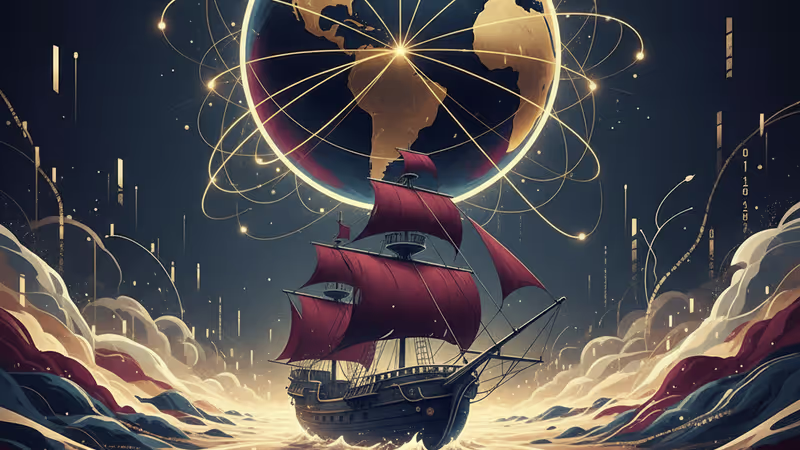
The British Empire's Ghost Fleet: Does Britain Still 'Rule the Waves' in the 21st Century?
The British Empire is gone, but its legacy continues to shape 21st-century geopolitics and culture. An analysis of what 'Rule the Waves' means today.
The British Empire has vanished from the map, but the waves it created continue to shape the 21st century. Was the famous cry to "Rule the Waves" just a song of a bygone era, or is it code for an influence that never truly faded?
An Empire Built on Naval Power
At its core, the British Empire was a maritime empire. Throughout the 19th and early 20th centuries, the Royal Navy dominated the world's oceans, securing trade routes and spearheading colonial expansion. Backed by this immense naval might, the empire at its zenith controlled nearly a quarter of the Earth's land surface and over a fifth of its population. This wasn't just military superiority; it was the foundation of a vast global system that shaped finance, trade, and culture.
A Legacy of Light and Shadow
The empire's legacy is profoundly complex. The global spread of the English language, common law systems, and models of parliamentary democracy are undeniable aspects of its influence. Yet, this is overshadowed by the dark realities of colonial rule. Arbitrary borders drawn by imperial powers continue to fuel regional conflicts today, while the scars of resource extraction and economic exploitation have left lasting challenges for post-colonial nations. This duality makes any simple judgment of its history impossible.
Echoes of Empire in the Modern World
While Britain's direct rule has ended, its influence persists in modern international relations. The imperial nostalgia evident during the Brexit debates and the continued diplomatic reach through the Commonwealth are clear examples. Furthermore, the strategic sea lanes once controlled by the empire remain vital arteries of the global economy, and geopolitical tensions surrounding these routes show that the ghosts of the empire still haunt the waves.
本コンテンツはAIが原文記事を基に要約・分析したものです。正確性に努めていますが、誤りがある可能性があります。原文の確認をお勧めします。
関連記事
バングラデシュの最大野党BNPの指導者、タリケ・ラーマン氏が17年の亡命生活を終え帰国する。首都には500万人の支持者が集結する見込みで、来年2月の総選挙を前に緊張が高まっている。
ネパールで物議を醸すK.P.シャルマ・オリ前首相が、CPN-UML党首に3選されました。Z世代の抗議デモ弾圧で調査中の人物の再選は、ネパール政治の未来に何を意味するのでしょうか。
マレーシア政府がタイでオーストラリア人ジャーナリストを名誉毀損で提訴。国境を越えた「スラップ訴訟」が、東南アジアの言論の自由に与える影響と、タイの司法の対応を解説します。
韓国の李在明政権内で、対北朝鮮政策を巡る「自主派」と「同盟派」の対立が再燃。20年来の路線対立が、米中間の圧力が高まる中で韓国外交のジレンマを深めている。
バングラデシュの最大野党BNPの指導者、タリケ・ラーマン氏が17年の亡命生活を終え帰国する。首都には500万人の支持者が集結する見込みで、来年2月の総選挙を前に緊張が高まっている。
ネパールで物議を醸すK.P.シャルマ・オリ前首相が、CPN-UML党首に3選されました。Z世代の抗議デモ弾圧で調査中の人物の再選は、ネパール政治の未来に何を意味するのでしょうか。
マレーシア政府がタイでオーストラリア人ジャーナリストを名誉毀損で提訴。国境を越えた「スラップ訴訟」が、東南アジアの言論の自由に与える影響と、タイの司法の対応を解説します。
韓国の李在明政権内で、対北朝鮮政策を巡る「自主派」と「同盟派」の対立が再燃。20年来の路線対立が、米中間の圧力が高まる中で韓国外交のジレンマを深めている。