
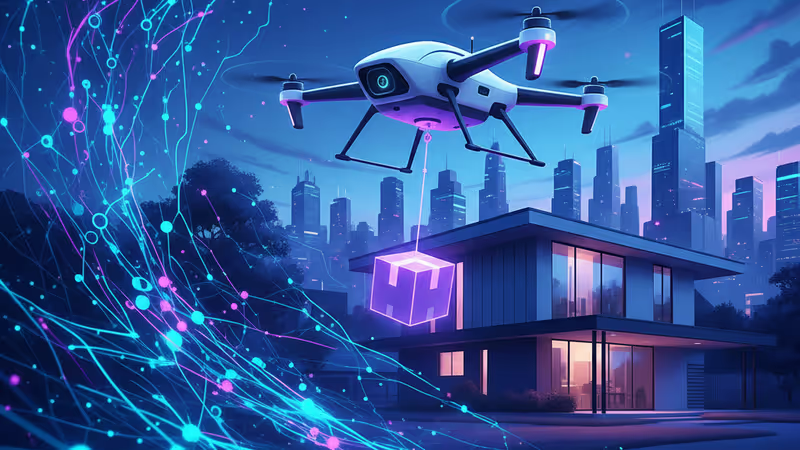
Zipline $600M Investment 2026: Fueling the Future of Autonomous Logistics
Zipline secures $600M in fresh funding at a $7.6B valuation. Explore Zipline's 2026 expansion plans for Houston, Phoenix, and beyond in the competitive drone delivery market.
2 million deliveries and counting. Zipline isn't just testing the waters anymore; it's scaling at lightning speed. The autonomous drone delivery leader announced a massive $600 million funding round on Wednesday, propelling its valuation to a staggering $7.6 billion. According to Reuters, the round saw participation from heavy hitters like Fidelity, Baillie Gifford, and Tiger Global.
Zipline $600M Investment and 2026 Expansion Plans
The fresh capital will fund a major U.S. expansion. Zipline plans to launch operations in Houston and Phoenix early this year, with an aim to reach at least four U.S. states by the end of 2026. The company's U.S. delivery volume has already been growing by about 15% week-over-week for the past seven months, signaling high consumer demand.
Tech Evolution: P1 vs P2 Platforms

At the heart of this growth is the Platform 2 (P2) drone, designed specifically for home delivery. It can carry up to 8 pounds and serves customers within a 10-mile radius. This contrasts with the larger Platform 1 (P1), which handles long-range logistics covering up to 120 miles round trip.
| Feature | Platform 1 (P1) | Platform 2 (P2) |
|---|---|---|
| Primary Use | Enterprise & Long-range | Residential & Last-mile |
| Range | 120 miles (round trip) | 10-mile radius |
| Payload | Heavy cargo | Up to 8 lbs |
| Partners | Govt & Healthcare | Walmart, Chipotle, etc. |
The competition is heating up as the industry matures. Wing, owned by Alphabet, is also expanding its partnership with Walmart to 150 more stores through 2027. Meanwhile, giants like Amazon Prime Air and startups like Flytrex are vying for the same airspace. CEO Keller Rinaudo Cliffton calls 2026 the "breakout year" for autonomous logistics.
Authors
Related Articles

E-bike pioneer Rad Power Bikes sells for pennies on the dollar after bankruptcy, revealing harsh realities of post-pandemic mobility market consolidation.

Swedish AI startup Lovable just tripled its valuation to $6.6B. Our analysis breaks down why this isn't just hype, but a fundamental shift in software development.
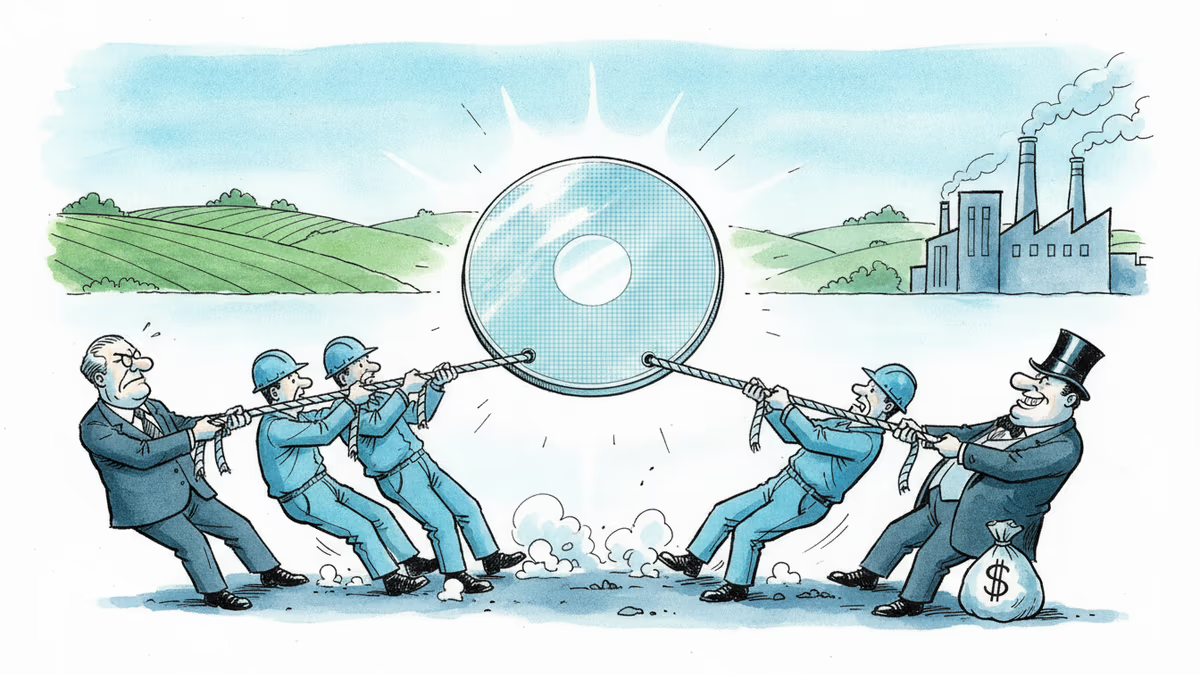
Samsung Electronics' union branch revealed that 84% of survey respondents oppose the government's roughly $290 billion (₩400 trillion) semiconductor megaproject in Gwangju. Government, management, the union and shareholders are all reading the same national project in sharply different ways.
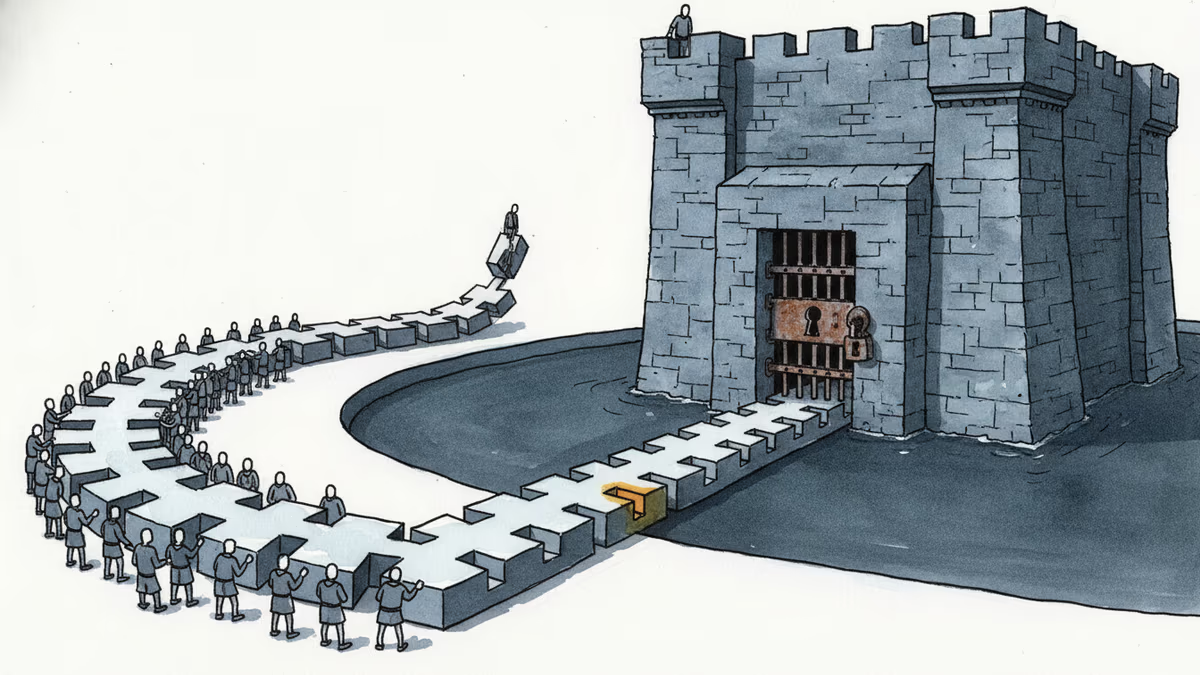
Nvidia shipped roughly a billion RISC-V cores in 2024, then announced it would run CUDA on the open standard. We break down how royalty-free instruction sets and open software stacks are trying to route around CUDA's lock-in. Part 2 of the Semiconductor Sovereignty series.
E-bike pioneer Rad Power Bikes sells for pennies on the dollar after bankruptcy, revealing harsh realities of post-pandemic mobility market consolidation.
Swedish AI startup Lovable just tripled its valuation to $6.6B. Our analysis breaks down why this isn't just hype, but a fundamental shift in software development.
Samsung Electronics' union branch revealed that 84% of survey respondents oppose the government's roughly $290 billion (₩400 trillion) semiconductor megaproject in Gwangju. Government, management, the union and shareholders are all reading the same national project in sharply different ways.
Nvidia shipped roughly a billion RISC-V cores in 2024, then announced it would run CUDA on the open standard. We break down how royalty-free instruction sets and open software stacks are trying to route around CUDA's lock-in. Part 2 of the Semiconductor Sovereignty series.
Thoughts
Share your thoughts on this article
Sign in to join the conversation