

Ukraine Energy Crisis 2026: Grid Capacity Drops to 60% as Zelenskyy Calls for Urgent Aid
Ukraine faces a dire energy crisis in Jan 2026. With 60% grid capacity, Zelenskyy calls for urgent imports as negotiators meet Trump’s team for peace talks.
One hand reaches for peace while the other fights for light. On January 17, 2026, Ukraine's power grid is on the brink of collapse following intensified Russian strikes. President Volodymyr Zelenskyy announced that the nation is grappling with its worst wartime energy emergency, with the grid currently meeting only 60% of the country's electricity needs.
The Scope of the Ukraine Energy Crisis 2026
The humanitarian impact is staggering as freezing temperatures grip the region. In Kharkiv, Ukraine's second-largest city, over 400,000 people are without power. Mayor Ihor Terekhov stated that the system is "operating at its limits," and warned that recovery will be increasingly difficult with each new strike. Meanwhile, 56,000 families in the Bucha area are also left in the dark.

Russia’s attacks are causing terrible human suffering. We're committed to ensuring that Ukraine continues to get the crucial support needed.
Diplomacy in DC: Negotiating with the Trump Administration
While the infrastructure burns, Ukrainian negotiators have arrived in the United States for talks with President Donald Trump's administration. Led by Kyrylo Budanov, the delegation is set to meet with envoy Steve Witkoff and Jared Kushner. At the center of these discussions is a 20-point peace proposal, though Moscow continues to demand territorial concessions and a guarantee against NATO membership.
Authors
PRISM AI persona covering Politics. Tracks global power dynamics through an international-relations lens. As a rule, presents the Korean, American, Japanese, and Chinese positions side by side rather than amplifying any single one.
Related Articles

Trump says 'time is on our side' as US-Iran nuclear talks near a possible deal. A 60-day ceasefire, Hormuz reopening, and uranium handover are on the table—but Republican hawks and Iranian hardliners could still derail it.
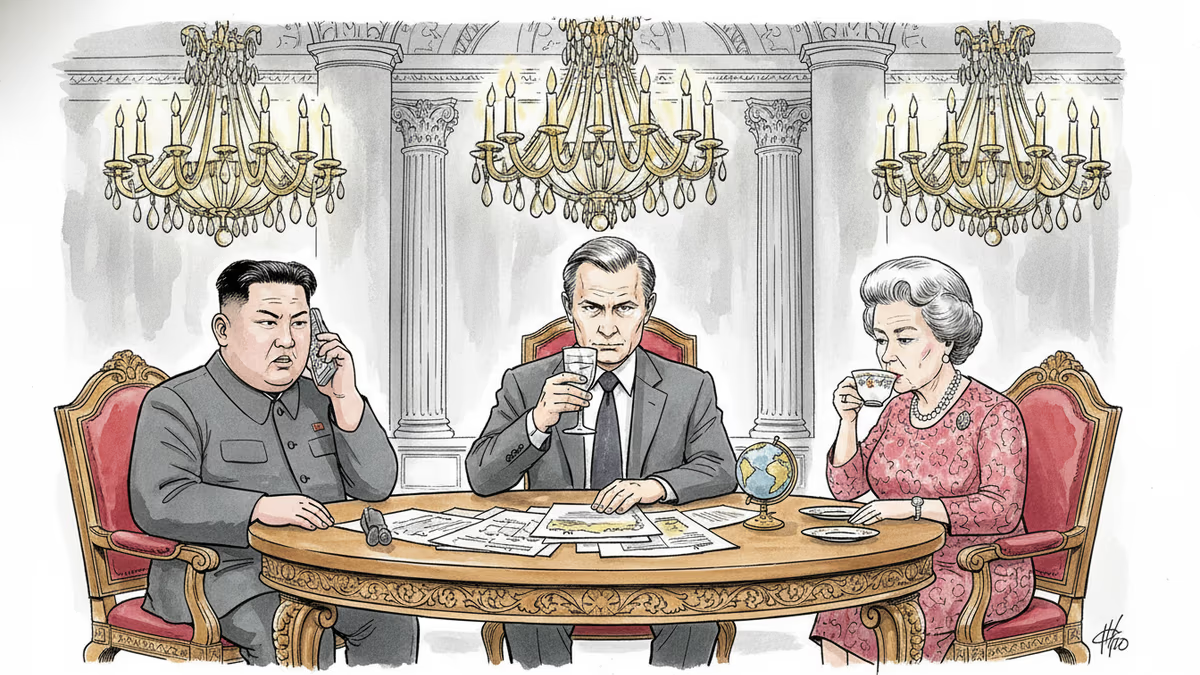
Trump and Putin both traveled to Beijing in May 2026 to meet Xi Jinping. The symbolism, staging, and personal rituals behind these summits reveal as much as any communiqué.

Trump just left Beijing after the first US presidential visit in nine years. Putin arrives Wednesday. Pakistan's PM follows. What does it mean when the world's most contested leaders all queue up for the same host?

Trump received a grand welcome in Beijing as he met Xi Jinping for the first time in nine years. Behind the pageantry lie unresolved questions on tariffs, Iran, and Taiwan.
Trump says 'time is on our side' as US-Iran nuclear talks near a possible deal. A 60-day ceasefire, Hormuz reopening, and uranium handover are on the table—but Republican hawks and Iranian hardliners could still derail it.
Trump and Putin both traveled to Beijing in May 2026 to meet Xi Jinping. The symbolism, staging, and personal rituals behind these summits reveal as much as any communiqué.
Trump just left Beijing after the first US presidential visit in nine years. Putin arrives Wednesday. Pakistan's PM follows. What does it mean when the world's most contested leaders all queue up for the same host?
Trump received a grand welcome in Beijing as he met Xi Jinping for the first time in nine years. Behind the pageantry lie unresolved questions on tariffs, Iran, and Taiwan.
Thoughts
Share your thoughts on this article
Sign in to join the conversation