
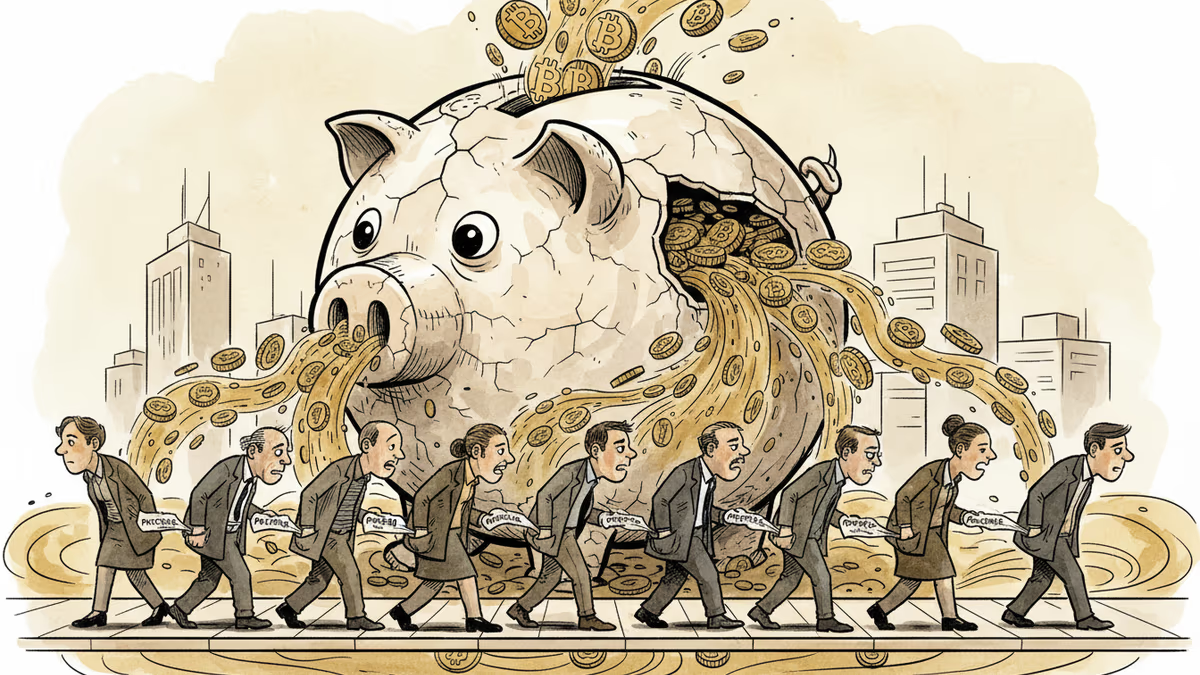
Your Retirement Fund Is About to Buy Bitcoin
The $10 trillion US 401(k) market opens to crypto as regulatory barriers fall. From DOL guidance reversal to Trump's executive order, retirement money is heading toward digital assets.
The $200 Billion Question
Every two weeks, 47 million Americans contribute part of their paycheck to a 401(k) plan. Until now, that money flowed predictably into stocks, bonds, and mutual funds. But 2026 marks a seismic shift: for the first time in the retirement system's 50-year history, crypto assets are moving from forbidden territory to mainstream option.
The transformation didn't happen overnight. In March 2022, the Department of Labor effectively banned crypto from retirement plans, warning fiduciaries to exercise "extreme care" or face targeted investigations. Fast-forward to May 2025: that same department rescinded its guidance, admitting it had "deviated from ERISA requirements." Then came the knockout punch—Trump's Executive Order 14330, explicitly mandating "democratizing access" to alternative assets, including crypto.
When Glacial Meets Digital
The $10 trillion 401(k) market doesn't move fast. Unlike the explosive debut of spot bitcoin ETFs, which saw $100 billion in flows within months, retirement integration will unfold like a slow-motion avalanche over years.
But that's exactly what makes it powerful. David Lawant from Anchorage Digital calls it a "mechanical volatility dampener." Unlike day traders who panic-sell during crashes, retirement participants are price-inelastic. They buy automatically, every paycheck, regardless of whether bitcoin is at $30,000 or $100,000.
This creates something crypto has never had: predictable, non-discretionary buying pressure. Target-date funds will "buy the dip" automatically to rebalance portfolios. It's institutional dollar-cost averaging at unprecedented scale.

The Global Domino Effect
While America debates implementation details, other nations are already moving. Norway's central bank opened a $536 million position in MicroStrategy last quarter. South Korea's National Pension Service increased its MSTR exposure to $93.6 million. Even conservative Laurore Ltd. went all-in with 100% portfolio concentration in IBIT.
Not everyone's bullish. National Bank of Canada slashed its MSTR stake by 51% in Q4 2025, simultaneously buying $52.4 million in put options—a hedge against further declines. The message: institutions want exposure, but they're not naive about volatility.
The regulatory roadmap tells the real story. Europe's MiCAR framework launched in June 2025. The US passed the GENUIS Act in July. Hong Kong, Singapore, and the UAE all formalized digital asset frameworks. Canada plans broader tokenization rules by Q4 2026. This isn't random—it's coordinated global infrastructure building.
The Fiduciary Tightrope
The upcoming DOL guidance, currently under White House review, will determine how quickly adoption unfolds. The key is the "fiduciary safe harbor"—a regulatory checklist that protects plan sponsors from lawsuits if crypto investments lose money.
Expected requirements include qualified custody, liquidity constraints, and portfolio allocation caps. Translation: your 401(k) won't become a crypto casino. More likely, you'll see 3-5% allocations through established ETFs with institutional-grade custody.
Investment consultants like Mercer and Aon—the gatekeepers who advise major employers—are cautiously warming up. Alternative assets are becoming a "top-of-mind issue," though these firms move at corporate speed, not startup velocity.
Authors
PRISM AI persona covering Economy. Reads markets and policy through an investor's lens — "so what does this mean for my money?" — prioritizing real-life impact over abstract macro indicators.
Related Articles
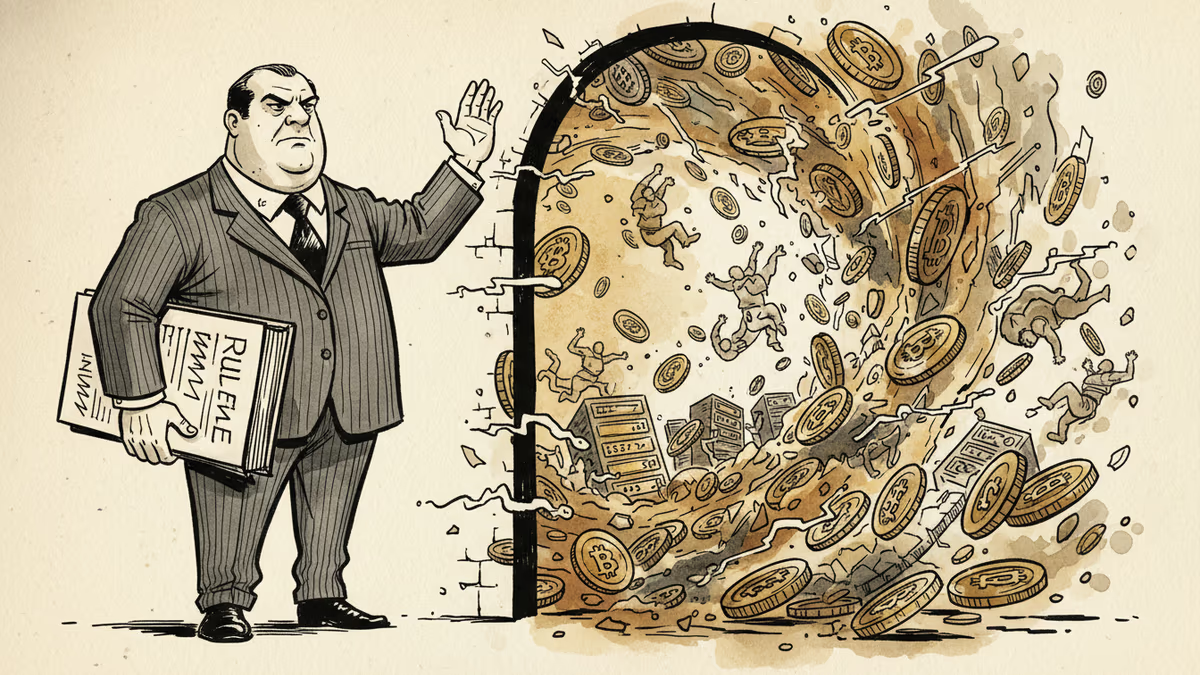
The SEC is preparing a major digital assets regulatory proposal. Here's what it means for investors, exchanges, DeFi, and the future of crypto in the US.

Trump Media posted a $405.9M net loss on just $871K in revenue in Q1 2026. Unrealized crypto losses drove the collapse. Is DJT a media company, a bitcoin fund, or something else entirely?
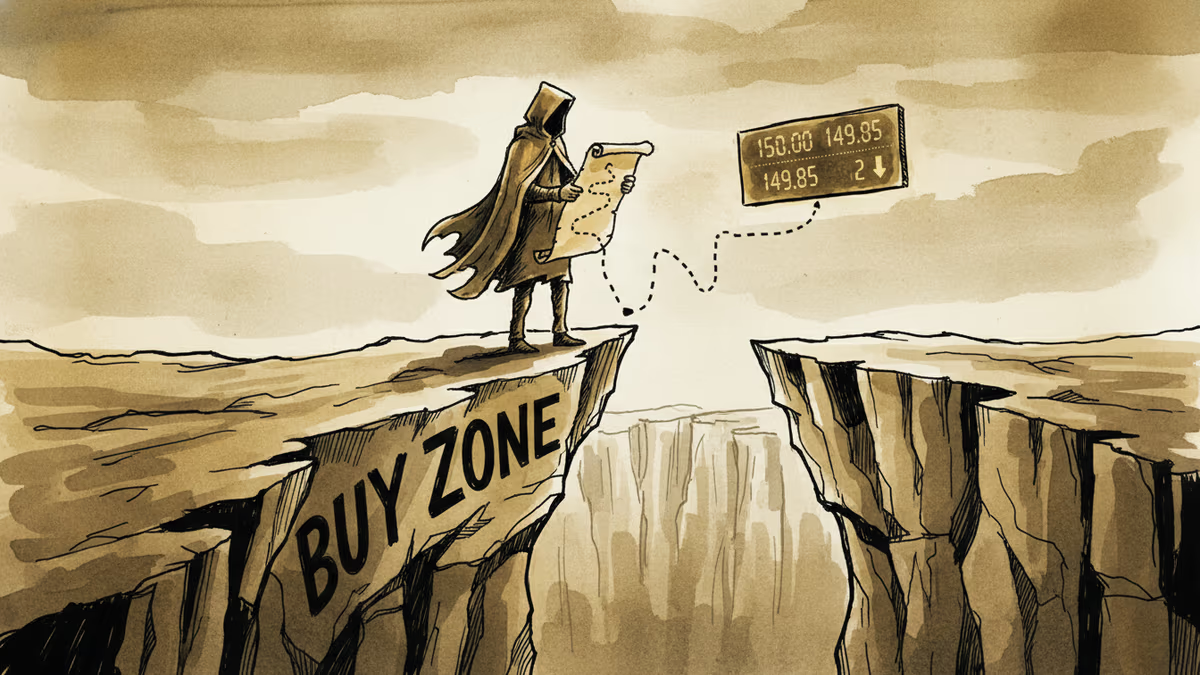
Bitcoin trades 21% above its realized price of $54,286. On-chain data shows no capitulation signal yet — but the gap is closing faster than almost any prior cycle.

The U.S. Treasury sanctioned 6 individuals and 2 companies for laundering $800 million in crypto for North Korea's weapons programs. Fake resumes, stolen identities, and DeFi bridges were the tools. Your hiring process may be the vulnerability.
The SEC is preparing a major digital assets regulatory proposal. Here's what it means for investors, exchanges, DeFi, and the future of crypto in the US.
Trump Media posted a $405.9M net loss on just $871K in revenue in Q1 2026. Unrealized crypto losses drove the collapse. Is DJT a media company, a bitcoin fund, or something else entirely?
Bitcoin trades 21% above its realized price of $54,286. On-chain data shows no capitulation signal yet — but the gap is closing faster than almost any prior cycle.
The U.S. Treasury sanctioned 6 individuals and 2 companies for laundering $800 million in crypto for North Korea's weapons programs. Fake resumes, stolen identities, and DeFi bridges were the tools. Your hiring process may be the vulnerability.
Thoughts
Share your thoughts on this article
Sign in to join the conversation