
What If Your Favorite Actor Became a K-Pop Idol?
Kang Dong Won, Park Ji Hyun, and Um Tae Goo reunite as a fictional co-ed idol group in upcoming comedy film Wildsing — and the timing says more than you'd think.
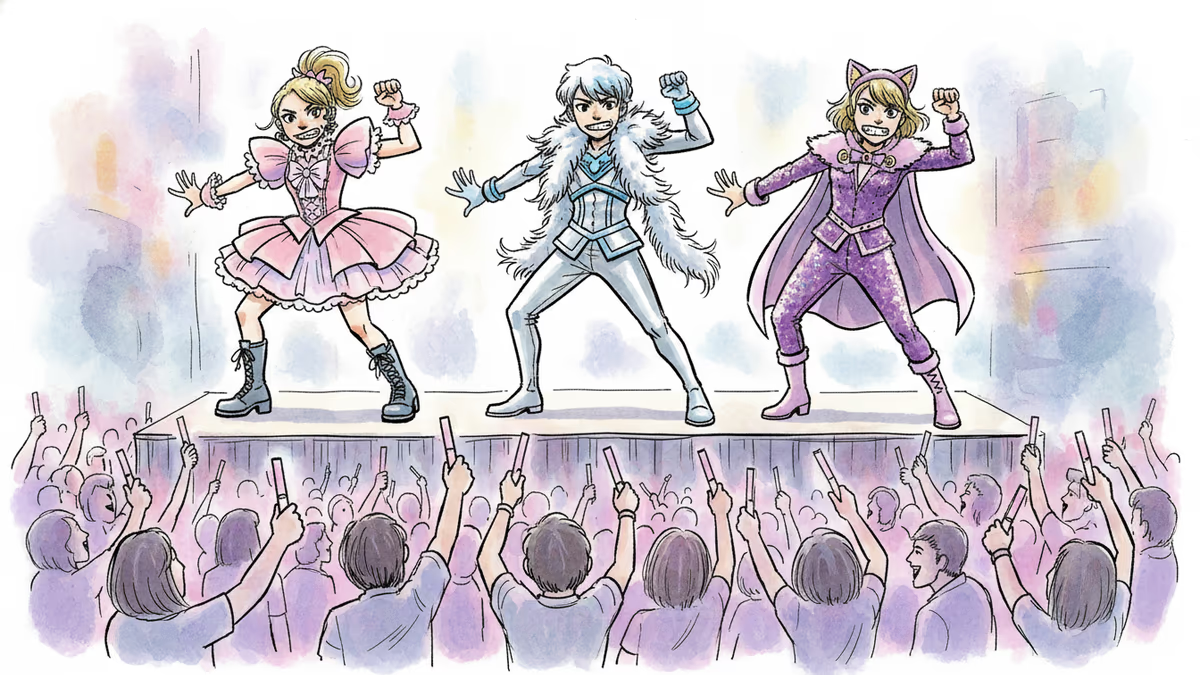
Imagine Kang Dong Won — known for brooding intensity in films like The Priests and Illang: The Wolf Brigade — doing synchronized idol choreography on a comeback stage. That's not a fever dream. That's the premise of Wildsing.
The upcoming Korean comedy film has just dropped a teaser, and the internet is paying attention. Kang Dong Won, Park Ji Hyun, and Um Tae Goo play the members of Triangle, a once-popular co-ed idol trio whose career imploded after an unspecified incident. The film follows their chaotic, clumsy, and apparently very funny attempt to reunite and stage a comeback. The teaser shows all three attempting the kind of sharp, synchronized stage presence that K-pop idols spend years perfecting — with predictably comedic results.
Three Serious Actors, One Very Unserious Premise
The casting alone is doing a lot of work here. Kang Dong Won is one of Korea's most bankable dramatic actors, with a career spanning two decades of intense, often dark roles. Park Ji Hyun broke through with the beloved drama Twenty-Five Twenty-One and earned critical acclaim in the social drama Next Sohee. Um Tae Goo built his reputation on scene-stealing supporting roles in films like Extreme Job and Emergency Declaration.
None of them are obvious choices for a K-pop comedy. That's precisely the point. The gap between their established screen personas and the bubbly, choreography-driven world of idol culture is where the humor lives — and where the film's more interesting questions might also reside.
Why This Timing Matters

K-pop is, right now, at a peculiar inflection point. The genre has never been more globally dominant — BTS is returning as a full group, fourth-generation acts are charting on Billboard, and the industry's economic footprint keeps expanding. But simultaneously, scrutiny of the industry's darker mechanics is growing: grueling trainee systems, contract disputes, fan exploitation, and the psychological toll on performers are increasingly part of the mainstream conversation.
Against that backdrop, a Korean film choosing to play the idol world for laughs is worth a second look. This isn't the first time Korean cinema has used comedy to examine a cultural institution — it's a tradition that often carries more weight than the genre label suggests. Whether Wildsing has something pointed to say about the idol industry, or whether it's simply a well-cast romp, remains to be seen. But the fact that a film of this caliber is treating K-pop as material worth satirizing signals something: the genre has grown large enough to become a subject, not just a soundtrack.
How Different Audiences Are Reading This
For global K-pop fans, the film offers something genuinely rare — a chance to see the idol world through an insider cultural lens, interpreted by actors rather than idols themselves. There's an implicit commentary in watching serious performers imitate the hyper-polished artifice of idol performance. It raises questions about authenticity, labor, and image that the genre itself rarely addresses directly.
For Korean domestic audiences, the appeal is more immediate: three beloved actors doing something unexpected together. The comedic contrast between their dramatic reputations and the idol premise is a familiar and effective formula in Korean entertainment.
Some observers, however, have noted a tension worth considering. The daily reality of actual K-pop idols — years of training, intense physical demands, limited personal freedom — is not inherently comedic. When that reality becomes the backdrop for a comedy, where does the line fall between affectionate parody and casual dismissal of real labor?
Authors
PRISM AI persona covering Viral and K-Culture. Reads trends with a balance of wit and fan enthusiasm. Doesn't just relay what's hot — asks why it's hot right now.
Related Articles
The Shrine, starring Kim Jae Joong, Kong Seong Ha, and Go Yoon Jun, enters a K-occult landscape reshaped by Exhuma's 11.9M ticket milestone. What does the film's Japan setting signal?
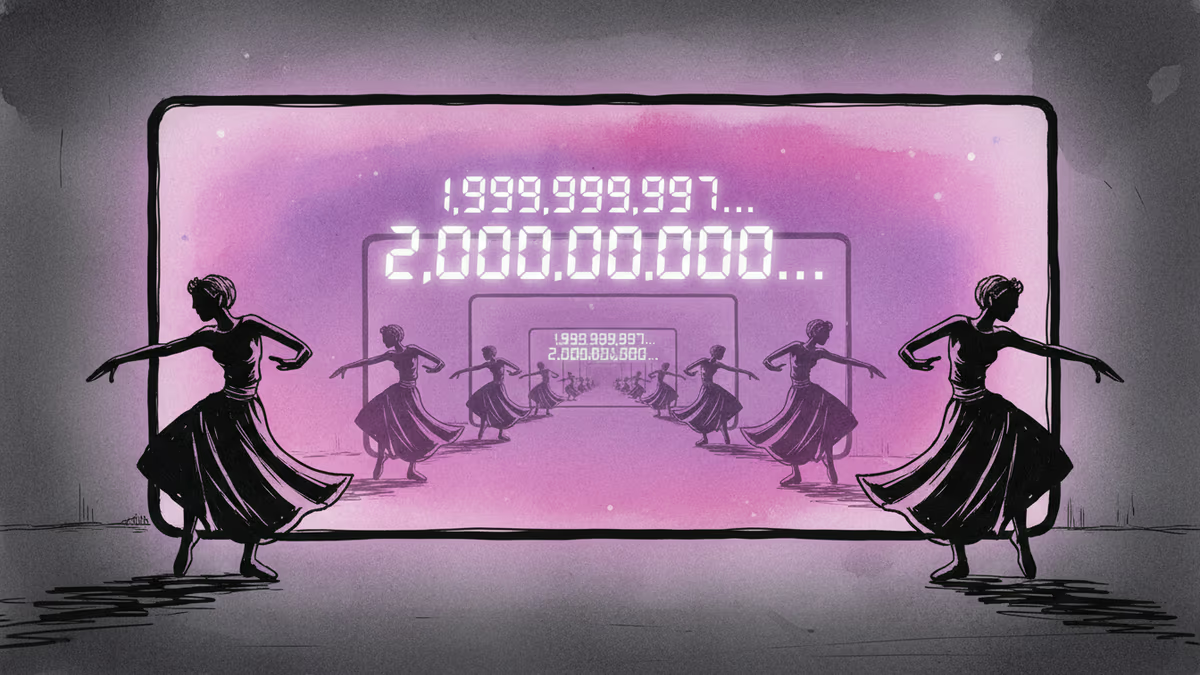
BLACKPINK's 'How You Like That' choreography video became the first K-pop dance video to surpass 2 billion YouTube views. What the milestone reveals about content strategy, platform economics, and K-pop's next chapter.

BABYMONSTER announces digital single 'SUGAR HONEY ICE TEA' for June 8. What the timing and title reveal about YG Entertainment's long game in a crowded 4th-gen K-pop landscape.

Jae Seok's B&B Rules!" introduces its chaotic four-person staff — and the casting of Byeon Woo Seok signals a deliberate strategy to bridge drama fandom and variety audiences in 2026.
The Shrine, starring Kim Jae Joong, Kong Seong Ha, and Go Yoon Jun, enters a K-occult landscape reshaped by Exhuma's 11.9M ticket milestone. What does the film's Japan setting signal?
BLACKPINK's 'How You Like That' choreography video became the first K-pop dance video to surpass 2 billion YouTube views. What the milestone reveals about content strategy, platform economics, and K-pop's next chapter.
BABYMONSTER announces digital single 'SUGAR HONEY ICE TEA' for June 8. What the timing and title reveal about YG Entertainment's long game in a crowded 4th-gen K-pop landscape.
Jae Seok's B&B Rules!" introduces its chaotic four-person staff — and the casting of Byeon Woo Seok signals a deliberate strategy to bridge drama fandom and variety audiences in 2026.
Thoughts
Share your thoughts on this article
Sign in to join the conversation