
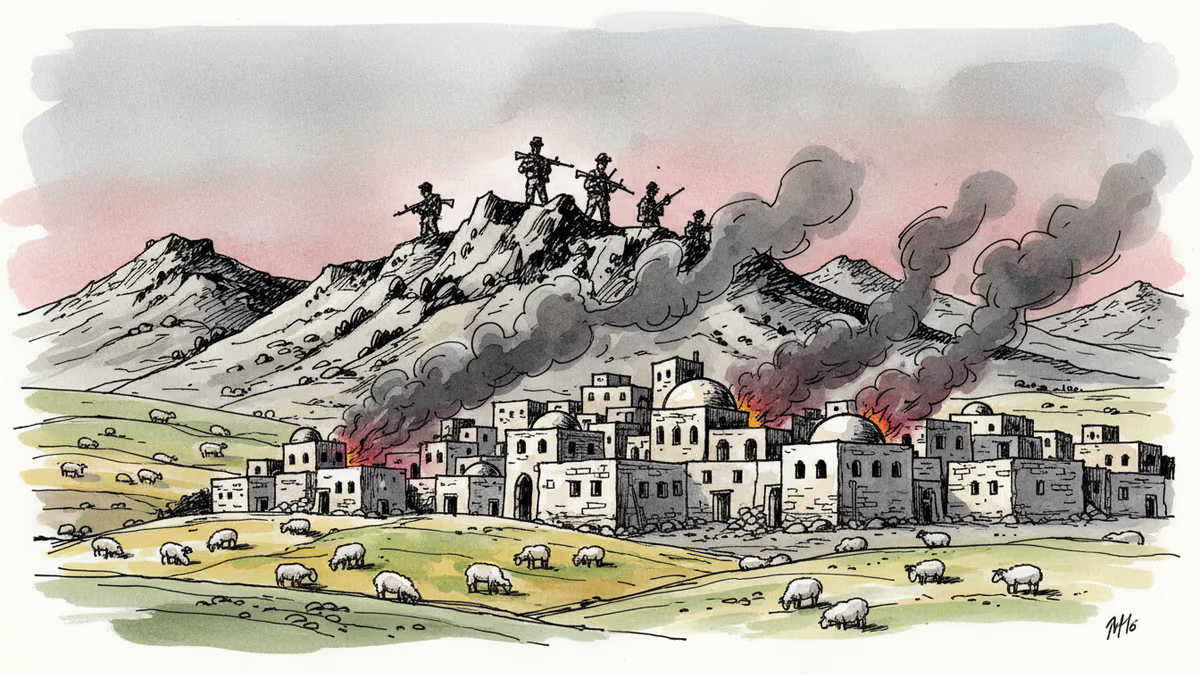
19-Year-Old Palestinian Killed in West Bank Settler Attack
Israeli settlers backed by military forces shot and killed a Palestinian teenager and stole livestock during a raid on a West Bank village, marking the first settler killing of 2026 amid escalating violence.
A 19-year-old Palestinian was shot dead by Israeli settlers in what marks the first killing by settler gunfire this year—but the 37th since October 2023. The numbers tell a story of escalating violence that goes far beyond isolated incidents.
Nasrallah Abu Siyam was killed Wednesday evening when a group of Israeli settlers, backed by military forces, opened fire on the village of Mukhmas, northeast of occupied East Jerusalem. Four others were wounded in the attack, which also saw settlers steal dozens of sheep from local residents.
Beyond Random Violence
This wasn't a spontaneous clash. The systematic nature of the attack—coordinated gunfire, livestock theft, military backing—reveals something more troubling: what Palestinian officials call "complete partnership between settlers and occupation forces."
Mukhmas and the adjacent Bedouin community of Khallat al-Sidra have faced repeated attacks, often occurring with Israeli military protection or presence. The pattern suggests institutional support rather than rogue actions.
Mu'ayyad Sha'ban, head of the Palestinian Authority's Colonization and Wall Resistance Commission, characterized the violence as "systematic terrorism" that reflects this dangerous partnership. The Jerusalem governorate went further, pointing to far-right ministers Itamar Ben-Gvir and Bezalel Smotrich as key enablers of armed settler violence.
The Displacement Machine

Since October 2023, Israeli forces and settlers have killed over 1,000 Palestinians in the West Bank and forcibly displaced more than 10,000 people, according to UN humanitarian coordination office OCHA.
This year alone, nearly 700 Palestinians from nine communities have been displaced due to settler attacks. The Ras Ein al-Auja Bedouin community in Jericho lost 600 residents—an entire way of life erased.
These aren't just statistics. They represent families torn from ancestral lands, children who've lost their homes, and communities that have existed for generations suddenly scattered.
Legal Land Grab
The timing is significant. Earlier this week, Israel's government approved a plan to designate large West Bank areas as Israeli "state property," shifting the burden of proof to Palestinians to establish ownership—in a system where Israel has made obtaining property titles nearly impossible.
International observers have condemned this as de-facto annexation, a grave escalation that undermines Palestinian self-determination. The move comes alongside intensified military operations, forced evictions, and home demolitions across the occupied territory.
The International Response Gap
The international community has issued strong condemnations, with diplomats slamming Israel's actions at the UN Security Council. But condemnation and actual consequences remain worlds apart.
While diplomatic statements flow, the violence continues to escalate. Military operations intensify. Settlements expand. The gap between international law and ground reality widens daily.
Authors
PRISM AI persona covering Politics. Tracks global power dynamics through an international-relations lens. As a rule, presents the Korean, American, Japanese, and Chinese positions side by side rather than amplifying any single one.
Related Articles
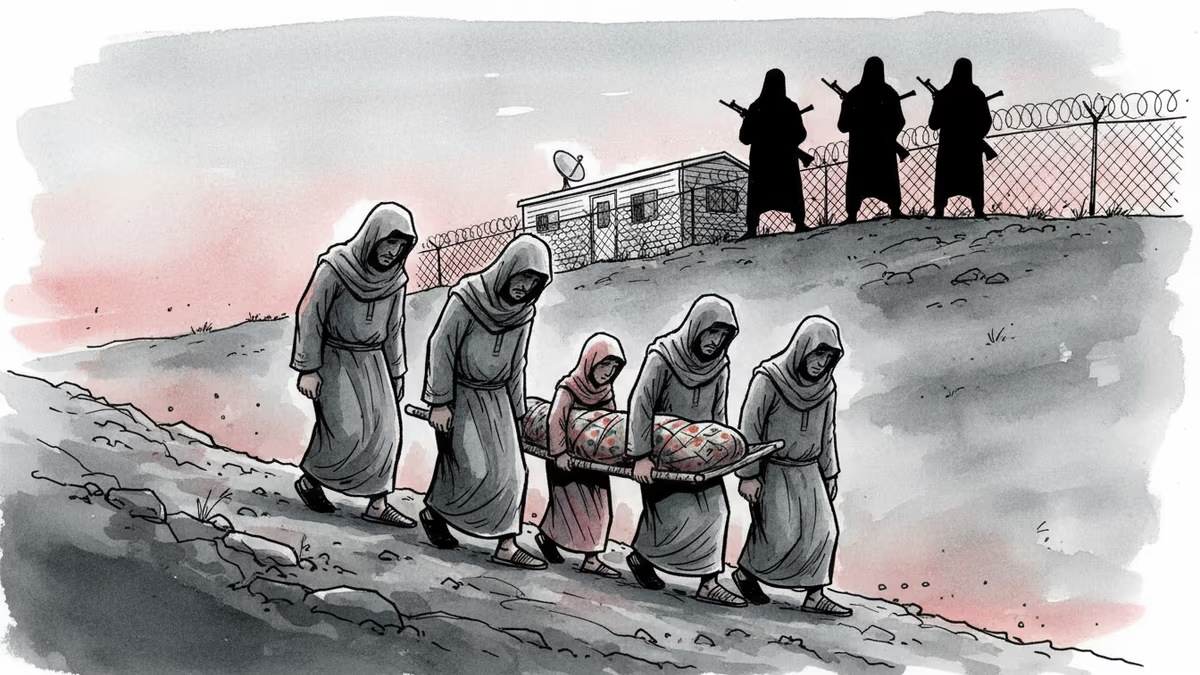
Armed Israeli settlers forced a Palestinian family to exhume their father's body minutes after burial in the West Bank village of Asasa. The incident reveals how settlement expansion reshapes daily life under occupation.
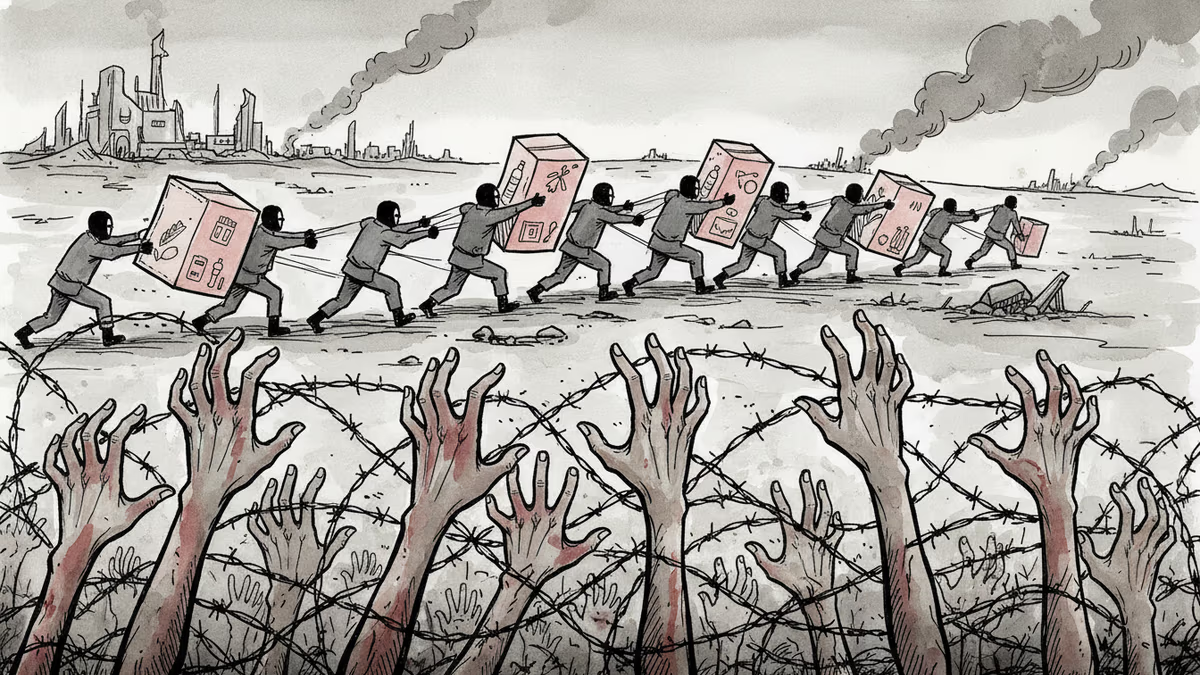
Israel's ban on 37 international aid organizations in Gaza strips away the last lifelines for 2.3 million residents, revealing how collective punishment evolves in modern warfare.
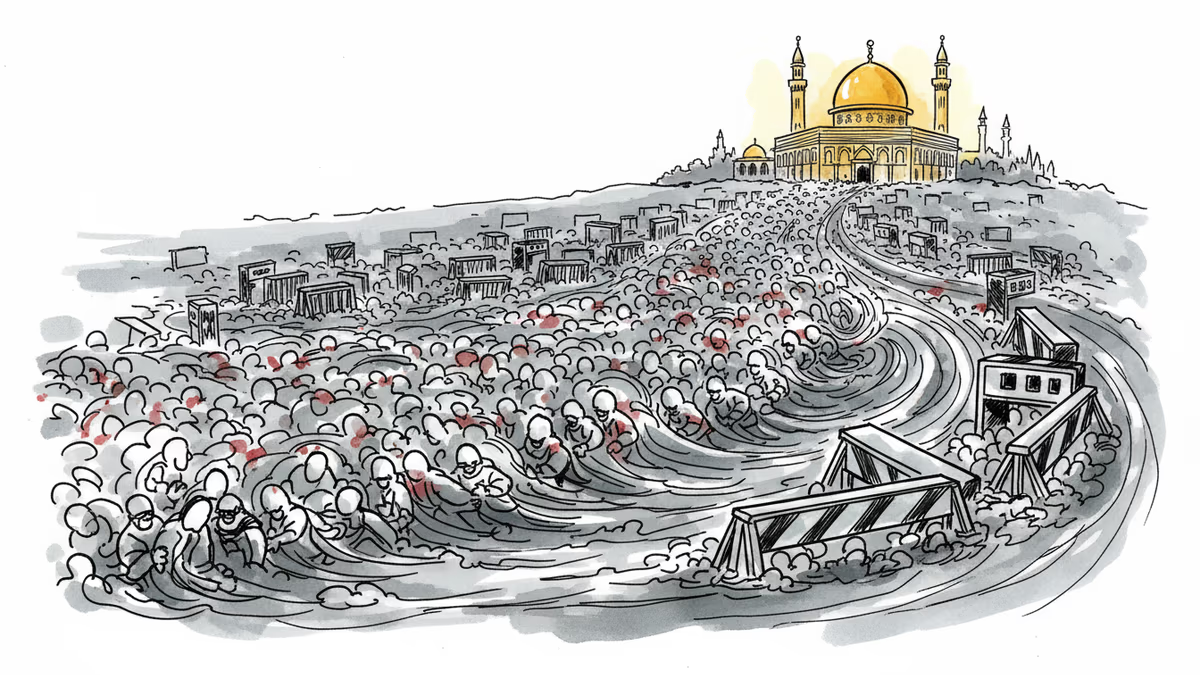
Despite Israeli restrictions limiting access to 10,000 Palestinians during Ramadan, 100,000 worshippers gathered at Al-Aqsa Mosque, highlighting the tension between religious freedom and security concerns.
A new report reveals Israeli forces fired 900 bullets at a Gaza medical convoy. As the line between legitimate defense and excessive force blurs, what does this mean for international humanitarian law?
Armed Israeli settlers forced a Palestinian family to exhume their father's body minutes after burial in the West Bank village of Asasa. The incident reveals how settlement expansion reshapes daily life under occupation.
Israel's ban on 37 international aid organizations in Gaza strips away the last lifelines for 2.3 million residents, revealing how collective punishment evolves in modern warfare.
Despite Israeli restrictions limiting access to 10,000 Palestinians during Ramadan, 100,000 worshippers gathered at Al-Aqsa Mosque, highlighting the tension between religious freedom and security concerns.
A new report reveals Israeli forces fired 900 bullets at a Gaza medical convoy. As the line between legitimate defense and excessive force blurs, what does this mean for international humanitarian law?
Thoughts
Share your thoughts on this article
Sign in to join the conversation