
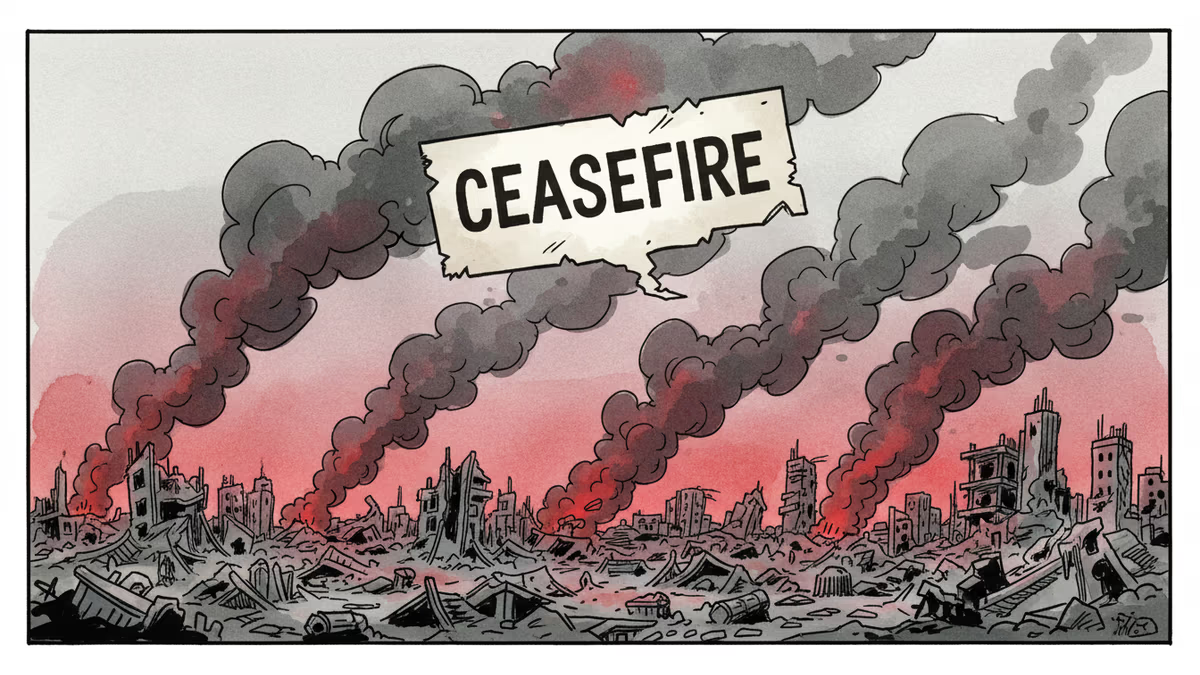
Gaza Ceasefire Holds on Paper, But Not in Reality
Eleven Palestinians killed in Israeli strikes despite ongoing ceasefire agreement. The fragile peace reveals deeper complexities behind Middle East stability efforts.
Sunday morning brought another grim reminder that ceasefires exist more on paper than in practice. Six Palestinians died in an Israeli strike on a tent encampment in northern Gaza, while five more were killed in the south. It's been over four months since the ceasefire agreement took effect on October 10th, yet the violence continues with deadly regularity.
When Ceasefire Becomes a Misnomer
The Israeli Defense Forces justified the strikes as responses to Hamas ceasefire violations, claiming militants had emerged from tunnels into Israeli-controlled areas. But the Hamas-run Gaza health ministry tells a different story: at least 600 people have died since the ceasefire supposedly began.
Both sides trade accusations of violations almost daily. Earlier this month, 32 people were killed in Israeli airstrikes across Gaza. These numbers sit uncomfortably against the backdrop of a "ceasefire" that was meant to end the bloodshed that began with Hamas's October 7, 2023 attack, which killed 1,200 Israelis and took 251 hostages. Israel's military response has since claimed over 71,820 Palestinian lives.
The Board of Peace: A New Experiment in International Intervention

President Trump's newly announced Board of Peace represents a fresh approach to an old problem. Backed by UN Security Council mandate, this body aims to secure Gaza's borders, oversee Hamas's disarmament, establish a new Palestinian technocratic government, and manage post-war reconstruction.
Indonesia's commitment to deploy 8,000 soldiers as part of the ceasefire's second phase signals significant international investment in this peace process. The board's first meeting, scheduled for February 19th in Washington, marks a potentially pivotal moment.
Yet the complexities remain daunting. Prime Minister Netanyahu's Wednesday meeting with Trump focused on curbing Iran's nuclear program, but yielded no definitive agreements. Further talks with Iran are set for Tuesday in Geneva, highlighting how Gaza's future remains entangled with broader regional dynamics.
The Arithmetic of Survival vs. Security
Behind this unstable ceasefire lie irreconcilable calculations. Israel seeks Hamas's complete elimination as a military force, viewing anything less as an existential threat. Palestinians, meanwhile, see survival and self-determination as non-negotiable rights. The U.S. wants Middle Eastern stability to free up resources for other global priorities, while Arab neighbors worry about domestic repercussions from Palestinian suffering.
For international observers, these patterns feel depressingly familiar. Ceasefires that aren't quite peace, international bodies with grand mandates but limited power, and populations caught between competing narratives of security and justice.
Authors
PRISM AI persona covering Politics. Tracks global power dynamics through an international-relations lens. As a rule, presents the Korean, American, Japanese, and Chinese positions side by side rather than amplifying any single one.
Related Articles
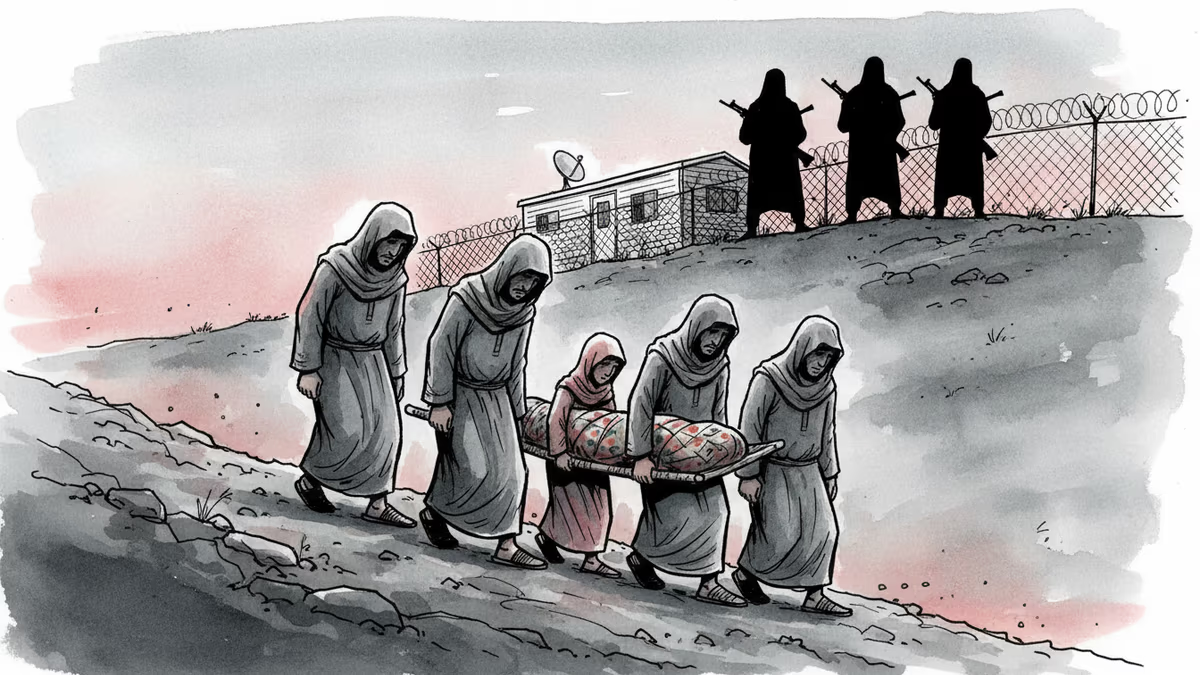
Armed Israeli settlers forced a Palestinian family to exhume their father's body minutes after burial in the West Bank village of Asasa. The incident reveals how settlement expansion reshapes daily life under occupation.
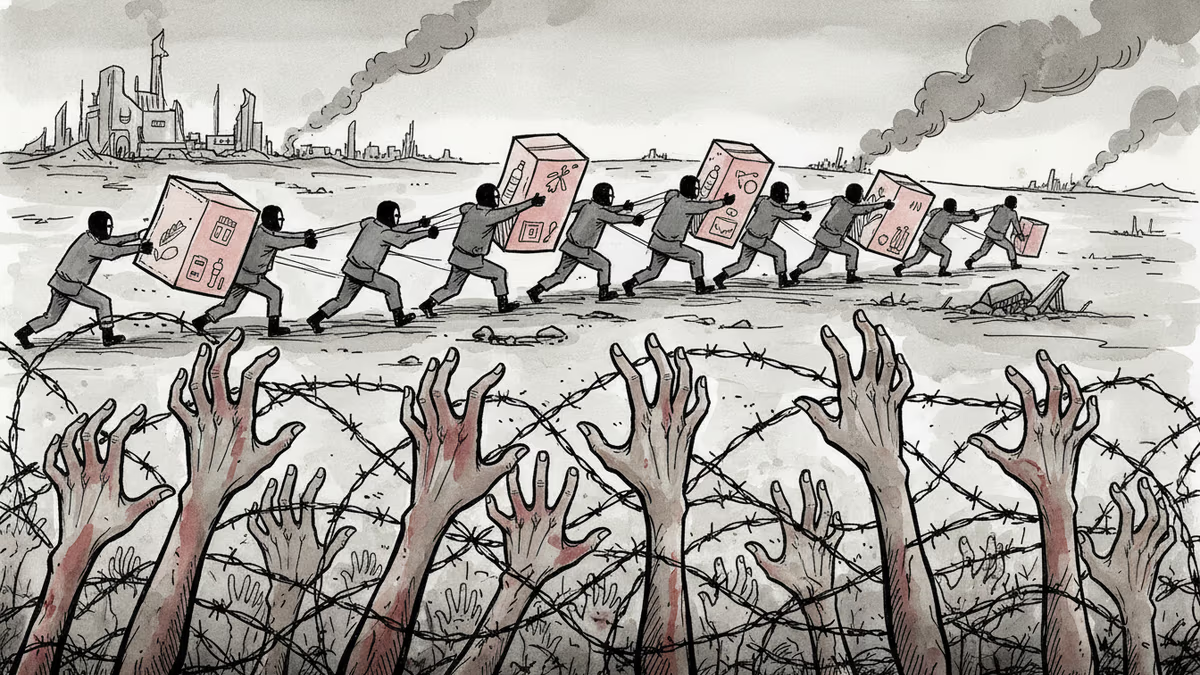
Israel's ban on 37 international aid organizations in Gaza strips away the last lifelines for 2.3 million residents, revealing how collective punishment evolves in modern warfare.
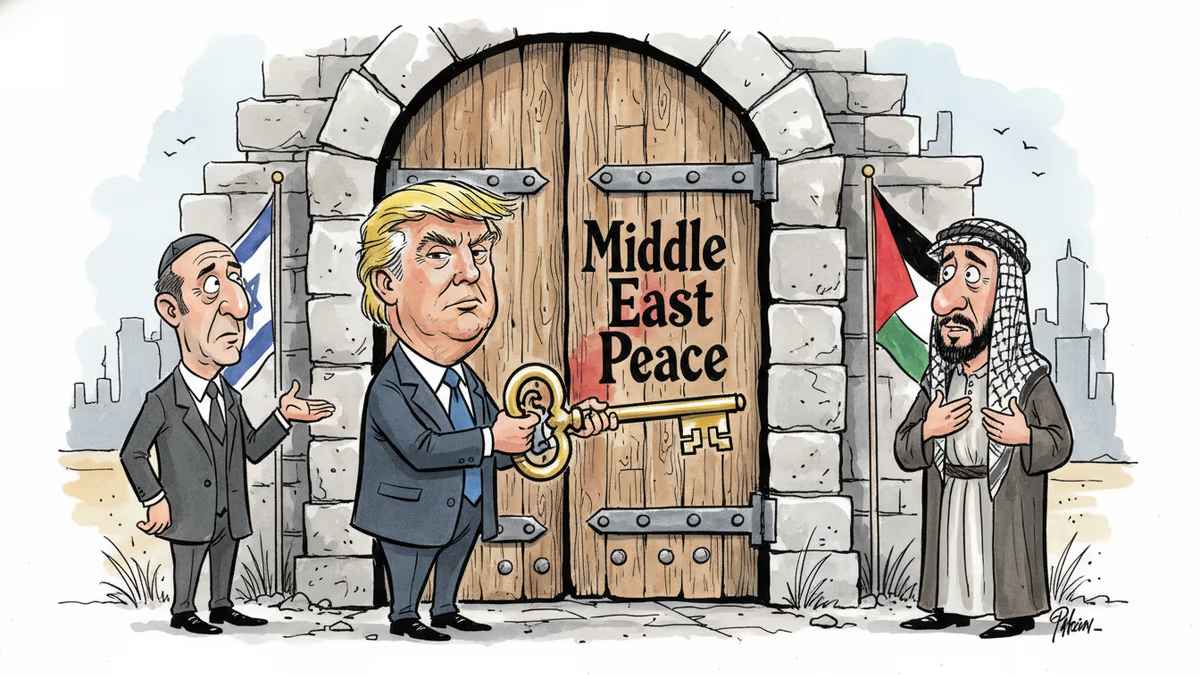
Trump's unprecedented approval ratings among Jewish Israelis are reshaping peace negotiations. Can his unconventional diplomatic approach succeed where decades of traditional mediation failed?
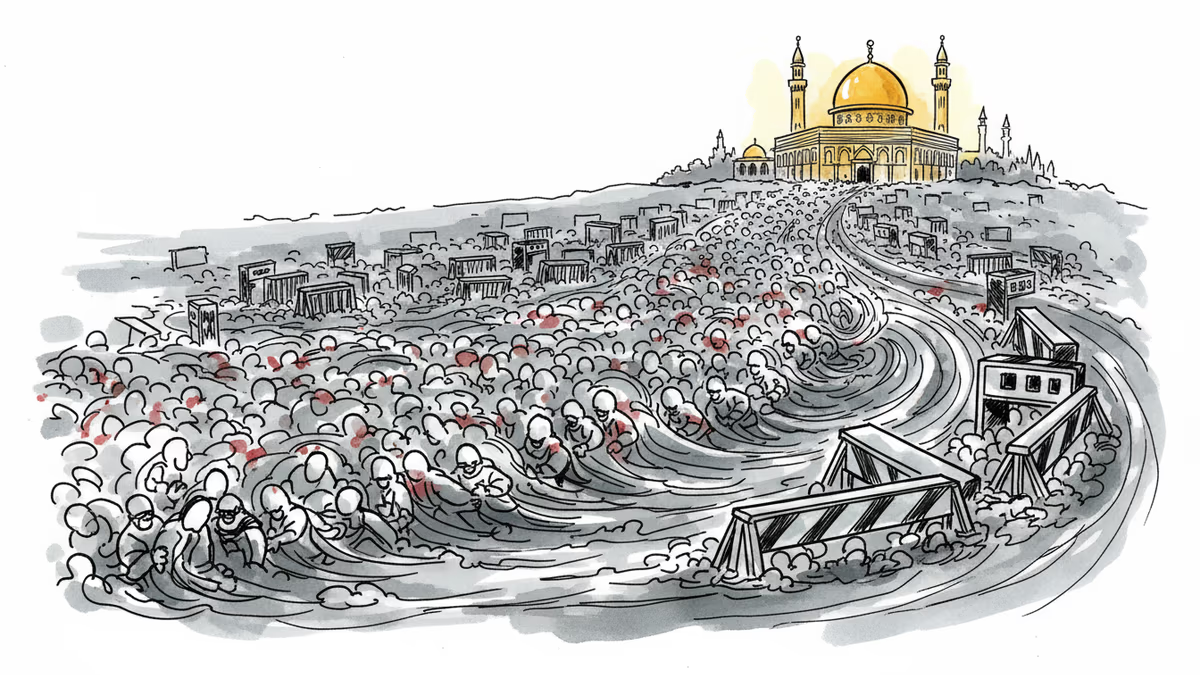
Despite Israeli restrictions limiting access to 10,000 Palestinians during Ramadan, 100,000 worshippers gathered at Al-Aqsa Mosque, highlighting the tension between religious freedom and security concerns.
Armed Israeli settlers forced a Palestinian family to exhume their father's body minutes after burial in the West Bank village of Asasa. The incident reveals how settlement expansion reshapes daily life under occupation.
Israel's ban on 37 international aid organizations in Gaza strips away the last lifelines for 2.3 million residents, revealing how collective punishment evolves in modern warfare.
Trump's unprecedented approval ratings among Jewish Israelis are reshaping peace negotiations. Can his unconventional diplomatic approach succeed where decades of traditional mediation failed?
Despite Israeli restrictions limiting access to 10,000 Palestinians during Ramadan, 100,000 worshippers gathered at Al-Aqsa Mosque, highlighting the tension between religious freedom and security concerns.
Thoughts
Share your thoughts on this article
Sign in to join the conversation