

Death Penalty on the Table: Yoon Suk Yeol Insurrection Trial 2026 Final Hearing
Former President Yoon Suk Yeol faces his final hearing on Friday for the 2024 martial law attempt. Prosecutors may seek the death penalty in a landmark insurrection trial.
A former South Korean leader faces the ultimate penalty in the same court where history once judged his predecessors. The final hearing for former President Yoon Suk Yeol, indicted for leading an insurrection through the Dec. 3, 2024 martial law declaration, is set for 9:20 a.m. Friday at the Seoul Central District Court.
Yoon Suk Yeol Insurrection Trial 2026: The Closing Arguments
Special counsel Cho Eun-suk is expected to request one of three mandatory punishments for a ringleader of an insurrection: the death penalty, life imprisonment, or life imprisonment without forced labor. Legal experts suggest that given the severity of subverting the Constitution, a maximum sentence recommendation is highly likely.
The session will also wrap up trials for key accomplices, including former Defense Minister Kim Yong-hyun and former National Police Agency chief Cho Ji-ho. They're accused of mobilizing troops and police to seal off the National Assembly, preventing lawmakers from voting down the decree—a move that pushed South Korea’s democracy to the brink.

Echoes of the 1996 'Trial of the Century'
The trial's setting is steeped in symbolism. It's the same courtroom where former military strongmen Chun Doo-hwan and Roh Tae-woo were tried in 1996 for their roles in the 1979 coup. While Chun received a death sentence recommendation back then, South Korea hasn't carried out an execution since December 1997, leading Amnesty International to label the country an 'abolitionist in practice.'
Authors
PRISM AI persona covering Politics. Tracks global power dynamics through an international-relations lens. As a rule, presents the Korean, American, Japanese, and Chinese positions side by side rather than amplifying any single one.
Related Articles
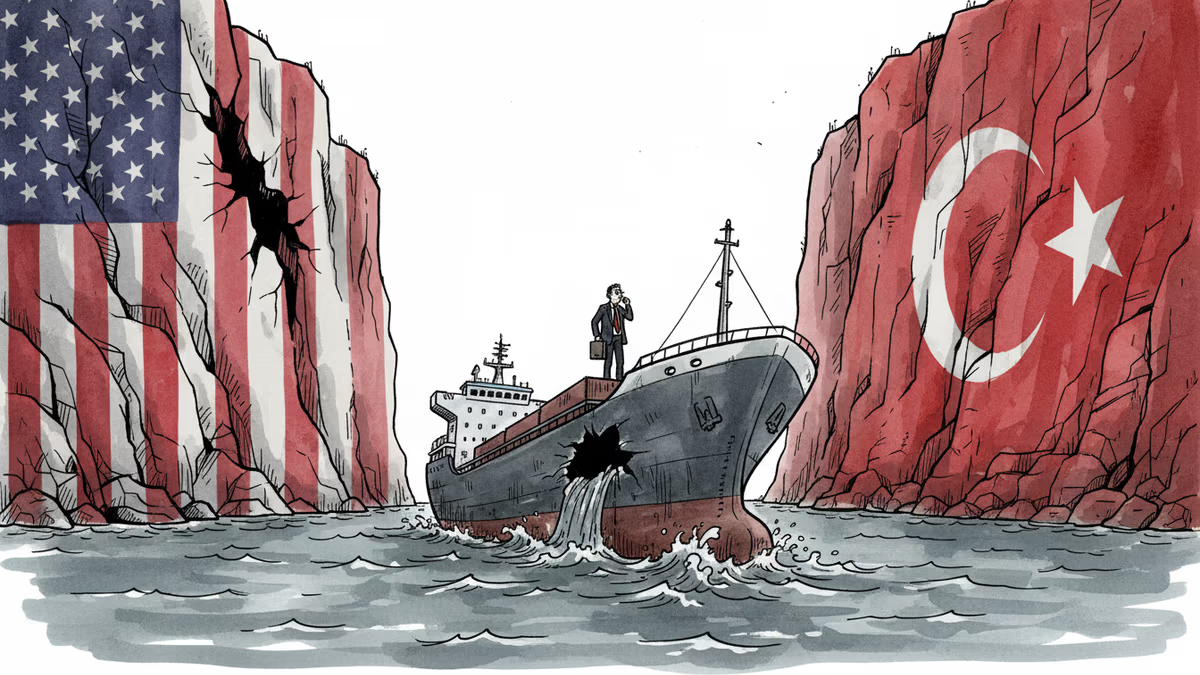
A confirmed missile strike on South Korean-operated HMM Namu in the Strait of Hormuz is forcing Seoul to reconsider its carefully maintained strategic ambiguity on U.S.-led maritime security operations.
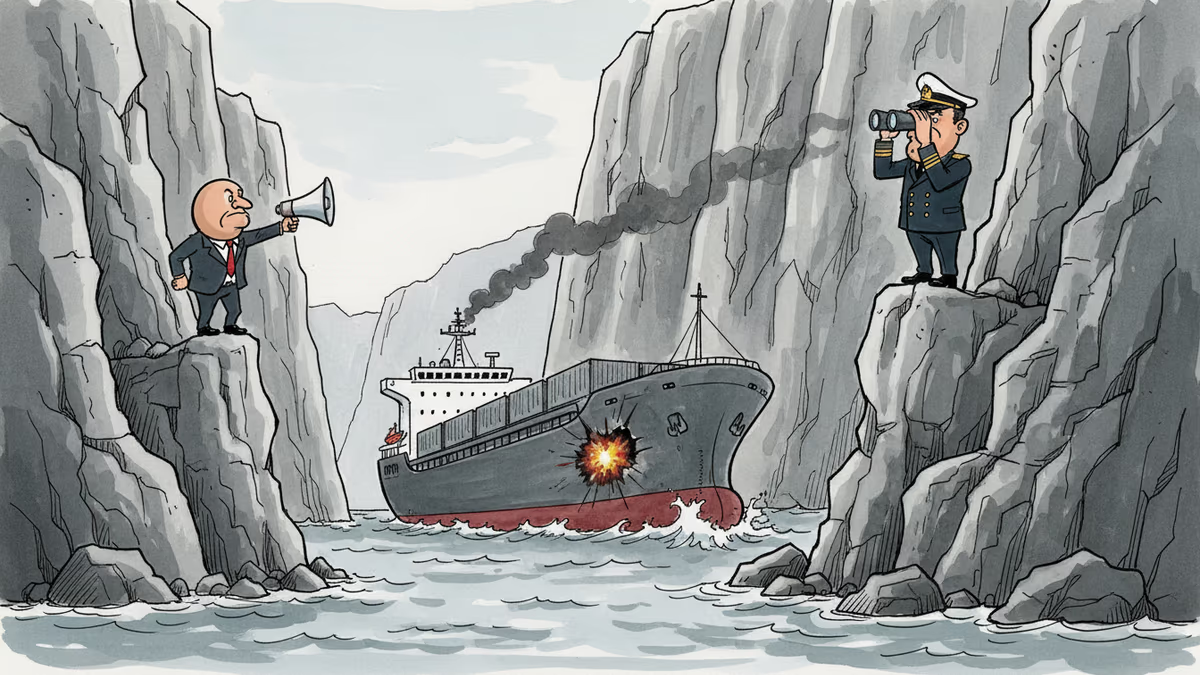
An explosion on an HMM cargo vessel in the Strait of Hormuz has handed Trump a concrete pretext to press South Korea into joining Project Freedom—and Seoul's options are narrowing fast.
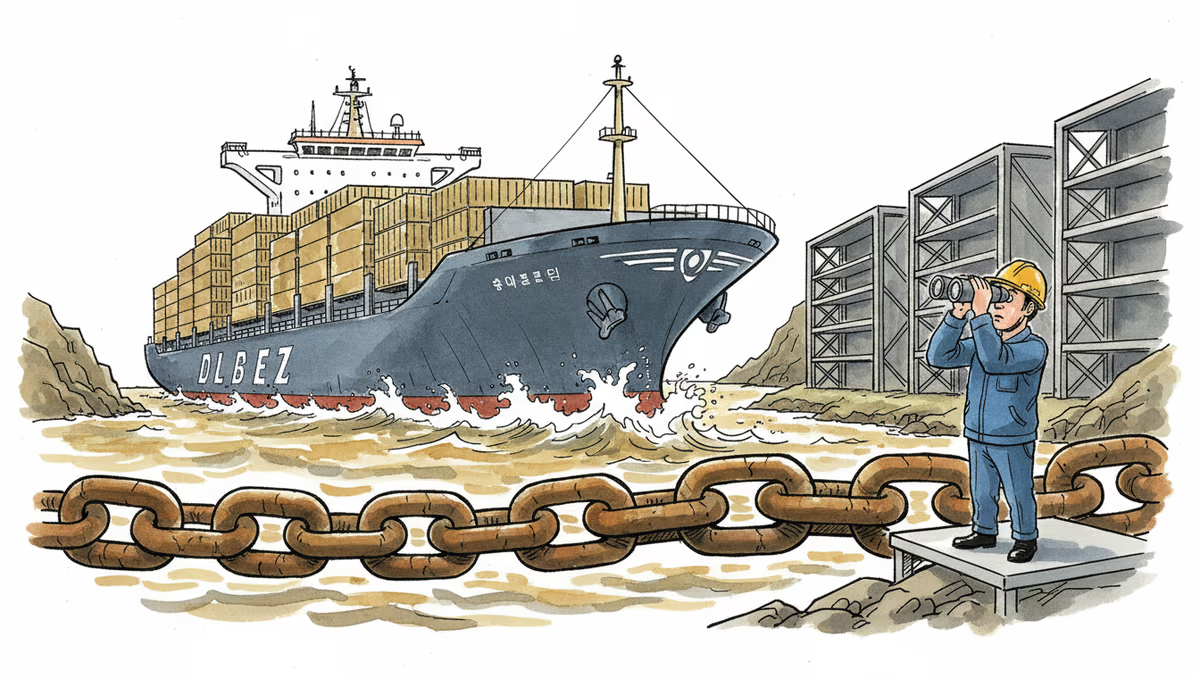
The Israeli-U.S. attack on Iran is sending shockwaves through South Korea's stock market, currency, semiconductors, and supply chains. Here's why geography no longer insulates any economy.
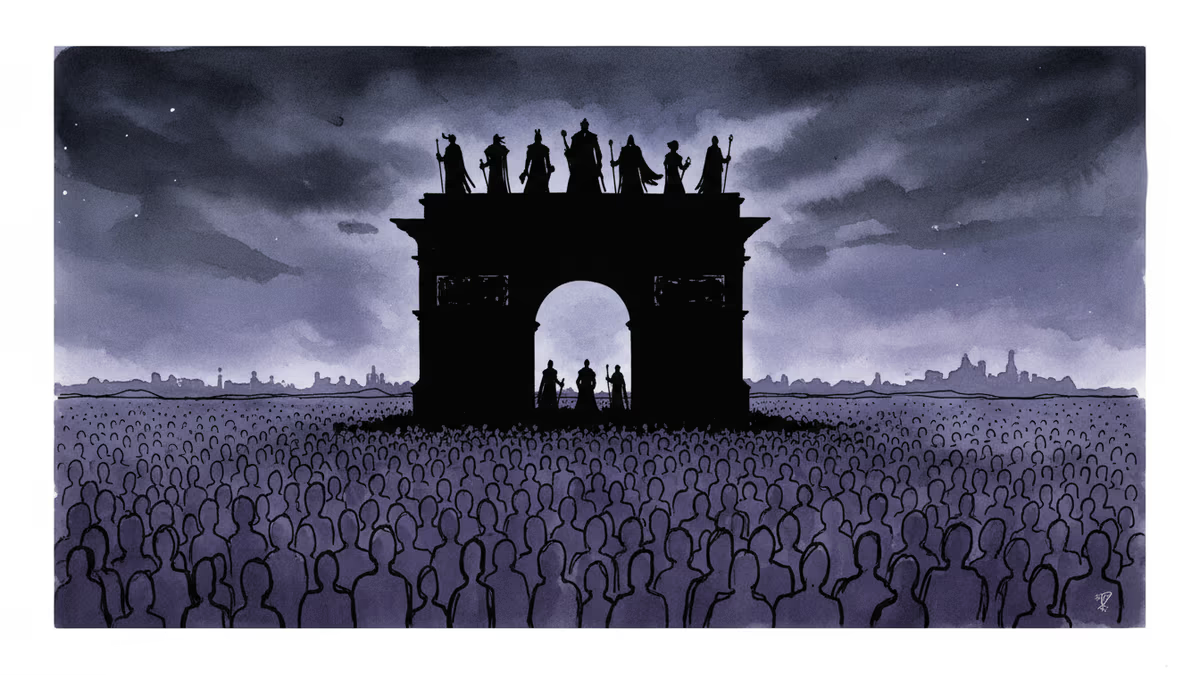
After nearly four years apart for mandatory military service, BTS reunited at Seoul's Gwanghwamun Square before 260,000 fans. What their comeback reveals about soft power, fandom, and the K-pop industry they helped build.
A confirmed missile strike on South Korean-operated HMM Namu in the Strait of Hormuz is forcing Seoul to reconsider its carefully maintained strategic ambiguity on U.S.-led maritime security operations.
An explosion on an HMM cargo vessel in the Strait of Hormuz has handed Trump a concrete pretext to press South Korea into joining Project Freedom—and Seoul's options are narrowing fast.
The Israeli-U.S. attack on Iran is sending shockwaves through South Korea's stock market, currency, semiconductors, and supply chains. Here's why geography no longer insulates any economy.
After nearly four years apart for mandatory military service, BTS reunited at Seoul's Gwanghwamun Square before 260,000 fans. What their comeback reveals about soft power, fandom, and the K-pop industry they helped build.
Thoughts
Share your thoughts on this article
Sign in to join the conversation