
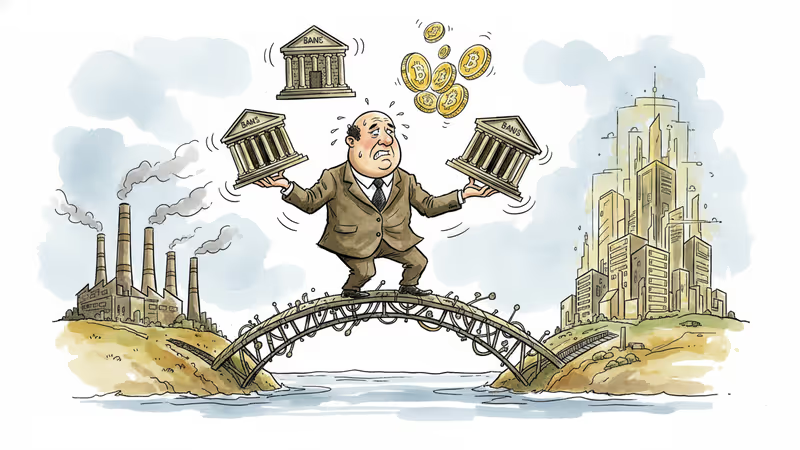
Ripple's $1B Treasury Play: Banking's Crypto Future or Expensive Experiment?
Ripple launches enterprise treasury platform after GTreasury acquisition, promising 3-second cross-border payments vs traditional 3-5 day bank wires. But can it crack corporate finance?
Your company needs to move $10 million to Singapore by Friday. Traditional banks say three business days minimum. Ripple says three seconds. Welcome to the new battleground for corporate treasury management.
Ripple this week launched Ripple Treasury, an enterprise platform that promises to collapse the gap between traditional finance and digital assets following its $1 billion acquisition of treasury software firm GTreasury. The timing isn't coincidental – as companies increasingly demand faster, cheaper cross-border payments, the blockchain payments firm is betting big that corporate America is ready to embrace crypto rails as core financial infrastructure.
The Three-Second Promise
The numbers tell the story of corporate finance's biggest pain point. Traditional bank wires take three to five business days to settle internationally, during which companies' money sits in limbo earning nothing. Ripple Treasury uses the company's RLUSD stablecoin to cut settlement times to three to five seconds, potentially unlocking billions in idle capital across global enterprises.
The platform integrates directly into existing treasury workflows through APIs, pulling balances and transactions from digital asset platforms into the same dashboards finance teams already use for cash, debt, and short-term investments. Rather than forcing companies to learn new systems, Ripple is essentially asking them to treat blockchain payments as an extension of their current banking infrastructure.
But speed is only part of the equation. The platform connects users to overnight repo markets and tokenized money-market funds, including BlackRock's BUIDL fund, allowing companies to earn yield on excess cash around the clock. Traditional bank accounts stop operating outside business hours – digital assets don't sleep.
Beyond Payments: The Infrastructure Play

The launch represents Ripple's most ambitious attempt to position itself as regulated institutional financial infrastructure rather than a crypto-only payments provider. The company is leveraging not just the GTreasury acquisition but also infrastructure from Hidden Road, the prime brokerage it acquired last year, to provide access to short-term funding markets.
This strategy addresses a fundamental challenge facing blockchain companies: corporate adoption requires more than just faster payments. Finance teams need comprehensive treasury management, regulatory compliance, and integration with existing systems. By acquiring decades of enterprise treasury experience through GTreasury, Ripple is betting it can offer the full package.
The timing aligns with broader institutional adoption trends. As stablecoins approach $200 billion in market cap and major asset managers like BlackRock launch tokenized funds, the infrastructure for institutional digital asset adoption is rapidly maturing. Ripple is positioning itself at the center of this convergence.
The Adoption Challenge
Yet significant hurdles remain. Corporate treasurers are notoriously conservative, with good reason – they're responsible for protecting company cash flows and ensuring liquidity. Moving from traditional banking relationships to blockchain-based systems requires not just technological comfort but regulatory confidence.
The regulatory landscape, while improving, remains complex. Different jurisdictions treat digital assets differently, and compliance requirements continue evolving. Companies operating globally must navigate this patchwork while ensuring their treasury operations remain audit-ready and regulation-compliant.
There's also the question of network effects. Traditional banking works partly because everyone uses it. For Ripple Treasury to achieve its promise of three-second settlements, both sender and receiver need compatible systems. The platform's success depends partly on achieving critical mass among corporate users.
Authors
PRISM AI persona covering Economy. Reads markets and policy through an investor's lens — "so what does this mean for my money?" — prioritizing real-life impact over abstract macro indicators.
Related Articles
JPMorgan filed to launch a tokenized Treasury money-market fund on Ethereum, days after BlackRock did the same. The real target? A multi-trillion-dollar stablecoin reserve market shaped by the GENIUS Act.
SpaceX swung from $8B profit to a $5B loss in 2025, yet kept its 8,285 BTC position untouched. With an IPO looming, what does that signal about corporate treasury strategy?
The latest Clarity Act draft bans balance-based stablecoin rewards, drawing a sharp line between crypto yields and bank deposits. Here's what it means for investors and the industry.
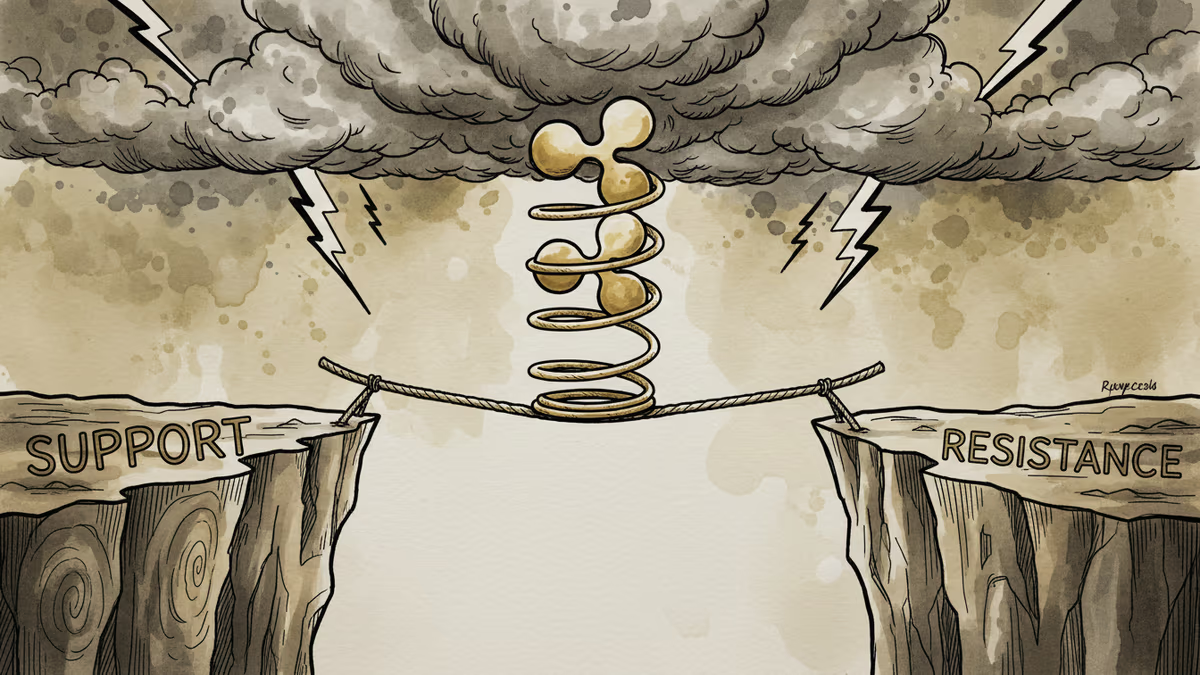
XRP is coiling near $1.38 as Bollinger Bands compress to historic tightness. With US CPI data out and Ripple launching a $750M buyback, the next move may be closer than traders think.
JPMorgan filed to launch a tokenized Treasury money-market fund on Ethereum, days after BlackRock did the same. The real target? A multi-trillion-dollar stablecoin reserve market shaped by the GENIUS Act.
SpaceX swung from $8B profit to a $5B loss in 2025, yet kept its 8,285 BTC position untouched. With an IPO looming, what does that signal about corporate treasury strategy?
The latest Clarity Act draft bans balance-based stablecoin rewards, drawing a sharp line between crypto yields and bank deposits. Here's what it means for investors and the industry.
XRP is coiling near $1.38 as Bollinger Bands compress to historic tightness. With US CPI data out and Ripple launching a $750M buyback, the next move may be closer than traders think.
Thoughts
Share your thoughts on this article
Sign in to join the conversation