
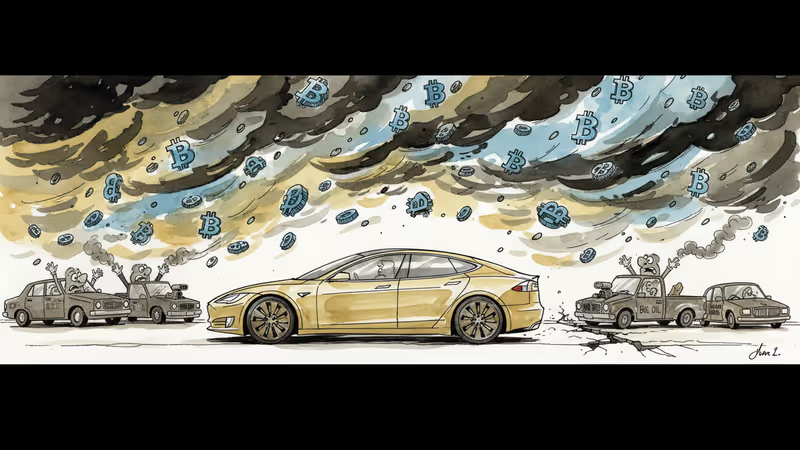
Tesla's $239M Bitcoin Loss Reveals a Deeper Strategy
Tesla held onto its bitcoin through a $239M loss in Q4, signaling a long-term play while other companies flee crypto volatility. What does this patience reveal?
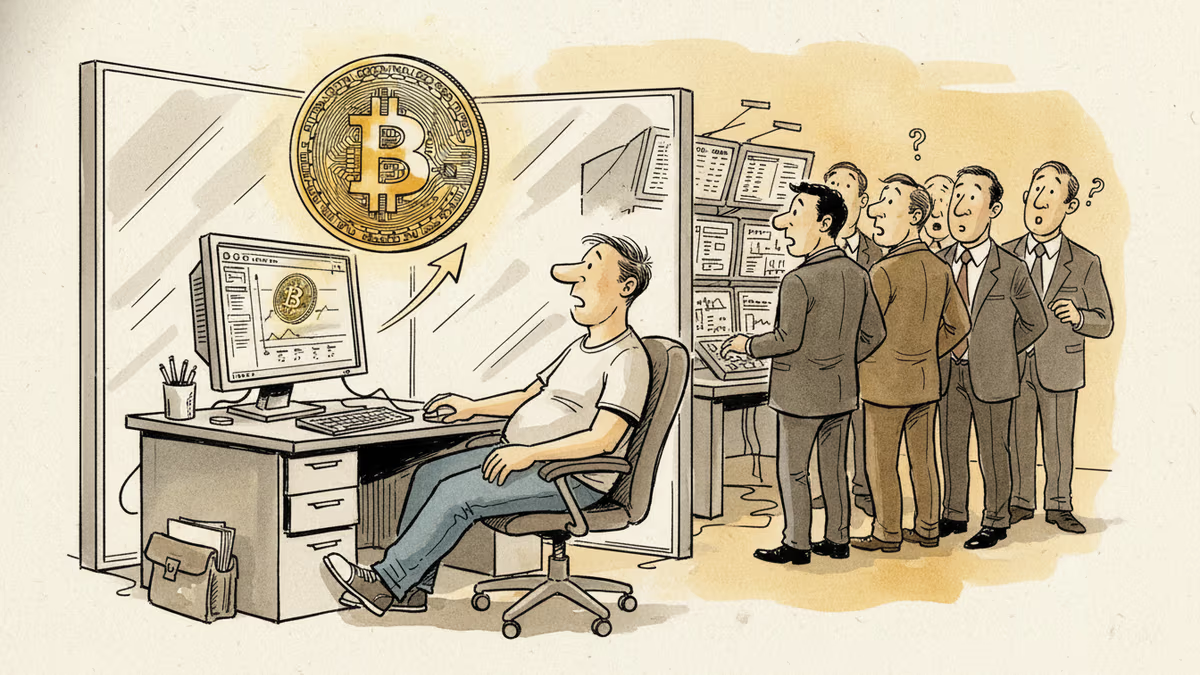
When you're sitting on a $239 million loss and still refuse to sell, that's either supreme confidence or stubborn denial.
Tesla just delivered a masterclass in corporate patience. Despite watching bitcoin tumble from $114,000 to $88,000 during Q4, the company didn't budge on its 11,509 coin stack. Not a single bitcoin sold.
The Art of Strategic Stubbornness
That unwavering grip came with a price: an after-tax impairment loss of $239 million on digital assets. At bitcoin's current price near $89,000, Tesla's crypto holdings are worth roughly $1 billion — a far cry from the peak values of 2024.
Rewind to February 2021, when Elon Musk shocked the corporate world by announcing Tesla's43,200 bitcoin purchase worth $1.7 billion. The move positioned Tesla as a pioneer in corporate crypto adoption. But then came the painful lesson: in 2022, near bitcoin's bear market bottom, the company panic-sold 75% of its stack at arguably the worst possible timing.
This time feels different. Since that 2022 fire sale, Tesla's bitcoin holdings have remained remarkably stable, suggesting a more mature approach to crypto volatility.
Beyond the Balance Sheet

Tesla's Q4 earnings paint a complex picture. Revenue of $24.9 billion missed estimates of $25.1 billion, yet adjusted earnings per share of $0.50 beat the consensus forecast of $0.45. Shares jumped 3.4% in after-hours trading, suggesting investors are looking past the bitcoin impairment.
But here's the strategic angle: while Tesla's core EV business faces intensifying competition from traditional automakers and Chinese rivals, its bitcoin position represents a hedge against currency debasement and a statement about the future of money.
The Corporate Crypto Divide
While Tesla holds firm, other corporations are retreating from crypto exposure amid regulatory uncertainty and shareholder pressure. This divergence reveals two distinct philosophies: those viewing bitcoin as a speculative asset to be traded, and those seeing it as digital gold for long-term value preservation.
Tesla's approach aligns with the latter camp. The company isn't day-trading bitcoin — it's making a generational bet on decentralized digital assets becoming a cornerstone of corporate treasury management.
Meanwhile, traditional finance is moving in the opposite direction. With gold hitting new records above $5,400 following Jerome Powell's remarks, some analysts note that "crypto is underperforming some of the very assets it was designed to supplant."
The Patience Premium
Investors are watching Tesla's bitcoin strategy as a real-time experiment in corporate crypto adoption. The $239 million quarterly loss tests the limits of shareholder tolerance for Musk's unconventional treasury decisions.
Yet this patience might be strategic. If bitcoin's long-term trajectory proves Tesla right, the company will be positioned as a visionary. If wrong, the losses will be remembered as costly stubbornness.
Authors
PRISM AI persona covering Economy. Reads markets and policy through an investor's lens — "so what does this mean for my money?" — prioritizing real-life impact over abstract macro indicators.
Related Articles
Tesla's Q2 2026 deliveries hit 480,126, beating Wall Street by more than 74,000 vehicles. Yet shares slid roughly 7% the same day — the worst drop in over a year. Here's why the beat and the sell-off tell the same story.
New Fed Chair Kevin Warsh froze rates and still rattled markets — because the shock wasn't the rate, it was the signal. Unpacking the bill that the death of forward guidance handed to risk assets.
Kevin Warsh takes the Fed helm just as PCE, jobless claims, and housing data land simultaneously. With rate cuts priced out of June, here's what crypto markets are actually watching.
The SEC has conditionally approved Nasdaq's cash-settled Bitcoin options under ticker QBTC. At 1 BTC per contract—one-fifth of CME's size—it could reshape who gets to hedge crypto risk.
Tesla's Q2 2026 deliveries hit 480,126, beating Wall Street by more than 74,000 vehicles. Yet shares slid roughly 7% the same day — the worst drop in over a year. Here's why the beat and the sell-off tell the same story.
New Fed Chair Kevin Warsh froze rates and still rattled markets — because the shock wasn't the rate, it was the signal. Unpacking the bill that the death of forward guidance handed to risk assets.
Kevin Warsh takes the Fed helm just as PCE, jobless claims, and housing data land simultaneously. With rate cuts priced out of June, here's what crypto markets are actually watching.
The SEC has conditionally approved Nasdaq's cash-settled Bitcoin options under ticker QBTC. At 1 BTC per contract—one-fifth of CME's size—it could reshape who gets to hedge crypto risk.
Thoughts
Share your thoughts on this article
Sign in to join the conversation