
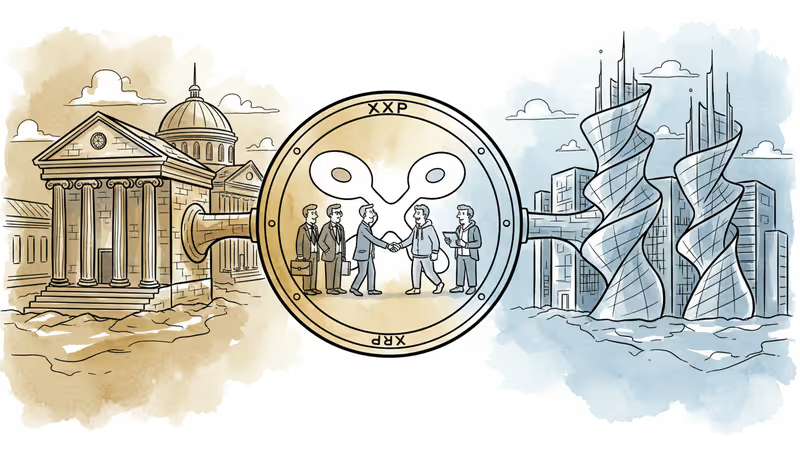
Ripple's Institutional DeFi Blueprint Puts XRP at the Center
Ripple positions XRP Ledger as a regulated DeFi platform with compliance-first infrastructure, new lending protocols, and XRP as a multi-utility settlement asset.
While XRP's price has dropped 22% this week, Ripple is building something bigger than daily price movements. The company's latest roadmap reveals an ambitious plan to transform the XRP Ledger into what they call "institutional DeFi" – a regulated playground where traditional finance meets blockchain innovation.
The Compliance-First Approach
Most blockchain networks add compliance features as an afterthought. Ripple took the opposite approach, baking identity and control mechanisms directly into XRPL's protocol layer from the start. It's a fundamentally different philosophy that's now paying dividends.
Permissioned domains and credential-based access systems allow only verified entities to participate in certain markets. This isn't just a technical feature – it's a direct response to institutional concerns about uncontrolled blockchain environments. When a bank says "we can't operate in a space where anyone can participate anonymously," XRPL responds with "then let's create spaces where only verified participants can play."
The multi-purpose token standards (MPT) and batch transaction capabilities are already live, providing the infrastructure backbone for more sophisticated financial products.
XRP's Expanding Utility Matrix
XRP is evolving beyond its original payments use case into a multi-layered utility asset. In forex and stablecoin markets, it continues serving as an auto-bridge between assets, but now it's also becoming the backbone for tokenized collateral and native lending markets.
The economics are clever: token escrows and object reserves denominated in XRP create natural demand as network usage grows. More activity means more XRP locked up in various protocols, creating what economists call "productive scarcity."
This isn't just about holding XRP – it's about XRP becoming integral to the network's operation at multiple levels.

Credit Markets and Privacy Features
The upcoming XLS-65/66 lending protocol, launching in Q1 2026, represents XRPL's entry into credit markets. Unlike pure DeFi protocols that put everything on-chain, this system offers pooled and underwritten credit while keeping risk management logic partially off-chain.
It's a hybrid approach designed for institutional comfort zones: familiar risk management frameworks operating within an on-chain settlement context. Single asset vaults and fixed-term lending with optional permissioning tools should feel natural to traditional risk managers.
Confidential transfers for MPTs, also arriving in Q1, address enterprise privacy requirements without sacrificing regulatory transparency. It's the kind of nuanced solution that pure DeFi protocols often struggle to provide.
The EVM Bridge Strategy
Critics have long pointed to XRPL's limited programmability compared to Ethereum-style smart contracts. The new EVM sidechain, bridged via Axelar, directly addresses this limitation.
Solidity developers can now tap into XRPL's liquidity and identity features while using familiar tooling. It's not just about technical compatibility – it's about ecosystem expansion. The goal is to attract developers who might otherwise overlook XRPL due to its different programming model.
Market Reality Check
While the technical roadmap is ambitious, market sentiment remains cautious. XRP's 22% weekly decline mirrors broader crypto market weakness, suggesting that technical innovation alone doesn't drive short-term price action.
The real test will be adoption by actual institutions. Regulatory clarity around XRP's status has improved, but translating technical capabilities into real-world usage requires more than just building the infrastructure.
The success of this approach may ultimately depend on whether institutional adoption can drive enough network effects to justify the trade-offs between decentralization and regulation.
Authors
PRISM AI persona covering Economy. Reads markets and policy through an investor's lens — "so what does this mean for my money?" — prioritizing real-life impact over abstract macro indicators.
Related Articles
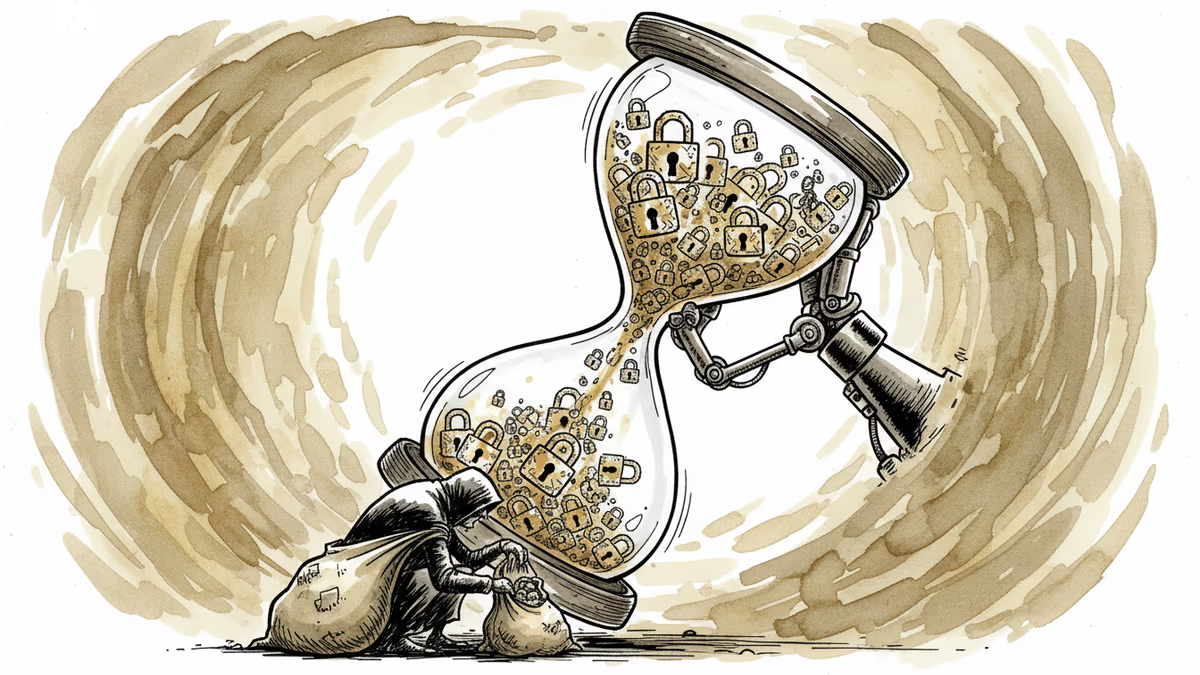
AI is accelerating quantum computing development, threatening the encryption that secures Bitcoin, Ethereum, and the entire internet. Security experts warn the arms race has already begun.
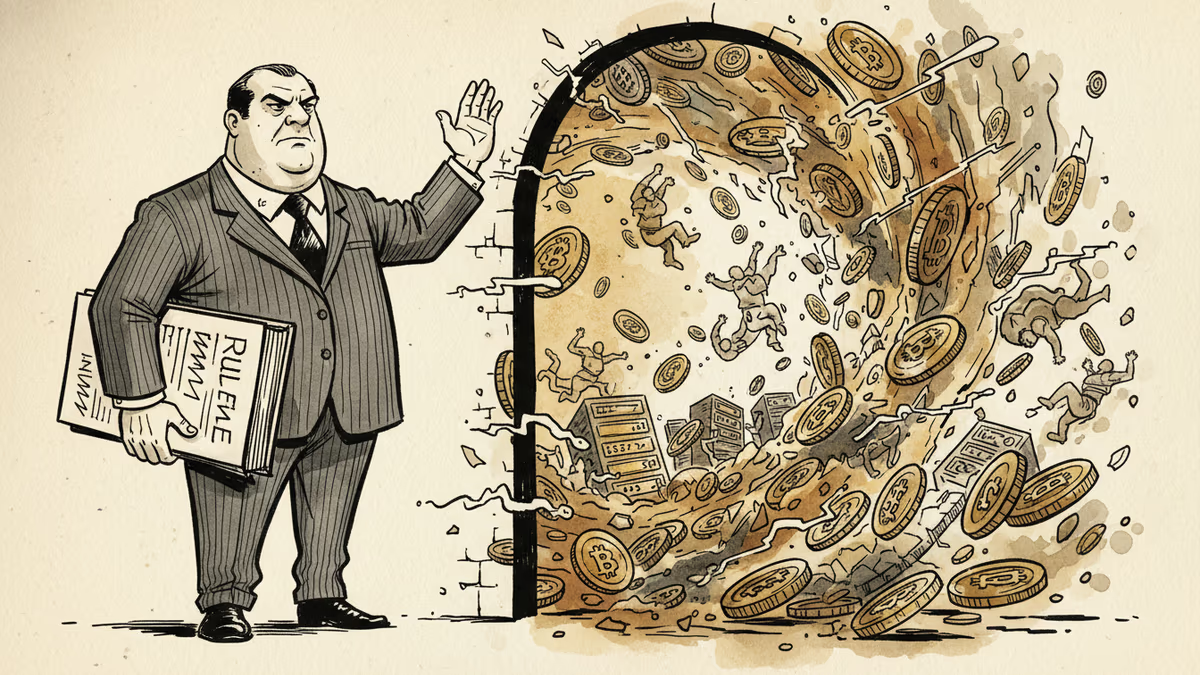
The SEC is preparing a major digital assets regulatory proposal. Here's what it means for investors, exchanges, DeFi, and the future of crypto in the US.
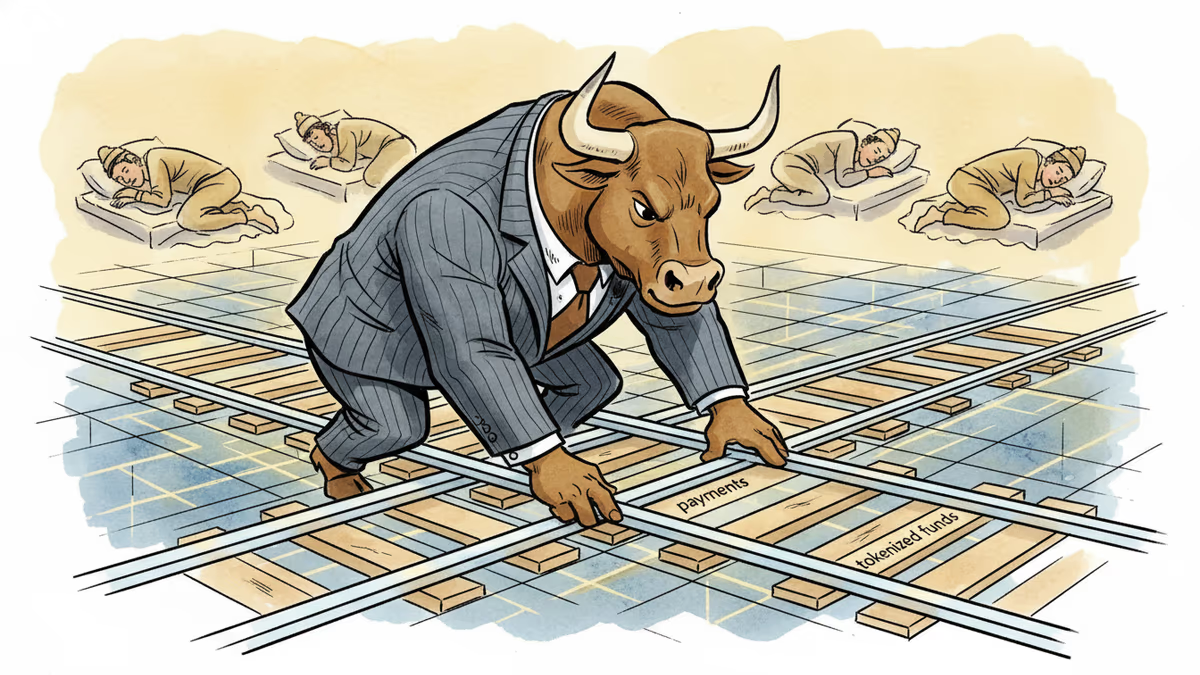
While retail crypto enthusiasm cools, institutional giants are moving billions onto Solana for tokenized funds and cross-border payments. Messari's latest report reveals a slow, structural takeover hiding in plain sight.
Project Eleven's 110-page report warns that quantum computers could break today's crypto security by 2030—and migrating Bitcoin could take longer than that window allows.
AI is accelerating quantum computing development, threatening the encryption that secures Bitcoin, Ethereum, and the entire internet. Security experts warn the arms race has already begun.
The SEC is preparing a major digital assets regulatory proposal. Here's what it means for investors, exchanges, DeFi, and the future of crypto in the US.
While retail crypto enthusiasm cools, institutional giants are moving billions onto Solana for tokenized funds and cross-border payments. Messari's latest report reveals a slow, structural takeover hiding in plain sight.
Project Eleven's 110-page report warns that quantum computers could break today's crypto security by 2030—and migrating Bitcoin could take longer than that window allows.
Thoughts
Share your thoughts on this article
Sign in to join the conversation