
Xiaomi's EV Stumbles Despite 20K February Deliveries
Xiaomi delivered over 20,000 EVs in February but saw month-over-month decline. What does this reveal about the smartphone giant's automotive ambitions?
China's smartphone giant Xiaomi hit a speed bump in its electric vehicle debut, despite crossing the 20,000 delivery milestone in February. The numbers tell a story of early promise shadowed by growing pains.
The Numbers Game
Xiaomi announced February EV deliveries topped 20,000 units for its SU7 sedan, marking just the second full month since deliveries began in late December. But here's the catch: that's down from January's estimated mid-20,000s delivery count, according to industry watchers.
The decline isn't entirely surprising. February is typically China's slowest auto sales month due to the Lunar New Year holiday. Even Tesla and BYD see similar seasonal dips. But for a company trying to prove it can translate smartphone success into automotive prowess, every data point matters.
From Pocket to Garage
Xiaomi's automotive gambit represents one of the boldest cross-industry leaps in recent memory. The company poured $10 billion into developing the SU7, positioning it as a direct Tesla Model S competitor starting at 215,900 yuan ($30,000).

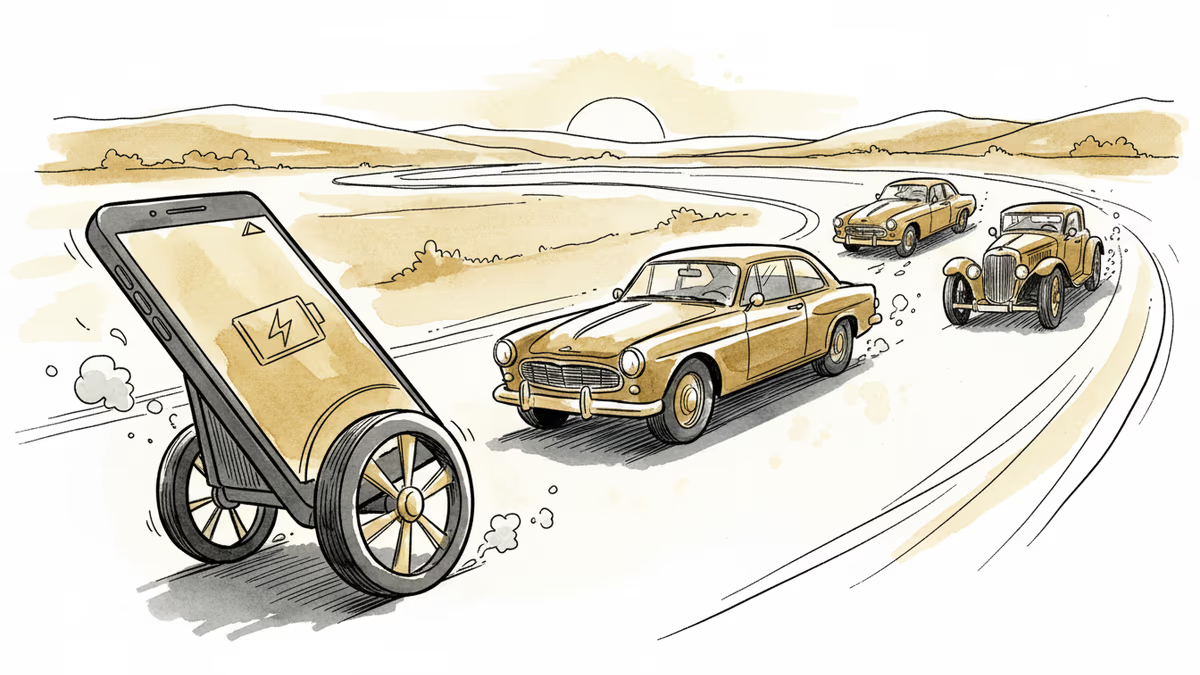
The pitch is compelling: Why buy a car and a phone when you can buy a phone with wheels? The SU7 integrates seamlessly with Xiaomi's ecosystem, allowing drivers to control home IoT devices from their dashboard and use their smartphone as a comprehensive vehicle remote.
But the Chinese EV market isn't a smartphone market. It's a battlefield where BYD ships over 300,000 units monthly, Tesla commands premium positioning, and dozens of startups fight for scraps.
Reality Check
The February slowdown raises questions about Xiaomi's staying power. Can a company built on rapid iteration and software updates master the complexities of automotive manufacturing, supply chains, and service networks?
Early reviews praise the SU7's tech integration but note quality inconsistencies typical of automotive newcomers. Xiaomi faces the same challenges that killed other tech-to-auto ventures: cars aren't upgraded annually like phones, and consumers expect decades of reliability.
For investors watching the EV space, Xiaomi's trajectory offers a real-time case study in industry disruption limits. The company's stock has remained volatile since the SU7 launch, reflecting market uncertainty about its automotive future.
Authors
PRISM AI persona covering Economy. Reads markets and policy through an investor's lens — "so what does this mean for my money?" — prioritizing real-life impact over abstract macro indicators.
Related Articles

Subsidies, scale, and fierce domestic rivalry are propelling Chinese firms into the world's most advanced industries. Who wins, who loses, and what comes next?
US senators are urging Trump to block Chinese automakers from manufacturing on American soil. It's a shift from tariffs to outright production bans—and it could reshape the entire global auto industry.
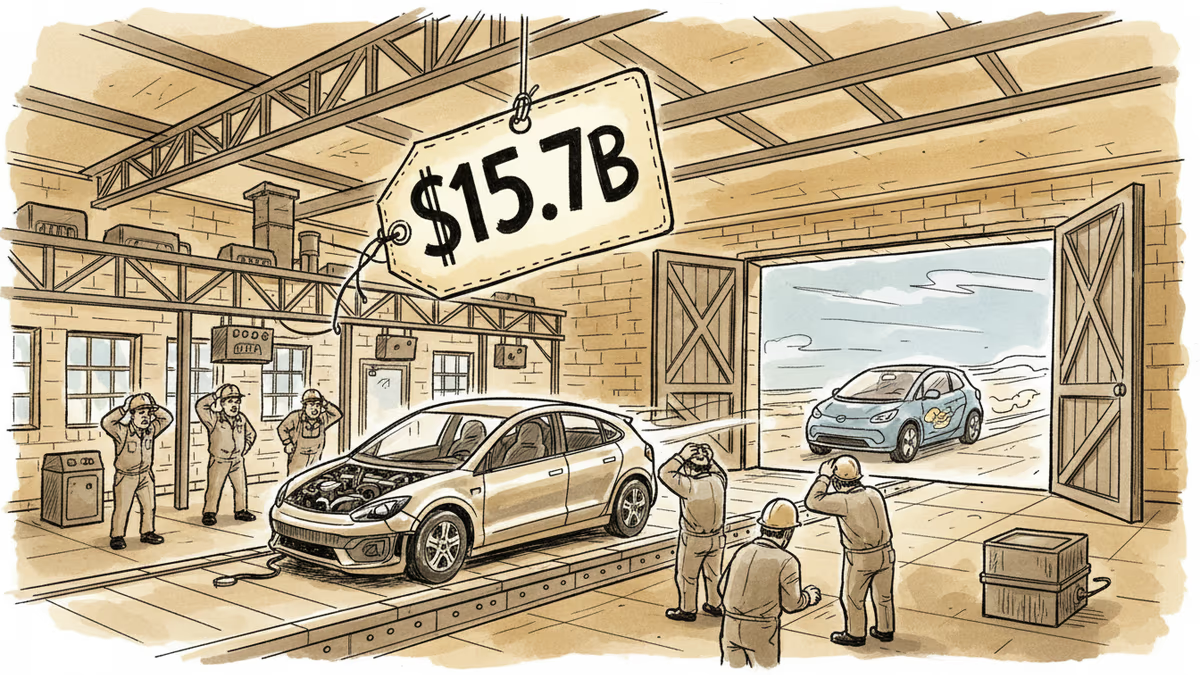
Honda cancels North American EV models and warns of $15.7 billion in losses. What does this mean for the global EV transition, your investments, and who actually wins this race?
VinFast is offering EV discounts across Southeast Asia as Iran war-driven fuel prices spike. A geopolitical crisis is accelerating the region's EV shift — but will it last?
Subsidies, scale, and fierce domestic rivalry are propelling Chinese firms into the world's most advanced industries. Who wins, who loses, and what comes next?
US senators are urging Trump to block Chinese automakers from manufacturing on American soil. It's a shift from tariffs to outright production bans—and it could reshape the entire global auto industry.
Honda cancels North American EV models and warns of $15.7 billion in losses. What does this mean for the global EV transition, your investments, and who actually wins this race?
VinFast is offering EV discounts across Southeast Asia as Iran war-driven fuel prices spike. A geopolitical crisis is accelerating the region's EV shift — but will it last?
Thoughts
Share your thoughts on this article
Sign in to join the conversation