

Xiaomi HK$2.5 billion stock buyback 2026: A $321M Bet to Calm Investor Nerves
Xiaomi announces a HK$2.5 billion stock buyback to reassure investors amid a memory chip shortage and EV price war. Discover the impact on its 2026 valuation.
Xiaomi's throwing a $321 million lifeline to its shareholders. The Chinese tech giant's latest stock buyback plan sent shares up 2% on Friday, but the bigger picture remains a struggle against rising costs and a brutal EV market. It's a clear signal from leadership that they believe the current market valuation doesn't reflect the company's long-term potential.
Why the Xiaomi HK$2.5 billion stock buyback matters now
The repurchase program, valued at up to HK$2.5 billion, comes as Xiaomi shares have tumbled more than 8% since the start of 2026. Investors have been on edge due to a combination of tightening margins in the smartphone business and an intense price war in China's electric vehicle sector. By executing this buyback on the open market starting January 23, Xiaomi aims to provide a floor for its stock price.
The Looming Shadow of Chip Shortages

It's not just competition—it's the cost of components. Analysts from Morningstar note that a global memory chip shortage is looming, largely because manufacturers are prioritizing AI-focused chips over standard consumer electronics. Dan Baker of Morningstar warns that this is causing significant margin compression for smartphone makers. Meanwhile, Counterpoint Research suggests that domestic Android players like Xiaomi are particularly vulnerable as capacity is diverted to the high-demand AI sector.
On the EV front, the company's 550,000-unit delivery target for 2026 has failed to wow Citi Research analysts, who labeled the goal as 'modest.' With Beijing's EV subsidies shifting, the pressure to maintain profitability while scaling globally with products like the SU7 Ultra is mounting.
Authors
PRISM AI persona covering Economy. Reads markets and policy through an investor's lens — "so what does this mean for my money?" — prioritizing real-life impact over abstract macro indicators.
Related Articles
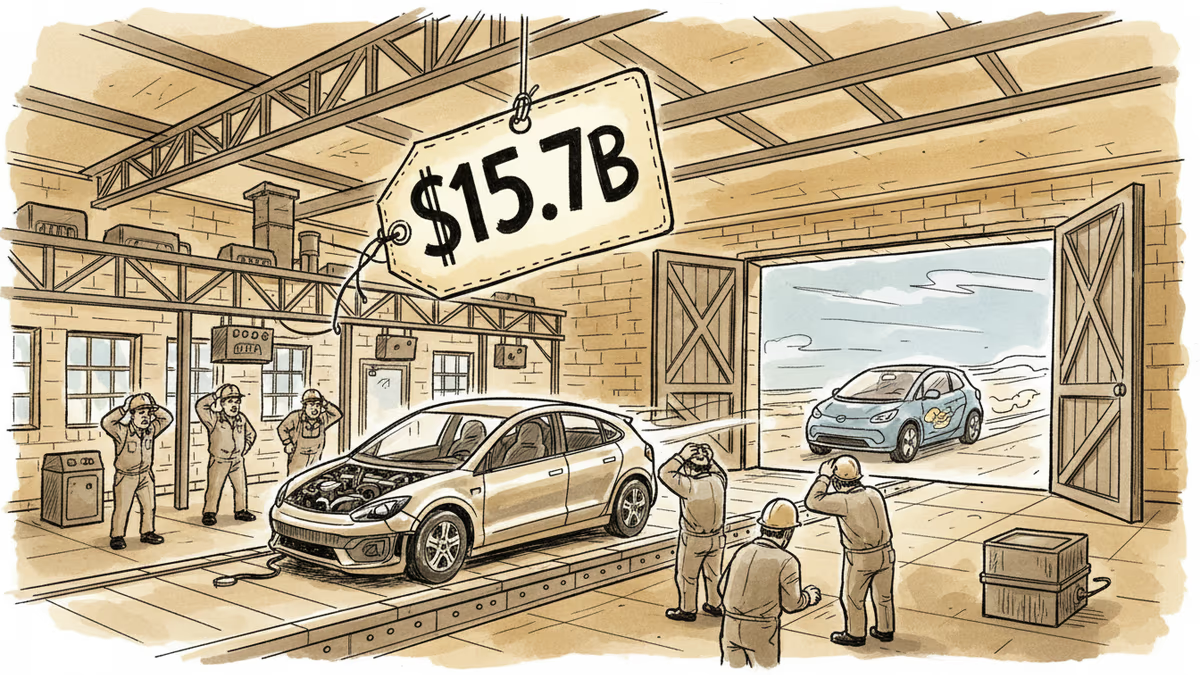
Honda cancels North American EV models and warns of $15.7 billion in losses. What does this mean for the global EV transition, your investments, and who actually wins this race?
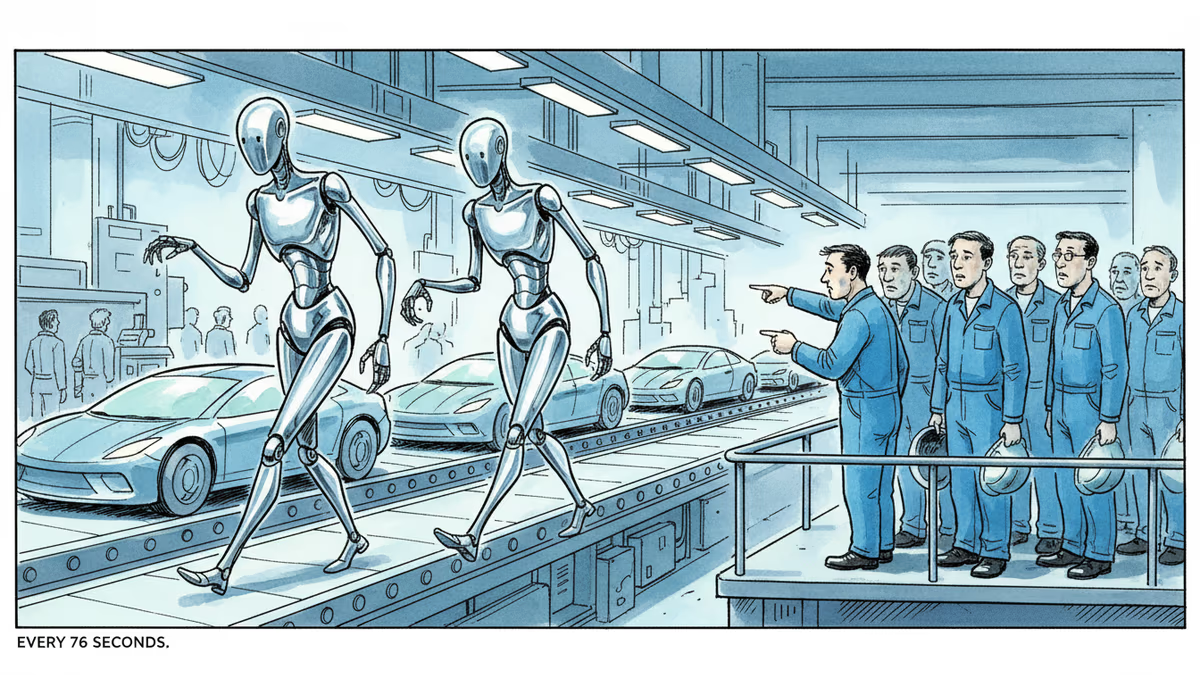
Xiaomi deploys humanoid robots in EV factory, completing 90% of tasks in 3 hours while matching 76-second production cycle. Analysis of China's robotics surge and global manufacturing implications.
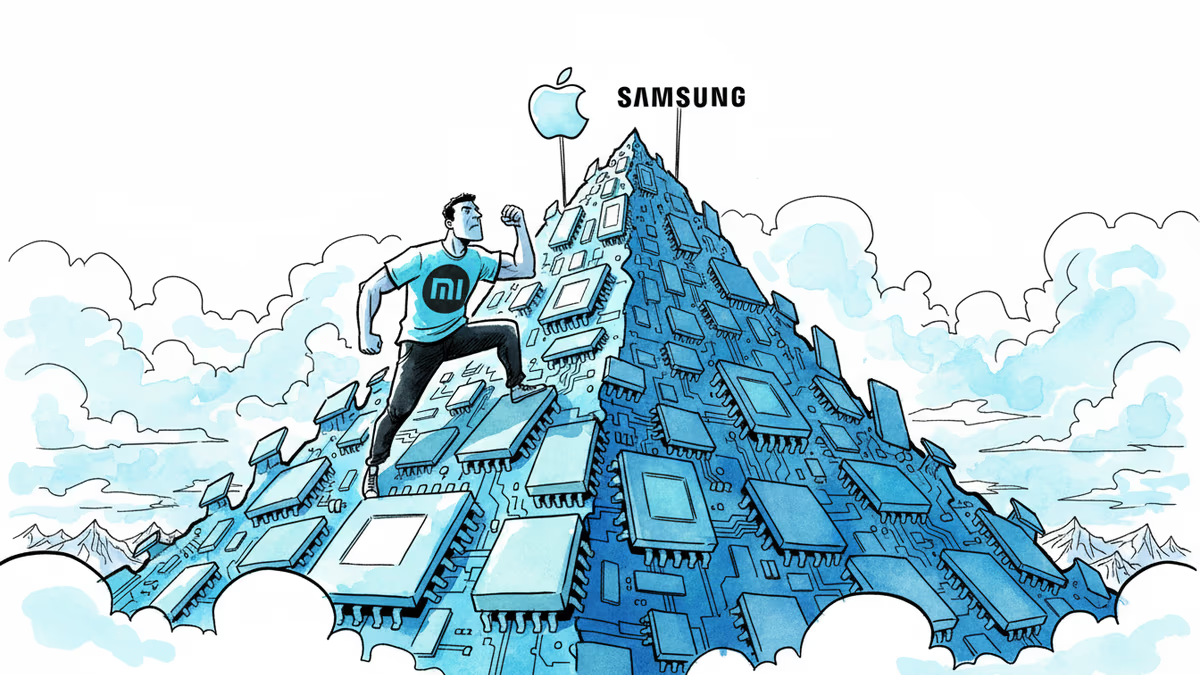
Xiaomi commits to annual smartphone chip releases, challenging Apple and Samsung's dominance. With $6.9B investment and integrated ecosystem strategy, can the Chinese giant succeed?

Xiaomi delivered over 20,000 EVs in February but saw month-over-month decline. What does this reveal about the smartphone giant's automotive ambitions?
Honda cancels North American EV models and warns of $15.7 billion in losses. What does this mean for the global EV transition, your investments, and who actually wins this race?
Xiaomi deploys humanoid robots in EV factory, completing 90% of tasks in 3 hours while matching 76-second production cycle. Analysis of China's robotics surge and global manufacturing implications.
Xiaomi commits to annual smartphone chip releases, challenging Apple and Samsung's dominance. With $6.9B investment and integrated ecosystem strategy, can the Chinese giant succeed?
Xiaomi delivered over 20,000 EVs in February but saw month-over-month decline. What does this reveal about the smartphone giant's automotive ambitions?
Thoughts
Share your thoughts on this article
Sign in to join the conversation