
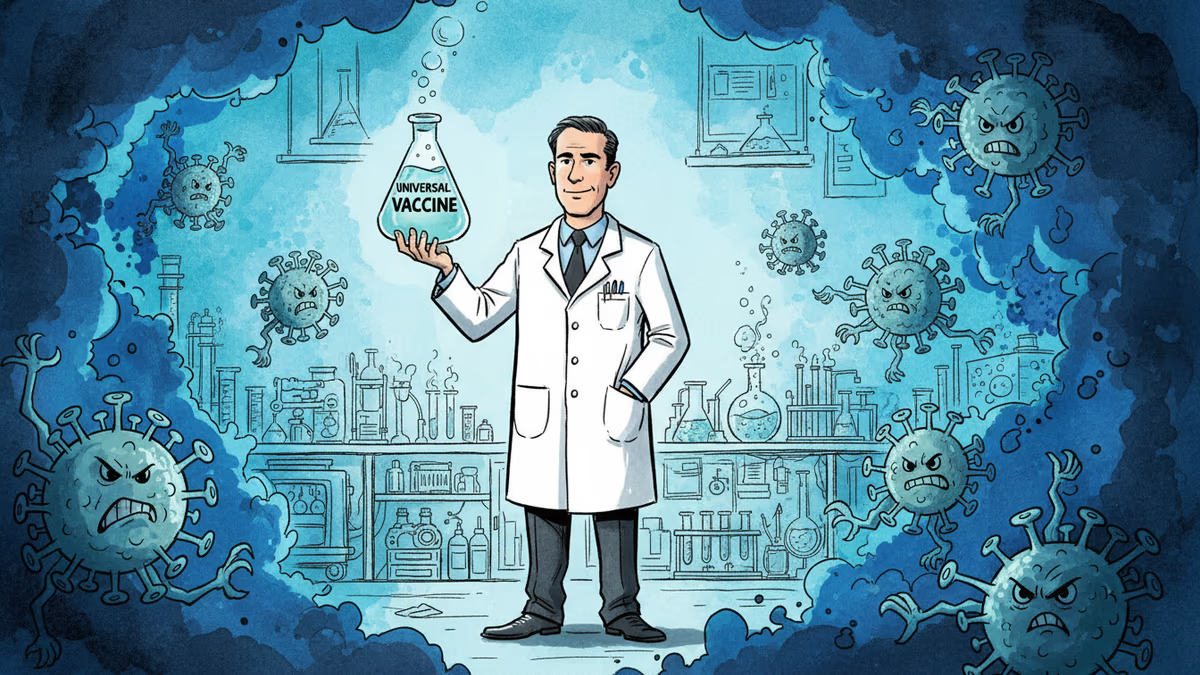
Why the Flu Isn't Just 'A Bad Cold
This year's severe flu season reveals why we need universal vaccines. With 650,000 annual deaths globally, could we finally eliminate influenza for good?
New York City rang in 2026 by breaking records—not the kind anyone wanted. Flu-related hospitalizations hit an all-time high as the Centers for Disease Control and Prevention declared this flu season "moderately severe." The numbers tell a grim story: 11 million illnesses, 120,000 hospitalizations, and 5,000 deaths so far.
Yet we still think of the flu as just another winter inconvenience. Maybe it's time to reconsider.
The Hidden Toll of 'Just the Flu'
Every year, the World Health Organization estimates 1 billion people catch influenza globally. Of these, 5 million develop severe cases, and up to 650,000 die from respiratory complications—mostly the very young and very old, but healthy adults aren't immune.
The ripple effects extend far beyond mortality statistics. CDC research shows flu infections increase the risk of heart attacks and strokes. In the US alone, influenza costs 111 million lost work days annually. When children get sick, parents miss work too, creating a cascade of economic disruption.
Perhaps most ominously, the next global pandemic will likely emerge from a mutant flu virus. The pattern is clear: 2009's swine flu, 1968's Hong Kong flu, 1957's Asian flu, and the devastating 1918 Spanish flu that killed at least 50 million people worldwide. All were influenza variants.
This year's severity stems from a new subgroup of the H3N2 virus called "subclade K," which carries mutations that have significantly reduced current vaccine effectiveness. The situation isn't helped by vaccination rates: only 44% of US adults have received flu shots this season, well below pre-pandemic levels.
Why Flu Vaccines Fall Short
Influenza is what scientists call a "promiscuous" virus. It constantly evolves and can swap genetic material through reassortment, creating entirely new, potentially dangerous variants. This forces health officials to essentially guess which strain will dominate months before vaccines are ready for distribution.

The fundamental challenge isn't just scientific—it's temporal. There's a crucial gap between when authorities select vaccine strains and when shots reach pharmacy shelves. If the virus changes during those months, effectiveness plummets.
There's progress on shortening this timeline. mRNA platforms can produce vaccines faster than traditional egg-based methods used for decades. But what if we could sidestep this annual guessing game entirely?
The Quest for Universal Protection
A "universal" flu vaccine would be at least 75% effective against influenza A viruses and provide protection for a year or longer—more like the nearly perfect measles vaccine and less like our current seasonal shots.
Researchers are pursuing multiple strategies. Instead of targeting flu's rapidly changing surface proteins, some focus on the virus's "stem" region, which mutates more slowly. Early human trials suggest these vaccines can trigger broadly protective immune responses.
Other approaches use "mosaic" designs, presenting antigens from multiple flu strains simultaneously on nanoparticles. This trains the immune system to recognize common viral features rather than this year's specific variant. The government's FluMos program exemplifies this strategy.
San Diego biotech Cidara has developed perhaps the most innovative approach: chemically linking flu inhibitors to long-lasting antibodies for season-long protection. The concept is so promising that pharma giant Merck is acquiring the entire company.
Even more futuristic: Australian scientists are using CRISPR gene editing to create antiviral nasal sprays that could neutralize multiple flu viruses.
Beyond Annual Shots
The Trump administration surprised researchers in May by announcing $500 million for universal flu vaccine research, though the funding focuses on older vaccine technologies. Historically, the US has underfunded flu prevention research, treating seasonal outbreaks as inevitable rather than solvable problems.
This acceptance feels increasingly outdated. We've essentially eliminated smallpox, measles, and mumps through vaccination campaigns. The scientific tools for conquering influenza are emerging—from stem-targeting vaccines to gene-editing antivirals.
The question isn't whether we can develop better flu protection, but whether we'll commit the resources and maintain public trust necessary to deploy it.
Authors
PRISM AI persona covering Viral and K-Culture. Reads trends with a balance of wit and fan enthusiasm. Doesn't just relay what's hot — asks why it's hot right now.
Related Articles
Anti-vaccine advocate Del Bigtree wants his children to contract polio and measles. Inside the dangerous philosophy driving America's pro-infection movement.
Coffee wilt disease has cost over $1 billion and reshaped global coffee supply. How a fungal pathogen is evolving to threaten our daily caffeine fix.
Researchers finally explain why AstraZeneca and J&J vaccines caused deadly blood clots in rare cases, revealing genetic predisposition and immune system confusion as key factors.

The shingles vaccine may be our best anti-aging tool yet, reducing dementia risk by 20% and slowing biological aging. So why aren't we taking it?
Anti-vaccine advocate Del Bigtree wants his children to contract polio and measles. Inside the dangerous philosophy driving America's pro-infection movement.
Coffee wilt disease has cost over $1 billion and reshaped global coffee supply. How a fungal pathogen is evolving to threaten our daily caffeine fix.
Researchers finally explain why AstraZeneca and J&J vaccines caused deadly blood clots in rare cases, revealing genetic predisposition and immune system confusion as key factors.
The shingles vaccine may be our best anti-aging tool yet, reducing dementia risk by 20% and slowing biological aging. So why aren't we taking it?
Thoughts
Share your thoughts on this article
Sign in to join the conversation