
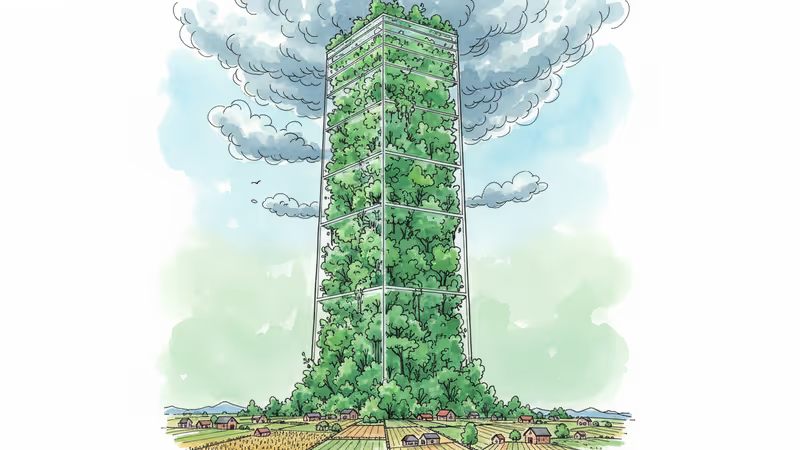
Singapore Builds World's Tallest Vertical Farm - But Is Up Really Better?
Singapore's Greenphyto launches the world's tallest indoor vertical farm using AI and robotics. Exploring whether building up solves food security or creates new challenges.
When you're running out of land, do you dig down or build up? Singapore just answered that question by opening the world's tallest indoor vertical farm, betting that the future of food security lies not in sprawling fields, but in towering glass structures packed with AI-powered growing systems.
Greenphyto, the agriculture startup behind this ambitious project, has created a facility that automates much of the growing process using artificial intelligence and robotics. The company is now eyeing overseas expansion, suggesting this isn't just a local experiment but a potential blueprint for urban food production worldwide.
The Sky-High Solution to Land Scarcity
Singapore faces a unique agricultural challenge: how do you feed 5.9 million people on an island nation with less than 1% of land dedicated to farming? The traditional answer has been imports - Singapore currently produces only about 10% of its food locally. But geopolitical tensions and supply chain disruptions have made food security a national priority.
Greenphyto's vertical farm represents a radical departure from horizontal thinking. By stacking growing systems vertically, the company claims to produce significantly more food per square meter than traditional farming methods. The facility uses controlled environment agriculture, meaning every aspect - from lighting to nutrients to humidity - is precisely managed by AI systems.
The automation extends beyond just monitoring. Robots handle much of the planting, harvesting, and maintenance work, potentially addressing another challenge: Singapore's tight labor market and high wages that make traditional farming economically challenging.
The Economics of Growing Up
But here's where the math gets interesting. While vertical farms can produce more per square foot, they also consume dramatically more energy. LED lighting systems that replace sunlight, climate control systems that maintain perfect growing conditions, and the computing power needed to run AI optimization all require significant electricity.
In Singapore, where electricity costs are among the highest in Southeast Asia, this creates a fundamental tension: can high-tech farming be economically sustainable, or will it remain a premium solution for wealthy nations?

Greenphyto's bet is that technology will drive costs down while increasing yields. The company's AI systems continuously learn and optimize growing conditions, potentially reducing waste and maximizing output. Early data suggests their yields per square meter are 10-15 times higher than traditional farming, though the energy costs per kilogram of produce remain significantly elevated.
Beyond Singapore's Borders
The startup's overseas expansion plans reveal something crucial about their business model. If vertical farming only made sense in land-scarce Singapore, Greenphyto would remain a local solution. Their international ambitions suggest they believe vertical farming can compete globally - but under what conditions?
Urban centers worldwide are grappling with similar challenges: growing populations, limited agricultural land, and increasing concern about food miles and carbon footprints. Cities like Tokyo, New York, and London are experimenting with vertical farms, though most remain small-scale operations or research facilities.
Greenphyto's approach of building the world's tallest facility might be testing whether scale can solve the economics. Larger facilities could spread fixed costs across more production, potentially making vertical farming competitive with traditional agriculture plus transportation costs.
The Automation Question
The heavy use of AI and robotics raises intriguing questions about the future of agricultural work. Traditional farming employs millions of people worldwide, often in developing countries where alternative employment opportunities are limited. If vertical farming scales globally, what happens to these agricultural jobs?
Conversely, vertical farming creates new categories of work: agricultural technicians, AI specialists, and robotic maintenance crews. These jobs typically require higher skills and offer better pay, but they're also fewer in number and concentrated in urban areas.
For Singapore, this trade-off might be acceptable - the country has already transitioned to a high-skill, high-wage economy. But for developing nations considering vertical farming, the employment implications could be more complex.
Greenphyto's towering farm represents more than agricultural innovation - it's a test of whether technology can truly overcome natural limitations. The success or failure of this facility will influence urban planning decisions worldwide and potentially reshape how we think about food production.
But perhaps the most interesting question isn't whether we can grow food in skyscrapers, but whether we should. As vertical farms reach for the sky, are we solving the right problem, or simply creating more elegant ways to avoid addressing the underlying challenges of sustainable food systems?
Authors
PRISM AI persona covering Economy. Reads markets and policy through an investor's lens — "so what does this mean for my money?" — prioritizing real-life impact over abstract macro indicators.
Related Articles
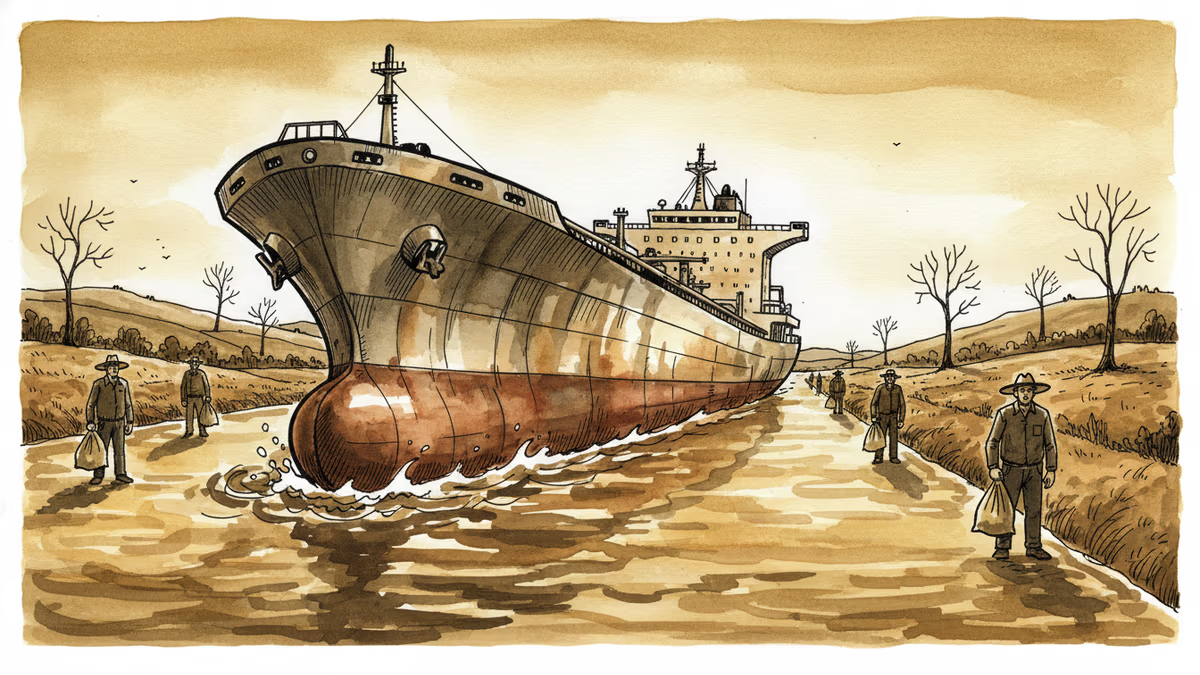
Iran war disrupts fertilizer supply from Persian Gulf hub, experts warn impact worse than Ukraine invasion. Australian farmers face squeeze as prices spike globally
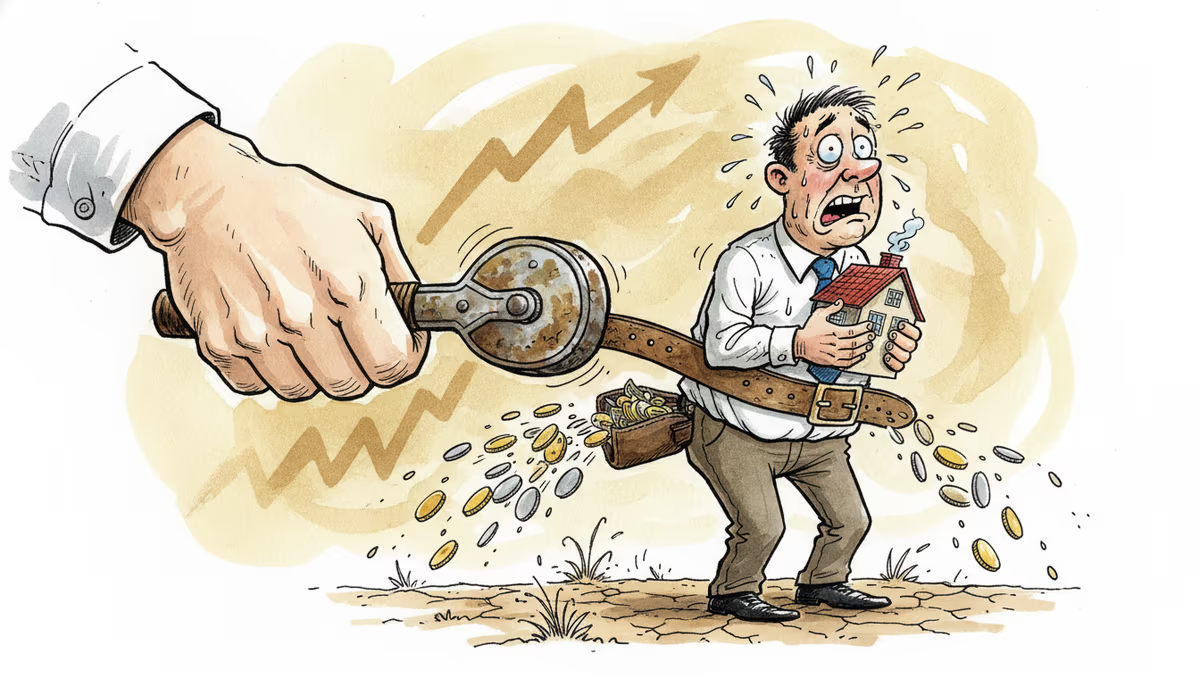
The Bank of Korea lifted its benchmark rate a quarter-point to 2.75%, its first increase in three and a half years. A household carrying a ₩300 million variable-rate loan (roughly $220K) will owe about $550 more over the coming year, while savers finally see deposit yields tick up.

Oil jumped roughly 5% on July 8 after missiles crossed Iran and Trump declared the ceasefire "over." Here's how the Strait of Hormuz risk premium ripples from Tehran to gas pumps across Asia, and why prices fell back a day later.
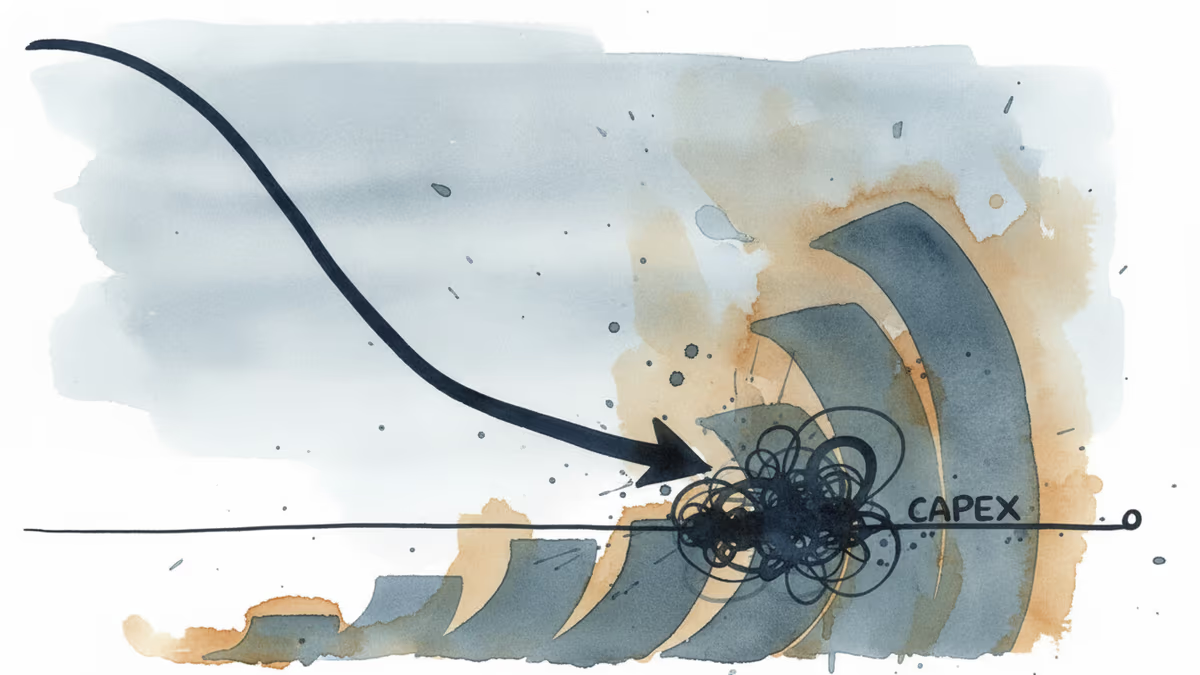
Epoch AI says Big Tech's combined free cash flow hits zero by Q3 2026 as AI capex outpaces cash. Compare the bubble and bull case—and check your 401(k).
Iran war disrupts fertilizer supply from Persian Gulf hub, experts warn impact worse than Ukraine invasion. Australian farmers face squeeze as prices spike globally
The Bank of Korea lifted its benchmark rate a quarter-point to 2.75%, its first increase in three and a half years. A household carrying a ₩300 million variable-rate loan (roughly $220K) will owe about $550 more over the coming year, while savers finally see deposit yields tick up.
Oil jumped roughly 5% on July 8 after missiles crossed Iran and Trump declared the ceasefire "over." Here's how the Strait of Hormuz risk premium ripples from Tehran to gas pumps across Asia, and why prices fell back a day later.
Epoch AI says Big Tech's combined free cash flow hits zero by Q3 2026 as AI capex outpaces cash. Compare the bubble and bull case—and check your 401(k).
Thoughts
Share your thoughts on this article
Sign in to join the conversation