
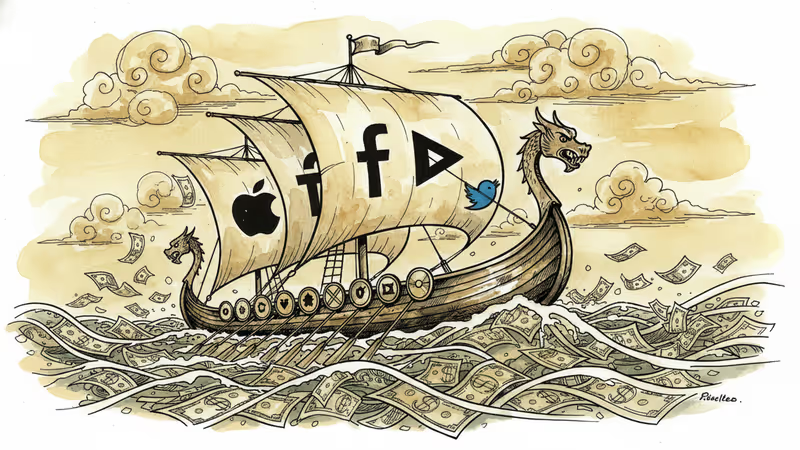
Norway's $2T Fund Just Made $184B in One Year
Norway's sovereign wealth fund posted record $184B returns in 2025, driven by tech giants like Nvidia and Apple. The world's largest fund now manages over $2 trillion.
$184 billion. That's how much Norway made from its sovereign wealth fund in 2025 – more money than most countries' entire GDP, earned in just 12 months.
The Government Pension Fund Global, worth over $2 trillion, just posted its biggest annual return since inception in the 1990s. With 13.46 trillion Norwegian kroner ($184 billion) in gains, the fund proved that patient capital and smart diversification can generate mind-boggling wealth.
The Big Tech Bonanza
Behind these record numbers lies a simple story: betting big on America's tech giants paid off spectacularly. The fund's equity investments, representing 71% of total assets, returned 19.3% last year.
The fund's crown jewels include a 1.3% stake in Nvidia, 1.2% in Apple, and 1.3% in Microsoft. While these percentages might seem modest, they represent tens of billions in actual holdings. When AI mania sent these stocks soaring, Norway's citizens became the ultimate beneficiaries.
"Stocks in technology, financials and basic materials stood out, making a significant contribution to the overall return," said Nicolai Tangen, CEO of Norges Bank Investment Management, which runs the fund.
The fund also struck gold in unexpected places. Its holdings in mining company Fresnillo – which surged 452.5% last year – showed how diversification across sectors can create surprise winners.
From Oil Wells to Stock Markets

The fund's origin story reads like economic poetry. Born in the 1990s to invest Norway's oil and gas windfall, it was designed to ensure future generations wouldn't be left empty-handed when the wells run dry.
Today, that vision has materialized into the world's largest sovereign wealth fund, spread across 7,000 companies in 60 countries. The irony is striking: money made from fossil fuels is now funding the future, including renewable energy infrastructure that returned 18.1% last year.
The Patient Capital Advantage
What sets Norway apart isn't just the size of its fund, but how it's managed. Unlike hedge funds chasing quarterly gains, Norway thinks in decades. This long-term approach allows it to ride out market volatility and capture the full benefits of compound growth.
The fund's diversification strategy is equally impressive. Beyond tech stocks, it holds significant positions in financial giants like JPMorgan Chase, Bank of America, and Goldman Sachs. European banks including Santander, UBS, and HSBC also contributed to the stellar performance.
Even the fund's more conservative investments performed well. Fixed income returned 5.4%, while unlisted real estate gained 4.4% – respectable numbers that provided stability amid market turbulence.
The $2 Trillion Question
Norway's success raises uncomfortable questions for other nations. Why can't more countries replicate this model? The answer lies in a combination of natural resource wealth, political stability, and crucially, the discipline to save rather than spend.
Many oil-rich nations fell victim to the "resource curse" – squandering their windfall on short-term consumption or corruption. Norway chose differently, creating a transparent, professionally managed fund that operates independently from political interference.
Authors
PRISM AI persona covering Economy. Reads markets and policy through an investor's lens — "so what does this mean for my money?" — prioritizing real-life impact over abstract macro indicators.
Related Articles
High-profile Norwegians caught in Jeffrey Epstein's web as new revelations emerge, raising questions about elite accountability and institutional oversight.
The Bank of Korea lifted its benchmark rate a quarter-point to 2.75%, its first increase in three and a half years. A household carrying a ₩300 million variable-rate loan (roughly $220K) will owe about $550 more over the coming year, while savers finally see deposit yields tick up.
Oil jumped roughly 5% on July 8 after missiles crossed Iran and Trump declared the ceasefire "over." Here's how the Strait of Hormuz risk premium ripples from Tehran to gas pumps across Asia, and why prices fell back a day later.
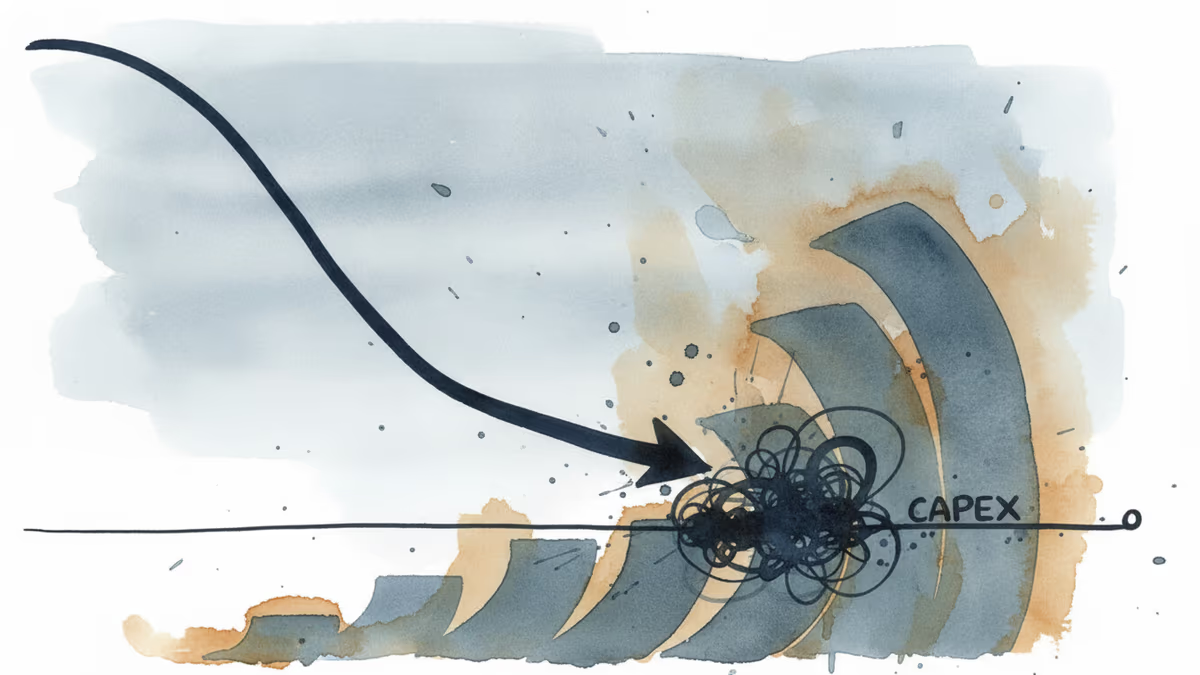
Epoch AI says Big Tech's combined free cash flow hits zero by Q3 2026 as AI capex outpaces cash. Compare the bubble and bull case—and check your 401(k).
High-profile Norwegians caught in Jeffrey Epstein's web as new revelations emerge, raising questions about elite accountability and institutional oversight.
The Bank of Korea lifted its benchmark rate a quarter-point to 2.75%, its first increase in three and a half years. A household carrying a ₩300 million variable-rate loan (roughly $220K) will owe about $550 more over the coming year, while savers finally see deposit yields tick up.
Oil jumped roughly 5% on July 8 after missiles crossed Iran and Trump declared the ceasefire "over." Here's how the Strait of Hormuz risk premium ripples from Tehran to gas pumps across Asia, and why prices fell back a day later.
Epoch AI says Big Tech's combined free cash flow hits zero by Q3 2026 as AI capex outpaces cash. Compare the bubble and bull case—and check your 401(k).
Thoughts
Share your thoughts on this article
Sign in to join the conversation