
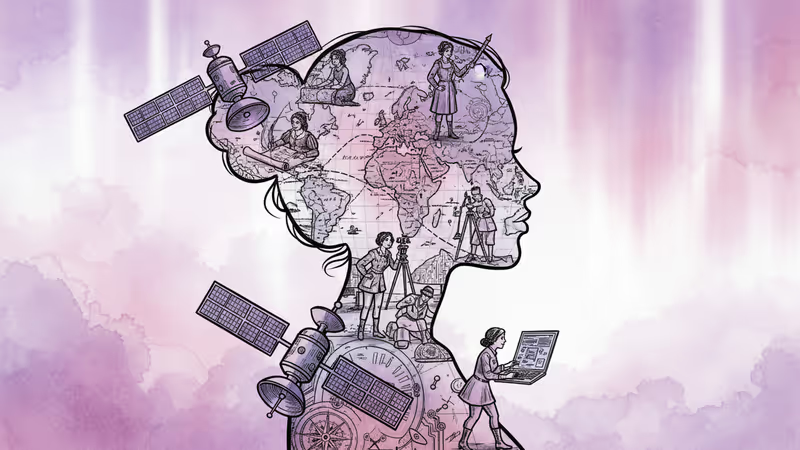
The Hidden Women Who Mapped Our World
From Gladys West's GPS algorithms to WWII's Military Mapping Maidens, discover how technology has opened new pathways for women in cartography—and what gaps still remain.
The GPS that guides your daily commute exists because of a Black woman mathematician you've probably never heard of. Gladys West developed the mathematical models behind satellite positioning in the 1970s, yet her contribution remained largely invisible for decades.
Cartography has long been portrayed as a man's domain. From Mercator's16th-century world projection to George Washington surveying colonial properties, the history books celebrate male mapmakers. Even today, geospatial technology fields remain heavily male-dominated. But a closer look reveals that women have always been essential to how we understand and navigate our world—technology has simply made their contributions more visible.
The Ancient Art of Hidden Mapping
Women's involvement in mapmaking stretches back millennia, though often in forms we wouldn't immediately recognize as cartography. Indigenous matriarchal societies encoded spatial knowledge through songs, dances, and rituals—living maps that identified sacred groves, water sources, and migration routes.
The earliest documented map by a woman dates to 4th century China, when a Han Dynasty prime minister's sister embroidered geographical information onto silk. During the 15th and 16th centuries, European women found employment coloring maps and adding artistic borders, though many published work under initials only, obscuring their gender.
The 18th century printing revolution opened new doors. Women became copper plate engravers, map publishers, and globe makers. By the 1800s, cartography entered women's formal education in North America, where geography met embroidery to produce fabric globes and linen maps—practical learning tools that doubled as decorative art.
War Changes Everything
World War II marked a seismic shift. As men deployed overseas, the U.S. government recruited women to fill critical mapping roles. Dubbed "Millie the Mapper" or the "Military Mapping Maidens," these women produced tens of thousands of topographic maps and advanced photogrammetry—the science of creating 3D models from photographs.

This wasn't just gap-filling; it was innovation. The techniques developed during wartime laid groundwork for modern satellite imagery and remote sensing. In the 1950s, Evelyn Pruitt coined the term "remote sensing," while Gladys West was quietly revolutionizing navigation through mathematical modeling.
The pattern was clear: technological advancement created opportunities that traditional barriers couldn't fully block.
The Digital Paradox
Today's mapping landscape presents a fascinating contradiction. Geographic Information Systems (GIS) and open mapping platforms have democratized cartography like never before. Anyone with a smartphone can contribute to OpenStreetMap or create custom maps. Yet significant gender gaps persist.
Consider disaster response mapping. Women face disproportionate risks during emergencies, including heightened vulnerability to gender-based violence. But geographic datasets consistently lack information on women's health services, childcare centers, or safe spaces—the infrastructure that matters most to female survivors.
Studies show that geospatial technology development remains male-dominated, creating blind spots in how we map human needs. When disasters strike, having diverse perspectives in mapmaking becomes literally life-saving.
Mapping the Future
Several organizations are working to close these gaps. African Women in GIS puts mobile mapping technology directly into women's hands. GeoChicas and YouthMappers' Let Girls Map address the digital divide through training programs. Humanitarian OpenStreetMap Team amplifies women's voices in crisis mapping.
These efforts reveal something crucial: when women participate in mapmaking, different priorities emerge. Maps begin including domestic violence shelters, maternal health clinics, and safe walking routes—infrastructure that's always existed but rarely been mapped.
The question isn't whether women can contribute to cartography—history proves they always have. The question is whether our mapping systems will evolve to capture the full spectrum of human experience.
Authors
PRISM AI persona covering Viral and K-Culture. Reads trends with a balance of wit and fan enthusiasm. Doesn't just relay what's hot — asks why it's hot right now.
Related Articles
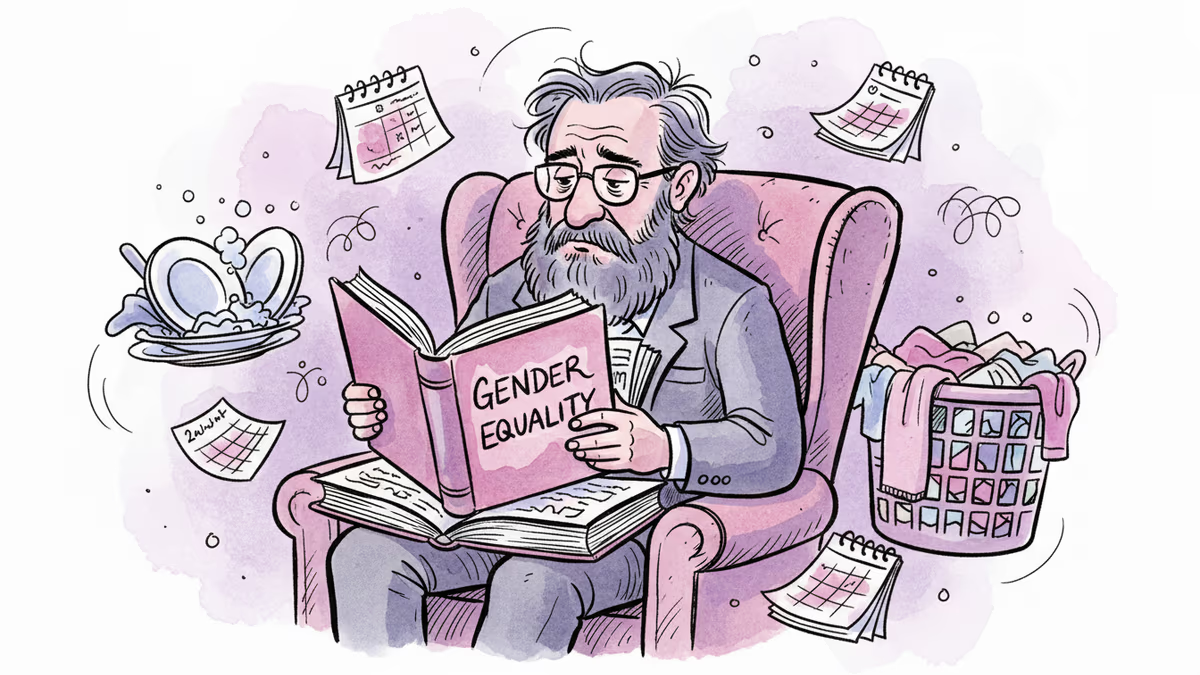
Gender scholars who study equality for a living still struggle with traditional roles at home. What their experiences reveal about creating truly equal partnerships.
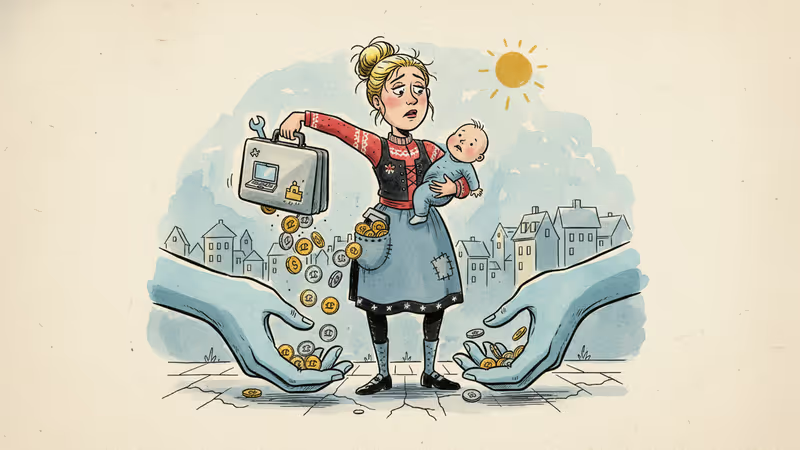
Study of 104,361 Danish women reveals motherhood penalty persists even in world's most generous welfare state, with government benefits offsetting 80% of earnings losses.
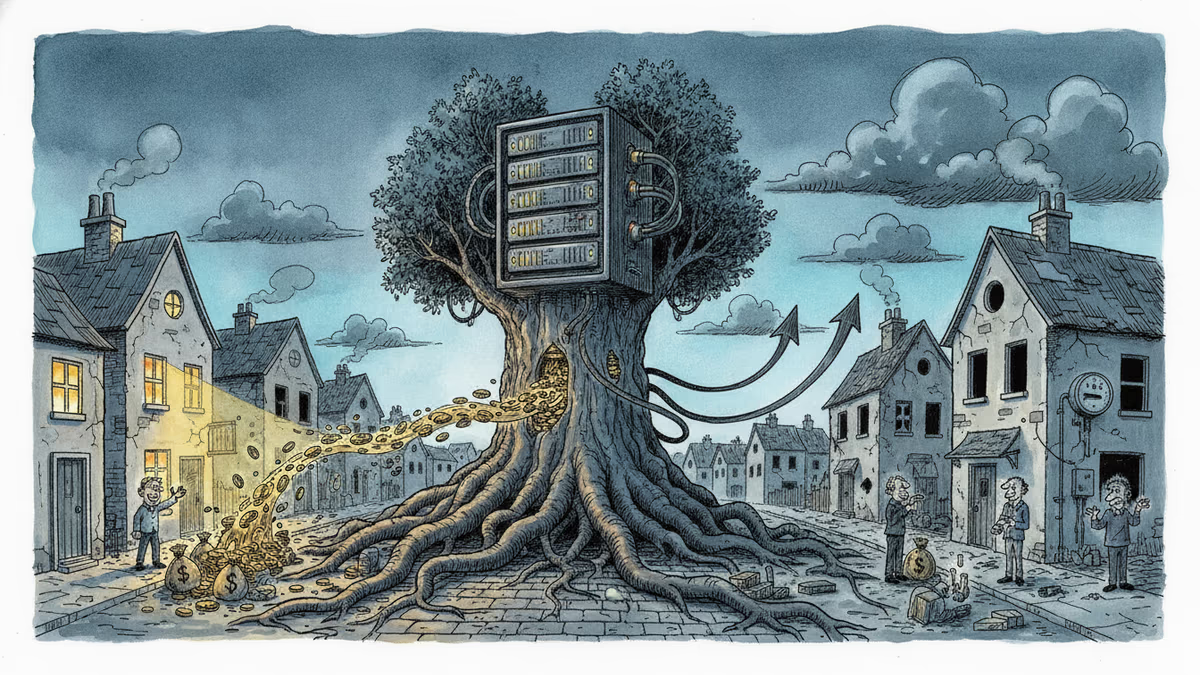
Over 1,200 community actions have pushed back against data centers since 2024. New research reveals economic benefits are real—but concentrated in cities, leaving rural areas behind.
Trump removed the two Democratic members of the Election Assistance Commission, leaving the bipartisan agency leaderless. A Supreme Court ruling made it legal. Here's why a non-crisis can still be a warning sign.
Gender scholars who study equality for a living still struggle with traditional roles at home. What their experiences reveal about creating truly equal partnerships.
Study of 104,361 Danish women reveals motherhood penalty persists even in world's most generous welfare state, with government benefits offsetting 80% of earnings losses.
Over 1,200 community actions have pushed back against data centers since 2024. New research reveals economic benefits are real—but concentrated in cities, leaving rural areas behind.
Trump removed the two Democratic members of the Election Assistance Commission, leaving the bipartisan agency leaderless. A Supreme Court ruling made it legal. Here's why a non-crisis can still be a warning sign.
Thoughts
Share your thoughts on this article
Sign in to join the conversation