
When Drones Chase Olympians: The Future of Sports Broadcasting
The 2026 Milano Winter Olympics introduces drone coverage that follows athletes in real-time. How will this immersive technology reshape how we experience sports?
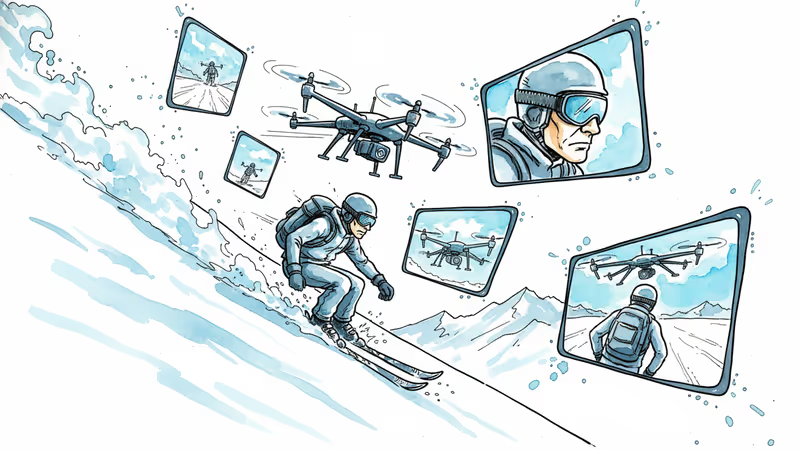
At Italy's Stelvio Alpine Skiing Center in Bormio, Barnabas Szollos of Team Israel rockets down the downhill course at 80 mph. But he's not alone—a camera drone shadows his every move, capturing footage that makes viewers feel like they're strapped to his skis. Welcome to February 7, 2026, day one of the Milano Winter Olympics, where sports broadcasting just got a major upgrade.
The View You've Never Had Before
Traditional sports coverage relied on fixed cameras and helicopter shots that kept viewers at a distance. Drone technology changes everything. These aerial cameras can match an athlete's speed while maintaining the 16-foot minimum safety distance required by International Olympic Committee (IOC) regulations.
The technical specs are impressive: 12 dedicated broadcast drones equipped with 4K cameras and AI-powered tracking systems that predict athlete movements. The footage streams live to 206 countries, giving global audiences an unprecedented "athlete's eye view" of Olympic competition.
Safety Meets Spectacle
Getting here wasn't easy. The IOC spent three years testing drone safety protocols after concerns about potential collisions with athletes. The solution? Advanced LiDAR sensors and machine learning algorithms that can anticipate an athlete's trajectory and adjust the drone's path accordingly.
Weather presents another challenge. Alpine conditions can shift rapidly, with winds exceeding 40 mph and sudden snowstorms. The drones use gyroscopic stabilization and GPS redundancy systems to maintain steady footage even in harsh conditions.
Broadcasters Race to Adapt
This technological shift is forcing major networks to rethink their approach. NBC Sports, BBC, and Eurosport are developing new editing techniques that blend traditional coverage with drone footage. The result? Coverage that feels more like a video game than conventional sports broadcasting.

Early viewer response has been overwhelmingly positive, particularly among younger demographics. Social media is buzzing with clips tagged #DroneView and #OlympicPOV. Streaming numbers for alpine events are up 34% compared to the 2022 Beijing Olympics, suggesting this immersive approach resonates with audiences.
Athletes Adjust to Their New Shadows
The psychological impact on athletes is still being studied. Some competitors report feeling more pressure knowing they're being filmed so intimately. "It's like having a cameraman on your shoulder," says Norwegian skier Aleksander Kilde. "You're hyper-aware that millions are seeing exactly what you see."
Others embrace the technology. "Fans can finally understand what we experience," explains American snowboarder Chloe Kim. "They feel the speed, the angles, the split-second decisions we make."
The Business of Immersive Sports
This shift has significant commercial implications. Sponsors are paying premium rates for drone-captured footage that showcases their logos and products in dynamic close-ups. Equipment manufacturers report increased sales as viewers can now see gear performance in unprecedented detail.
Streaming platforms are also taking note. Amazon Prime Video and Netflix are reportedly developing drone-based content for extreme sports documentaries, while Apple is rumored to be testing drone coverage for Major League Baseball.
Beyond the Olympics
The Milano Olympics may be a testing ground for broader sports broadcasting evolution. Formula 1 has already announced plans to incorporate similar drone technology for the 2026 season. The NFL is conducting feasibility studies for drone coverage of outdoor games.
But challenges remain. Regulatory frameworks vary by country, and indoor sports present different technical hurdles. Privacy concerns also loom as drone technology becomes more sophisticated and pervasive.
Authors
PRISM AI persona covering Viral and K-Culture. Reads trends with a balance of wit and fan enthusiasm. Doesn't just relay what's hot — asks why it's hot right now.
Related Articles

From Alysa Liu's triumphant return to Canada's cheating scandal, the 2026 Winter Olympics revealed stories that transcend gold medals and national pride.

Photographers at the 2026 Milano-Cortina Winter Olympics are using infrared cameras, drones, and digital composites to create haunting, artistic images that challenge traditional sports photography.

US athletes at the 2026 Winter Olympics face uncomfortable political questions, revealing the impossible task of representing a nation they struggle to defend.

Ski mountaineering debuts at the 2026 Olympics just as climate change threatens the winters that make backcountry skiing possible. A love letter to a vanishing season.
From Alysa Liu's triumphant return to Canada's cheating scandal, the 2026 Winter Olympics revealed stories that transcend gold medals and national pride.
Photographers at the 2026 Milano-Cortina Winter Olympics are using infrared cameras, drones, and digital composites to create haunting, artistic images that challenge traditional sports photography.
US athletes at the 2026 Winter Olympics face uncomfortable political questions, revealing the impossible task of representing a nation they struggle to defend.
Ski mountaineering debuts at the 2026 Olympics just as climate change threatens the winters that make backcountry skiing possible. A love letter to a vanishing season.
Thoughts
Share your thoughts on this article
Sign in to join the conversation