

Kenya's Great Carbon Valley: Can Geothermal Power Forge the Future of CO2 Removal?
In Kenya's Great Rift Valley, startups are using geothermal energy for Direct Air Capture (DAC) of CO₂. An in-depth look at the 'Great Carbon Valley' vision, its huge potential, and its critical challenges.
In Kenya’s Great Rift Valley, a landscape forged by volcanic fire, a high-stakes climate experiment is underway. A startup named Octavia Carbon is harnessing the region's immense geothermal energy to power machines that suck carbon dioxide directly from the air. This pilot project is the first step in a sweeping vision to remake this geologically active corridor into the 'Great Carbon Valley'—a global hub for carbon removal.
Founded in 2022, Octavia Carbon began running its critical test in June near the town of Gilgil. It's using excess energy from nearby geothermal power stations to operate four prototypes. Each device has an initial capacity to capture just 60 tons of CO₂ per year, a modest start. But the immediate goal isn't scale; it's to demonstrate that Direct Air Capture (DAC) is not only possible here, but uniquely suited to Kenya's environment.
This potential is what led entrepreneurs Bilha Ndirangu and James Irungu Mwangi to found Great Carbon Valley (GCV) in 2023, a company dedicated to attracting DAC firms to the region. They've already brought in major players, including Switzerland's Climeworks, operator of the world's largest DAC plant, and Belgian startup Sirona Technologies. Climeworks has announced plans to complete its Kenyan plant by 2028. Proponents hope the industry will create real opportunities for Kenya’s roughly 6 million un- or under-employed youths.

But the vision faces formidable hurdles. DAC remains unproven at scale and is wildly expensive. The average price for a DAC credit is nearly $450 per ton, compared to around $84 per ton in the EU’s carbon market. Critics argue it's a 'pollution permit' that gives polluters an excuse to delay the transition from fossil fuels. An investigation into Climeworks’ Mammoth plant in Iceland found it didn't even capture enough CO₂ to offset its own operations.
Layered on top of these technical and economic challenges is a deep-seated history of distrust from the Maasai people, who have inhabited this land for centuries. Decades of geothermal development have led to waves of evictions, and many locals still don't have access to the electricity generated on their ancestral land. Maasai activist Agnes Koilel told reporters that past promises of employment resulted in low-paying cleaning or security jobs. She wants to see tangible benefits, like a health center, and an end to displacement. "Power is generated from these communities," Koilel said. "But they themselves do not have that light."
The Great Carbon Valley project walks a tightrope between a visionary future and a fraught reality. If Ndirangu and her partners can navigate the immense costs, technical challenges, and deeply personal community issues, they could pioneer a new chapter in the fight against climate change. If they can't, it risks becoming another cautionary tale of a grand idea that failed to connect with the people on the ground.
Authors
Related Articles
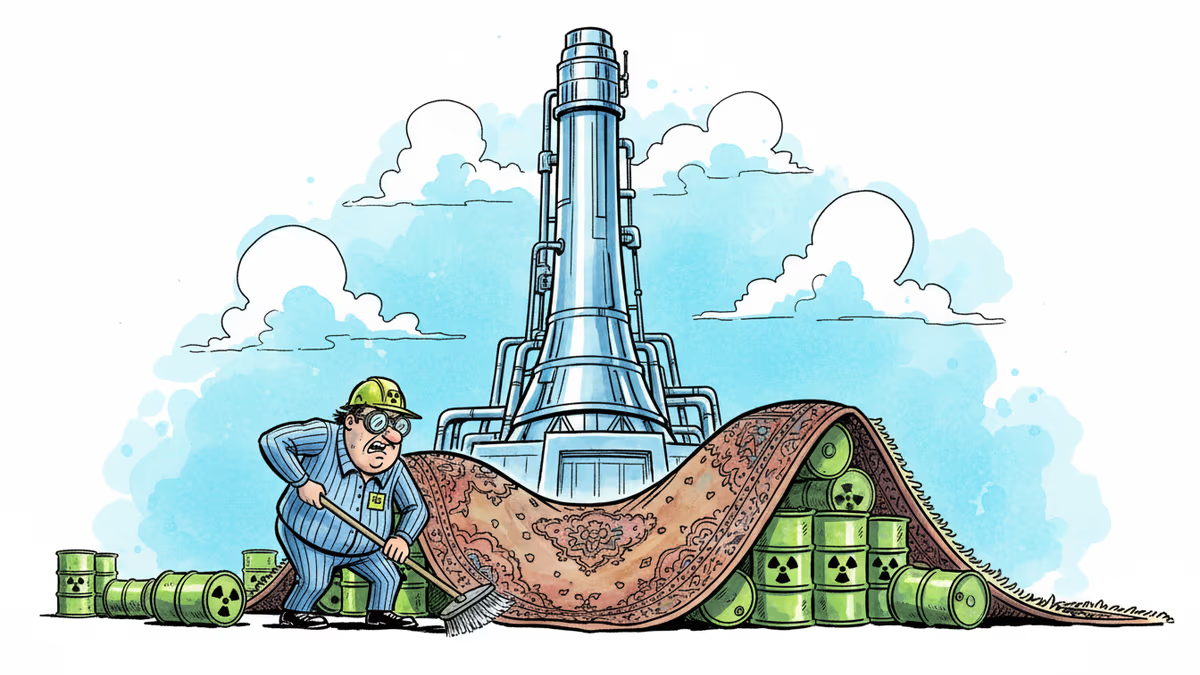
Nuclear energy is booming again, fueled by Big Tech's data center appetite. But 70 years of spent fuel still has nowhere permanent to go. Finland solved it. The US hasn't tried hard enough.
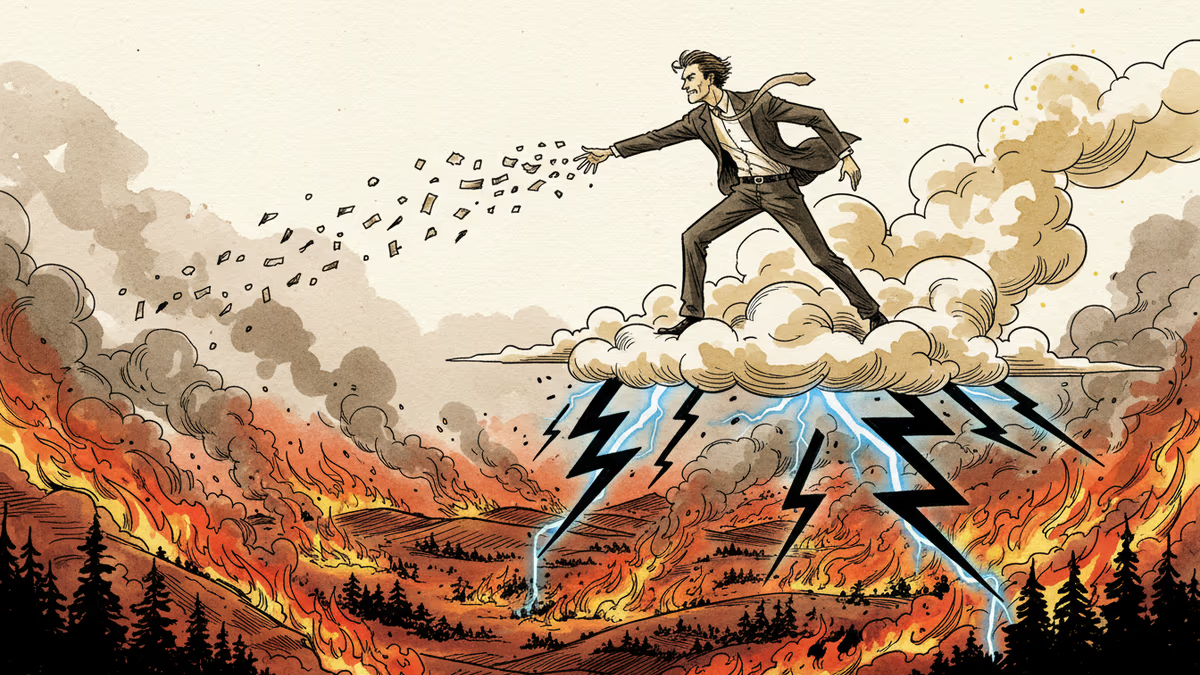
Skyward Wildfire raised millions claiming it can prevent wildfires by stopping lightning strikes. But is it just repackaging 60-year-old cloud seeding technology?

Zanskar secures $115M Series C funding to revolutionize geothermal energy using AI. Discover how they're unlocking terawatt-scale clean energy from hidden underground resources.

Microsoft partners with Indian startup Varaha to buy 100,000 tons of biochar carbon credits through 2029, aiming to offset rising AI-related emissions.
Nuclear energy is booming again, fueled by Big Tech's data center appetite. But 70 years of spent fuel still has nowhere permanent to go. Finland solved it. The US hasn't tried hard enough.
Skyward Wildfire raised millions claiming it can prevent wildfires by stopping lightning strikes. But is it just repackaging 60-year-old cloud seeding technology?
Zanskar secures $115M Series C funding to revolutionize geothermal energy using AI. Discover how they're unlocking terawatt-scale clean energy from hidden underground resources.
Microsoft partners with Indian startup Varaha to buy 100,000 tons of biochar carbon credits through 2029, aiming to offset rising AI-related emissions.
Thoughts
Share your thoughts on this article
Sign in to join the conversation