
PRISM Weekly Digest: First Week of February 2026
When $660 Billion Screamed, a Subtitle Won. Big Tech's AI spending war vs. K-drama's quiet victory reveals the week's paradox.
PRISM Weekly Digest
Feb Week 1, 2026 | When $660 Billion Screamed, a Subtitle Won
Two numbers defined this week for the PRISM editorial team.
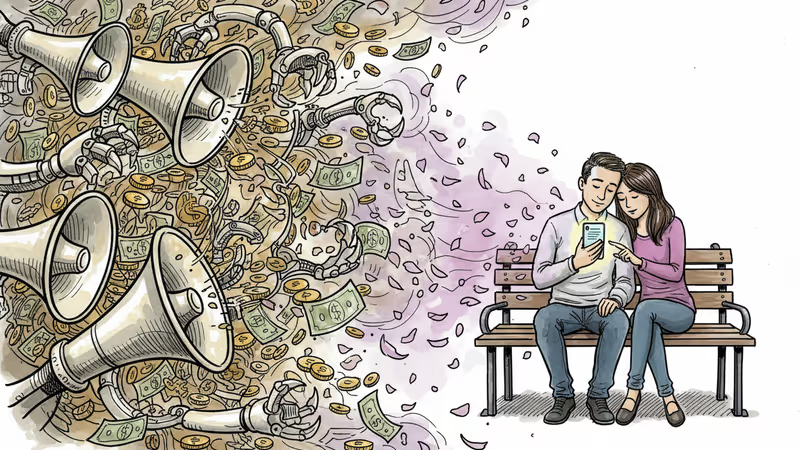
$660 billion. That's how much Big Tech will pour into AI this year. And three consecutive weeks at No. 1. That's the record held by a Netflix K-drama with no explosions, no time loops, and no chaebol heirs.
The week's loudest story was money. Its most powerful moment was silence. While AI companies torched billions in a Super Bowl advertising brawl, a single drama was making the world cry -- one subtitle at a time. In that contrast lies the real story of this week.
The Week That Roared: $660 Billion
Microsoft committed $80 billion. Alphabet, $75 billion. Meta, $65 billion. A single NvidiaH200 chip costs $40,000 with a year-long wait list. The AI arms race has reached a stage where the numbers themselves are weapons. Whoever spends fastest wins.
The Super Bowl was this frenzy in miniature. At millions per 30-second slot, AI companies clashed head-on. Svedka aired an AI-generated commercial. Anthropic and OpenAI traded public jabs. Crypto.com bet $70 million on the AI.com domain. The most expensive stage hosted the loudest war.
But Wall Street remained cool. Microsoft's operating margin is projected to drop 2 percentage points this year due to AI spending. Analysts warned that it's time to show ROI. The $660 billion figure represented the scale of conviction -- and equally, the scale of anxiety.

For Korean companies, the calculus is more complicated. Samsung and SK Hynix ride the AI chip demand wave, enjoying a memory semiconductor boom. But Naver and Kakao's entire annual revenue is smaller than what Big Tech spends on AI in a single quarter. Samsung SDS pivoted to enterprise AI; LG AI Research focused on robotics and home appliances. When you can't outspend the giants, survival means knowing where not to fight.
The Subtitle That Whispered
The same week, Netflix's "Can This Love Be Translated?" held the No. 1 buzz ranking for the third consecutive week. In a landscape where 73% of Netflix's top 10 dramas were action-thrillers, a quiet romance kept its crown without a single gunshot.
The show's central device is a language barrier. Its two leads don't speak the same language. No lavish sets, no CGI, no plot twists. Instead: two people straining to understand each other, their faces doing the work that words can't. International audiences connected through subtitles -- and the very filter of subtitles proved the universality of emotion.
The K-drama formula is being rewritten. Netflix's Korean content strategy began with genre spectacles like Squid Game and Kingdom, and has now expanded to everyday romance. As mini-series budgets soar from $1.5 million to over $4 million, this show proved that investment doesn't have to buy spectacle. It can buy authenticity.
While AI Learned Human Language, Humans Tried to Understand Each Other
Place these two stories side by side and a strange irony surfaces. While Big Tech spent $660 billion teaching machines to process human language, audiences around the world fell for two people who couldn't understand a word of each other's. In an era where AI promises perfect translation, what captivated people was an emotion that refused to be translated.
$660 billion promises efficiency. Faster processing, better predictions, smoother communication. But "Can This Love Be Translated?" showed the opposite. Imperfect communication is the very essence of human connection. Not understanding someone fully is what makes us listen harder -- and that effort itself becomes love.
This is the week's paradox. Technology grows louder as it consumes more money, but what moves the human heart remains quiet.
"Books build depth, PRISM captures speed."
PRISM Weekly Digest is published weekly.
Authors

Combining the sharp eye of a financial auditor with the warm sensibility of a picture book editor, writing stories that read the currents of the AI era. Currently Editor-in-Chief at Liabooks.
Related Articles

Trump announced substantial progress on a US-Iran peace deal and Hormuz reopened after six weeks. Bitcoin jumped from $74,000 to $76,700 in four hours. Xi seated Putin, Iran, and India at the same desk in one week. SpaceX opened its books for the first time in 23 years with the largest IPO in U.S. history; Nvidia conceded China to Huawei. BTS held the Billboard 200 top 10 for an eighth straight week.
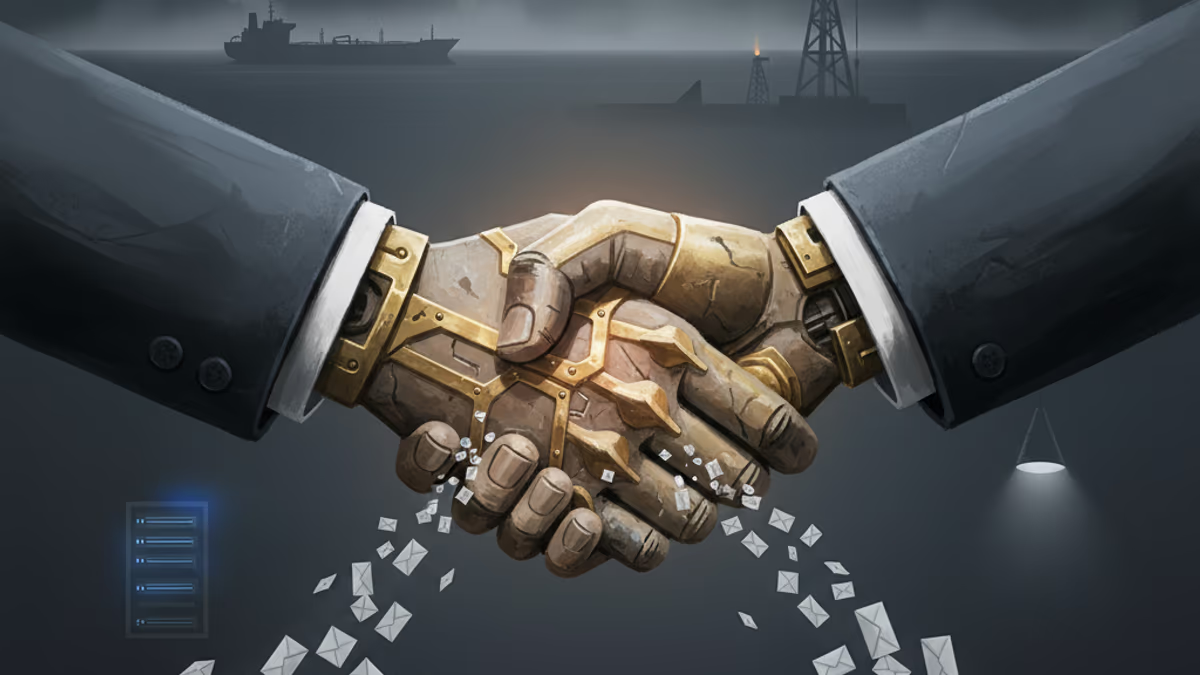
Trump and Xi met in Beijing for the first time in nine years. Microsoft poured $100B into OpenAI and became the supporting actor; Cerebras received $70B on day one. Hormuz entered week six. Cisco cut 4,000. ILLIT hit Billboard No. 1, CORTIS debuted at No. 3, and BTS is confirmed for the World Cup Final halftime stage.

A closed Hormuz arrives at the kitchen table, Musk vs. Altman puts a trillion dollars on trial, the Big Four bet $650 billion on AI, and Trump sends 25% tariff invoices to long-time allies. K-pop's seventeen-year slave-contract era closes with a standard-contract reform.
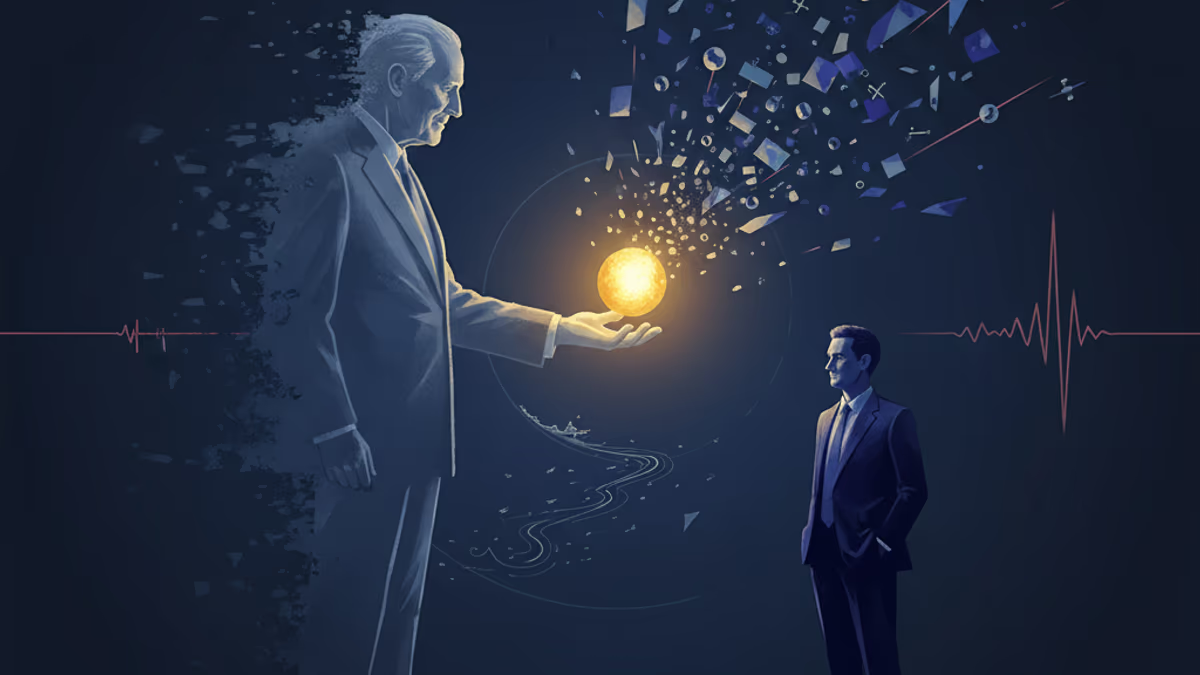
Tim Cook's 25-year goodbye, $40 billion poured into Anthropic, shots near the White House dinner, and TXT's first Grand Slam — a week of power handed over and crises distributed.
Trump announced substantial progress on a US-Iran peace deal and Hormuz reopened after six weeks. Bitcoin jumped from $74,000 to $76,700 in four hours. Xi seated Putin, Iran, and India at the same desk in one week. SpaceX opened its books for the first time in 23 years with the largest IPO in U.S. history; Nvidia conceded China to Huawei. BTS held the Billboard 200 top 10 for an eighth straight week.
Trump and Xi met in Beijing for the first time in nine years. Microsoft poured $100B into OpenAI and became the supporting actor; Cerebras received $70B on day one. Hormuz entered week six. Cisco cut 4,000. ILLIT hit Billboard No. 1, CORTIS debuted at No. 3, and BTS is confirmed for the World Cup Final halftime stage.
A closed Hormuz arrives at the kitchen table, Musk vs. Altman puts a trillion dollars on trial, the Big Four bet $650 billion on AI, and Trump sends 25% tariff invoices to long-time allies. K-pop's seventeen-year slave-contract era closes with a standard-contract reform.
Tim Cook's 25-year goodbye, $40 billion poured into Anthropic, shots near the White House dinner, and TXT's first Grand Slam — a week of power handed over and crises distributed.
Thoughts
Share your thoughts on this article
Sign in to join the conversation