
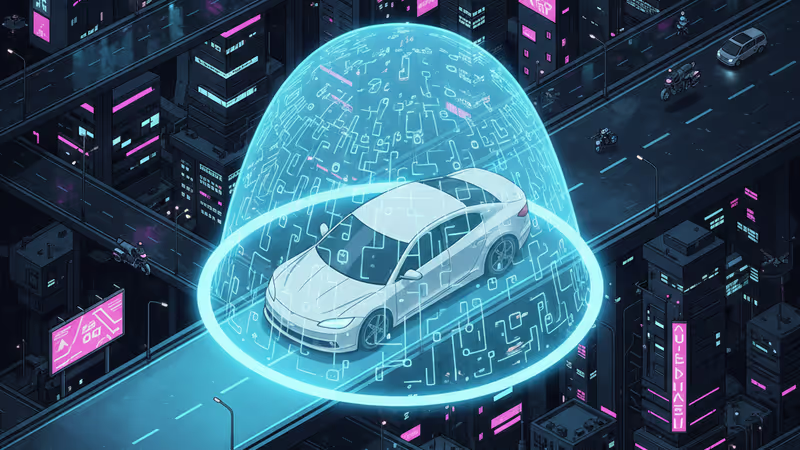
Waymo's Real Lead Over Tesla Isn't Tech—It's a Masterclass in Trust
A deep analysis of the 2025 robotaxi market reveals why Waymo's methodical strategy is outpacing Tesla's tech-first approach. The real battle is trust, not AI.
The Lede: The Robotaxi War's Decisive Shift
While 2025 marked the year robotaxis transitioned from Silicon Valley novelty to a viable urban transport option, the real story isn't about the technology's arrival. It's about the profound strategic divergence between the leaders. The data is clear: Alphabet's Waymo is building an empire, not with audacious promises, but through a grinding, city-by-city campaign to win over regulators and the public. This is no longer a race to solve AI; it's a battle for societal integration, and Waymo is writing the playbook while its rivals are still learning the language.
Why It Matters
The race for autonomous mobility is a winner-take-all contest for a multi-trillion-dollar market that will redefine urban logistics, personal transportation, and real estate. The emerging strategies of Waymo, Amazon's Zoox, and Tesla offer a critical case study for investors and executives on deploying disruptive technology. The winner won't just own a fleet of cars; they will own the operating system for our cities. Understanding who is winning and, more importantly, why, is crucial for anyone betting on the future of AI and automation.
The Analysis: Three Philosophies Collide
Waymo's Playbook: The Diplomat's Path to Dominance
Waymo's expansion to 26 markets for operations or testing isn't just a sign of technical maturity; it's a testament to a deliberate, almost diplomatic strategy. While Alphabet's "Other Bets" segment bleeds over a billion dollars a quarter, this should be viewed as a strategic investment in building an unbreachable moat made of regulatory approvals and operational data. Every new city launch, every freeway route approved, and even every teen account offered is another brick in this wall. Elon Musk's recent acknowledgment of Waymo "paving the path" on regulation wasn't just a compliment; it was a concession that you cannot simply disrupt your way through city councils and the NHTSA. Waymo is spending billions to de-risk the entire category, ensuring it holds the most valuable political and operational capital when the market truly scales.
Tesla's Gambit: A Fleet-in-Waiting Hits a Human Wall
For years, Tesla's core promise has been that millions of its vehicles on the road are a fleet-in-waiting, ready to become autonomous money-makers with a software update. Yet, its 2025 "Robotaxi" launch in Austin and the Bay Area still requires human safety drivers. This single fact reveals the fatal flaw in its strategy. Tesla treated autonomy as a pure software problem, underestimating the 'human system' outside the car. The public's high level of fear (66% of drivers, per AAA) isn't assuaged by aggressive software rollouts. Waymo's minor but public stumbles—hitting a cat, driving through a police standoff, illegally passing school buses—highlight the immense challenge of the last 1% of autonomous driving. These aren't just bugs to be patched; they are trust-destroying events that Tesla's approach seems ill-equipped to handle systematically.
Zoox's Wildcard: Reimagining the Vehicle Itself
Amazon's Zoox represents a third, high-risk, high-reward path. By building a bespoke, carriage-style vehicle with no steering wheel, Zoox is betting that the ultimate user experience will be the key differentiator. This is classic Amazon thinking: vertically integrate and optimize the entire process for a specific purpose. While its rollout is small and currently free pending regulatory approval, its purpose-built design could offer a fundamentally better and safer-feeling product. If Zoox can navigate the regulatory maze Waymo is currently mapping, it could leapfrog the competition not on miles driven, but on passenger preference. Its 10,000-vehicle-a-year factory plan indicates Amazon is preparing to scale this vision rapidly once the regulatory green light is given.
PRISM Insight: The Real Bottleneck is the 'Trust Deficit'
The core challenge for the entire industry in 2026 and beyond is not technological, but social. The battle is against the 'Trust Deficit.'
- Second-Order Effects of Errors: A Waymo illegally passing a school bus is more than a software flaw. It's a headline that validates the fears of every parent and regulator. These incidents provide ammunition for opposition groups and can delay or kill expansion plans. The winner will be the company with the most robust system for preventing, handling, and transparently communicating these inevitable edge-case failures.
- The Path to Profitability is Paved with Perception: The article notes fares are currently high. The long-term economic model relies on massive scale to offset the enormous R&D and hardware costs by eliminating the driver. However, this scale is impossible without public acceptance. If communities actively resist deployment due to perceived safety risks, noise, or congestion, the entire business model collapses. Waymo's methodical, market-by-market approach is designed to build this trust foundation, while Tesla's more cavalier strategy risks poisoning the well for everyone.
PRISM's Take
While Tesla continues to dominate headlines with ambitious timelines, the future of autonomous mobility is being built quietly and expensively on the streets of Phoenix, San Francisco, and Austin. Waymo's lead is no longer merely technological; it is operational, regulatory, and, increasingly, commercial. The company is not just deploying cars; it is methodically building a licensed and regulated utility for urban transport. The key lesson for investors and innovators is that in the complex world of physical-world AI, the fastest path to victory isn't to 'move fast and break things,' but to move deliberately and build trust.
Related Articles
A California judge rules Tesla's Autopilot & FSD marketing is deceptive. Our analysis explores the deep impact on the AV industry, investors, and Tesla's brand.
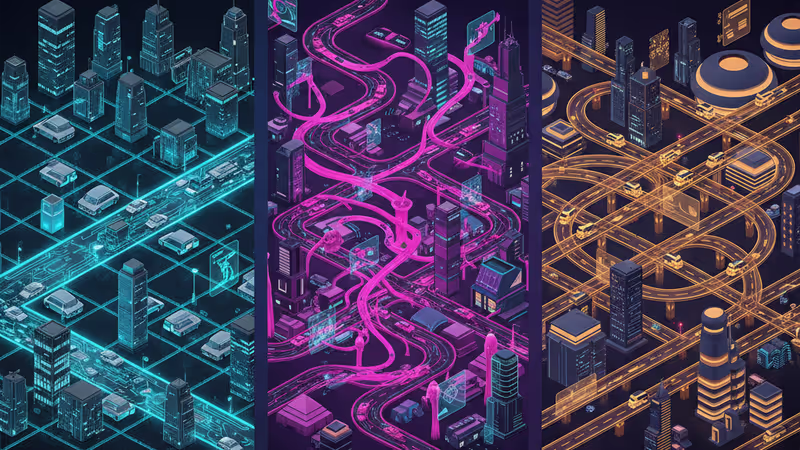
The 2025 robotaxi race is a clash of titans. Waymo's aggressive expansion, Zoox's bespoke hardware, and Tesla's delayed AI dream reveal divergent strategies for owning the future of mobility.
Waymo is dominating the robotaxi market, but the real story is the strategic battle against Amazon's Zoox and Tesla. Our expert analysis explains why.
Waymo is leading the robotaxi race, but its victory is far from certain. A deep-dive analysis of the competing strategies of Waymo, Tesla, and Amazon's Zoox.