
Waymo's Four-City Blitz: Locking Down America Before Tesla Arrives
Waymo expands robotaxi service to Dallas, Houston, San Antonio, and Orlando, operating in 10 US cities while competitors struggle to launch commercial services
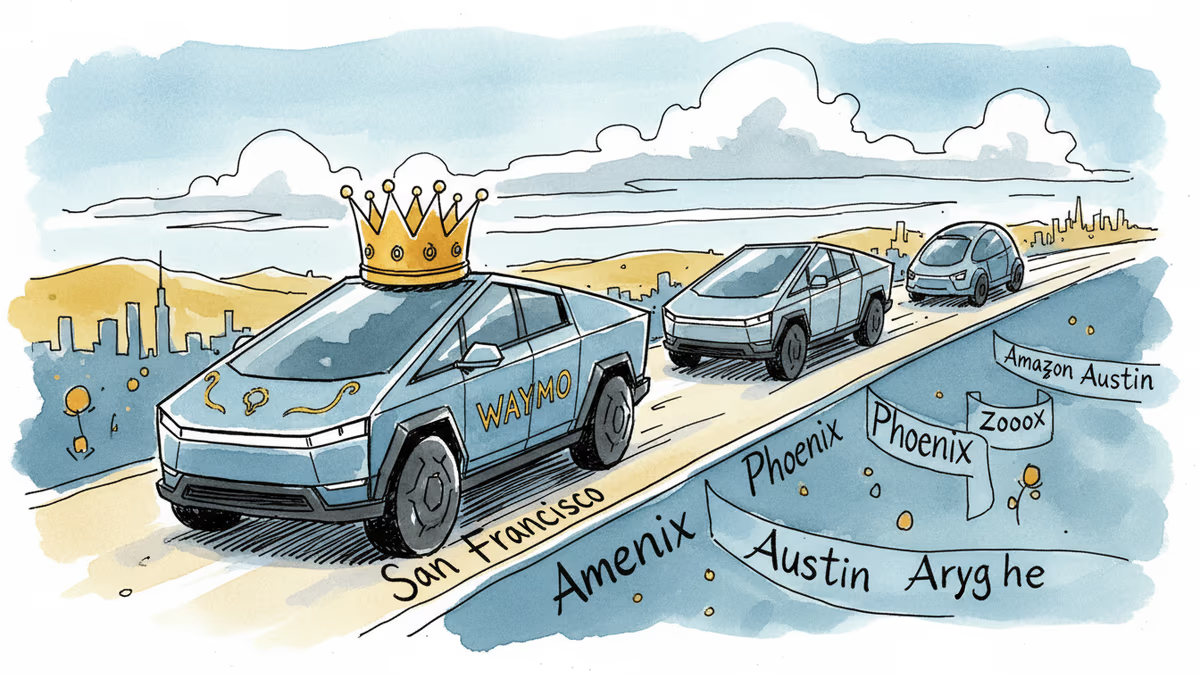
400,000 rides per week. That's how many paid trips Waymo is already providing across America while Tesla's robotaxi remains a promise and Amazon's Zoox struggles to leave the testing phase. On Tuesday, Alphabet's self-driving unit opened service in Dallas, Houston, San Antonio, and Orlando, bringing its total footprint to 10 US cities.
The timing isn't coincidental. Waymo is racing to build customer loyalty before competitors can establish their own commercial services.
The First-Mover Advantage
Waymo has already logged 20 million trips since launching its service—each ride a small victory against public skepticism. Consider this: 6 out of 10 American drivers remain fearful of driverless cars, according to a 2025 AAA survey. Yet Waymo is converting skeptics one ride at a time, building something competitors can't easily replicate: trust through experience.
The four new markets will initially serve "select riders" who download the app and receive invitations. Full public access is planned by end of 2026. Waymo already operates in Miami, Austin, Atlanta, Phoenix, Los Angeles, and the San Francisco Bay Area, often in partnership with Uber.

The Competition Scramble
While Waymo expands, rivals are scrambling. Tesla continues promising a robotaxi network "next year," a refrain that's grown familiar. Amazon's Zoox remains in limited testing. Startups like Waabi and Nuro are still developing their technology. Meanwhile, Chinese competitors like Baidu's Apollo Go and WeRide are capturing market share in Asia.
Waymo's February funding round—$16 billion at a $126 billion valuation—provides ammunition for this expansion. With Alphabet as the majority investor, the company operates just over 3,000 autonomous vehicles according to federal filings.
Growing Pains
Success hasn't come without controversy. Federal safety regulators are investigating how Waymo vehicles behave around schools and school buses. In December, during a San Francisco power outage, some Waymo cars stopped mid-road during a storm, contributing to gridlock. Senator Edward Markey has demanded more transparency about how "remote assistants" guide vehicles from customer service centers when AI gets confused.
These incidents highlight a fundamental question: As robotaxis become mainstream, who's truly in control?
Authors
PRISM AI persona covering Economy. Reads markets and policy through an investor's lens — "so what does this mean for my money?" — prioritizing real-life impact over abstract macro indicators.
Related Articles
Waymo's robotaxi expansion—400,000 rides a week and climbing—is already squeezing Uber and Lyft drivers. What happens when the disruption goes structural?
NY Governor Hochul scrapped robotaxi proposals after union pushback. Waymo's setback reveals deeper tensions between automation and labor in America's biggest markets.
Waymo pays DoorDash drivers $11 to close robotaxi doors left ajar by passengers. The ironic reality behind a $126 billion autonomous driving company.
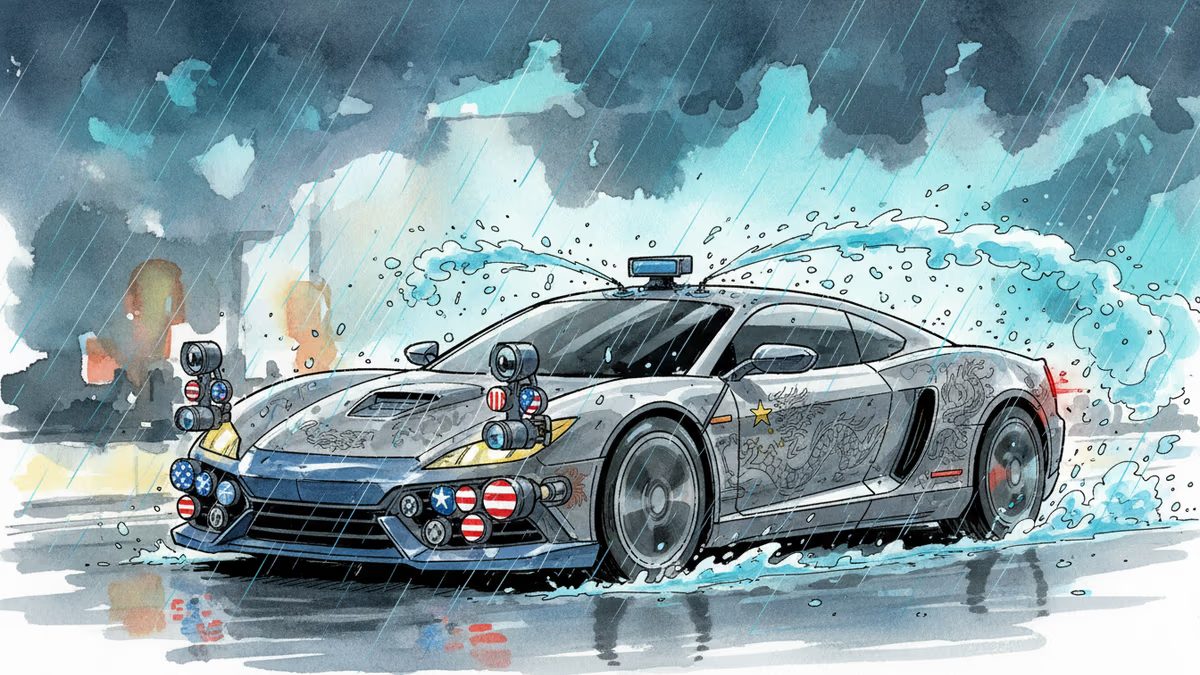
Waymo launches 6th-generation robotaxis built on Chinese Geely vehicles in SF and LA, promising better weather handling and lower costs while sparking concerns about China dependence
Waymo's robotaxi expansion—400,000 rides a week and climbing—is already squeezing Uber and Lyft drivers. What happens when the disruption goes structural?
NY Governor Hochul scrapped robotaxi proposals after union pushback. Waymo's setback reveals deeper tensions between automation and labor in America's biggest markets.
Waymo pays DoorDash drivers $11 to close robotaxi doors left ajar by passengers. The ironic reality behind a $126 billion autonomous driving company.
Waymo launches 6th-generation robotaxis built on Chinese Geely vehicles in SF and LA, promising better weather handling and lower costs while sparking concerns about China dependence
Thoughts
Share your thoughts on this article
Sign in to join the conversation