
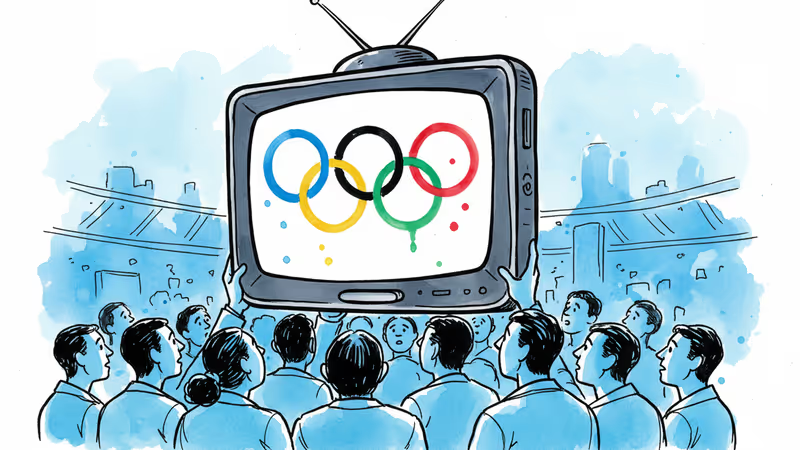
How the 2026 Winter Olympics Will Test Streaming's Dominance
The Milano Cortina 2026 Winter Olympics showcase the shift from traditional TV to streaming services. NBC's Peacock Premium strategy reveals how sports broadcasting is evolving in the digital age.
When Mariah Carey and Andrea Bocelli take the stage on February 6th at 2 pm ET for the Milano Cortina 2026 Winter Olympics opening ceremony, millions of viewers will face a choice their parents never had: cable TV or streaming?
The Streaming-First Olympics
This year's Games represent a watershed moment in sports broadcasting. While NBC maintains its exclusive US broadcasting rights, the real action is happening on Peacock Premium, their streaming service that costs $11 per month with ads or $18 without.
The shift isn't just about platform—it's about experience. Peacock's Olympics hub website allows viewers to search, bookmark specific sports, and receive notifications for live events. This personalized approach contrasts sharply with the traditional channel-surfing experience of finding your favorite sport.
The timing challenge adds another layer. With events taking place in northern Italy (GMT+1), American viewers wanting live coverage will need to wake up at dawn for many competitions. Streaming's on-demand capabilities suddenly become essential, not just convenient.
New Sports, New Audiences
The 2026 Games introduce ski mountaineering as a new Olympic sport, embodying the "what if skiing, but uphill?" concept. This addition reflects the Olympics' ongoing evolution to attract younger, adventure-seeking audiences.

Traditional powerhouse events maintain their appeal:
- Figure skating begins February 6th with ice dance
- Ice hockey women's preliminary rounds start February 5th
- Short track speed skating kicks off February 10th with daily competitions
- Curling opens February 4th with mixed doubles
Biathlon—described as "the closest thing the Olympic Games get to a James Bond movie"—combines cross-country skiing with rifle shooting. Meanwhile, skeleton athletes hurtle head-first down icy tracks at 80 mph, making it one of the most viscerally thrilling spectator sports.
The Economics of Olympic Viewing
The subscription model raises questions about accessibility. A $11-18 monthly fee might seem modest, but it represents a fundamental shift from free broadcast television. For casual Olympic viewers who might watch only during the Games, the cost-benefit calculation becomes complex.
This pricing strategy also creates an interesting dynamic: viewers must actively choose to pay for Olympic content, potentially creating a more engaged but smaller audience. The traditional model of stumbling across Olympic coverage while channel-surfing disappears.
Global Implications
While NBC's approach reflects American market dynamics, other countries are watching closely. The success or failure of streaming-first Olympic coverage could influence broadcasting strategies worldwide. Traditional broadcasters in Europe and Asia are already experimenting with hybrid models that combine free highlights with premium live coverage.
The shift also impacts how Olympic stories are told. Streaming platforms can offer deeper, more specialized content—extended athlete profiles, behind-the-scenes footage, and technical analysis that wouldn't fit traditional broadcast schedules.
Authors
Related Articles
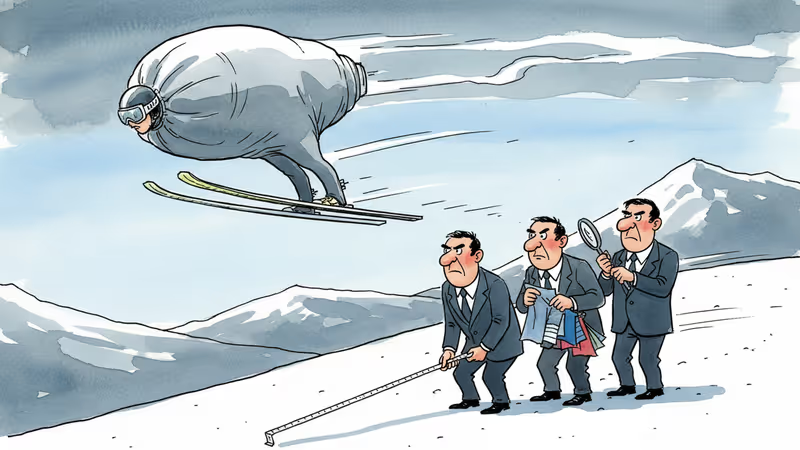
As the 2026 Winter Olympics begin, rumors swirl about male ski jumpers injecting fillers into their penises to gain larger jumpsuits and aerodynamic advantages. But how much difference can 2 cm of fabric really make?

Samsung Electronics' union branch revealed that 84% of survey respondents oppose the government's roughly $290 billion (₩400 trillion) semiconductor megaproject in Gwangju. Government, management, the union and shareholders are all reading the same national project in sharply different ways.
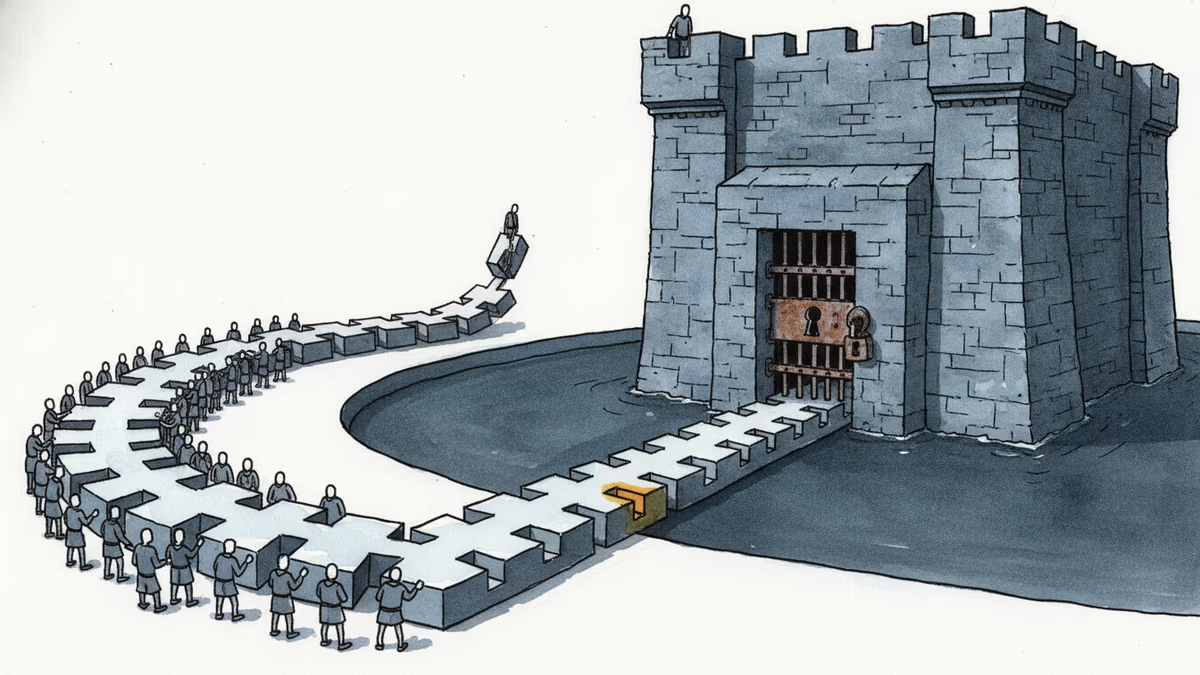
Nvidia shipped roughly a billion RISC-V cores in 2024, then announced it would run CUDA on the open standard. We break down how royalty-free instruction sets and open software stacks are trying to route around CUDA's lock-in. Part 2 of the Semiconductor Sovereignty series.
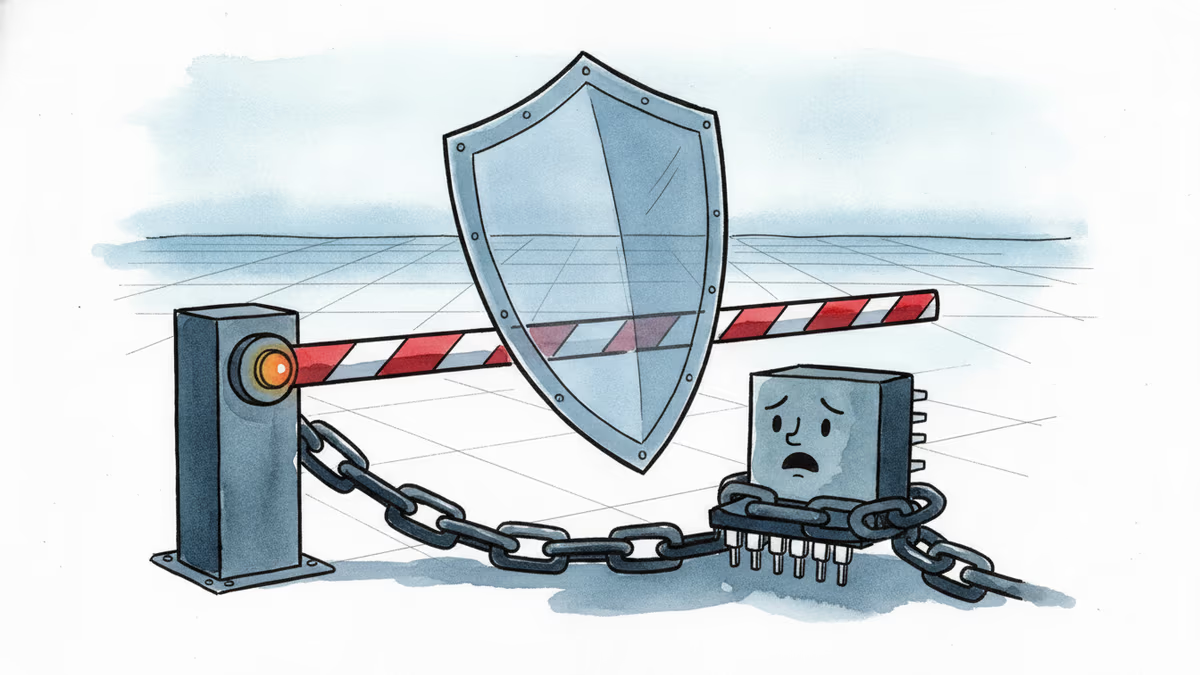
US AI-chip export controls split into three layers in the first half of 2026 — January easing, a May crackdown on circumvention, and a pending bill. Nvidia erased China from its guidance and still posted a record $81.6 billion quarter. A look at the export policy that both shields and cages it.
As the 2026 Winter Olympics begin, rumors swirl about male ski jumpers injecting fillers into their penises to gain larger jumpsuits and aerodynamic advantages. But how much difference can 2 cm of fabric really make?
Samsung Electronics' union branch revealed that 84% of survey respondents oppose the government's roughly $290 billion (₩400 trillion) semiconductor megaproject in Gwangju. Government, management, the union and shareholders are all reading the same national project in sharply different ways.
Nvidia shipped roughly a billion RISC-V cores in 2024, then announced it would run CUDA on the open standard. We break down how royalty-free instruction sets and open software stacks are trying to route around CUDA's lock-in. Part 2 of the Semiconductor Sovereignty series.
US AI-chip export controls split into three layers in the first half of 2026 — January easing, a May crackdown on circumvention, and a pending bill. Nvidia erased China from its guidance and still posted a record $81.6 billion quarter. A look at the export policy that both shields and cages it.
Thoughts
Share your thoughts on this article
Sign in to join the conversation