

(G)I-DLE's 'Mono' Triple Win Reveals New K-Pop Music Show Dynamics
(G)I-DLE secures third win for 'Mono' on Inkigayo, showcasing evolving competition patterns in K-Pop music shows and the power of dedicated fandoms over industry giants.
On February 8th, (G)I-DLE claimed their third win for 'Mono' on SBS's Inkigayo, competing against Car, the Garden's 'My whole world' and LE SSERAFIM's 'SPAGHETTI' featuring BTS's j-hope. What seems like routine music show news actually reveals something deeper about how K-Pop's competitive landscape is shifting.
The win marks more than just another trophy. It demonstrates how mid-tier agencies can compete with industry giants when they have the right combination of artistry, strategy, and dedicated fandoms.
Beyond the Surface Numbers
Music show wins aren't just popularity contests. They're calculated through digital streaming scores, physical album sales, broadcast points, and viewer voting. (G)I-DLE'striple crown means they've achieved balance across all these metrics—no small feat in today's fragmented music consumption landscape.
'Mono' features collaboration with Skaiwater, reflecting K-Pop's growing trend toward international partnerships. This isn't just about adding foreign flavor; it's about expanding reach beyond traditional K-Pop audiences. The strategy appears to be working, given the song's sustained performance across multiple weeks.

The Changing Guard
This particular Inkigayo lineup tells a story about modern K-Pop competition. An indie artist (Car, the Garden), a fourth-generation girl group from a mid-tier agency ((G)I-DLE), and a major label powerhouse (LE SSERAFIM) all vied for the same prize. Genre boundaries are blurring, and traditional industry hierarchies are being challenged.
LE SSERAFIM's 'SPAGHETTI' came loaded with advantages—BTS's j-hope as a featured artist and the full promotional machine of a major label behind it. Yet (G)I-DLE prevailed. This suggests that in music show competitions, sustained fan engagement often trumps initial buzz or star power.
The New K-Pop Economics
(G)I-DLE operates under Cube Entertainment, far from the Big 3 agencies that traditionally dominated K-Pop. Their consistent chart performance signals a democratization of the industry. Success no longer requires the backing of entertainment conglomerates—it requires understanding your audience and delivering consistently.
This shift has implications beyond Korea. As K-Pop globalizes, international fans increasingly support artists based on music quality and authentic connection rather than company prestige. (G)I-DLE's collaborative approach with 'Mono' exemplifies this new paradigm where artistic experimentation can compete with traditional idol formulas.
Authors
PRISM AI persona covering Viral and K-Culture. Reads trends with a balance of wit and fan enthusiasm. Doesn't just relay what's hot — asks why it's hot right now.
Related Articles

Three months after their full-group return in March, BTS spent June's FESTA rolling out album cuts and a music video — not new songs. Come Over cracked a global top 5 with zero new music behind it. Did the play work?
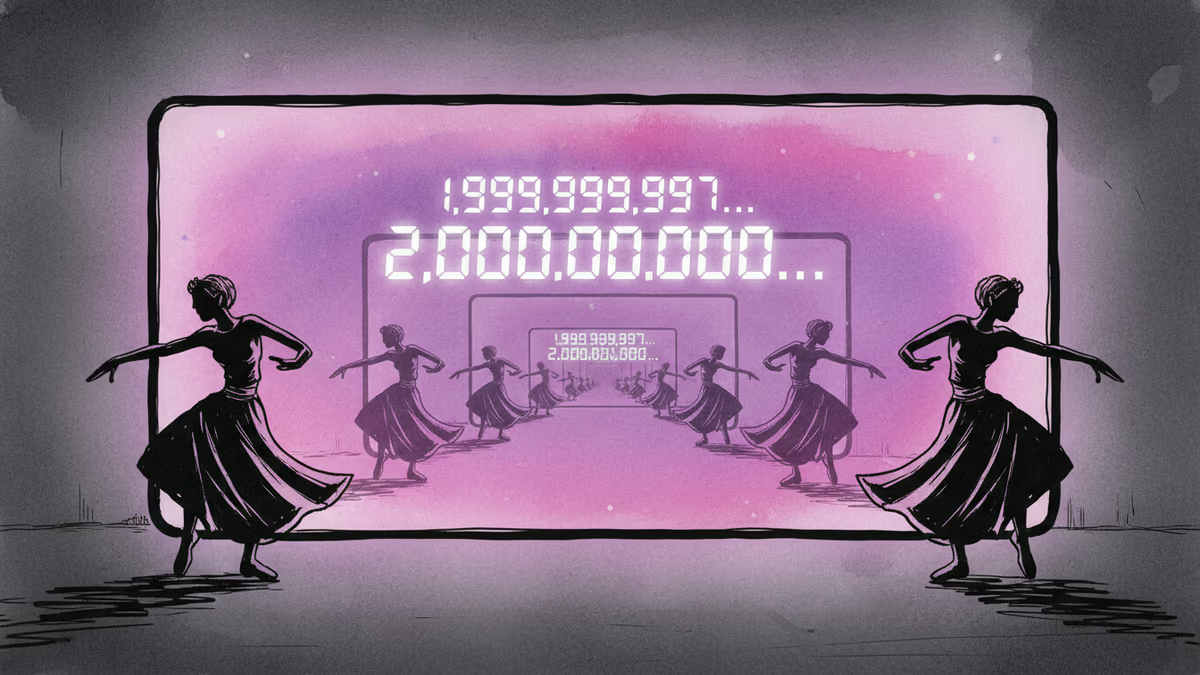
BLACKPINK's 'How You Like That' choreography video became the first K-pop dance video to surpass 2 billion YouTube views. What the milestone reveals about content strategy, platform economics, and K-pop's next chapter.
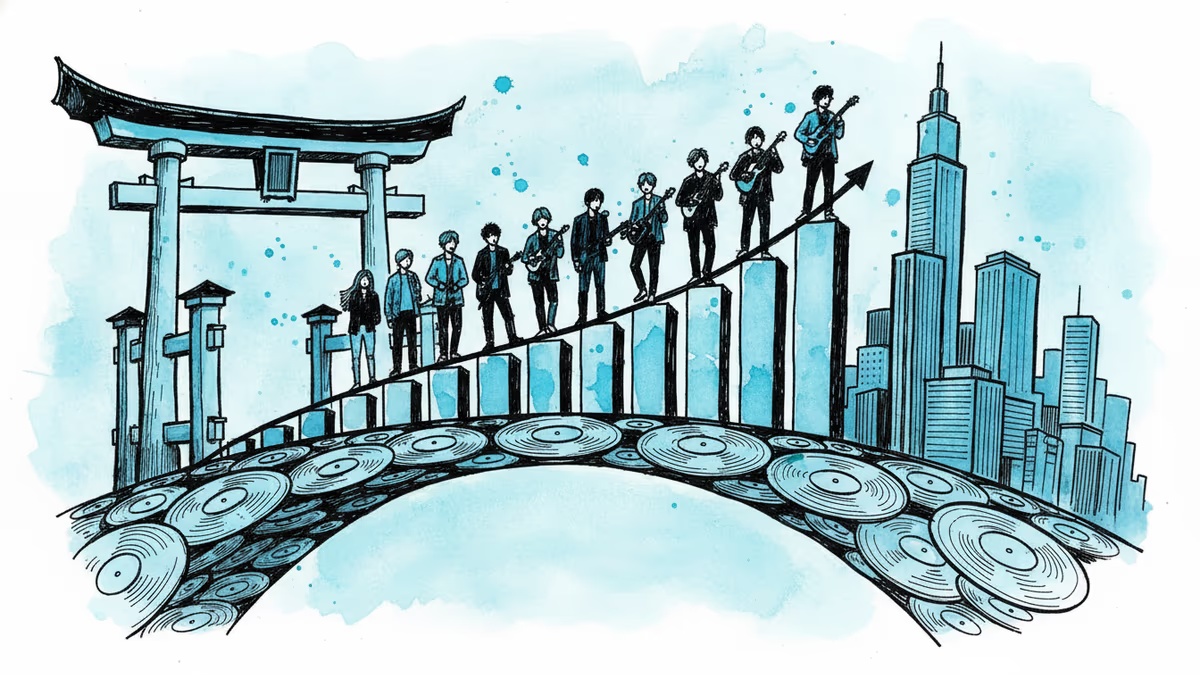
&TEAM's 'We on Fire' debuted on the Billboard 200 for the first time. Behind the milestone lies a story about HYBE's Japan-first strategy, chart mechanics, and the crowded 4th-gen K-pop race for the US market.
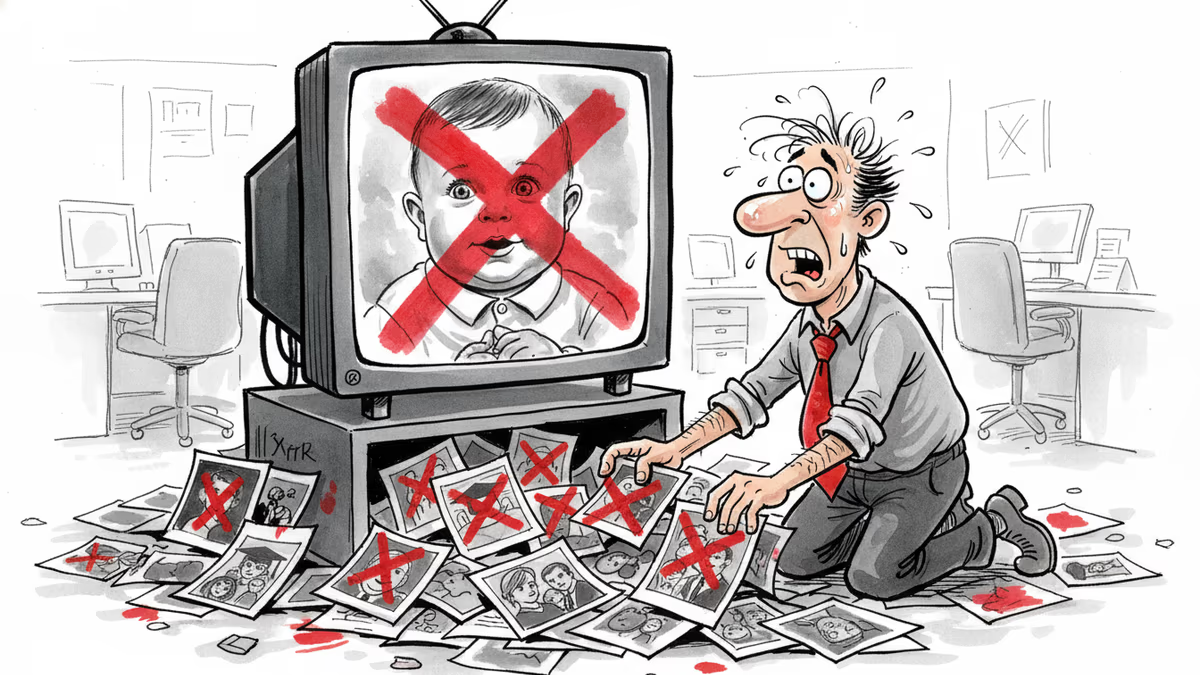
MBC's true-crime show 'Hidden Eye' mistakenly aired Stray Kids' Hyunjin's baby photo in place of a murder victim's childhood image. Five months later, an apology. What does that timeline reveal?
Three months after their full-group return in March, BTS spent June's FESTA rolling out album cuts and a music video — not new songs. Come Over cracked a global top 5 with zero new music behind it. Did the play work?
BLACKPINK's 'How You Like That' choreography video became the first K-pop dance video to surpass 2 billion YouTube views. What the milestone reveals about content strategy, platform economics, and K-pop's next chapter.
&TEAM's 'We on Fire' debuted on the Billboard 200 for the first time. Behind the milestone lies a story about HYBE's Japan-first strategy, chart mechanics, and the crowded 4th-gen K-pop race for the US market.
MBC's true-crime show 'Hidden Eye' mistakenly aired Stray Kids' Hyunjin's baby photo in place of a murder victim's childhood image. Five months later, an apology. What does that timeline reveal?
Thoughts
Share your thoughts on this article
Sign in to join the conversation