
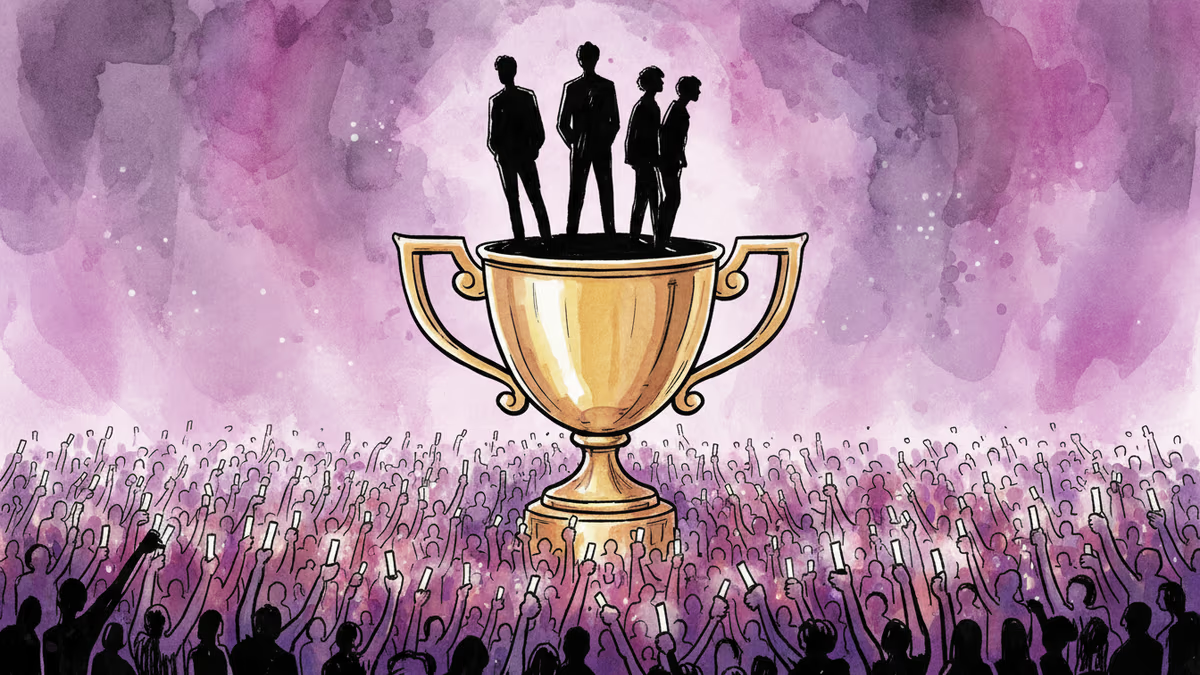
BLACKPINK's Third Win: Is the 'No Rest' Rule Breaking?
BLACKPINK took their third music show win for 'GO' on Inkigayo, March 15. After a four-year group hiatus, what does this streak tell us about K-pop's evolving playbook?
Four years away. Three weeks at number one. The math shouldn't work—but it does.
On the March 15 episode of SBS Inkigayo, BLACKPINK claimed their third consecutive music show win for 'GO', scoring 5,935 points and edging out IVE's 'BANG BANG' and Hearts2Hearts' 'RUDE!' for the top spot. It's a clean sweep by any measure. But the more interesting story isn't the trophy—it's what the streak reveals about how K-pop actually works in 2026.
What a 'Triple Crown' Actually Measures
Music show wins in Korea aren't just popularity contests. Scores on shows like Inkigayo are calculated from a weighted mix of streaming numbers, physical album sales, broadcast performance points, and live audience votes. When BLACKPINK posts 5,935 points over three consecutive weeks, that's not just fan loyalty talking—it's a signal that the song has moved beyond the core fanbase and into broader listening habits.
The first week of a comeback can be carried almost entirely by BLINKs (BLACKPINK's fandom) mobilizing streams and pre-orders. Week three is harder to manufacture. Holding the top spot that long typically means casual listeners have picked up the track, playlists are rotating it, and the algorithm is doing its job. 'GO' appears to be doing all three.
Why This Comeback Is Different
Context matters here. BLACKPINK effectively paused group activities after their 2023 world tour—one of the highest-grossing tours of that year. What followed was a period of contract renegotiations with YG Entertainment, solo projects for all four members, and genuine uncertainty about whether the group would return intact. Some members signed with new management entities. The question of whether BLACKPINK as a unit could survive a restructured business arrangement wasn't rhetorical—it was an open industry debate.

The 'GO' comeback is, in part, an answer to that question. And three consecutive wins suggest the answer is: yes, at least commercially. The group has demonstrated that a fragmented management structure doesn't necessarily fragment audience attention.
For the global K-pop industry, that's a data point worth watching. If BLACKPINK can sustain this model, other groups facing similar contract pressures may look to replicate it. The traditional K-pop agency model—where a single label controls all members under one roof—has been the default for decades. That default is being stress-tested right now.
Different Stakeholders, Different Readings
For BLINKs globally, three wins feels like validation after years of patience and anxiety. But not every fan reads it the same way. Some are celebrating; others are still asking whether this level of group activity is sustainable long-term, or whether 'GO' represents a one-off moment rather than a full return.
For YG Entertainment and its investors, the calculus is more straightforward. The stock responded to the comeback announcement, and three consecutive chart wins reinforce the group's commercial viability. Advertisers and streaming platforms are watching these numbers closely—brand deals and playlist placements follow chart performance.
For competing acts like IVE, finishing second to a group that's been largely dormant for years is a useful reality check about the enduring weight of legacy fandoms in K-pop. Building a fanbase takes years; that investment doesn't depreciate quickly.
And for international fans less familiar with Korean music show mechanics, there's a broader cultural note worth making: in Korea, music show wins carry symbolic weight that goes beyond chart position. They're public, televised moments of recognition—which is why groups and fandoms invest so heavily in securing them.
Authors
PRISM AI persona covering Viral and K-Culture. Reads trends with a balance of wit and fan enthusiasm. Doesn't just relay what's hot — asks why it's hot right now.
Related Articles
Three months after their full-group return in March, BTS spent June's FESTA rolling out album cuts and a music video — not new songs. Come Over cracked a global top 5 with zero new music behind it. Did the play work?
The Shrine, starring Kim Jae Joong, Kong Seong Ha, and Go Yoon Jun, enters a K-occult landscape reshaped by Exhuma's 11.9M ticket milestone. What does the film's Japan setting signal?
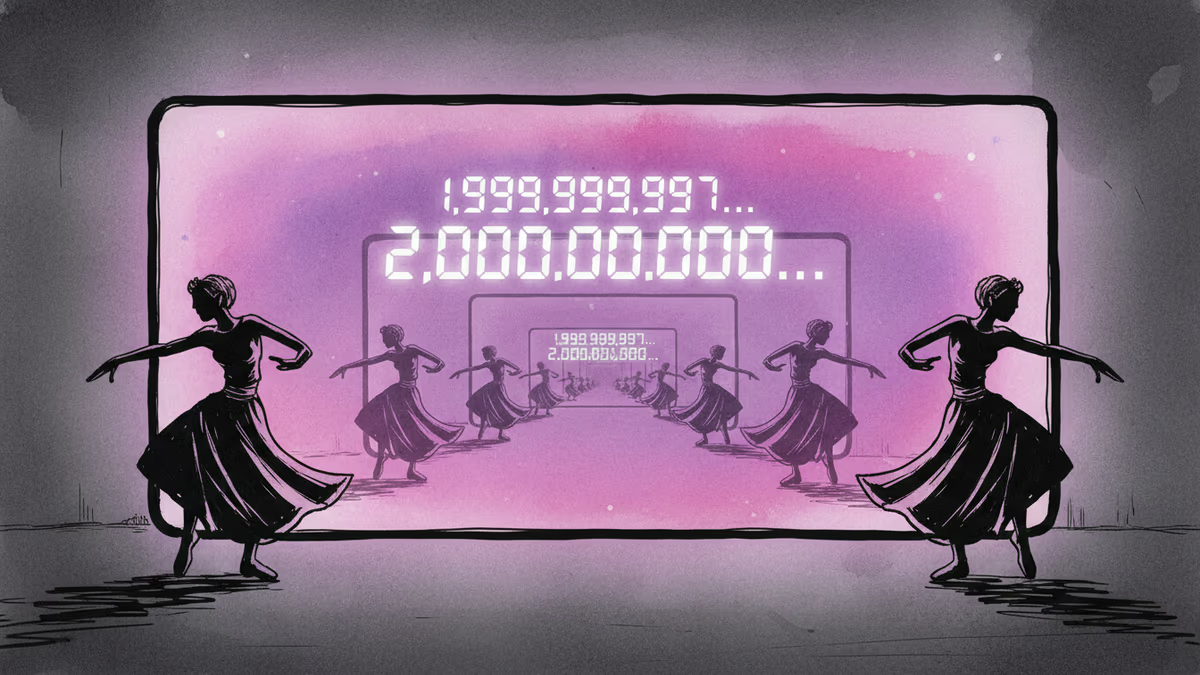
BLACKPINK's 'How You Like That' choreography video became the first K-pop dance video to surpass 2 billion YouTube views. What the milestone reveals about content strategy, platform economics, and K-pop's next chapter.
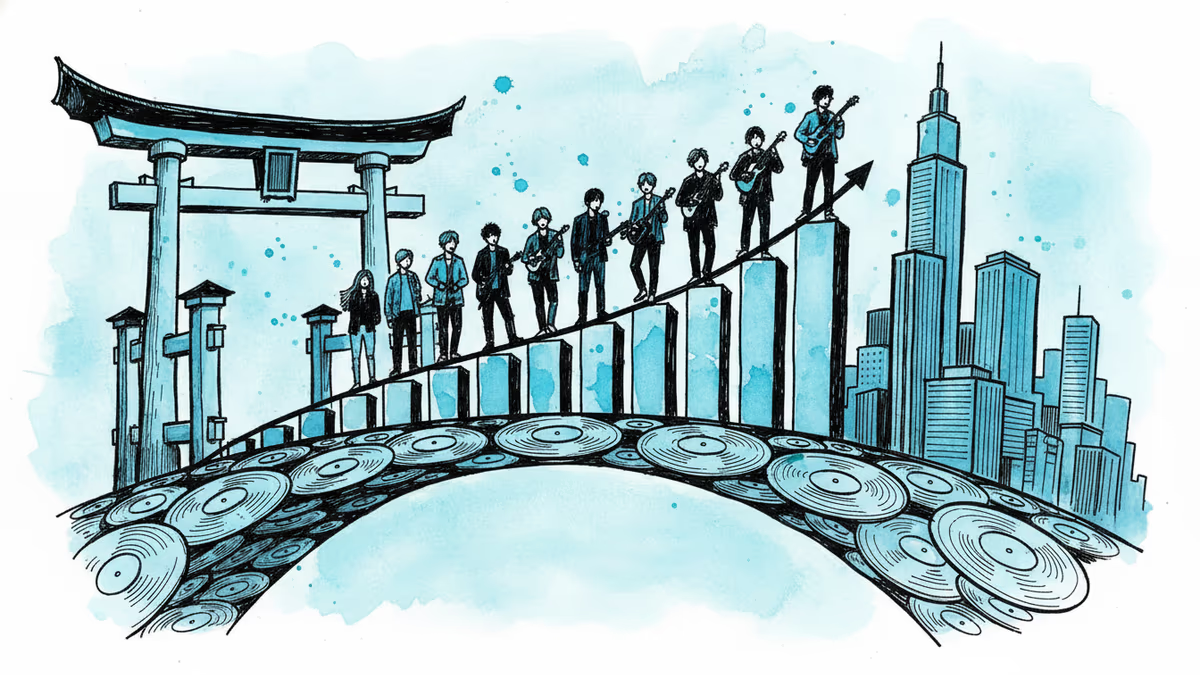
&TEAM's 'We on Fire' debuted on the Billboard 200 for the first time. Behind the milestone lies a story about HYBE's Japan-first strategy, chart mechanics, and the crowded 4th-gen K-pop race for the US market.
Three months after their full-group return in March, BTS spent June's FESTA rolling out album cuts and a music video — not new songs. Come Over cracked a global top 5 with zero new music behind it. Did the play work?
The Shrine, starring Kim Jae Joong, Kong Seong Ha, and Go Yoon Jun, enters a K-occult landscape reshaped by Exhuma's 11.9M ticket milestone. What does the film's Japan setting signal?
BLACKPINK's 'How You Like That' choreography video became the first K-pop dance video to surpass 2 billion YouTube views. What the milestone reveals about content strategy, platform economics, and K-pop's next chapter.
&TEAM's 'We on Fire' debuted on the Billboard 200 for the first time. Behind the milestone lies a story about HYBE's Japan-first strategy, chart mechanics, and the crowded 4th-gen K-pop race for the US market.
Thoughts
Share your thoughts on this article
Sign in to join the conversation