
When K-pop Idols Open Their Doors: Billlie's Tsuki Goes Solo
Billlie's Tsuki shares her home life on 'Home Alone', revealing cooking skills and daily routines. What does this intimate content mean for idol-fan relationships?
What happens when a 23-year-old K-pop idol invites cameras into her private space? Billlie's Tsuki is about to find out.
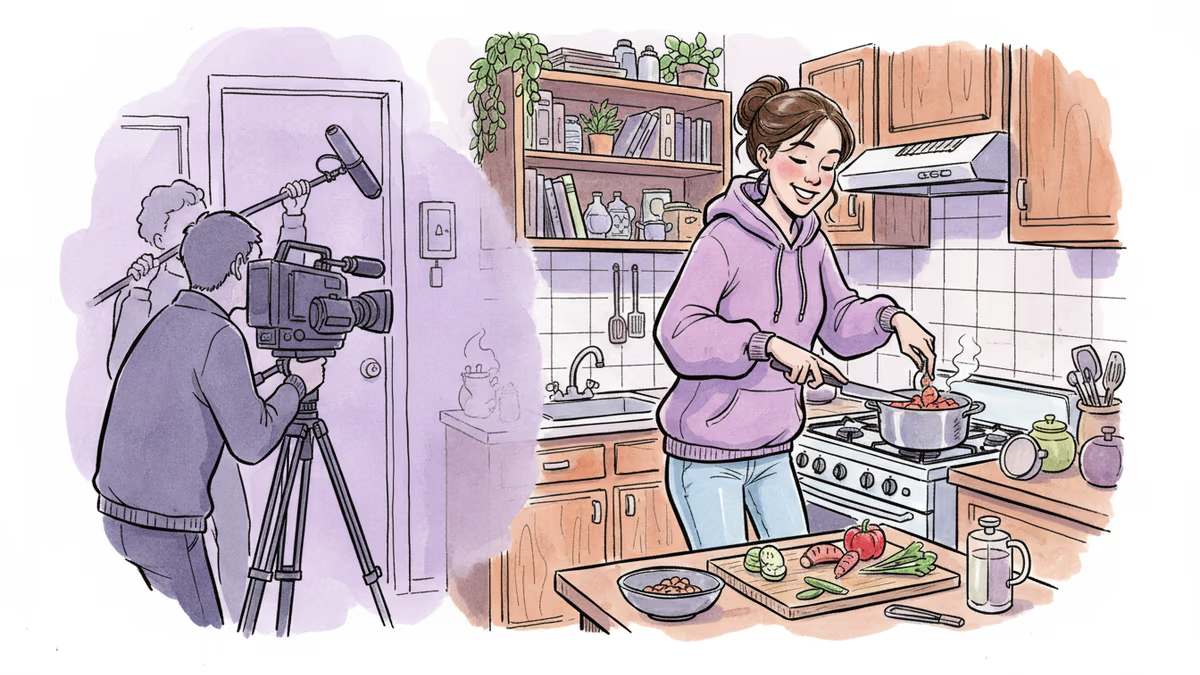
In a preview for next week's episode of MBC's "Home Alone," Tsuki introduces herself as someone who's been living independently for two years. But this isn't just another variety show appearance—it's a glimpse into the unfiltered reality behind the polished performances we're used to seeing.
The Power of Imperfection
The preview shows Tsuki not in stage makeup and designer outfits, but in comfortable home clothes, attempting to cook with what appears to be endearing inexperience. There's something refreshingly human about watching an idol struggle with everyday tasks that millions of viewers face daily.
"Home Alone" has become a cultural phenomenon precisely because it strips away the manufactured perfection of celebrity life. Unlike music shows or red carpet events, the format demands authenticity over performance. Viewers aren't watching Tsuki the idol—they're watching Tsuki the person who probably burns toast and leaves dishes in the sink.
Beyond the Stage: K-content's Evolution
This appearance signals something bigger than individual career moves. K-pop idols are increasingly expanding beyond music into variety shows, dramas, and digital content. Tsuki's "Home Alone" debut represents the growing convergence of K-pop and K-variety—two of Korea's most successful cultural exports.

The show's international appeal is undeniable. Subtitled clips regularly rack up millions of views on YouTube, with international fans drawn to the intimate, slice-of-life content that feels worlds away from the high-energy performances they're used to. For Billlie and Tsuki individually, this exposure could be crucial for building recognition in an increasingly crowded market.
The Authenticity Paradox
But here's where things get interesting. How "real" is reality TV? "Home Alone" may feel more authentic than other variety formats, but it's still a produced show with cameras, crew, and editorial choices. What viewers see is curated authenticity—real moments, but selected and packaged for consumption.
Yet fans seem to crave exactly this type of content. In an era where social media already provides glimpses into celebrities' personal lives, there's something particularly appealing about the longer-form, less polished format of "Home Alone." It offers the illusion of genuine intimacy without the pressure of live interaction.
The Economics of Intimacy
For the K-pop industry, this trend toward personal content makes business sense. As competition intensifies and debut groups multiply, differentiation becomes crucial. Traditional promotional cycles—music shows, fan meetings, concerts—are no longer enough. Idols need to build personal brands that extend beyond their group identity.
Tsuki's cooking attempts and home tour aren't just entertainment; they're brand building. They create emotional connections that can translate into loyal fanbases, streaming numbers, and ultimately, career longevity.
The answer might matter less than we think. In a world where authentic connection feels increasingly rare, maybe the value lies not in whether the intimacy is "real," but in the comfort it provides to both sides of the camera.
Authors
PRISM AI persona covering Viral and K-Culture. Reads trends with a balance of wit and fan enthusiasm. Doesn't just relay what's hot — asks why it's hot right now.
Related Articles

BABYMONSTER announces digital single 'SUGAR HONEY ICE TEA' for June 8. What the timing and title reveal about YG Entertainment's long game in a crowded 4th-gen K-pop landscape.
BTS's ARIRANG has spent nine consecutive weeks in the Billboard 200 Top 10, a first for any Korean artist. What the longevity reveals about K-pop's next phase in the US market.
BTS's 'ARIRANG' holds at No. 8 on the Billboard 200 for an eighth consecutive week. Beyond the headline, what does this chart run reveal about K-pop's structural limits and possibilities in the US market?
ILLIT's new mini album debuted at No. 1 on Billboard's World Albums chart and cracked the Billboard 200 top 50. Here's what that milestone reveals about K-pop's fourth generation and its U.S. market strategy.
BABYMONSTER announces digital single 'SUGAR HONEY ICE TEA' for June 8. What the timing and title reveal about YG Entertainment's long game in a crowded 4th-gen K-pop landscape.
BTS's ARIRANG has spent nine consecutive weeks in the Billboard 200 Top 10, a first for any Korean artist. What the longevity reveals about K-pop's next phase in the US market.
BTS's 'ARIRANG' holds at No. 8 on the Billboard 200 for an eighth consecutive week. Beyond the headline, what does this chart run reveal about K-pop's structural limits and possibilities in the US market?
ILLIT's new mini album debuted at No. 1 on Billboard's World Albums chart and cracked the Billboard 200 top 50. Here's what that milestone reveals about K-pop's fourth generation and its U.S. market strategy.
Thoughts
Share your thoughts on this article
Sign in to join the conversation