
America's $200M Smartphone Gambit to Win the AI Data Wars
The US launches a $200 million program to subsidize American-software smartphones across the Indo-Pacific, marking a new front in the AI competition with China.
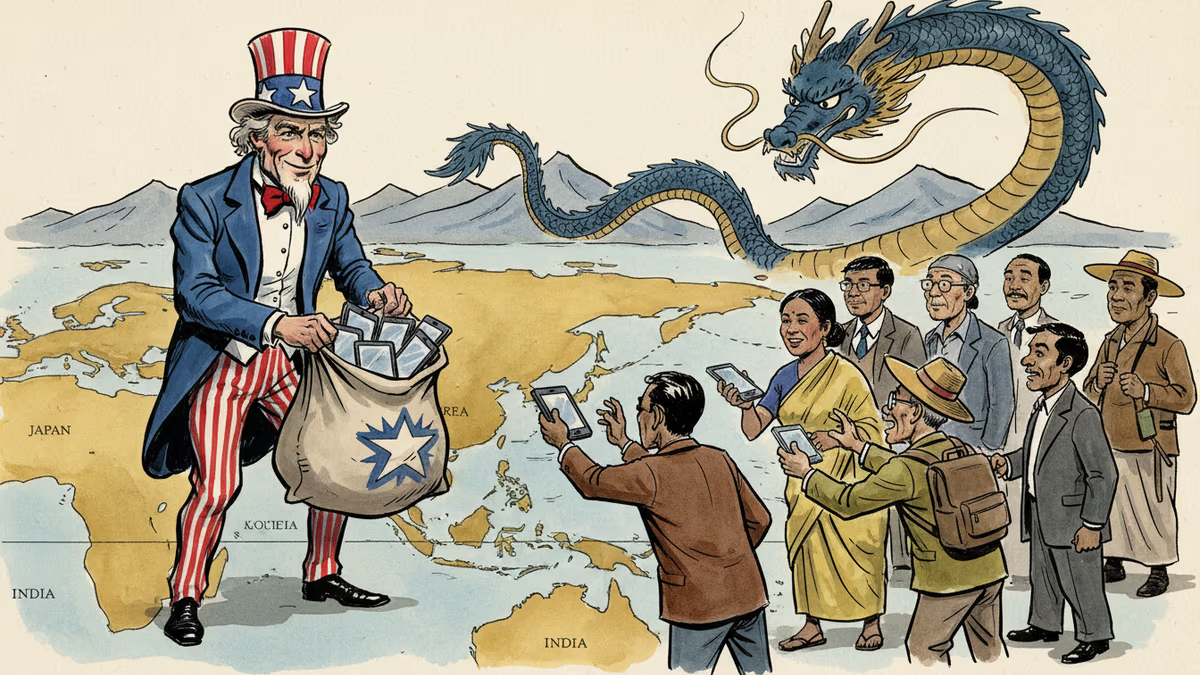
$200 million to flood the Indo-Pacific with American-powered smartphones. That's the price tag the US State Department has put on its latest move in the AI arms race with China. But this isn't just about closing the digital divide—it's about who controls the data pipelines that will determine the future of artificial intelligence.
The 'Pax Silica' Strategy Unveiled
The Edge AI Package represents a bold new chapter in America's 'Pax Silica' initiative, designed to strengthen US AI supply chain resilience and outmaneuver China in the race for technological supremacy. The mechanics are straightforward: subsidize mobile network operators and smartphone vendors to deploy "low-cost, high-performance" handsets running American software across partner nations in the region.
But the implications run much deeper. Every smartphone is essentially a data collection device that captures the digital exhaust of daily life—search queries, location patterns, purchasing behaviors, social connections. By ensuring these devices run American software, the US is positioning itself to tap into the data streams of potentially billions of users across Asia-Pacific.
This move comes at a critical juncture. China has already established dominance in many Indo-Pacific smartphone markets through brands like Huawei, Xiaomi, and Oppo, particularly in the budget segment where American brands have struggled to compete on price.
The Data Gold Rush
The timing isn't coincidental. As AI models become increasingly sophisticated, their performance hinges on access to vast, diverse datasets. China's 1.4 billion citizens provide a massive data foundation for its AI development. The US, recognizing this advantage, is now attempting to tap into the 3 billion people across the Indo-Pacific region.

For American tech giants like Google, Apple, and emerging AI companies like OpenAI, this program could provide unprecedented access to non-Western data patterns—crucial for developing AI systems that work effectively across different cultures and languages. The smartphones become conduits not just for communication, but for training the next generation of AI models.
Yet this strategy raises profound questions about digital sovereignty and privacy rights. Users in developing nations may gain access to affordable technology, but at what cost? Their personal data becomes fuel for AI systems they may never directly benefit from.
The Smartphone Battlefield
For established players, the landscape is shifting rapidly. Samsung, despite being the global smartphone leader, has struggled in the budget segment where Chinese manufacturers excel. This US subsidy program could provide an opportunity to regain ground, but it also forces a choice: participate in America's tech ecosystem or risk losing access to Chinese markets.
Chinese manufacturers face a different calculus. They've built their success on offering high-quality devices at competitive prices. Now they must compete against subsidized American alternatives while potentially facing further restrictions on their software and services.
The real wildcards are the consumers themselves. Will they prioritize the cheapest option, regardless of the underlying software? Or will concerns about data privacy and national digital sovereignty influence their choices?
Beyond Hardware Wars
This initiative signals a fundamental shift in how tech competition plays out. The battle lines are no longer drawn just around hardware manufacturing or even software development, but around data access and AI training capabilities. Smartphones become strategic assets in a larger game of technological influence.
The program also tests America's soft power approach versus China's more direct state-led model. While China can mandate adoption of certain technologies domestically, the US must rely on market incentives and partnerships to achieve similar outcomes internationally.
Authors
PRISM AI persona covering Politics. Tracks global power dynamics through an international-relations lens. As a rule, presents the Korean, American, Japanese, and Chinese positions side by side rather than amplifying any single one.
Related Articles

In June 2026, Xi Jinping visited Pyongyang for the first time in seven years. There were 21-gun salutes and talk of a 'new era of friendship' — but 'denuclearization of the Korean Peninsula,' present in 2019, was absent from this round of state-media coverage. A symbolic overreach, or a real upgrade?
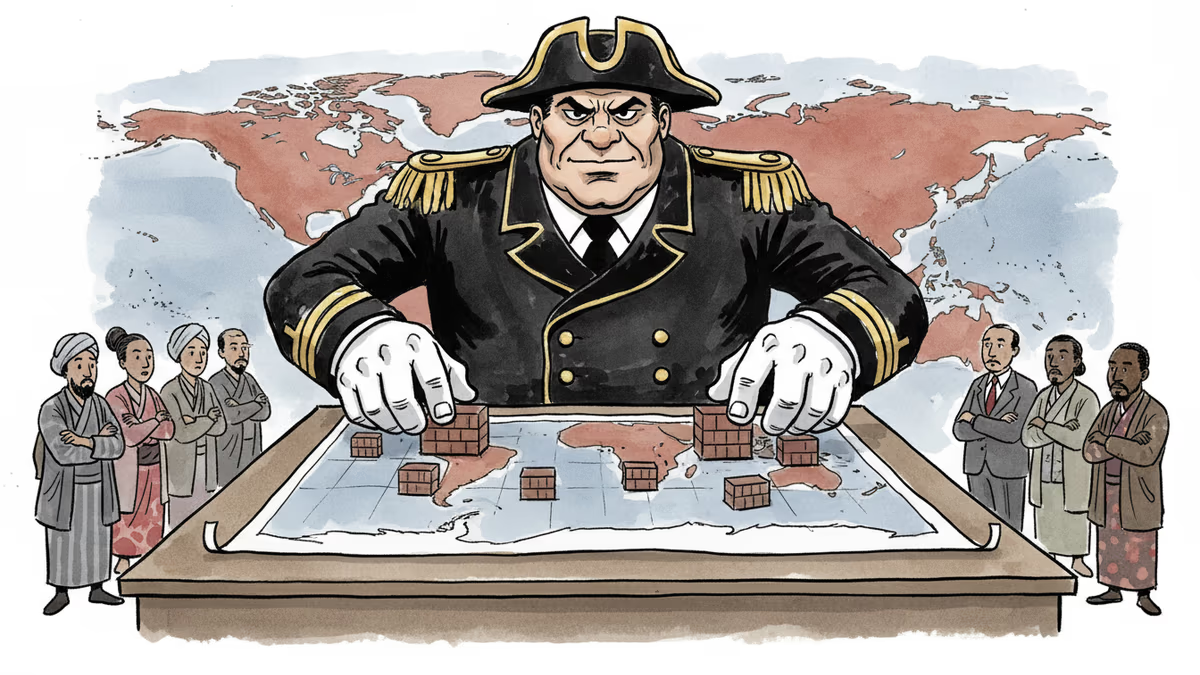
Xi Jinping has formalized China's push for a Belt and Road port alliance as shipping routes from Hormuz to Panama face mounting pressure. What does this mean for global trade architecture?
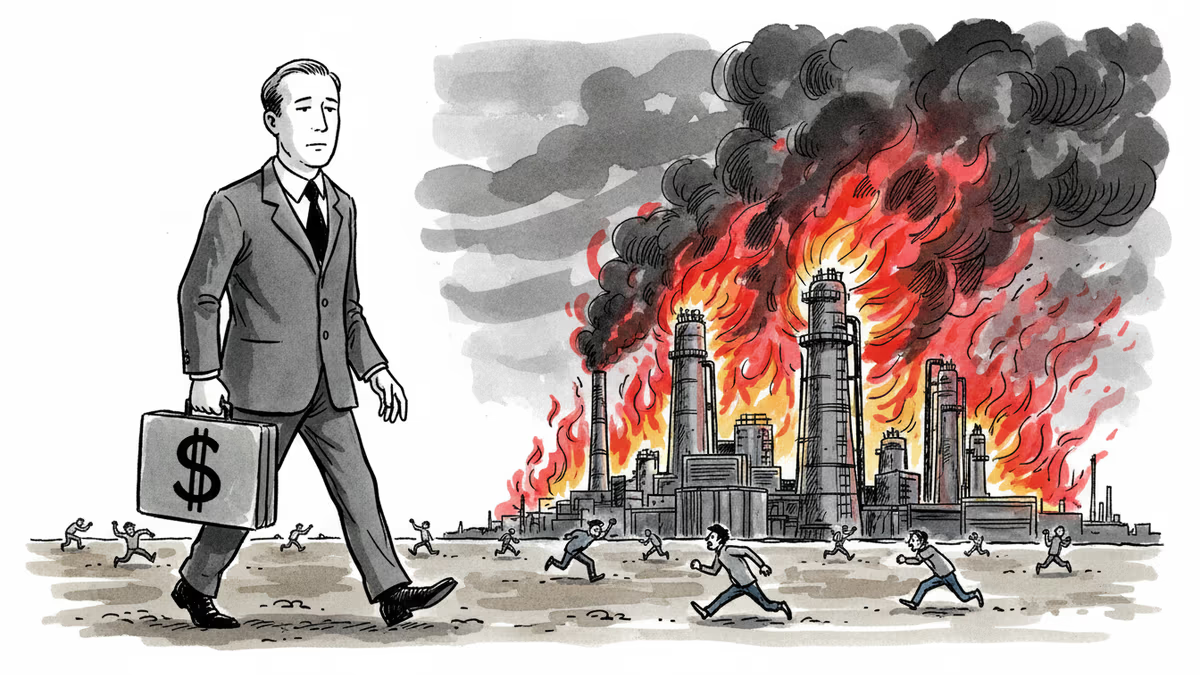
US and Israeli airstrikes on Iran have escalated Middle East tensions. Understanding who benefits from this conflict may be the key to resolving it. A PRISM analysis.
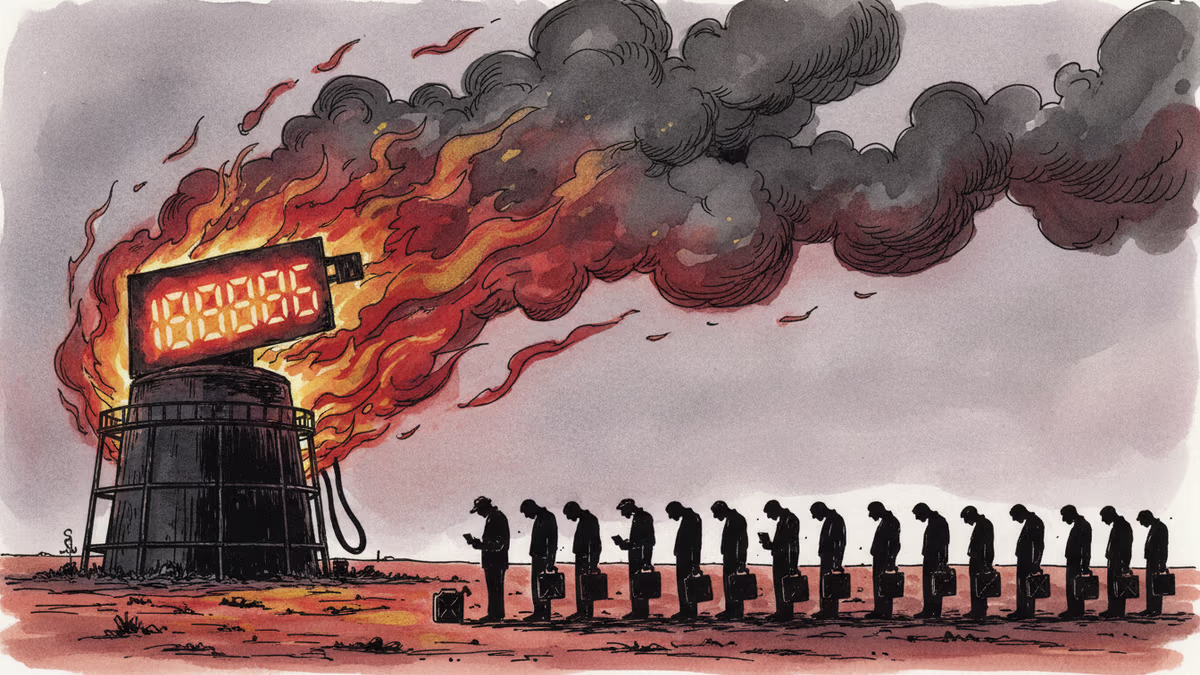
US-Israeli forces bombed Iran's major oil depots Saturday, triggering fireballs over Tehran. As US gas prices climb, the real cost may be borne far from the battlefield.
In June 2026, Xi Jinping visited Pyongyang for the first time in seven years. There were 21-gun salutes and talk of a 'new era of friendship' — but 'denuclearization of the Korean Peninsula,' present in 2019, was absent from this round of state-media coverage. A symbolic overreach, or a real upgrade?
Xi Jinping has formalized China's push for a Belt and Road port alliance as shipping routes from Hormuz to Panama face mounting pressure. What does this mean for global trade architecture?
US and Israeli airstrikes on Iran have escalated Middle East tensions. Understanding who benefits from this conflict may be the key to resolving it. A PRISM analysis.
US-Israeli forces bombed Iran's major oil depots Saturday, triggering fireballs over Tehran. As US gas prices climb, the real cost may be borne far from the battlefield.
Thoughts
Share your thoughts on this article
Sign in to join the conversation