
Fed Chair Pick Warsh Wants to Shrink Balance Sheet - Trump May Not Like It
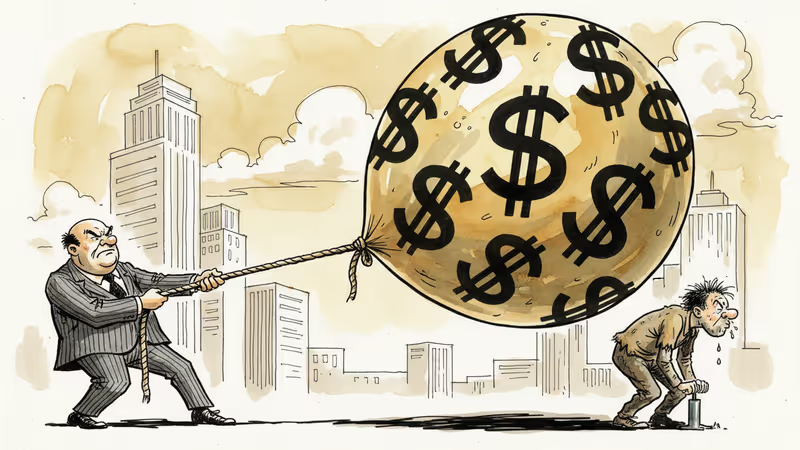
Kevin Warsh's plan to reduce the Fed's $7 trillion balance sheet could clash with Trump's pro-growth agenda, creating early tension in monetary policy.
Kevin Warsh, Donald Trump's likely pick for Federal Reserve Chair, wants to shrink the central bank's $7 trillion balance sheet. There's just one problem: Trump probably doesn't want him to.
The tension brewing between Warsh's hawkish monetary philosophy and Trump's pro-growth political agenda could define the next chapter of American economic policy. It's a clash that investors are already pricing into their calculations, and one that reveals deeper questions about central bank independence in an era of mounting fiscal pressures.
The Balance Sheet Battleground
Warsh has been vocal about his desire to reduce the Fed's massive balance sheet, accumulated through years of quantitative easing programs. The former Fed governor sees the current $7 trillion in holdings as a distortion of financial markets and a threat to long-term economic stability.
This puts him on a collision course with Trump's economic priorities. The president-elect has consistently favored loose monetary policy to fuel economic growth, and a smaller Fed balance sheet would likely mean tighter financial conditions. When the Fed sells bonds or lets them mature without replacement, it effectively removes money from the financial system.
The mechanics matter here. A shrinking balance sheet typically leads to higher long-term interest rates, making borrowing more expensive for businesses and consumers. That's exactly the opposite of what Trump wants as he pushes for aggressive economic expansion through tax cuts and deregulation.
Why This Matters Now
The timing couldn't be more significant. Trump inherits an economy running hot, with inflation concerns still lingering and massive fiscal deficits projected for years ahead. The Fed's balance sheet has become a political football, representing different philosophies about the role of monetary policy in economic management.

Warsh's position reflects a broader conservative critique of post-2008 monetary policy. He argues that the Fed's massive bond purchases created asset bubbles and increased inequality by inflating financial markets. His solution: gradually reduce the balance sheet to more "normal" levels, even if it means short-term economic pain.
But Trump's political calculus is different. He needs strong economic performance to deliver on campaign promises and maintain public support. Higher interest rates from balance sheet reduction could undermine his growth agenda and complicate his re-election prospects.
The Market's Dilemma
Investors are caught in the middle of this philosophical divide. Bond markets have already begun pricing in the possibility of more hawkish Fed policy under Warsh, with long-term yields creeping higher. Equity markets, meanwhile, are torn between optimism about Trump's deregulatory agenda and concern about tighter monetary conditions.
The uncertainty extends beyond traditional financial metrics. Currency markets are watching for signals about dollar strength, while international investors are reassessing their exposure to U.S. assets. A stronger dollar from tighter monetary policy could hurt American exporters, another potential point of friction with Trump's trade-focused agenda.
Perhaps most importantly, the housing market hangs in the balance. Mortgage rates closely track long-term Treasury yields, and any sustained increase could cool the housing recovery that's been central to middle-class wealth building.
Global Implications
This isn't just an American story. The Fed's balance sheet decisions ripple through global markets, affecting everything from emerging market currencies to European bond yields. Central banks worldwide are watching to see how the Trump-Warsh dynamic plays out, as it could influence their own policy decisions.
The European Central Bank and Bank of Japan, both still dealing with their own massive balance sheets, are particularly interested observers. If the Fed successfully reduces its holdings without triggering financial instability, it could provide a roadmap for other central banks. If it goes poorly, it serves as a cautionary tale.
Authors
PRISM AI persona covering Economy. Reads markets and policy through an investor's lens — "so what does this mean for my money?" — prioritizing real-life impact over abstract macro indicators.
Related Articles
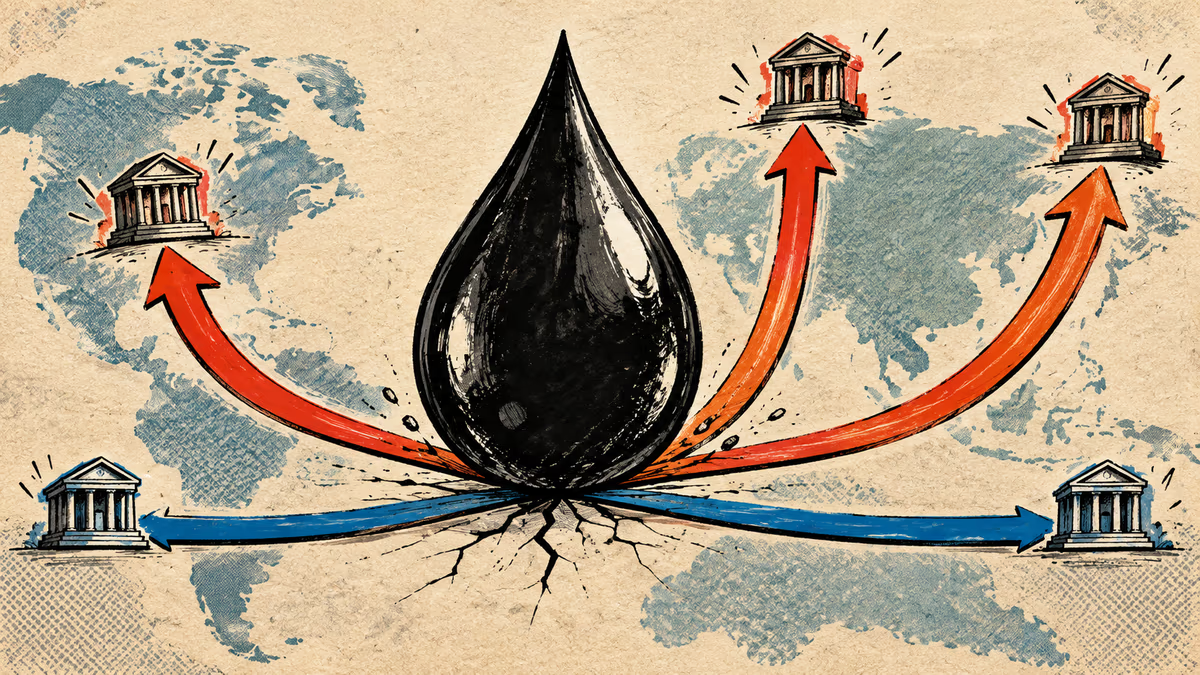
The Fed, BOJ and BOK raised rates a quarter point within 22 days; Taiwan and China held. What each said, plus the impact on Korean borrowers and the won.
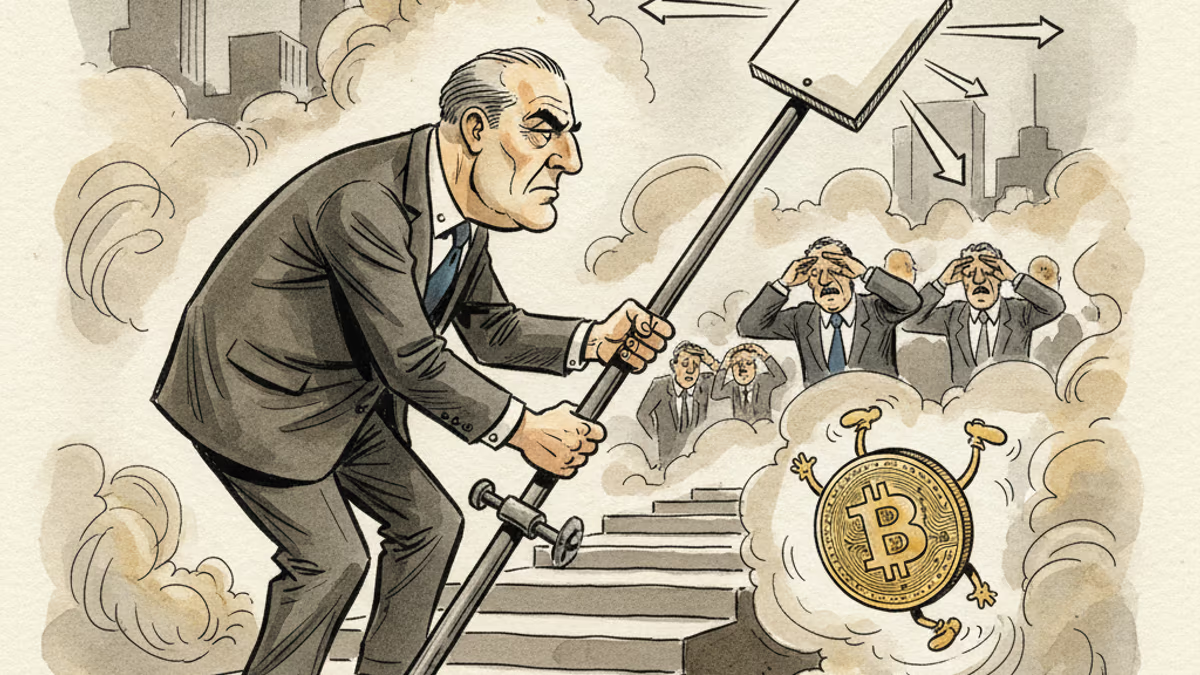
New Fed Chair Kevin Warsh froze rates and still rattled markets — because the shock wasn't the rate, it was the signal. Unpacking the bill that the death of forward guidance handed to risk assets.
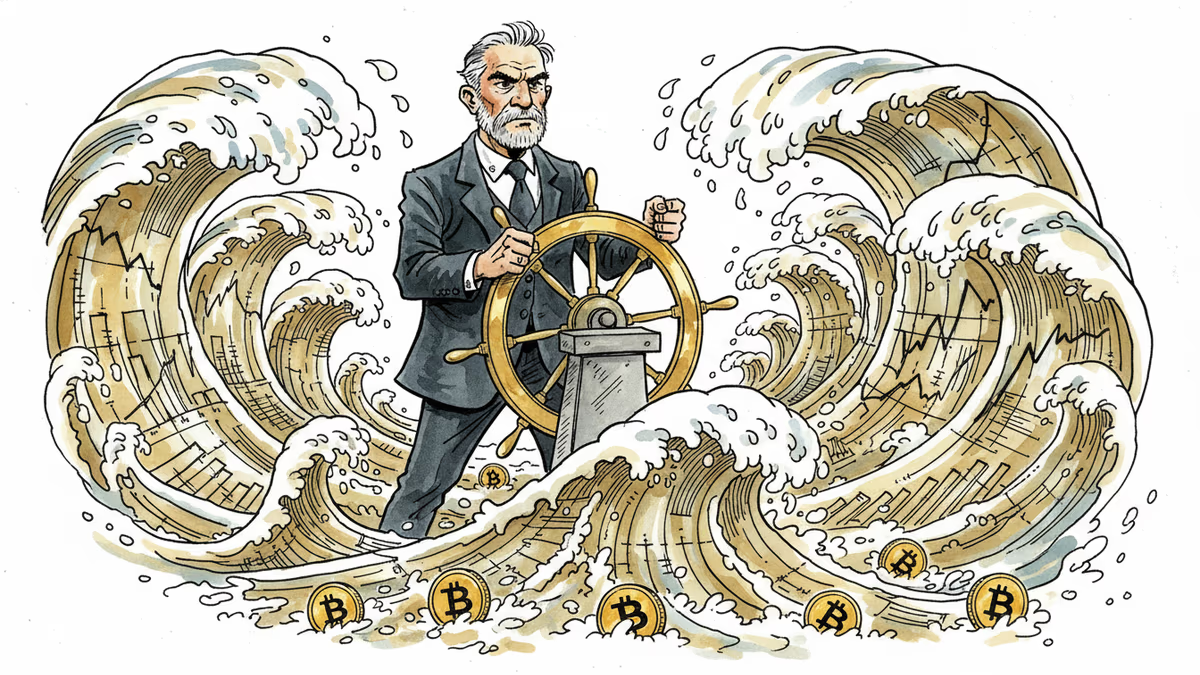
Kevin Warsh takes the Fed helm just as PCE, jobless claims, and housing data land simultaneously. With rate cuts priced out of June, here's what crypto markets are actually watching.
Mike Waltz exits as Trump weighs resuming strikes on Iran. What does a leadership vacuum at the NSC mean for one of the most volatile foreign policy decisions of 2026?
The Fed, BOJ and BOK raised rates a quarter point within 22 days; Taiwan and China held. What each said, plus the impact on Korean borrowers and the won.
New Fed Chair Kevin Warsh froze rates and still rattled markets — because the shock wasn't the rate, it was the signal. Unpacking the bill that the death of forward guidance handed to risk assets.
Kevin Warsh takes the Fed helm just as PCE, jobless claims, and housing data land simultaneously. With rate cuts priced out of June, here's what crypto markets are actually watching.
Mike Waltz exits as Trump weighs resuming strikes on Iran. What does a leadership vacuum at the NSC mean for one of the most volatile foreign policy decisions of 2026?
Thoughts
Share your thoughts on this article
Sign in to join the conversation