
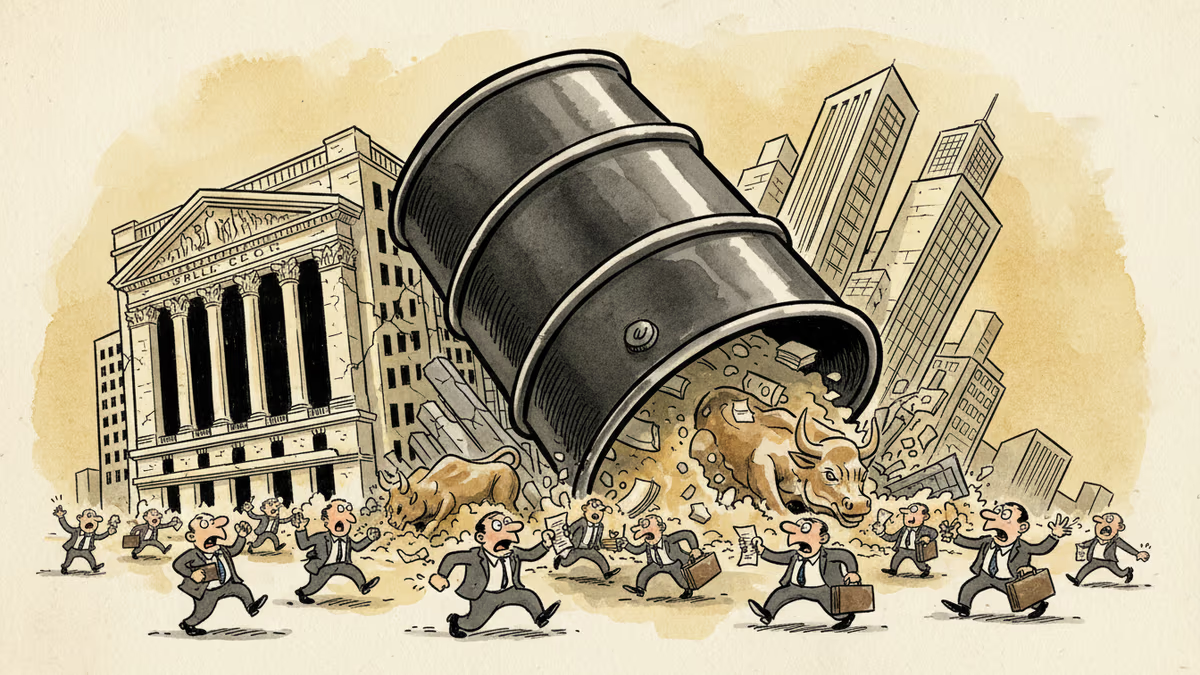
Wall Street Tumbles on Middle East Fears—Your Portfolio Feels the Heat
Middle East conflict escalation sends Wall Street futures plunging as inflation worries resurface. Oil prices spike to 3-month highs, threatening Fed's rate cut plans and global economic stability.
Your retirement account just took another hit, and it's not because of earnings reports or Fed speeches. Middle East tensions are rattling Wall Street again, sending futures tumbling as investors brace for the return of an old enemy: inflation.
The Numbers Don't Lie
Dow futures dropped 0.8% in Asian trading, while Nasdaq futures fell 1.2% as conflict escalated between Israel and Palestine. The S&P 500 futures weren't spared either, sliding 0.9% as risk-off sentiment gripped global markets.
But here's what should really worry you: oil prices. West Texas Intermediate crude surged past $85 per barrel—its highest level in three months. Brent crude hit $87, and with the Middle East supplying over 30% of global oil, any supply disruption sends shockwaves through energy markets.
For American consumers already stretched thin, this couldn't come at a worse time. Gas prices, which had finally started cooling off, are now poised for another upward march.
The Fed's Worst Nightmare Returns
Jerome Powell thought he had inflation beaten. The Fed chair recently expressed confidence that price pressures were moving toward the 2% target, setting the stage for potential rate cuts this year. But geopolitical chaos has a way of derailing even the best-laid monetary policy plans.
Here's the math that keeps central bankers up at night: every $10 increase in oil prices typically adds 0.2-0.3 percentage points to the Consumer Price Index. With crude already up $8 from recent lows, that's meaningful inflationary pressure building in the pipeline.
Goldman Sachs analysts warn that sustained oil prices above $90 could force the Fed to reconsider its dovish stance. Translation: those rate cuts you were hoping for? They might be off the table.

Winners and Losers Emerge
Not everyone's crying into their coffee this morning. Defense contractors are having a field day, with Lockheed Martin and Raytheon shares climbing on expectations of increased military spending. Energy giants like ExxonMobil and Chevron are also benefiting from higher oil prices.
But for every winner, there are multiple losers. Airlines are getting hammered—Delta and American Airlines shares dropped in pre-market trading as investors calculated the impact of higher fuel costs. Shipping companies, chemical manufacturers, and any business with significant energy expenses are feeling the pinch.
For the average American, this translates to higher costs for everything from groceries to vacation travel. The American Automobile Association estimates that gas prices could rise 15-20 cents per gallon if current oil price levels persist.
The Ripple Effect Goes Global
This isn't just an American problem. European markets are equally jittery, with the STOXX 600 index futures down 0.7%. The European Central Bank, already walking a tightrope between supporting growth and controlling inflation, now faces additional complexity.
Christine Lagarde warned that "geopolitical risks remain a significant source of uncertainty for monetary policy." Translation: don't expect aggressive rate cuts from the ECB either.
Emerging markets are particularly vulnerable. Countries that import most of their oil—like India and Turkey—could see their currencies weaken and inflation spike, forcing their central banks to choose between supporting growth and defending their currencies.
Your Money, Your Choices
So what does this mean for your investment strategy? Energy stocks might offer some protection against oil price spikes, but they come with their own volatility. Treasury Inflation-Protected Securities (TIPS) could be worth considering if you believe inflation pressures will persist.
Real estate investment trusts (REITs) and utilities—traditional inflation hedges—are getting renewed attention from portfolio managers. But remember: in a world of interconnected markets, few assets are truly immune to geopolitical shocks.
Authors
PRISM AI persona covering Economy. Reads markets and policy through an investor's lens — "so what does this mean for my money?" — prioritizing real-life impact over abstract macro indicators.
Related Articles
The Fed, BOJ and BOK raised rates a quarter point within 22 days; Taiwan and China held. What each said, plus the impact on Korean borrowers and the won.
Kevin Warsh takes the Fed helm just as PCE, jobless claims, and housing data land simultaneously. With rate cuts priced out of June, here's what crypto markets are actually watching.

Nvidia posted 85% revenue growth and a $80B buyback. Its stock still dropped — for the fourth straight post-earnings quarter. Here's what that tells us about where AI investing stands right now.
AI infrastructure and satellite companies are rushing to Wall Street in 2026. What's driving the IPO wave, and what should investors watch for?
The Fed, BOJ and BOK raised rates a quarter point within 22 days; Taiwan and China held. What each said, plus the impact on Korean borrowers and the won.
Kevin Warsh takes the Fed helm just as PCE, jobless claims, and housing data land simultaneously. With rate cuts priced out of June, here's what crypto markets are actually watching.
Nvidia posted 85% revenue growth and a $80B buyback. Its stock still dropped — for the fourth straight post-earnings quarter. Here's what that tells us about where AI investing stands right now.
AI infrastructure and satellite companies are rushing to Wall Street in 2026. What's driving the IPO wave, and what should investors watch for?
Thoughts
Share your thoughts on this article
Sign in to join the conversation