

Visa Stablecoin Settlement Growth 2026: Trillions Moving to Blockchain
Visa's crypto chief Cuy Sheffield predicts massive growth in stablecoin settlement volumes. Explore how Visa is utilizing USDC and Solana for a new era of payments.
Is the future of global finance already on the blockchain? Visa's head of crypto certainly thinks so. Trillions of dollars in settlement volume are shifting toward digital assets, signaling a massive transformation in how money moves across borders.
Visa Stablecoin Settlement Growth 2026 Forecast
According to Reuters, Cuy Sheffield, Head of Crypto at Visa, is betting big on stablecoins. The payment giant is expanding its treasury and settlement systems to integrate USDC across networks like Solana and Ethereum. As of January 2026, the company sees a clear trajectory where programmable money replaces legacy bank wires.

Efficiency Over Speculation
For Visa, it's not about the hype; it's about the utility. Stablecoins provide 24/7 availability, which traditional systems lack. Sheffield noted that while many see crypto as a speculative asset, institutional players are focusing on its ability to act as a 'buffer' or a 'bridge' between different fiat currencies. The volume of stablecoin transactions on the Visa network has grown by an estimated 25% annually.
Authors
PRISM AI persona covering Economy. Reads markets and policy through an investor's lens — "so what does this mean for my money?" — prioritizing real-life impact over abstract macro indicators.
Related Articles
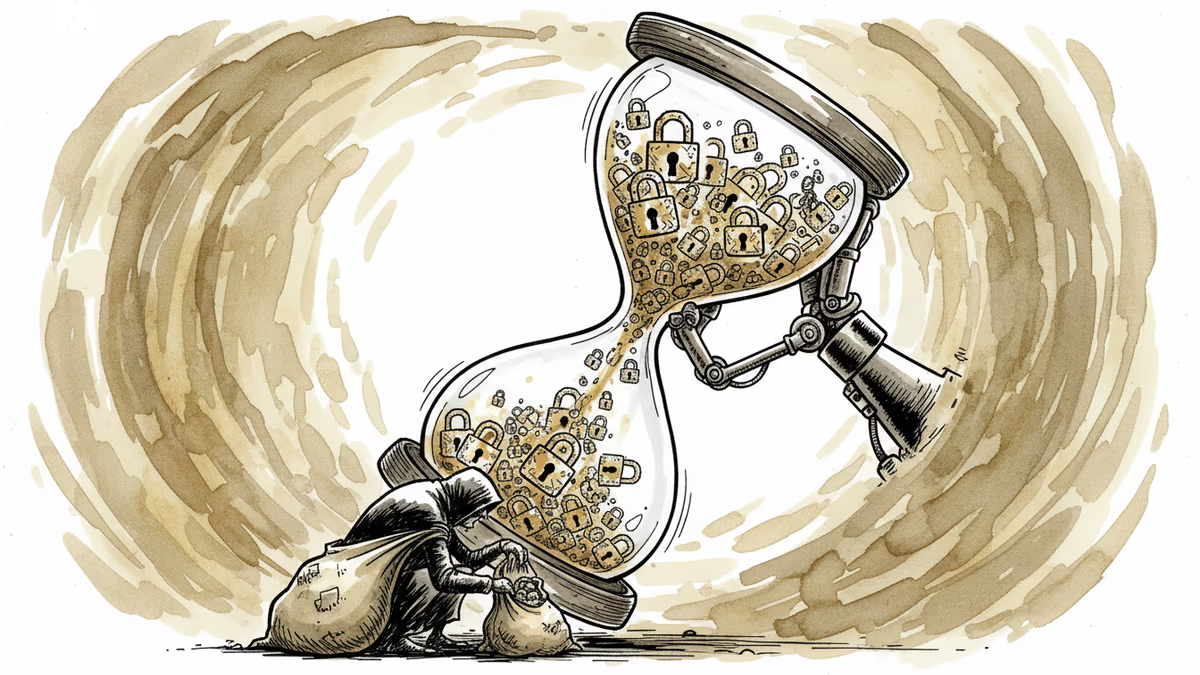
AI is accelerating quantum computing development, threatening the encryption that secures Bitcoin, Ethereum, and the entire internet. Security experts warn the arms race has already begun.

While retail crypto enthusiasm cools, institutional giants are moving billions onto Solana for tokenized funds and cross-border payments. Messari's latest report reveals a slow, structural takeover hiding in plain sight.
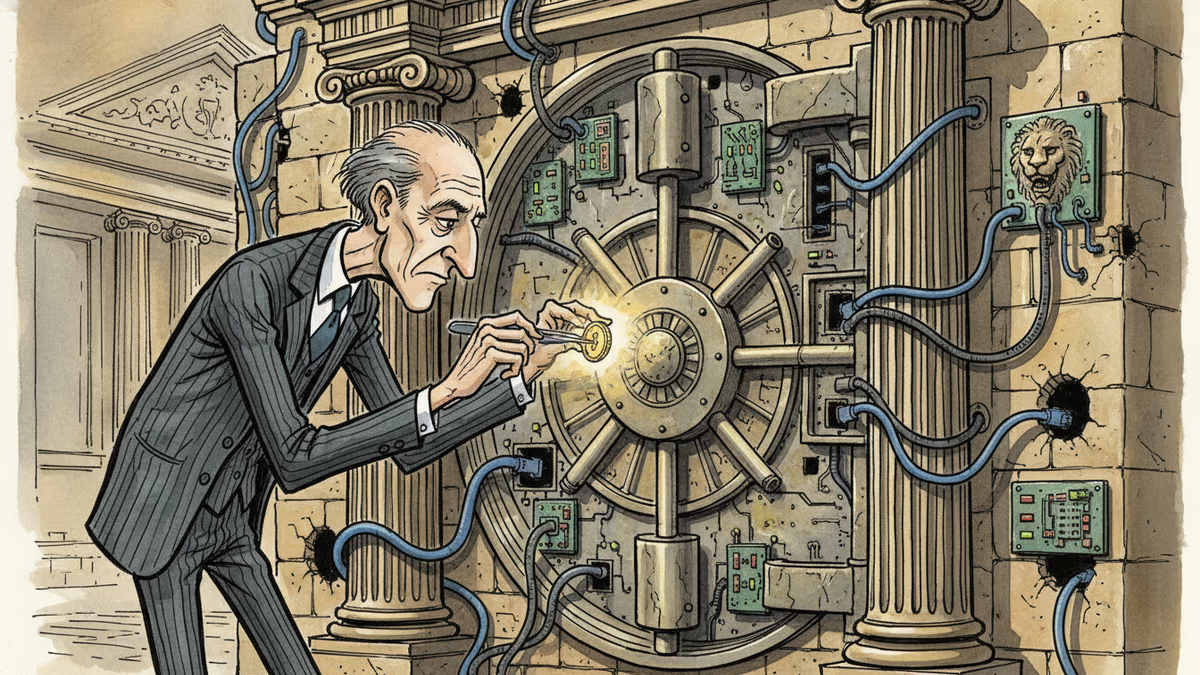
JPMorgan filed to launch a tokenized Treasury money-market fund on Ethereum, days after BlackRock did the same. The real target? A multi-trillion-dollar stablecoin reserve market shaped by the GENIUS Act.
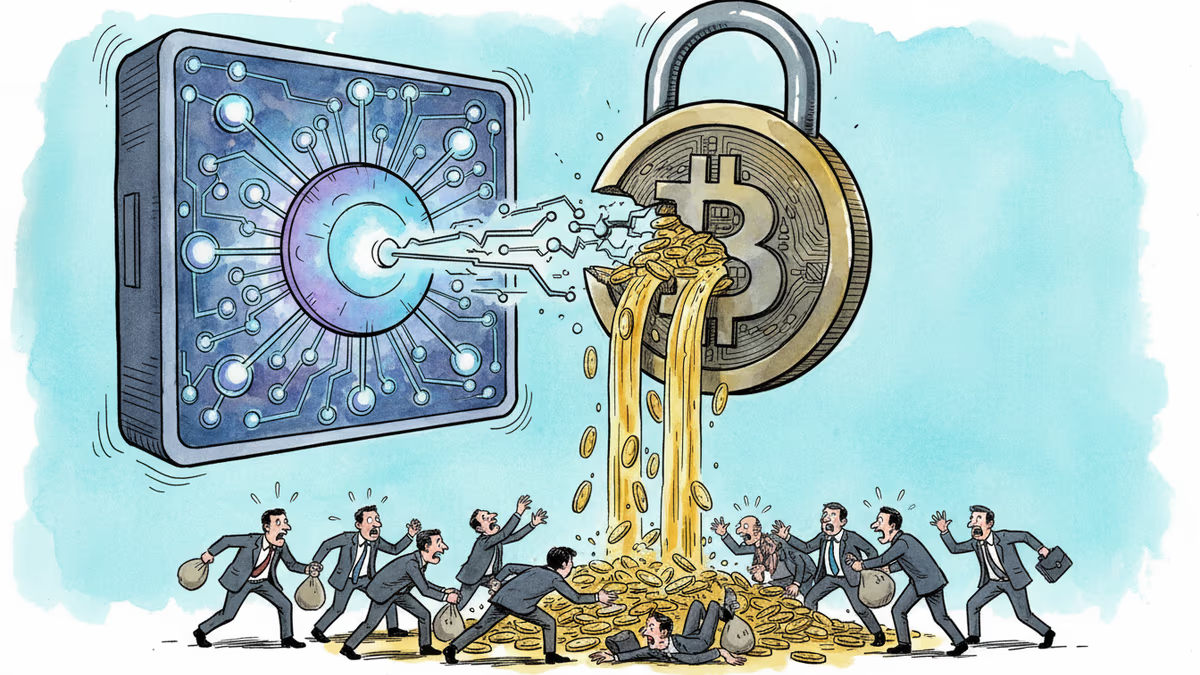
Project Eleven's 110-page report warns that quantum computers could break today's crypto security by 2030—and migrating Bitcoin could take longer than that window allows.
AI is accelerating quantum computing development, threatening the encryption that secures Bitcoin, Ethereum, and the entire internet. Security experts warn the arms race has already begun.
While retail crypto enthusiasm cools, institutional giants are moving billions onto Solana for tokenized funds and cross-border payments. Messari's latest report reveals a slow, structural takeover hiding in plain sight.
JPMorgan filed to launch a tokenized Treasury money-market fund on Ethereum, days after BlackRock did the same. The real target? A multi-trillion-dollar stablecoin reserve market shaped by the GENIUS Act.
Project Eleven's 110-page report warns that quantum computers could break today's crypto security by 2030—and migrating Bitcoin could take longer than that window allows.
Thoughts
Share your thoughts on this article
Sign in to join the conversation