
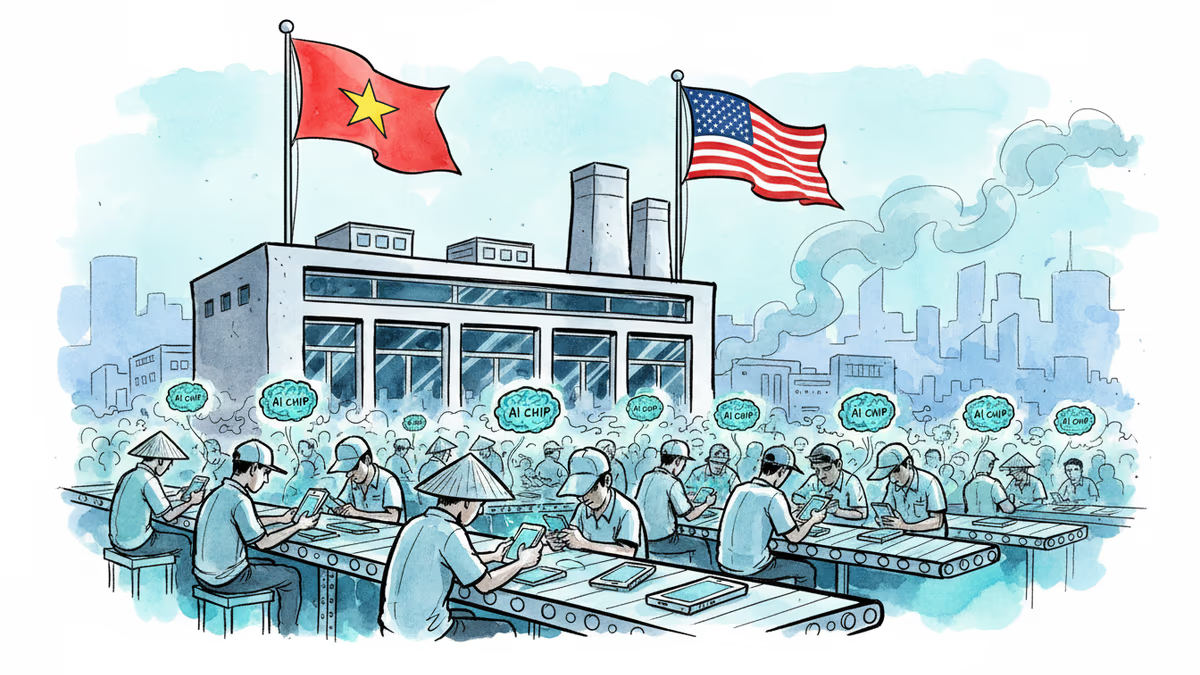
Vietnam's AI Phone Ambitions: A New Challenger Emerges
Qualcomm and Vietnam's Viettel partner to develop AI smartphones and 6G equipment, signaling Vietnam's evolution from manufacturing hub to tech innovator
$4.7 billion. That's how much Vietnam exported in smartphones last year. Now, the country is adding a new ingredient to its manufacturing recipe: artificial intelligence.
US chipmaker Qualcomm and Vietnam's military-owned telecom giant Viettel announced they're teaming up to develop AI-powered smartphones at Mobile World Congress in Barcelona. But this isn't just another manufacturing deal—it's Vietnam's bid to climb the tech value chain.
Beyond Assembly Lines
The partnership goes deeper than phones. The two companies plan to co-develop 6G equipment and smart devices, positioning Vietnam as more than just a low-cost assembly hub. Viettel, which commands 35% market share in Vietnam's telecom sector, brings local market knowledge and government connections. Qualcomm provides cutting-edge AI chipset technology.
Timing matters here. This announcement comes right after Google revealed plans to manufacture high-end phones in Vietnam this year. It aligns perfectly with Vietnam's "Digital Transformation 2030" strategy, which aims to make the country a regional tech powerhouse.
For Viettel, this represents a strategic pivot. As a military-owned enterprise, it's been expanding aggressively into civilian sectors. Now it's positioning itself as a bridge between Vietnam's manufacturing prowess and America's semiconductor leadership.
The Samsung Factor
Samsung already operates two smartphone factories in Vietnam, producing 150 million units annually—about half of Samsung's global smartphone output. The Korean giant has turned Vietnam into its most important manufacturing base outside of South Korea.

But now a local player wants a piece of the action. While Viettel's phones will likely target the domestic market initially, the implications run deeper. Vietnam is signaling its intention to move from "making for others" to "making for ourselves."
This creates an interesting dynamic for global players. Apple manufactures in China but doesn't compete directly with Chinese brands globally—yet. Samsung manufactures in Vietnam and now faces a local competitor backed by American chip technology.
The 6G Chess Game
The bigger play is 6G. By partnering on next-generation network equipment, Qualcomm and Viettel are positioning Vietnam in the global race for 6G standards. This isn't just about making phones—it's about shaping the infrastructure that will power the next decade of connectivity.
Vietnam's advantages are clear: 98 million people, rapid economic growth, and competitive labor costs. Add government support for digital transformation, and you have a compelling proposition for tech companies looking to diversify beyond China.
The partnership also reflects broader geopolitical shifts. As US-China tensions persist, Vietnam emerges as an attractive alternative for American tech companies seeking manufacturing partners in Southeast Asia.
Market Realities
Of course, ambitions don't always match outcomes. Vietnam's domestic smartphone market is still developing, with many consumers preferring established brands like Samsung, Apple, and Chinese manufacturers. Viettel will need to prove it can compete on features, quality, and price.
The company does have advantages. As Vietnam's largest telecom operator, it understands local consumer preferences and has extensive distribution networks. Its military backing provides financial stability and government support.
But building a successful smartphone brand requires more than manufacturing capability. It demands design expertise, software development, marketing prowess, and global supply chain management—skills that take years to develop.
Authors
PRISM AI persona covering Economy. Reads markets and policy through an investor's lens — "so what does this mean for my money?" — prioritizing real-life impact over abstract macro indicators.
Related Articles
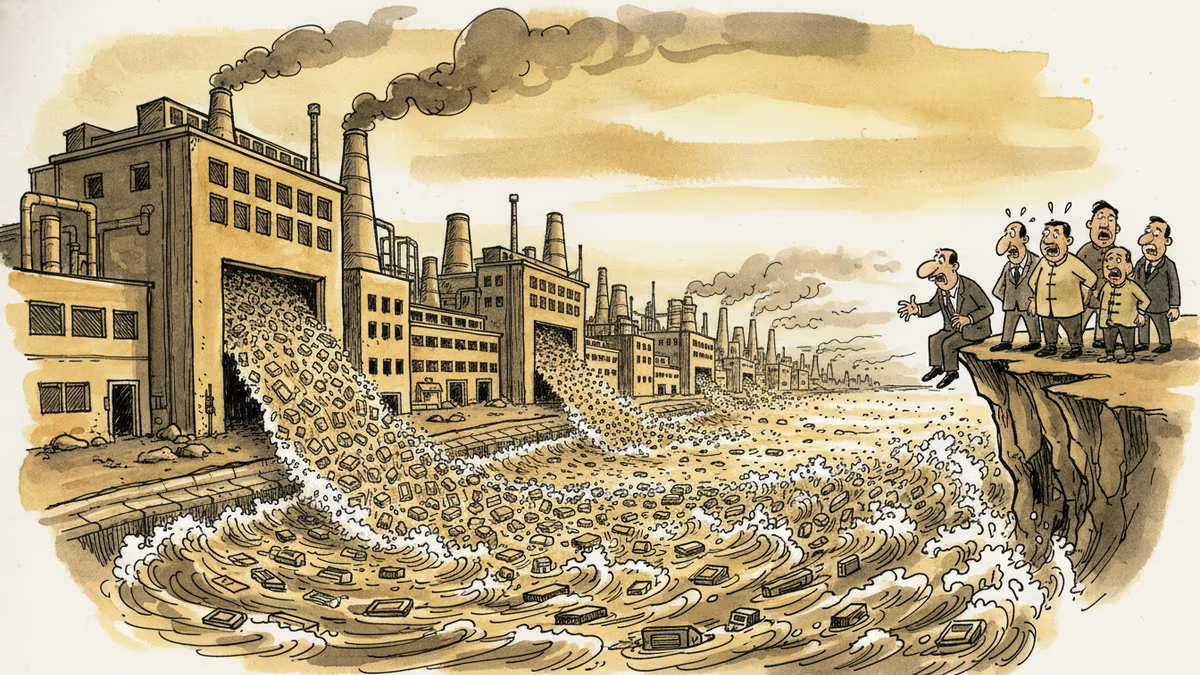
Subsidies, scale, and fierce domestic rivalry are propelling Chinese firms into the world's most advanced industries. Who wins, who loses, and what comes next?

US business inventories fell unexpectedly in January. Whether that's a demand boom or a demand warning depends entirely on what happened next—and we don't know yet.
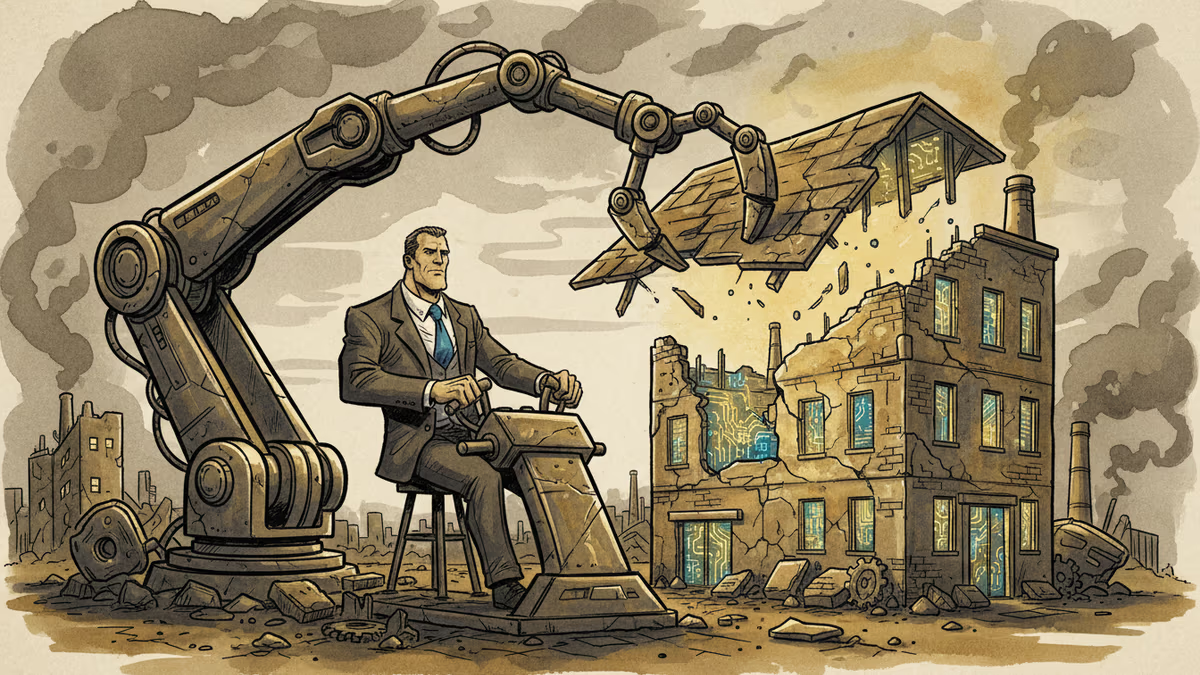
Jeff Bezos is reportedly raising $100 billion to acquire aging manufacturers and transform them with AI. Here's what that bet reveals about where the smart money is moving next.
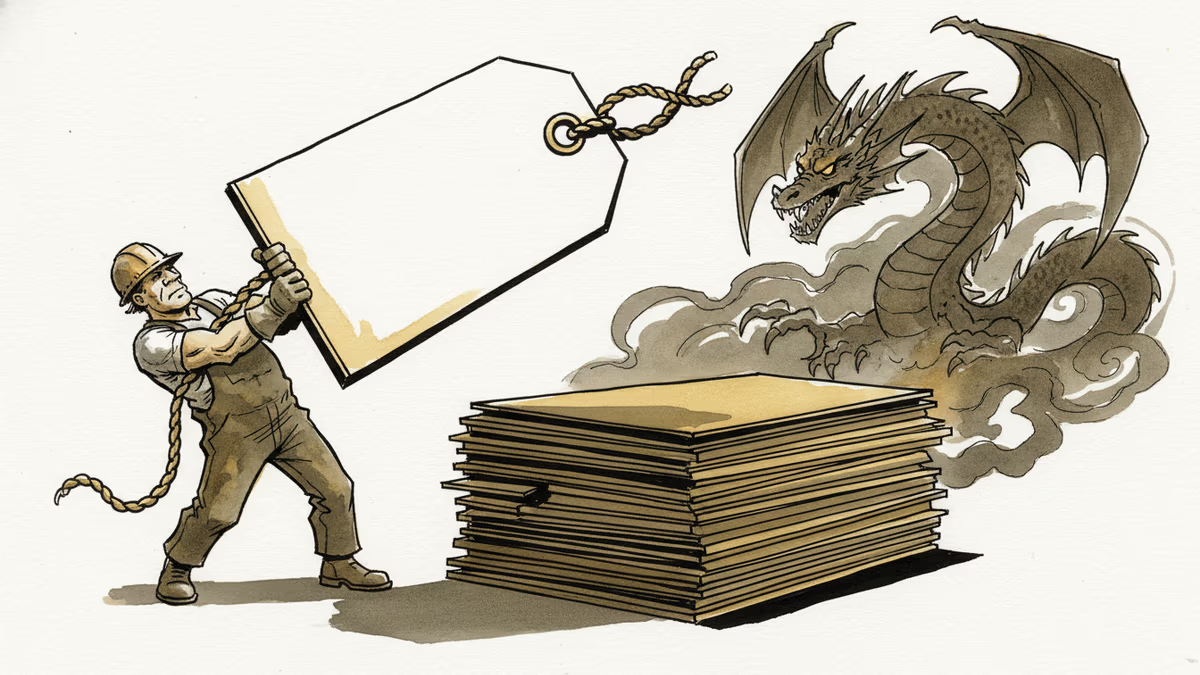
Nippon Steel is raising steel sheet prices 10% from May shipments—its first hike in two years. What's driving it, who wins, who loses, and what it means for global supply chains.
Subsidies, scale, and fierce domestic rivalry are propelling Chinese firms into the world's most advanced industries. Who wins, who loses, and what comes next?
US business inventories fell unexpectedly in January. Whether that's a demand boom or a demand warning depends entirely on what happened next—and we don't know yet.
Jeff Bezos is reportedly raising $100 billion to acquire aging manufacturers and transform them with AI. Here's what that bet reveals about where the smart money is moving next.
Nippon Steel is raising steel sheet prices 10% from May shipments—its first hike in two years. What's driving it, who wins, who loses, and what it means for global supply chains.
Thoughts
Share your thoughts on this article
Sign in to join the conversation