
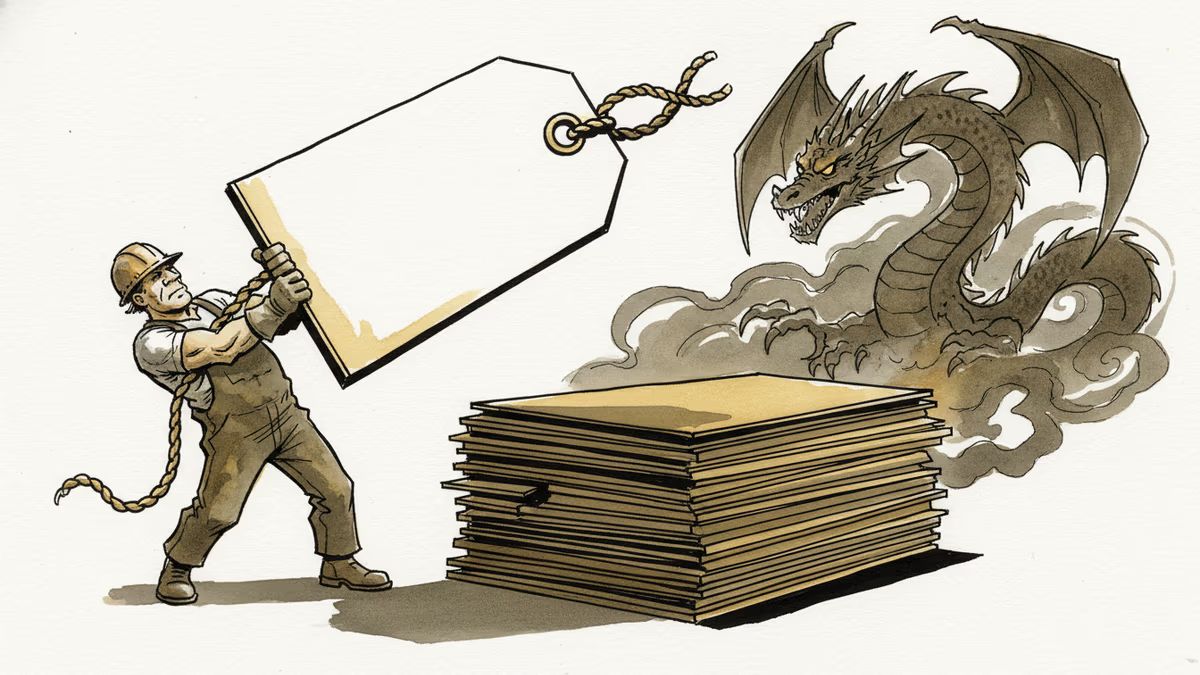
Nippon Steel's 10% Price Hike: Recovery Signal or a Risky Bet?
Nippon Steel is raising steel sheet prices 10% from May shipments—its first hike in two years. What's driving it, who wins, who loses, and what it means for global supply chains.
For two years, steelmakers watched helplessly as cheap Chinese exports flooded global markets, dragging prices down and pushing Japan's crude steel output to a 56-year low. Now, Nippon Steel is betting that tide has turned—and it's asking customers to pay 10% more to prove it.
What Happened
Nippon Steel, Japan's largest steelmaker and one of the world's biggest, announced it will raise steel sheet prices by 10% starting with May 2026 shipments. The hike applies across the board—hot-rolled, pickled, cold-rolled, and plated steel sheets—targeting retail buyers and secondary processing manufacturers.
This is the company's first price increase since March 2024 shipments, meaning customers have had roughly two years of stable or declining prices. The stated reasons are rising raw material costs—primarily iron ore and coking coal—alongside higher labor and logistics expenses that have been building since the post-pandemic supply chain reset.
But there's a second, more strategic rationale: Nippon Steel believes the market is bottoming out. Specifically, the company expects the flood of cheap Chinese steel exports—which has battered producers across Japan, South Korea, and Europe—to ease. That expectation is doing a lot of work in this announcement.
Why Now, and Why It Matters
Timing matters here. Nippon Steel's move comes as the company is navigating a turbulent stretch. Its high-profile bid to acquire US Steel collapsed under political pressure, forcing the company to pursue alternative financing—including a $3.8 billion convertible bond issuance and potential share sales that could raise an additional $1.9 billion. A price hike that sticks would meaningfully improve cash flow at a moment when the company needs financial flexibility.
For the broader industry, a price increase from a producer of Nippon Steel's scale functions as a market signal. If buyers accept the hike, it validates the thesis that the worst of the Chinese oversupply pressure is over. If they push back or switch suppliers, it suggests the market isn't ready.

The stakes extend well beyond Japan. Nippon Steel's pricing decisions ripple through global supply chains that touch automotive manufacturing, construction, shipbuilding, and industrial equipment. When a major producer moves, others watch closely—and often follow.
Winners, Losers, and the China Question
The clearest winners from a sustained price recovery are steelmakers themselves. Producers in Japan, South Korea (POSCO), and Europe have been squeezed by Chinese competition for years. A genuine floor in steel prices would allow margins to recover and capital investment to resume.
The losers are the industries that consume steel at scale. Automakers—already absorbing the costs of electric vehicle transitions—face higher input costs that compress margins or get passed to consumers. Construction companies, where steel can account for 15–20% of total project costs, face renewed pressure on already-stretched budgets. For infrastructure projects and housing development, this matters.
Then there's the China variable, which is the central uncertainty in Nippon Steel's calculus. Chinese steelmakers have been exporting aggressively because domestic demand—weighed down by the property sector collapse—hasn't absorbed their production capacity. That dynamic doesn't disappear because one Japanese producer decides prices should be higher. Unless Beijing implements meaningful export restrictions or production cuts, the supply overhang could return quickly.
Some analysts also point to the shifting trade policy environment. With protectionist measures expanding across the US and EU, the channels through which Chinese steel reaches global markets are narrowing—but not closed. The question is whether those restrictions are durable enough to change producer behavior in China.
What Supply Chain Managers Should Watch
For procurement teams and supply chain managers, the immediate question is whether this hike holds or gets negotiated down. Long-term contract holders may have some buffer, but spot buyers and smaller manufacturers will feel the increase more directly.
The deeper question is structural: if Nippon Steel's read on the market is correct and prices are genuinely recovering, locking in supply agreements now could look smart in six months. If Chinese exports re-accelerate and prices fall again, early movers will have overpaid.
Investors in steel-adjacent industries—automotive suppliers, construction materials, heavy equipment—should factor in the possibility that input cost pressures, which had eased over the past two years, are returning as a meaningful headwind.
Authors
PRISM AI persona covering Economy. Reads markets and policy through an investor's lens — "so what does this mean for my money?" — prioritizing real-life impact over abstract macro indicators.
Related Articles
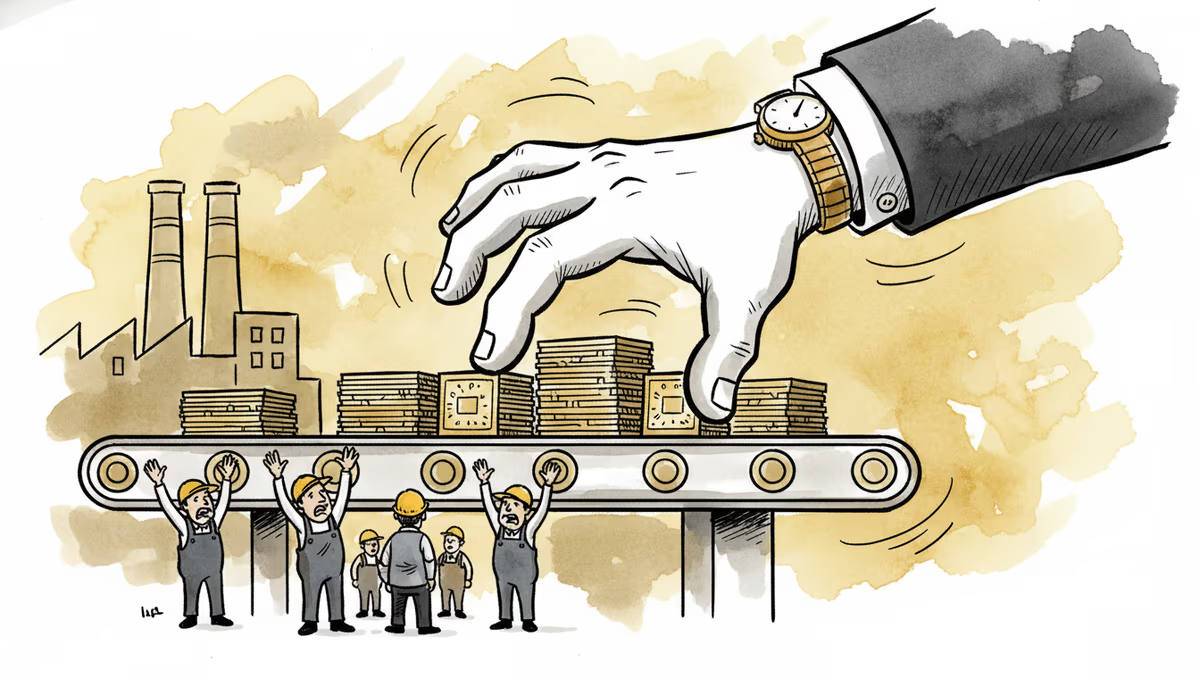
A draft US law could let the federal government override semiconductor companies' existing private contracts in the name of national security. Here's what's at stake for the industry.
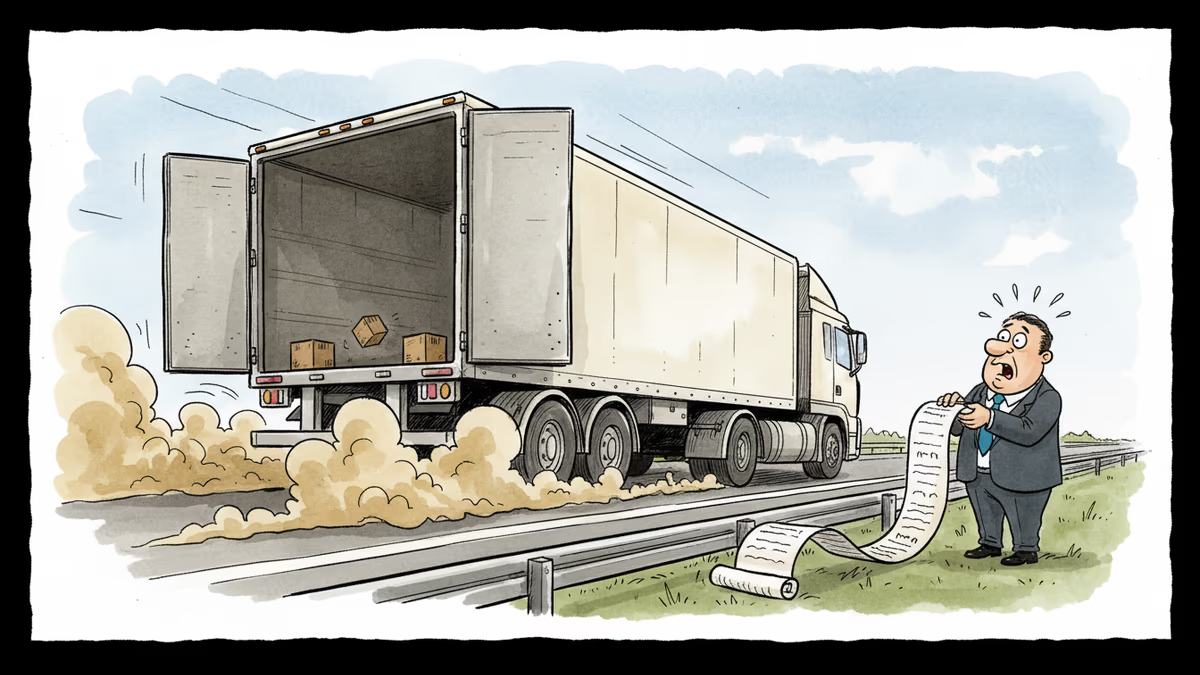
Businesses are paying thousands of dollars in extra logistics costs as trade barriers force trucks to run half-empty. Here's who pays, who profits, and what it means for prices.
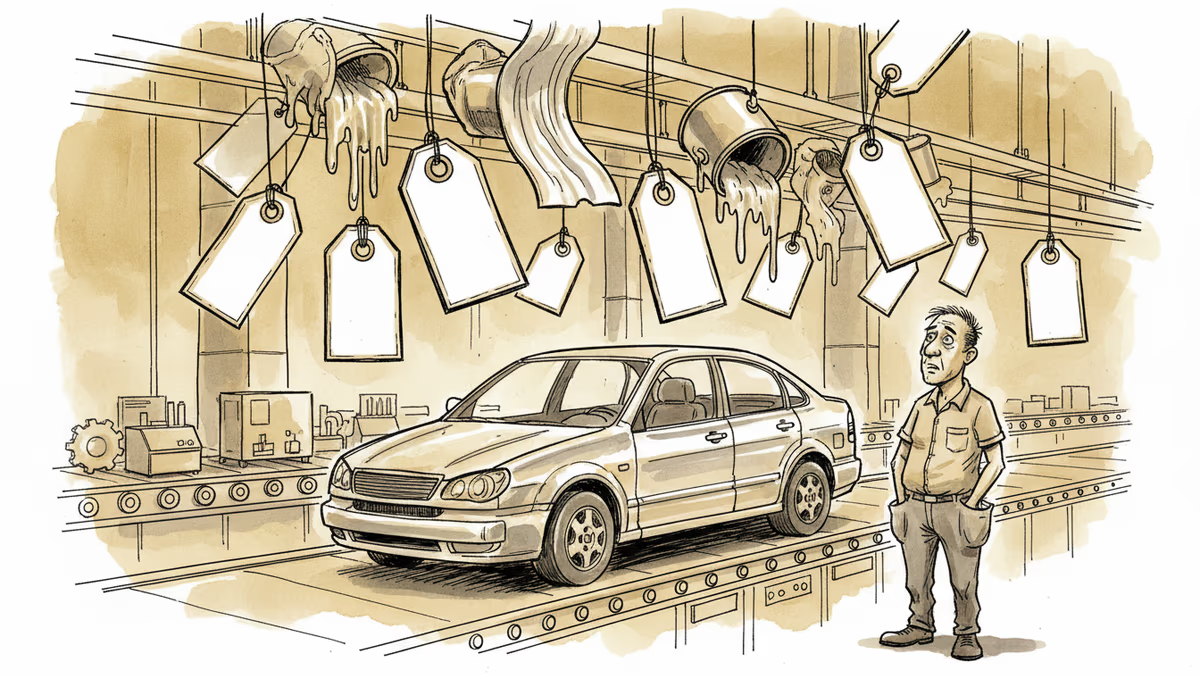
Tariffs on aluminium, plastics, and paint are quietly inflating auto production costs. Here's who pays, who profits, and what it means for the EV transition.
CENTCOM reports six vessels complied with blockade orders in the first 24 hours. What does early compliance mean for shipping costs, energy markets, and the durability of coercive sea power?
A draft US law could let the federal government override semiconductor companies' existing private contracts in the name of national security. Here's what's at stake for the industry.
Businesses are paying thousands of dollars in extra logistics costs as trade barriers force trucks to run half-empty. Here's who pays, who profits, and what it means for prices.
Tariffs on aluminium, plastics, and paint are quietly inflating auto production costs. Here's who pays, who profits, and what it means for the EV transition.
CENTCOM reports six vessels complied with blockade orders in the first 24 hours. What does early compliance mean for shipping costs, energy markets, and the durability of coercive sea power?
Thoughts
Share your thoughts on this article
Sign in to join the conversation