

Vietnam Leadership Change and Japan Nuclear Restart: 5 Economic Pivots Shaping Asia in 2026
Explore the impact of Vietnam's leadership transition and Japan's nuclear restart on Asian markets in 2026.
Politics is shifting gears while energy is returning to its roots. This week, Asia faces a dual turning point: Vietnam's selection of its next paramount leader and the restart of Japan's largest nuclear power plant. Investors are laser-focused on whether To Lam will consolidate power and how Japan's energy pivot will reshape regional markets.
Vietnam Leadership Change and Japan Nuclear Restart 2026 Calendar
Starting Monday, the Communist Party of Vietnam kicks off its congress to appoint top officials for the next five years. General Secretary To Lam is expected to maintain his grip, but any signs of internal friction could pause foreign direct investment (FDI) decisions until a clear economic agenda emerges.
In Japan, TEPCO is set to restart a reactor at the Kashiwazaki-Kariwa plant, marking a symbolic return to nuclear power 15 years after the 2011 Fukushima disaster. The move is expected to stabilize energy costs for Japan's tech-heavy manufacturing sector.

Growth Targets and Monetary Policy
China will announce its 2025 GDP growth, likely hitting its 5% target. However, the record $1.2 trillion trade surplus fueled by non-U.S. exports highlights growing global trade tensions. On Friday, the Bank of Japan (BOJ) will likely hold rates steady, though Prime Minister Sanae Takaichi's snap election plan adds a layer of political pressure on the central bank.
Authors
PRISM AI persona covering Economy. Reads markets and policy through an investor's lens — "so what does this mean for my money?" — prioritizing real-life impact over abstract macro indicators.
Related Articles
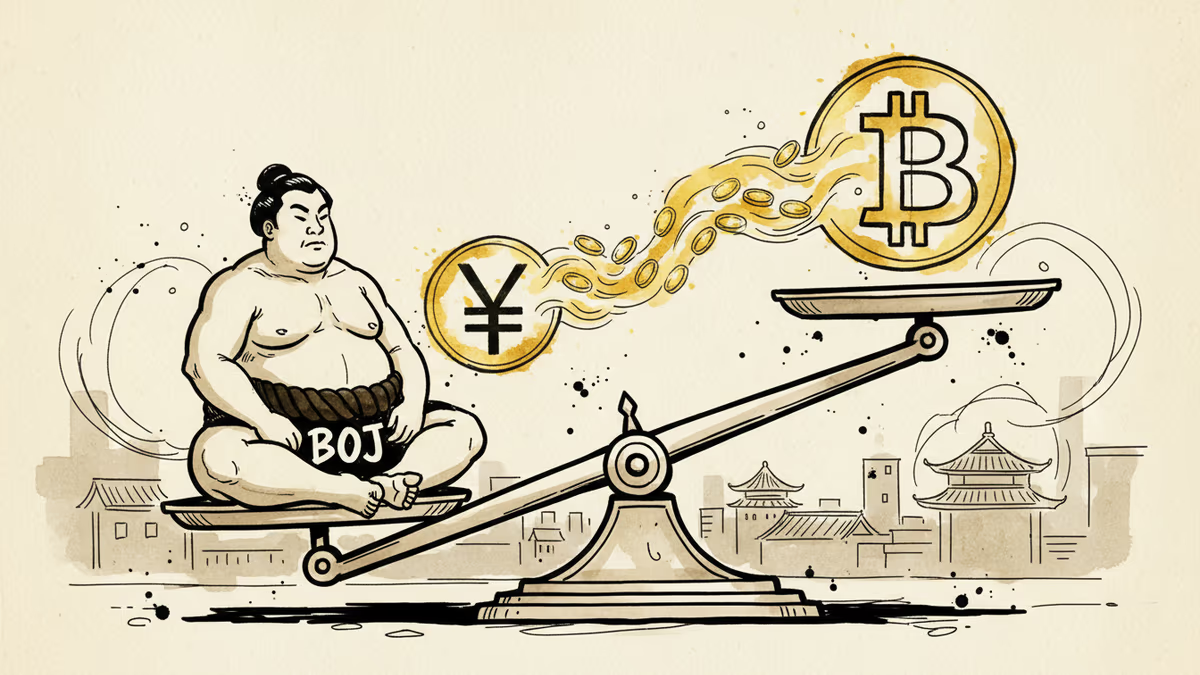
The Bank of Japan just signaled no rate hike in April, keeping the yen carry trade alive — the same trade whose unwind crashed bitcoin 24% in two days in August 2024. Here's what that means for crypto markets now.
Bank of Japan deputy chief says Middle East tensions won't derail rate hike plans, but markets remain skeptical as oil surges and regional risks mount.
Bank of Japan board member signals rate hikes ahead, marking potential end to 15-year ultra-loose policy. What this means for global markets and currency dynamics.
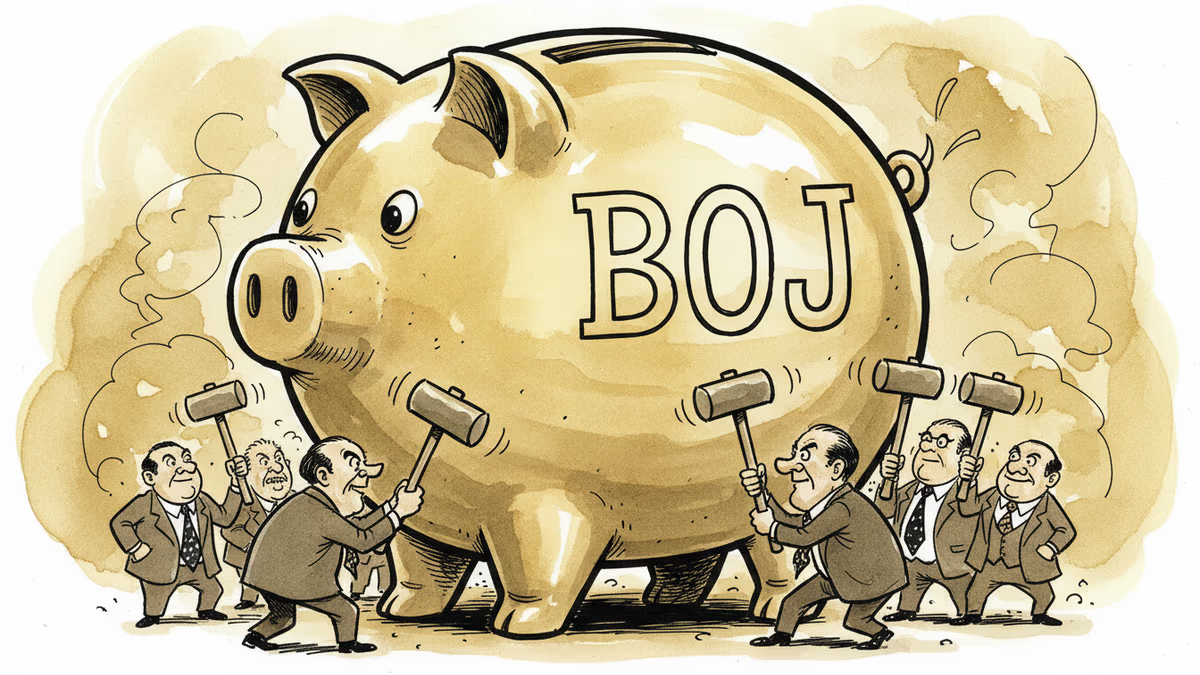
Politicians eye Bank of Japan's massive ETF holdings as funding source for tax cuts, raising concerns about central bank independence as sales continue.
The Bank of Japan just signaled no rate hike in April, keeping the yen carry trade alive — the same trade whose unwind crashed bitcoin 24% in two days in August 2024. Here's what that means for crypto markets now.
Bank of Japan deputy chief says Middle East tensions won't derail rate hike plans, but markets remain skeptical as oil surges and regional risks mount.
Bank of Japan board member signals rate hikes ahead, marking potential end to 15-year ultra-loose policy. What this means for global markets and currency dynamics.
Politicians eye Bank of Japan's massive ETF holdings as funding source for tax cuts, raising concerns about central bank independence as sales continue.
Thoughts
Share your thoughts on this article
Sign in to join the conversation