
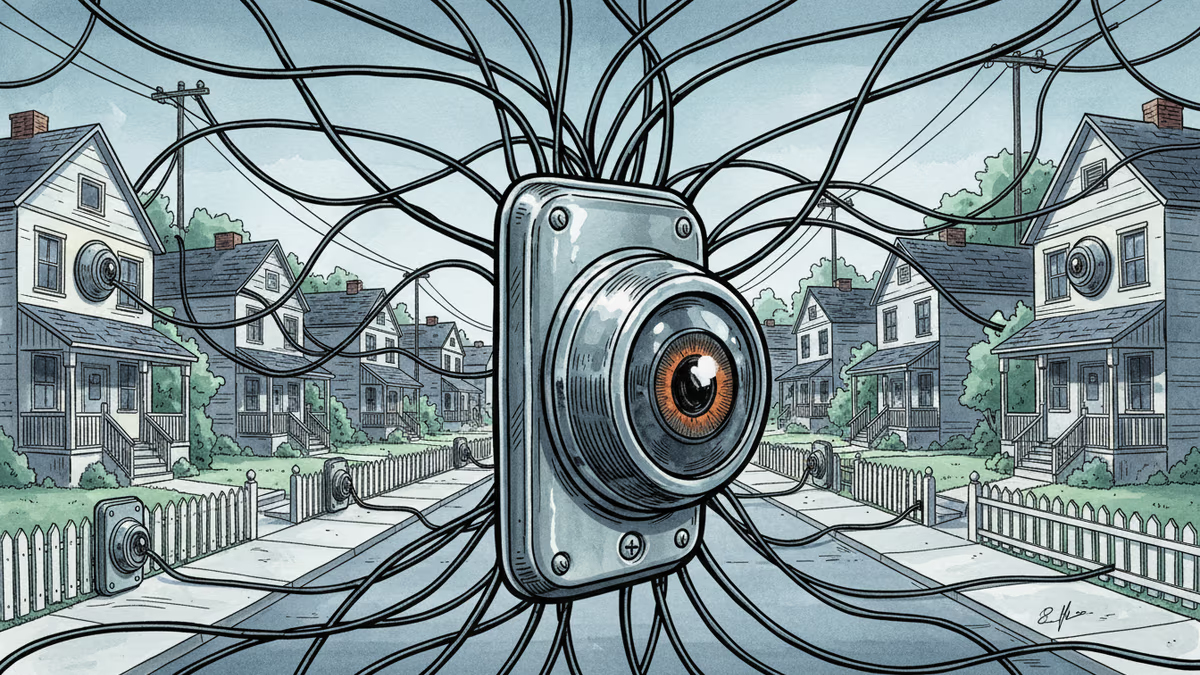
Your Doorbell Camera Just Became Big Brother's Best Friend
From Ring's creepy Super Bowl ad to police data requests, how video doorbells are transforming from home security into surveillance state tools
20 Million Eyes Are Watching
It started innocently enough—a simple camera to catch package thieves. Now, with over 20 millionRing doorbells installed across America, what began as home security has morphed into something far more unsettling. Ring's Super Bowl ad wasn't just marketing; it was a glimpse into a surveillance reality that's already here.
The ad showed a network of cameras tracking a lost dog through an entire neighborhood. Senator Ed Markey called it "creepy surveillance state." Privacy expert Chris Gilliard described it as putting "a cuddly face on a rather dystopian reality." Within days, Ring canceled its partnership with license plate tracking company Flock Safety—but experts say the damage is already done.
The Web Is Already Woven
"I would not be ready to declare Ring harmless," Dr. Matthew Guariglia from the Electronic Frontier Foundation tells me. The problem isn't just one company or one partnership. Police surveillance systems are "incredibly interoperable." Axon, maker of police body cameras, is developing tools to request Ring footage directly.
This isn't about individual cameras anymore. When hundreds of doorbell cameras connect, they create something unprecedented: a complete map of your daily life. Your morning coffee run, lunch break walk, evening grocery trip—all tracked, timestamped, and potentially stored forever.
Recent reports show ICE has been accessing Flock's license plate readers nationwide. What happens when video doorbells join that network?
Your Neighbor's Bias, Amplified by AI
There's another layer to this surveillance onion: the humans behind the cameras. Neighborhood apps overflow with videos of "suspicious" individuals, often filtered through the poster's prejudices. Research confirms racial profiling is a real problem in these community surveillance networks.
Legally, there's little protection. "Footage that captures public-facing sidewalks or driveways likely won't have privacy protection," explains Emile Ayoub from the Brennan Center. Your consent isn't required for someone to record and share video of you walking down a public street.

What's more troubling: these videos become training data for AI systems. Ring founder Jamie Siminoff defends this as people wanting "to live in a safe neighborhood," but whose definition of "safe" gets encoded into the algorithms?
The Legal Loopholes
Your rights are clearer than you might think—and more limited than you'd hope. Police can't force you to share footage without a warrant, but they can ask nicely through community message boards. You can ignore these requests.
The catch? If your videos live in the cloud, companies can be compelled to hand them over. Ring and Nest claim they'll notify users about law enforcement requests, unless legally prohibited. But as Dr. Guariglia notes, "As more evidence begins its journey as corporate data, the public has less power to figure out what happens to your information."
Emergency exceptions complicate things further. Companies can share data without warrants if there's "imminent danger of death or serious physical injury." Who defines "imminent"? The company does.
Taking Back Control
"Own your data," advises Matt Sailor from IC Realtime. The solution isn't necessarily ditching doorbells altogether—it's choosing how and where your data lives.
Local storage eliminates many privacy risks. Companies like Reolink offer Power-over-Ethernet doorbells that record directly to indoor devices. Eufy and TP-Link provide similar local-first options. No cloud means no corporate access, no police partnerships, no data mining.
If you prefer cloud storage, choose end-to-end encryption. Apple's HomeKit Secure Video encrypts footage before uploading, making it inaccessible even to Apple. But this requires buying into Apple's ecosystem—not everyone's cup of tea.
The Privacy Playbook
For existing doorbell owners, small changes make big differences:
- Narrow your view: Set activity zones to capture only your property
- Kill the audio: Doorbell mics are surprisingly sensitive, capturing conversations you never intended to record
- Minimize storage: Auto-delete footage after hours or days, not months
- Read the fine print: Opt out of any data-sharing programs hiding in your settings
These steps won't make you invisible, but they'll significantly reduce your digital footprint.
Authors
Related Articles

The FTC fined Cox Media and two ad firms $930,000 — not for actually eavesdropping on users, but for falsely claiming they could. The case raises uncomfortable questions about surveillance capitalism.
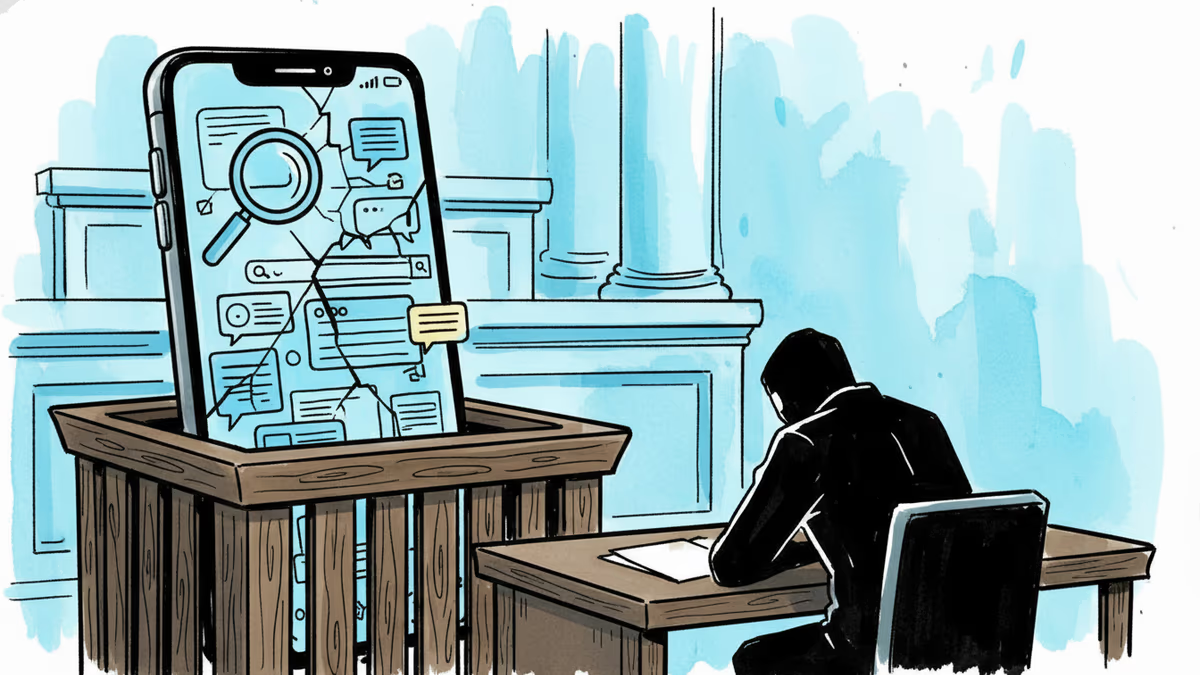
A Utah woman was sentenced to life in prison partly because of her Google searches and deleted texts. The Kouri Richins case reveals how digital footprints have become the courtroom's most reliable witness.
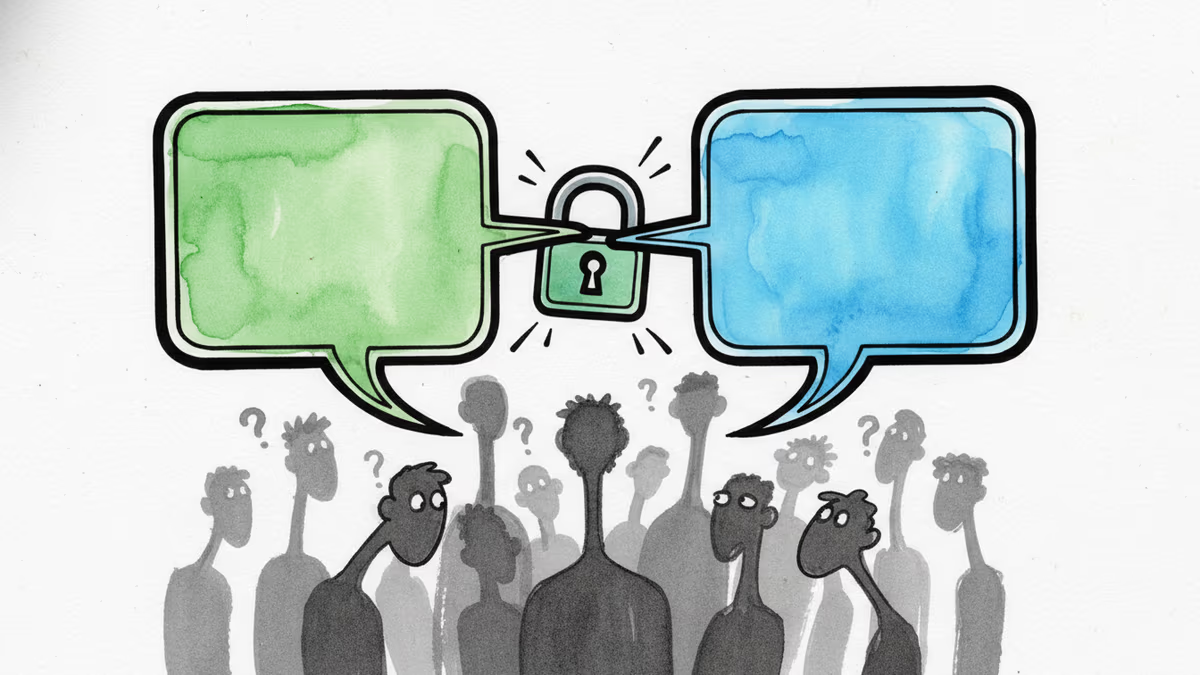
After 15 years of fragmented mobile messaging, Apple and Google are rolling out end-to-end encrypted RCS messaging between iPhones and Android devices. Here's what changed, why it took so long, and what it means for your privacy.
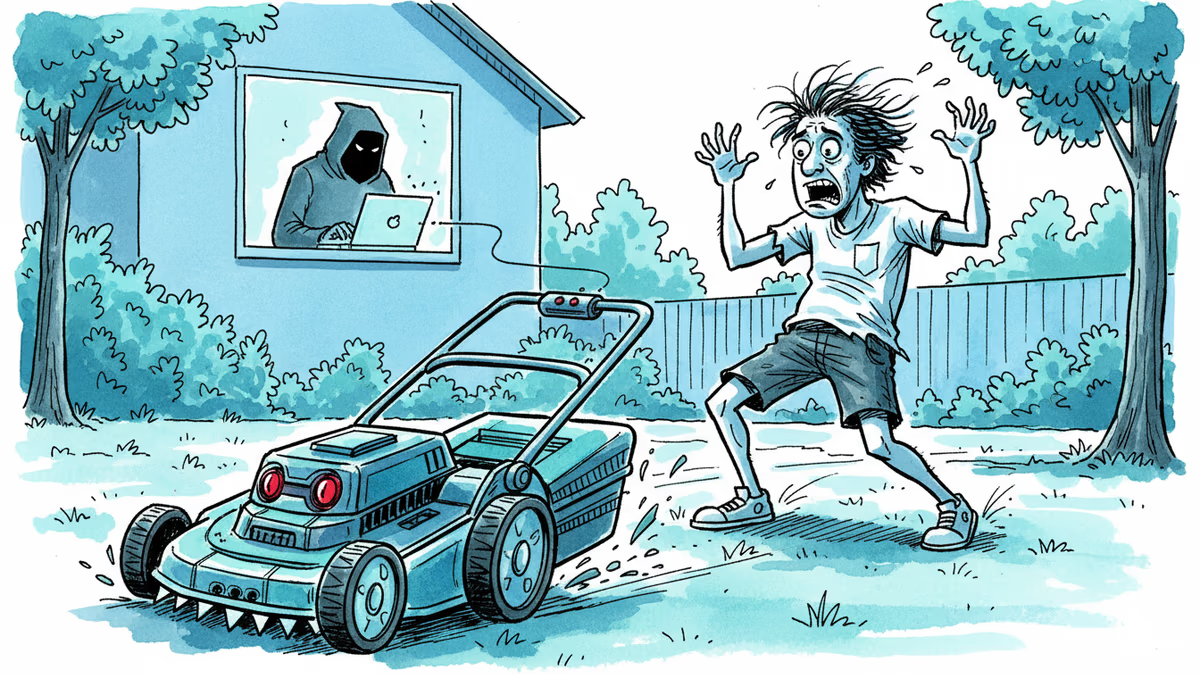
Yarbo's robot lawn mowers had critical security flaws exposing GPS, Wi-Fi passwords, and emails. The company confirmed the findings and cut remote access. But the real issue runs deeper than one brand.
The FTC fined Cox Media and two ad firms $930,000 — not for actually eavesdropping on users, but for falsely claiming they could. The case raises uncomfortable questions about surveillance capitalism.
A Utah woman was sentenced to life in prison partly because of her Google searches and deleted texts. The Kouri Richins case reveals how digital footprints have become the courtroom's most reliable witness.
After 15 years of fragmented mobile messaging, Apple and Google are rolling out end-to-end encrypted RCS messaging between iPhones and Android devices. Here's what changed, why it took so long, and what it means for your privacy.
Yarbo's robot lawn mowers had critical security flaws exposing GPS, Wi-Fi passwords, and emails. The company confirmed the findings and cut remote access. But the real issue runs deeper than one brand.
Thoughts
Share your thoughts on this article
Sign in to join the conversation