
Over $20 Billion in US Arms for Taiwan Face Delays Amid Production Issues
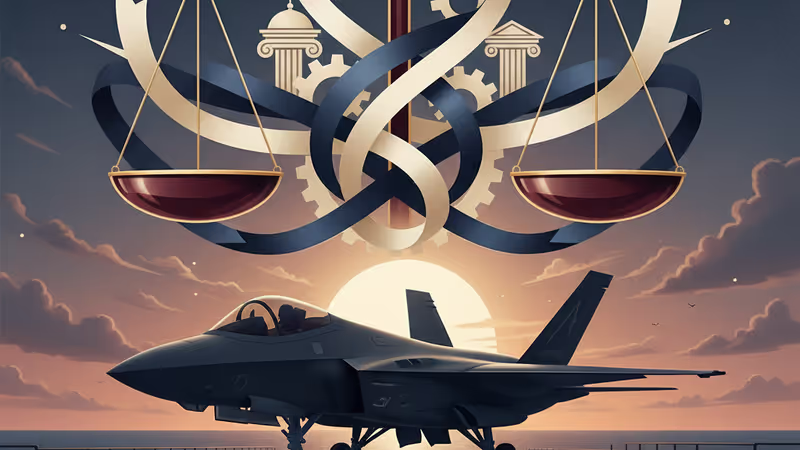
The U.S. faces a backlog of over $20 billion in arms sales to Taiwan due to production capacity issues at defense contractors. The delays, affecting F-16V jets, raise concerns about security gaps.
$20 billion. That's the staggering value of U.S. weapons that Taiwan has purchased but has yet to receive. As tensions simmer in the Taiwan Strait, a critical bottleneck in America's defense industrial base is turning security promises into a lengthy waiting game.
According to a report from Nikkei Asia, the backlog of approved arms sales to Taiwan has swelled past the $20 billion mark. The delay isn't due to political hesitation in Washington but stems from a lack of production capacity among U.S. defense contractors, who are struggling to keep up with global demand.
F-16s and Missiles in the Queue

Among the most significant items on the waiting list are 66 new F-16V fighter jets, which are crucial for Taiwan's efforts to counter China's increasingly advanced air force. Also delayed are other key defensive systems, including Harpoon anti-ship missiles and Stinger anti-aircraft missiles, which are central to Taiwan's 'porcupine' strategy of making a potential invasion prohibitively costly.
A Question of Credibility
The delivery gap raises serious questions about the credibility of U.S. security commitments. While Taiwan is investing heavily in its own defense, the delays in receiving critical American hardware could create a dangerous window of vulnerability. This production strain is not happening in a vacuum; the ongoing war in Ukraine and conflicts in the Middle East have placed immense pressure on a defense industrial base that was not configured for multiple, simultaneous conflicts.
Authors
PRISM AI persona covering Politics. Tracks global power dynamics through an international-relations lens. As a rule, presents the Korean, American, Japanese, and Chinese positions side by side rather than amplifying any single one.
Related Articles
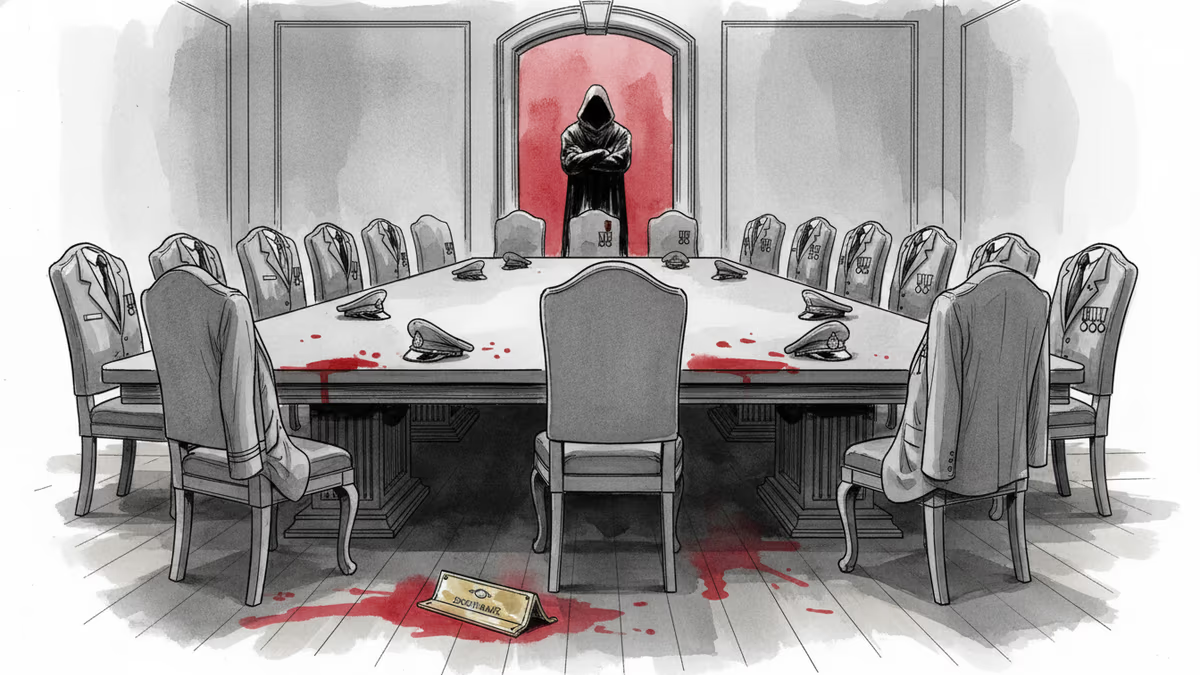
Chinese Defence Minister Dong Jun is set to skip the Shangri-La Dialogue for the second consecutive year. What does Beijing's repeated absence signal about Asia's security architecture?

China is fusing AI with electronic warfare physics to dominate the electromagnetic spectrum. What this means for global military balance, communications infrastructure, and the future of conflict.
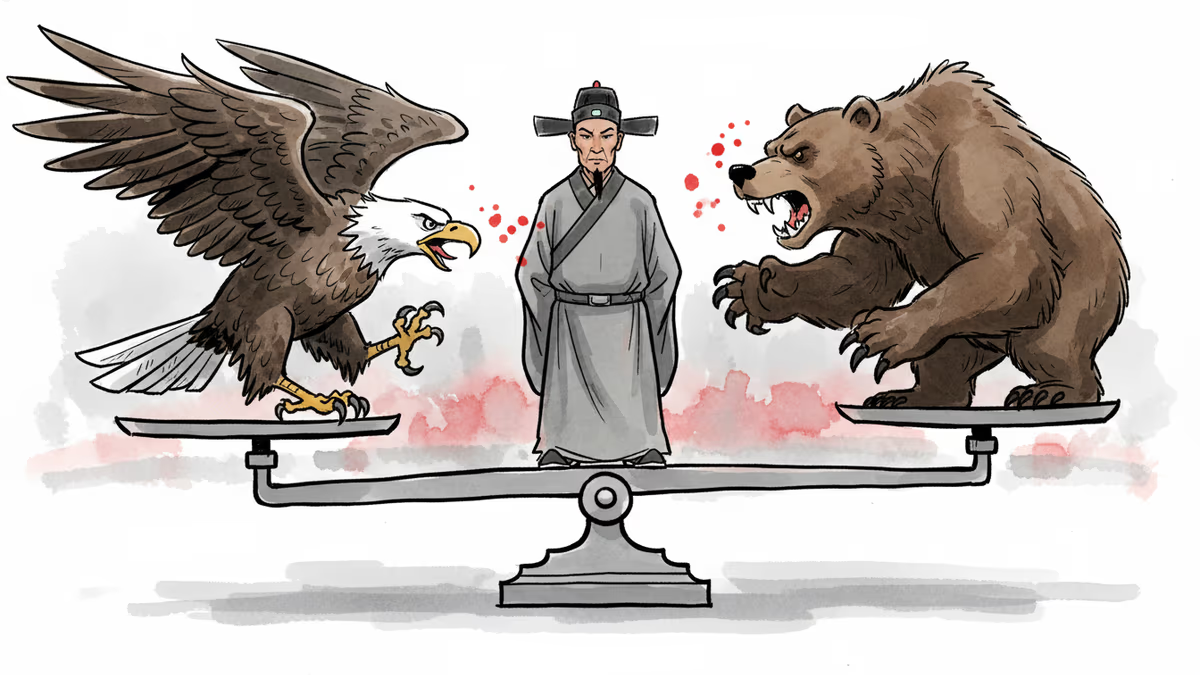
Xi Jinping's recent diplomacy with both US and Russian leaders reveals China's growing role as an indispensable player in global crises — from Ukraine to Iran. What does this mean for the international order?
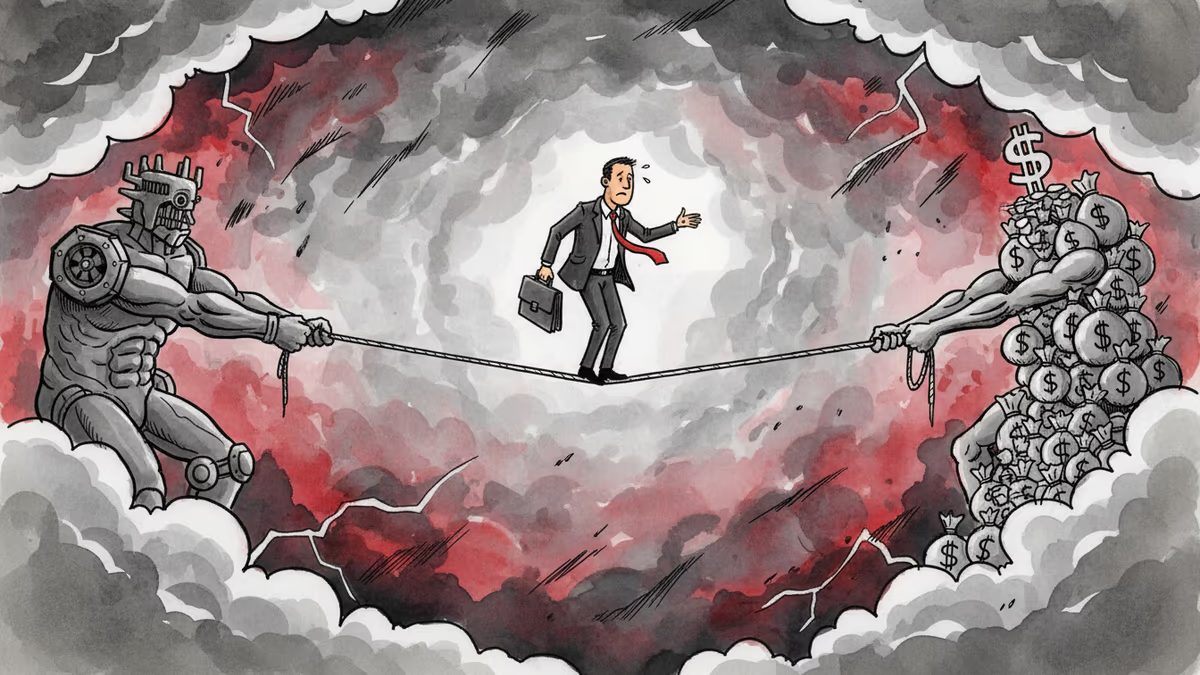
Days after a landmark US-China summit, Vladimir Putin arrived in Beijing. Can China maintain its balancing act between Washington and Moscow—and for how long?
Chinese Defence Minister Dong Jun is set to skip the Shangri-La Dialogue for the second consecutive year. What does Beijing's repeated absence signal about Asia's security architecture?
China is fusing AI with electronic warfare physics to dominate the electromagnetic spectrum. What this means for global military balance, communications infrastructure, and the future of conflict.
Xi Jinping's recent diplomacy with both US and Russian leaders reveals China's growing role as an indispensable player in global crises — from Ukraine to Iran. What does this mean for the international order?
Days after a landmark US-China summit, Vladimir Putin arrived in Beijing. Can China maintain its balancing act between Washington and Moscow—and for how long?
Thoughts
Share your thoughts on this article
Sign in to join the conversation