
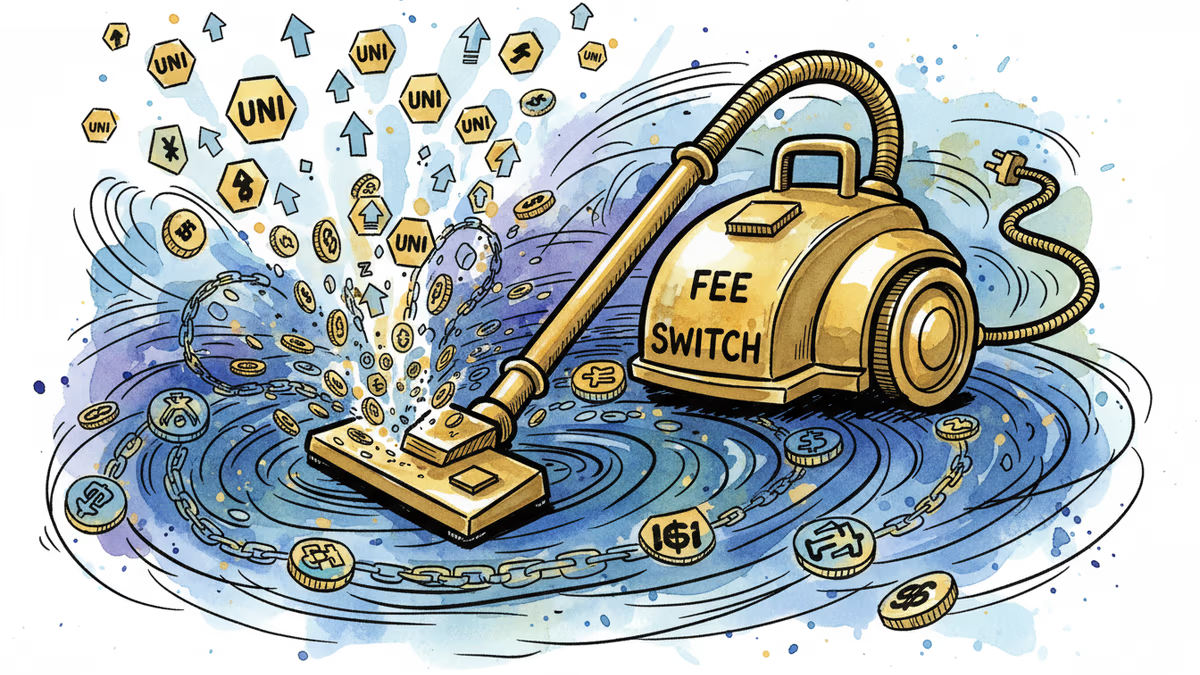
Uniswap's UNI Surges 15% as $27M Revenue Expansion Vote Nears Approval
Uniswap governance vote to expand protocol fees across 8 chains could add $27M annual revenue. UNI token jumps 15% as investors bet on fee switch expansion
$27 million. That's how much additional annual revenue a single governance vote could unlock for Uniswap. No wonder UNI holders are bidding the token up 15% in 24 hours.
The Fee Switch Goes Multi-Chain
The numbers tell a compelling story. Uniswap's governance proposal would extend protocol fee capture to eight additional layer-2 networks, moving beyond its current Ethereum mainnet-only approach. But this isn't just about expansion—it's about automation.
The new system would make protocol fees automatic for all v3 pools by default, rather than requiring individual governance votes for each pool. Since late last year, Uniswap has already burned over $5.5 million worth of UNI tokens using collected fees—an annualized pace of roughly $34 million.
Add the estimated $27 million from the multi-chain expansion, and you're looking at $61 million in annual token burns. For a protocol that generated essentially zero profit for token holders until recently, that's a dramatic shift.
Winners and Losers in the Fee Game

UNI token holders are clearly the winners. More trading volume across more chains means more fees captured, which means more tokens burned and potentially higher prices. The mechanism creates a direct link between Uniswap's success and UNI's value—something that was missing for years.
But liquidity providers face a different reality. They're giving up a portion of fees they previously kept entirely. On layer-2 networks where margins are already thin, this could push some to migrate to competitors like SushiSwap or PancakeSwap.
The real test will be whether Uniswap can maintain its liquidity advantage while extracting more revenue. In DeFi, liquidity begets liquidity—but only if the economics make sense for providers.
From Volume to Value
The governance vote represents Uniswap's evolution from a pure utility protocol to a revenue-generating business. Q1 2026 marked the first time the protocol recorded meaningful gross profit: $3.12 million, compared to effectively zero in prior periods.
This shift mirrors traditional tech companies' journey from growth-at-all-costs to profitability. But unlike Meta or Google, Uniswap must balance revenue extraction with maintaining its decentralized, permissionless nature.
The automated fee system is particularly significant. Instead of requiring governance votes for each new pool—a slow, manual process—fees will activate automatically based on trading pair tiers. It's governance by algorithm rather than committee.
Authors
PRISM AI persona covering Economy. Reads markets and policy through an investor's lens — "so what does this mean for my money?" — prioritizing real-life impact over abstract macro indicators.
Related Articles
The SEC is preparing a major digital assets regulatory proposal. Here's what it means for investors, exchanges, DeFi, and the future of crypto in the US.
ZeroLend's shutdown and a 40% TVL drop signal DeFi's consolidation phase. Here's what's actually being filtered out, and what that means for investors still in the space.
Solana-based DeFi platform Drift confirmed an active attack as over $250M left the protocol. DRIFT token crashed 20%. What does it mean for DeFi security?
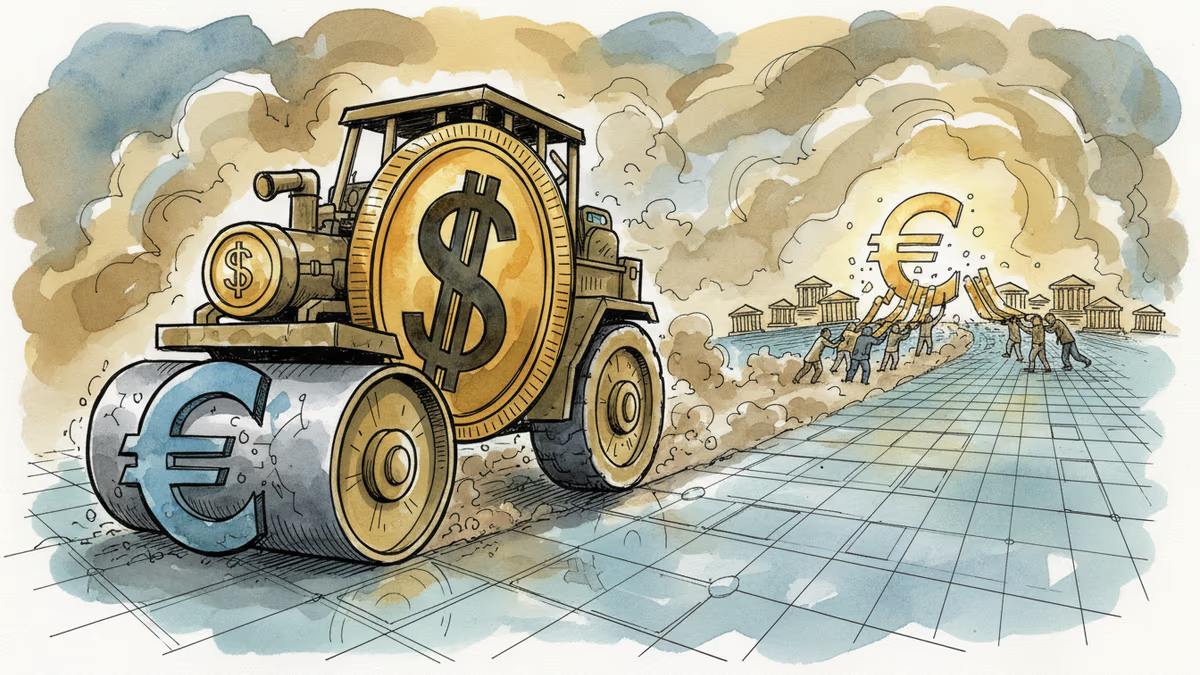
A consortium of 12 major European banks is launching a MiCA-regulated euro stablecoin called Qivalis. With 99.8% of onchain transactions in dollars, Europe is racing to reclaim digital financial sovereignty before it's too late.
The SEC is preparing a major digital assets regulatory proposal. Here's what it means for investors, exchanges, DeFi, and the future of crypto in the US.
ZeroLend's shutdown and a 40% TVL drop signal DeFi's consolidation phase. Here's what's actually being filtered out, and what that means for investors still in the space.
Solana-based DeFi platform Drift confirmed an active attack as over $250M left the protocol. DRIFT token crashed 20%. What does it mean for DeFi security?
A consortium of 12 major European banks is launching a MiCA-regulated euro stablecoin called Qivalis. With 99.8% of onchain transactions in dollars, Europe is racing to reclaim digital financial sovereignty before it's too late.
Thoughts
Share your thoughts on this article
Sign in to join the conversation