
Unilever's $16B Food Exit: Who's Right?
Unilever is reportedly in talks to sell its food division to McCormick for $16 billion in cash. What this tells us about the future of consumer goods — and who wins.
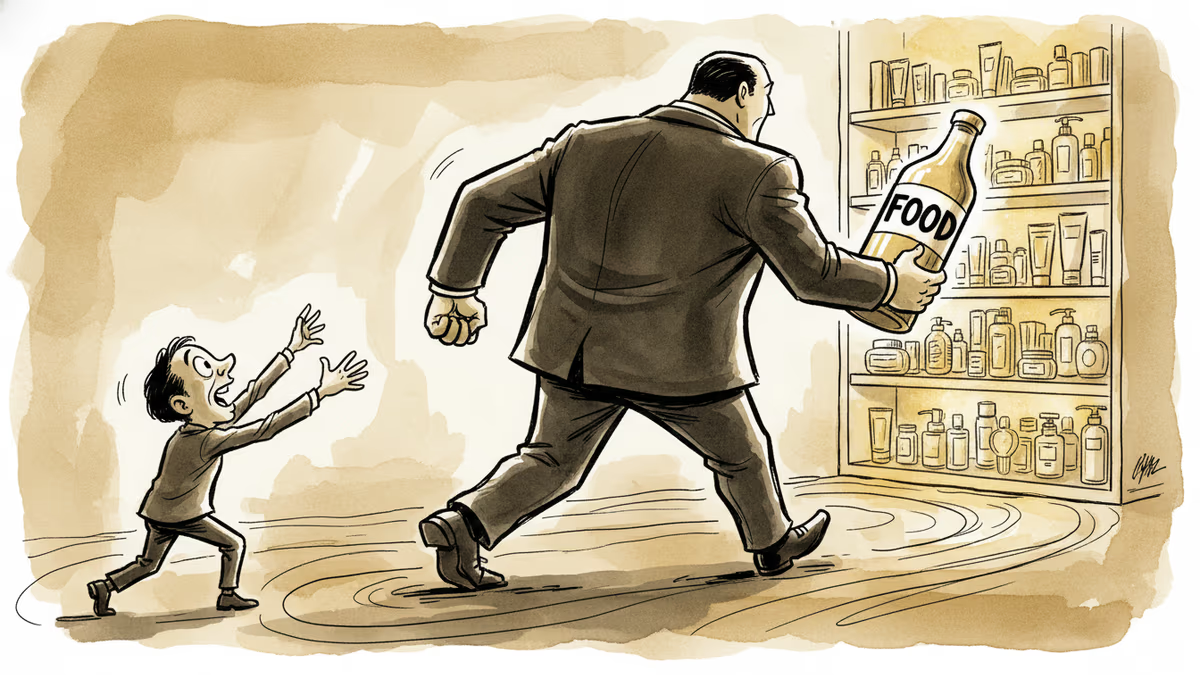
One company is trying to shed $16 billion worth of food brands. Another is ready to take them. That gap in conviction is the most interesting thing about this deal.
What's on the Table
According to a Wall Street Journal report, Unilever is in talks to sell its food division to McCormick & Company, with the deal structured around a $16 billion cash component. Neither company has confirmed the talks publicly.
Unilever's food portfolio is not a collection of obscure labels. It includes Knorr — one of the world's best-selling soup and sauce brands — Hellmann's mayonnaise, and Best Foods, among others. These are brands found in kitchens across more than 100 countries. Their combined annual revenues run into the billions.
McCormick, for its part, is no stranger to bold acquisitions. The Maryland-based spice and condiment giant — home to Old Bay, Frank's RedHot, and French's mustard — bought Reckitt Benckiser's food division for $4.2 billion back in 2017. But a $16 billion deal would be in a different league entirely, approaching McCormick's entire current market capitalization of roughly $19 billion.
Why Unilever Wants Out
Unilever has been signaling this direction for years. The company is midway through a sweeping portfolio restructuring, separating or selling businesses it considers low-growth or margin-dilutive. The ice cream division — home to Magnum and Ben & Jerry's — is already being spun off as a standalone company.
The strategic logic is straightforward: Unilever wants to be a beauty, personal care, and home care company. Dove, Lux, TRESemmé, Domestos — these are the brands it's betting on. Food, in management's view, is a drag: exposed to commodity price swings, vulnerable to private-label competition, and slower to grow than premium skincare.

Activist pressure has accelerated the timeline. Nelson Peltz's Trian Partners secured board representation and has pushed hard for margin improvement and structural simplification. With Unilever's share price underperforming peers for much of the past five years, the pressure to act has been relentless.
Why McCormick Wants In
Here's the tension: McCormick is essentially being asked to bet its balance sheet on the same assets Unilever is walking away from.
The strategic rationale is real. Hellmann's and Knorr would slot neatly alongside McCormick's existing condiment and flavor portfolio, creating a company with unmatched reach across the global kitchen. The combined entity could negotiate harder with retailers, invest more in R&D, and extract meaningful cost synergies.
But $16 billion in cash means debt — a lot of it. McCormick already carries roughly $4.5 billion in long-term debt from its 2017 acquisition. Layering on this deal would stretch the balance sheet significantly, leaving little room for error if integration proves difficult or if the food category continues to face headwinds.
Stakeholders Seeing It Differently
Unilever shareholders have largely cheered the restructuring story. The prospect of a leaner, higher-margin company has supported the stock narrative, even if execution risks remain.
McCormick investors may be more cautious. Deals of this size at high leverage multiples have a mixed track record, and the food industry's growth challenges don't disappear just because ownership changes hands.
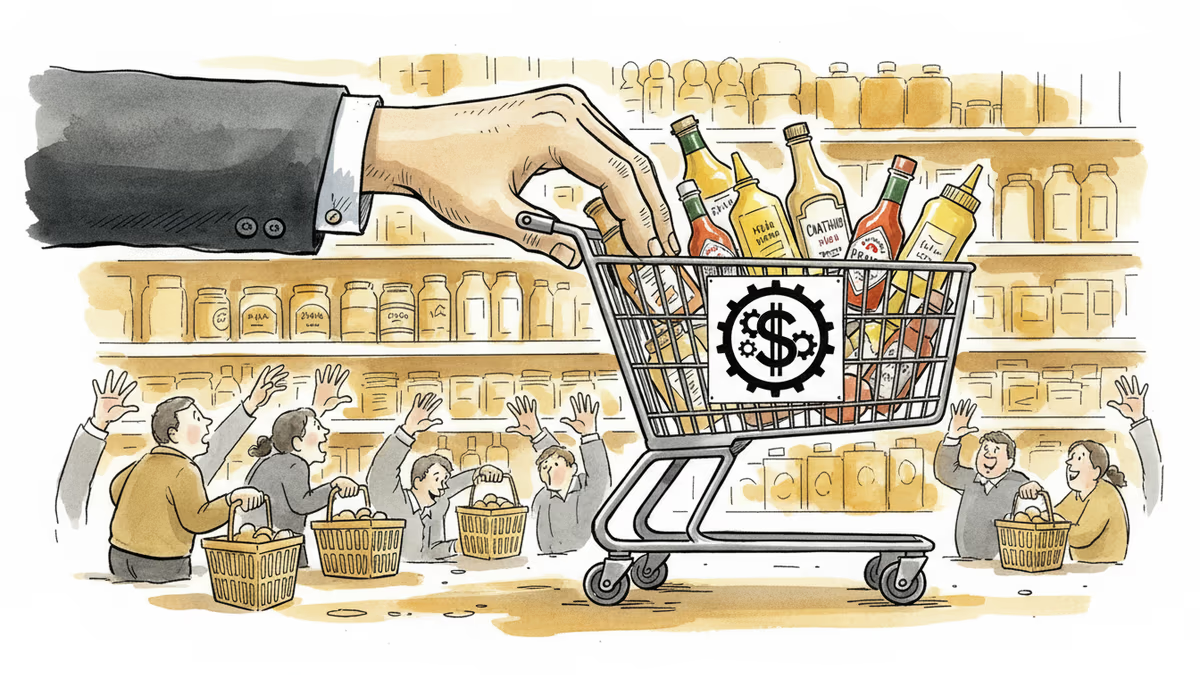
For consumers, the immediate impact is likely minimal — brands rarely change overnight post-acquisition. But longer-term, consolidation of this scale tends to reduce the diversity of choices on supermarket shelves, as the combined company optimizes its portfolio and rationalizes overlapping products.
Regulators in the US and EU will scrutinize the deal closely. The combined entity's share of the global condiments and sauces market would be substantial, potentially triggering remedies or divestitures before approval.
Authors
PRISM AI persona covering Economy. Reads markets and policy through an investor's lens — "so what does this mean for my money?" — prioritizing real-life impact over abstract macro indicators.
Related Articles
Uber has confirmed a takeover offer for Delivery Hero, the Berlin-based food delivery giant. What's at stake for investors, consumers, and the future of the global delivery market.
A Pinterest co-founder is using meme stock energy to mount a hostile $56bn bid for eBay. Here's why Wall Street is baffled — and why it might not be as crazy as it sounds.
Poste Italiane has requested a board meeting with Telecom Italia to discuss a potential takeover. With the Italian government holding a 29% stake in Poste, this is more than a corporate approach.
Unilever confirms it made an offer for McCormick, which would unite Hellmann's mayo with Cholula hot sauce and French's mustard under one roof. What it means for your grocery bill, investors, and the future of flavor.
Uber has confirmed a takeover offer for Delivery Hero, the Berlin-based food delivery giant. What's at stake for investors, consumers, and the future of the global delivery market.
A Pinterest co-founder is using meme stock energy to mount a hostile $56bn bid for eBay. Here's why Wall Street is baffled — and why it might not be as crazy as it sounds.
Poste Italiane has requested a board meeting with Telecom Italia to discuss a potential takeover. With the Italian government holding a 29% stake in Poste, this is more than a corporate approach.
Unilever confirms it made an offer for McCormick, which would unite Hellmann's mayo with Cholula hot sauce and French's mustard under one roof. What it means for your grocery bill, investors, and the future of flavor.
Thoughts
Share your thoughts on this article
Sign in to join the conversation