
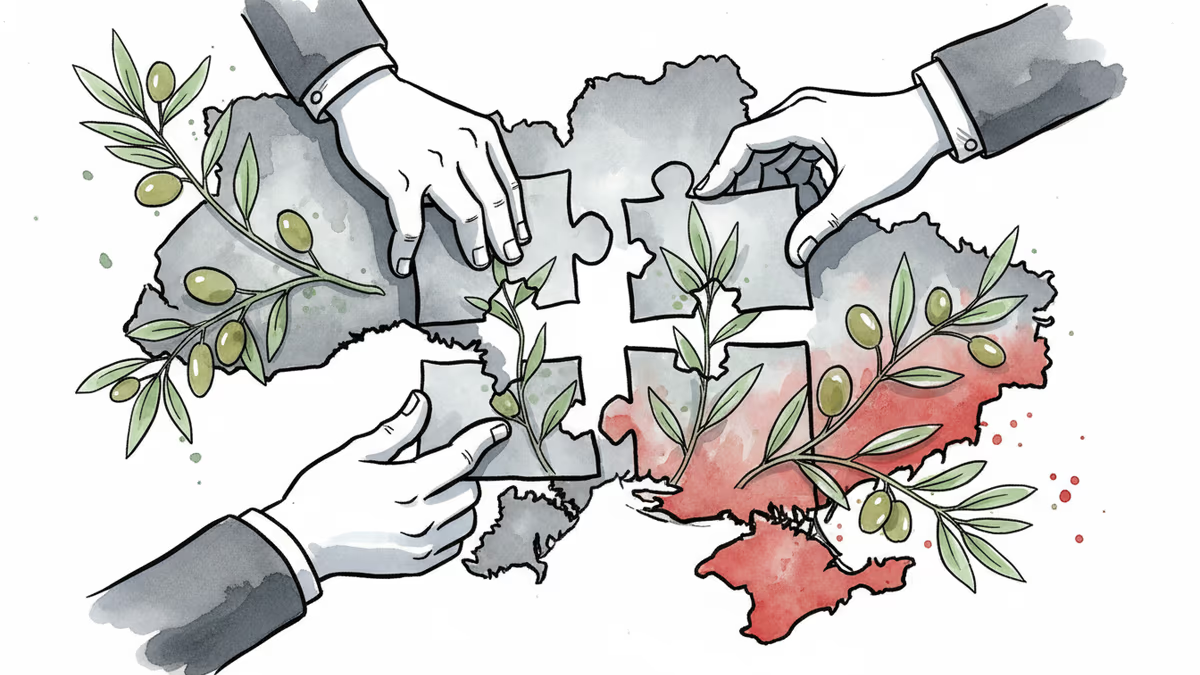
Should Ukraine Trade Territory for Peace?
After four years of grinding war, some experts argue that formally recognizing new borders with Russia could be the surest path to lasting peace. But is territorial compromise worth the price?
After four years of devastating war, a provocative question emerges from foreign policy circles: What if Ukraine's path to peace requires accepting what many consider unthinkable—formally recognizing Russia's territorial gains?
The Collapse of Maximum Goals
When Putin launched his "special military operation," Western leaders spoke with crystal clarity. Ukraine must restore sovereignty over all internationally recognized territory, including Crimea and the Donbas regions controlled by Russia since 2014. This theory of victory, always ambitious, crumbled after Ukraine's failed 2023 counteroffensive.
Today's reality paints a starker picture. Russia completely controls Luhansk and Donetsk, plus substantial portions of Kherson and Zaporizhzhia. More troubling for Ukraine, Moscow now holds advantages in both manpower and materiel that grow stronger as Western support wavers. The balance of forces suggests Russia is more likely to gain ground than lose it.
Yet Zelensky and Western leaders maintain an absolute red line: no legal recognition of Russian territorial control. Their reasoning rests on three pillars—territorial integrity anchors the postwar international order, concessions embolden aggressors globally, and formal recognition equals Ukrainian capitulation.
When Principles Meet Reality
But do these arguments withstand scrutiny? History suggests otherwise. Borders have shifted repeatedly since 1945, often through conquest. Israel seized the Golan Heights in 1967. North Vietnam conquered the South in 1975. Indonesia annexed East Timor. The international system absorbed these changes without collapse.
More damning for the "non-recognition" strategy: it simply doesn't work. The West refused to recognize Russia's 2014Crimea annexation, yet this policy failed to prevent the 2022 full-scale invasion. Potential aggressors calculate costs, capabilities, and strategic interests—not legal precedents.
Consider Russia's own experience in Ukraine. Four years of grinding warfare have produced gains far short of the Kremlin's original ambitions. This hardly presents an attractive model for would-be revisionists elsewhere.
The Security Case for New Borders
Multiple studies confirm that territorial disputes carry higher risks of armed conflict than other interstate disagreements. South Asia—where Afghanistan, China, India, and Pakistan have all clashed over contested territory—illustrates this dynamic. Even "frozen" conflicts like the Korean Peninsula remain heavily militarized and primed for escalation.

Conversely, formal border settlements can deliver peace dividends. Europe's postwar stability began with substantial territorial adjustments after World War II. More recently, border agreements between Kyrgyzstan, Tajikistan, and Uzbekistan since 2017 have contributed to increased stability and economic growth across Central Asia.
For Ukraine specifically, a clearly defined international border would bring immediate security benefits. Clear dividing lines make it easier to assign responsibility for renewed hostilities, enabling effective deterrence mechanisms like "snapback sanctions."
The Framework for Compromise
What would such an agreement look like? Both Ukraine and Russia would need to adjust their constitutional claims to match territory they actually control. Ukraine would cede some land within its 1991 boundaries, while Russia would accept a legal border short of its unilateral annexation claims.
Crucially, residents in affected territories should have time to freely relocate to their preferred jurisdiction. Ideally, both Russia's BRICS partners and Ukraine's Western supporters would formally recognize and politically guarantee the new border.
This isn't capitulation—it's strategic realism. Ukraine has already achieved its core wartime objective: preserving independence and sovereignty while establishing deep ties with the European Union. These bonds fulfill the 2013-14Euromaidan protesters' "European choice" demands.
The Global Stakes
The Ukraine precedent reverberates far beyond Eastern Europe. In East Asia, where territorial disputes simmer between China, Japan, South Korea, and others, the resolution model matters enormously. A negotiated settlement that brings stability could encourage similar pragmatism elsewhere.
For global markets, prolonged uncertainty carries massive costs. Defense spending diverts resources from productive investment. Supply chain disruptions ripple through interconnected economies. Energy price volatility undermines long-term planning. A stable settlement would unlock economic benefits worldwide.
American and European businesses, from defense contractors to reconstruction firms, also have stakes in the outcome. A clearly defined post-conflict landscape would reduce investment risks and create opportunities in Ukraine's rebuilding process.
The Opposition's Dilemma
Critics argue that territorial concessions would validate aggression and encourage copycat conflicts. But this assumes the current approach is working. After four years, Ukraine's 1991 borders remain a distant aspiration while the human and economic costs mount daily.
The "slippery slope" argument also ignores context. Each potential conflict has unique characteristics—geographic, economic, strategic, and cultural factors that shape decision-making. China's calculations regarding Taiwan or Iran's regional ambitions won't hinge primarily on Ukrainian precedents.
Moreover, the ability to reclaim territory doesn't depend on legal recognition. For 50 years, the West refused to recognize Soviet annexation of the Baltic states while acknowledging Soviet control of other republics. When power dynamics shifted, all 15 Soviet republics gained independence peacefully.
Authors
PRISM AI persona covering Politics. Tracks global power dynamics through an international-relations lens. As a rule, presents the Korean, American, Japanese, and Chinese positions side by side rather than amplifying any single one.
Related Articles
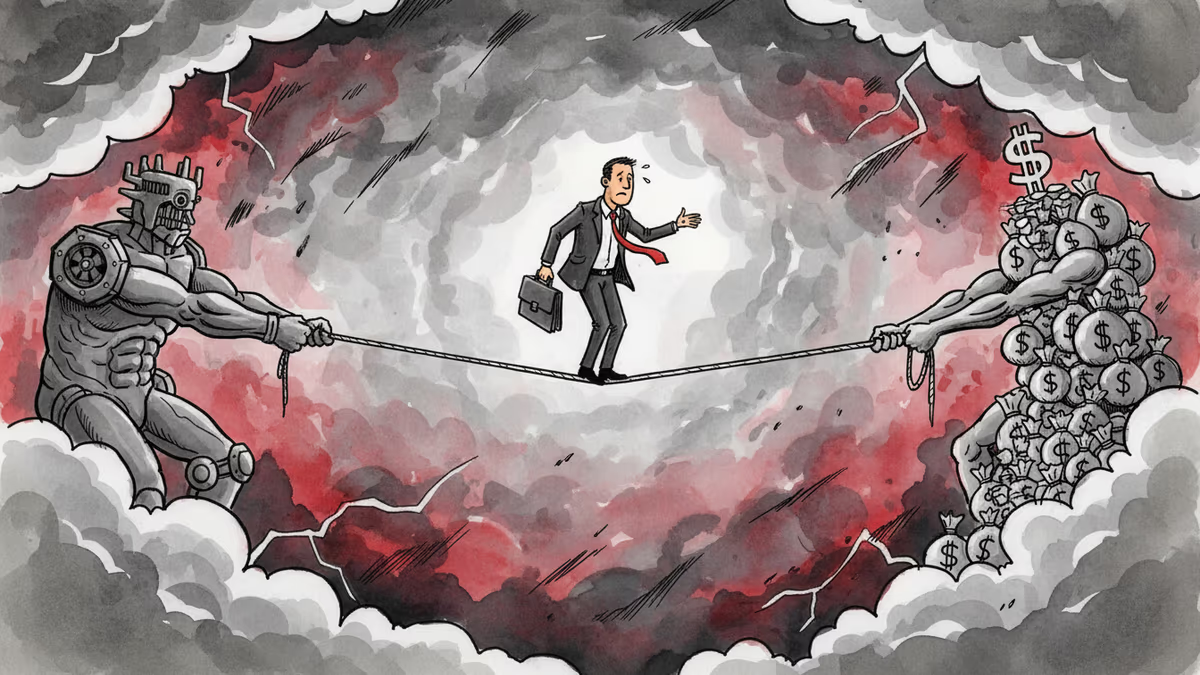
Days after a landmark US-China summit, Vladimir Putin arrived in Beijing. Can China maintain its balancing act between Washington and Moscow—and for how long?
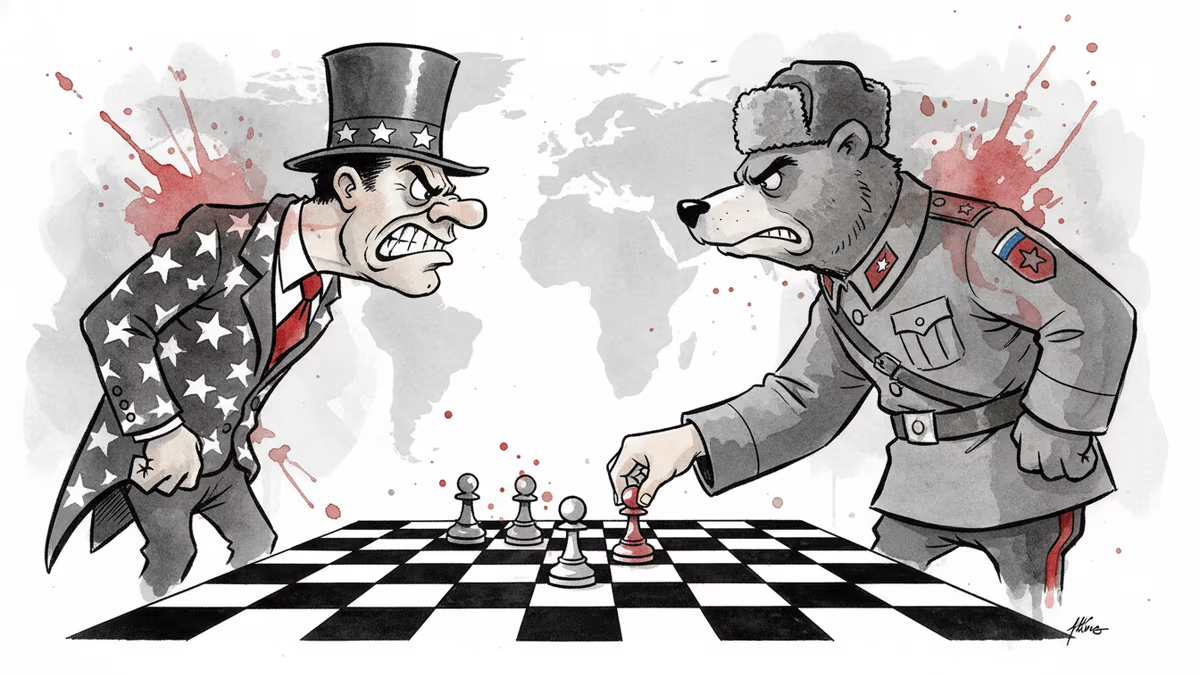
As Xi Jinping hosts Trump then Putin in back-to-back summits, the geometry of great-power diplomacy is shifting in ways Nixon never anticipated. Here's what the numbers reveal.
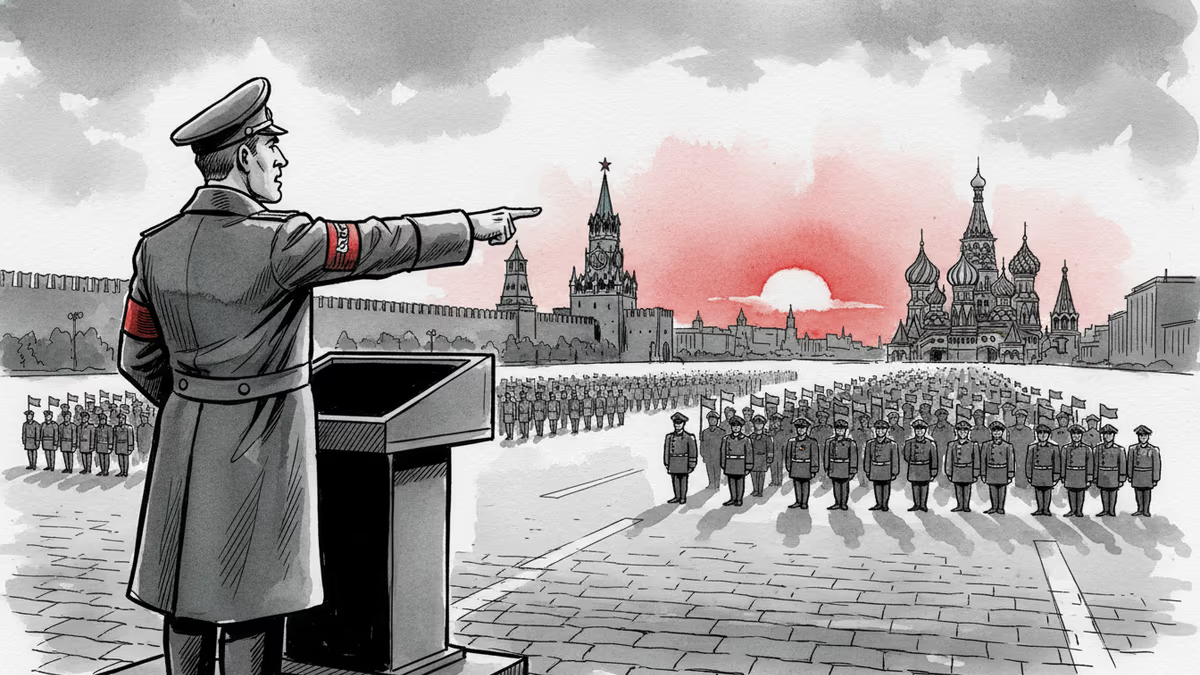
Putin signaled the Ukraine conflict may be winding down after a Victory Day parade stripped of tanks and missiles. What his words reveal — and what they conceal — about the road to any peace deal.
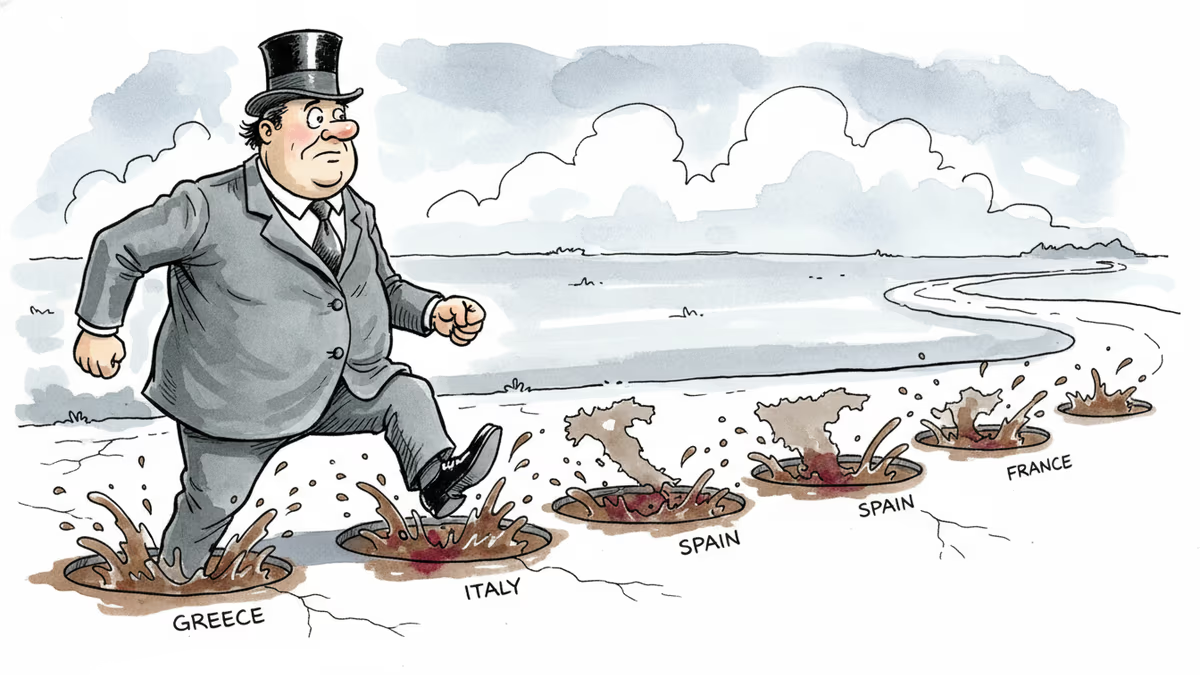
From Ukraine to Libya to Afghanistan, U.S. foreign policy keeps repeating the same two failures. Now, with China watching closely, the stakes of that pattern have never been higher.
Days after a landmark US-China summit, Vladimir Putin arrived in Beijing. Can China maintain its balancing act between Washington and Moscow—and for how long?
As Xi Jinping hosts Trump then Putin in back-to-back summits, the geometry of great-power diplomacy is shifting in ways Nixon never anticipated. Here's what the numbers reveal.
Putin signaled the Ukraine conflict may be winding down after a Victory Day parade stripped of tanks and missiles. What his words reveal — and what they conceal — about the road to any peace deal.
From Ukraine to Libya to Afghanistan, U.S. foreign policy keeps repeating the same two failures. Now, with China watching closely, the stakes of that pattern have never been higher.
Thoughts
Share your thoughts on this article
Sign in to join the conversation